
Octavia E. Butler (1947–2006)
Author of Parable of the Sower
About the Author
Science-fiction writer and novelist Octavia Estelle Butler was born in Pasadena, California, on June 22, 1947. She earned as Associate of Arts degree from Pasadena City College in 1968 and later attended California State University and the University of California. Her first novel, Patternmaster, show more was the first in a series about a society run by a group of telepaths who are mentally linked to one another. She explored the topics of race, poverty, politics, religion, and human nature in her works. She won a Hugo Award in 1984 for her short story Speech Sounds and a Hugo Award and Nebula Award in 1985 for her novella Bloodchild. She received a MacArthur Grant from the John D. and Catherine T. MacArthur Foundation. The award pays $295,000 over a five-year period to creative people who push the boundaries of their fields. She died in Lake Forest Park, Washington on February 24, 2006 at the age of 58. (Bowker Author Biography) show less
Series
Works by Octavia E. Butler
Octavia E. Butler: The Last Interview: and Other Conversations (The Last Interview Series) (2023) 55 copies, 1 review
Mauvaise graine 2 copies
Childfinder [short story] 1 copy
The Missing Relationship 1 copy
Kindred: A Reader's Guide 1 copy
Pilda semănătorului 1 copy
Butler, Octavia Archive 1 copy
O Mestre 1 copy
Book of the Living 1 copy
2000x: Bloodchild 1 copy
Associated Works
Dark Matter: A Century of Speculative Fiction from the African Diaspora (2000) — Contributor — 594 copies, 11 reviews
The Big Book of Science Fiction: The Ultimate Collection (2016) — Contributor — 522 copies, 8 reviews
The Norton Book of Science Fiction: North American Science Fiction, 1960-1990 (1993) — Contributor — 345 copies, 6 reviews
Sisters of the Revolution: A Feminist Speculative Fiction Anthology (2015) — Contributor — 340 copies, 8 reviews
Breaking Ice: An Anthology of Contemporary African-American Fiction (1990) — Contributor — 305 copies, 1 review
The Locus Awards: Thirty Years of the Best in Science Fiction and Fantasy (2004) — Contributor — 290 copies, 11 reviews
The Norton Anthology of African American Literature {2nd edition} (2003) — Contributor, some editions — 282 copies, 2 reviews
Women of Wonder, the Contemporary Years: Science Fiction by Women from the 1970s to the 1990s (1995) — Contributor — 215 copies, 2 reviews
Daughters of Earth: Feminist Science Fiction in the Twentieth Century (2006) — Contributor — 188 copies, 6 reviews
Daughters of Africa: An International Anthology of Words and Writings by Women of African Descent from the Ancient Egyptian to the Present (1992) — Contributor — 185 copies
Asimov's Science Fiction: Hugo & Nebula Award Winning Stories (1995) — Contributor — 104 copies, 2 reviews
The Prentice Hall Anthology of Science Fiction and Fantasy (2000) — Contributor — 100 copies, 2 reviews
New Eves: Science Fiction About the Extraordinary Women of Today and Tomorrow (1994) — Contributor — 71 copies, 3 reviews
Lightspeed Magazine, Issue 73 • June 2016 (People of Colo(u)r Destroy Science Fiction! special issue) (2016) — Contributor — 67 copies, 3 reviews
Asimov's Science Fiction Magazine: 30th Anniversary Anthology (2007) — Contributor — 61 copies, 1 review
Tales from Isaac Asimov's Science Fiction Magazine: Short Stories for Young Adults (1986) — Contributor — 43 copies
Nebula Awards 20: SFWA's Choices for the Best Science Fiction and Fantasy 1984 (1985) — Contributor — 28 copies
Bloodchildren: Stories by the Octavia E. Butler Scholars (2013) — Contributor — 28 copies, 2 reviews
Afro-Future Females: Black Writers Chart Science Fiction's Newest New-Wave Trajectory (2008) — Contributor — 13 copies
Hive of Dreams: Contemporary Science Fiction from the Pacific Northwest (2003) — Contributor — 13 copies
Terra Incognita, Number 1 — Interviewee — 1 copy
Tagged
Common Knowledge
- Legal name
- Butler, Octavia Estelle
- Birthdate
- 1947-06-22
- Date of death
- 2006-02-24
- Gender
- female
- Education
- Pasadena City College
California State University, Los Angeles - Occupations
- science fiction writer
- Organizations
- Science Fiction and Fantasy Writers of America
- Awards and honors
- Creative Arts Award L.A. YWCA (1980)
MacArthur Fellowship (1995)
Lifetime Achievement Award in Writing: PEN American Center (2000)
Guest of Honour, Eastercon, UK (1997)
SF Hall Of Fame (2010)
SFWA Infinity Award (2023) - Agent
- Merilee Heifetz (Writers House)
- Cause of death
- a fall
- Nationality
- USA
- Birthplace
- Pasadena, California, USA
- Places of residence
- Pasadena, California, USA
Seattle, Washington, USA - Place of death
- Lake Forest Park, Washington, USA
- Burial location
- Mountain View Cemetery, Altadena, California, USA
- Associated Place (for map)
- USA
Members
Discussions
January 2021: Octavia Butler in Monthly Author Reads (November 2021)
Octavia Butler: American Author Challenge in 75 Books Challenge for 2017 (August 2017)
Reviews
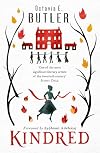
This is a really powerful novel about race and, the potential self-destructiveness of some interdependent human relationships. It is also a time travel novel, a genre of which I am always a fan.
Dana is a young black woman in California married to Kevin, a somewhat older white man (though, as if testing our assumptions, her husband's race is not mentioned nearly a fifth of the way through the novel). Dana is transported, initially on her own, back in time from the present day of 1976 (the show more novel was published in 1979) to a plantation in Maryland in 1815 (though she does not realise she has travelled in time until her second, and longer visit). Her time slips are connected to the activities of a red-haired boy and later young man, whom she realises on her second trip is her ancestor Rufus Weylin, who had children with a black woman Alice Greenwood. It becomes apparent that the timings of Dana's appearances in the past are linked to threats to Rufus's life (drowning, dying in a house fire, falling from a tree, etc. as per the chapter titles), while her returns to the present are caused when her own life is threatened, either by Rufus himself or by his callous and casually brutal father Tom. In this way, Dana and Rufus are locked in a perpetual hate - (almost of a sort) love relationship across time, each dependent on the other, Rufus needing Dana to save his life, while Dana needs Rufus to live to grow up and give birth to her ancestral line.
This is of course not an original science fiction idea at all, but is handled extremely well here, and enables the reader to see how a modern black woman copes with both the brutalities and banalities of slave life in the early 19th century, still some 50 years before the Civil War: the casual and severe whippings; the backbreaking and often monotonous work; the ever present threat of families being broken up; the prevention of slaves becoming literate so they cannot even imagine or bring about a alternative life. What perhaps strikes the modern reader as incongruous is the casual and matter of fact way in which the white owners act towards their slaves, sometimes not necessarily physically cruel per se, treating "their" slaves at one and the same time as possessions, work horses, wayward children or as being by instinct lazy and deceitful. The owners are of course, in their own terms, not behaving cruelly or unreasonably, in the same way that members in oppressor groups can very often behave perfectly reasonably and in a civilised manner towards other members of their group.
When Kevin is accidentally transported back with Dana, the dynamic changes, and he is able to protect her to some extent, though by the painful device of pretending they are master and slave, and not man and wife (which won't be believed). However, he is stranded in the past and separated from Dana for some five years, and to some extent becomes accustomed to life in that time as a white man largely living in the free North. They are able to reconcile themselves to each other, though with difficulty, as Dana's relationship (for want of a better word to describe this bizarre situation) with Rufus becomes more tortured. Dana and Kevin are eventually returned definitively to the present day (no spoilers about the denouement plays out).
This is a very powerful and grippingly written novel and I will read more by this author. show less
Dana is a young black woman in California married to Kevin, a somewhat older white man (though, as if testing our assumptions, her husband's race is not mentioned nearly a fifth of the way through the novel). Dana is transported, initially on her own, back in time from the present day of 1976 (the show more novel was published in 1979) to a plantation in Maryland in 1815 (though she does not realise she has travelled in time until her second, and longer visit). Her time slips are connected to the activities of a red-haired boy and later young man, whom she realises on her second trip is her ancestor Rufus Weylin, who had children with a black woman Alice Greenwood. It becomes apparent that the timings of Dana's appearances in the past are linked to threats to Rufus's life (drowning, dying in a house fire, falling from a tree, etc. as per the chapter titles), while her returns to the present are caused when her own life is threatened, either by Rufus himself or by his callous and casually brutal father Tom. In this way, Dana and Rufus are locked in a perpetual hate - (almost of a sort) love relationship across time, each dependent on the other, Rufus needing Dana to save his life, while Dana needs Rufus to live to grow up and give birth to her ancestral line.
This is of course not an original science fiction idea at all, but is handled extremely well here, and enables the reader to see how a modern black woman copes with both the brutalities and banalities of slave life in the early 19th century, still some 50 years before the Civil War: the casual and severe whippings; the backbreaking and often monotonous work; the ever present threat of families being broken up; the prevention of slaves becoming literate so they cannot even imagine or bring about a alternative life. What perhaps strikes the modern reader as incongruous is the casual and matter of fact way in which the white owners act towards their slaves, sometimes not necessarily physically cruel per se, treating "their" slaves at one and the same time as possessions, work horses, wayward children or as being by instinct lazy and deceitful. The owners are of course, in their own terms, not behaving cruelly or unreasonably, in the same way that members in oppressor groups can very often behave perfectly reasonably and in a civilised manner towards other members of their group.
When Kevin is accidentally transported back with Dana, the dynamic changes, and he is able to protect her to some extent, though by the painful device of pretending they are master and slave, and not man and wife (which won't be believed). However, he is stranded in the past and separated from Dana for some five years, and to some extent becomes accustomed to life in that time as a white man largely living in the free North. They are able to reconcile themselves to each other, though with difficulty, as Dana's relationship (for want of a better word to describe this bizarre situation) with Rufus becomes more tortured. Dana and Kevin are eventually returned definitively to the present day (no spoilers about the denouement plays out).
This is a very powerful and grippingly written novel and I will read more by this author. show less
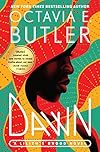
In many ways, Dawn is the inverse of Lem's Solaris. Instead of human's futile attempts at trying to understand an unknowable other, it is the aliens that struggle to comprehend us. But in Dawn the Oankali (a grotesquely tentacled, three gendered alien species) are convinced that they understand us, perhaps even better than we know ourselves. To make matters worse, they have humanity in a corner. They have 'rescued' the surviving members of our species after a large scale nuclear conflict, show more brought them to their ship beyond the orbit of our moon, and have been studying them obsessively in isolation cells.
The Oankali are traveling traders in genetics. They are drawn to humanity for some of our unexpected genetic possibilities, and 'offer' in exchange, among other things: a new form of hierarchy, a different version of intimacy, and unlocking our latent potential. This trade is anything other than consensual. Though individuals among the Oankali are often sympathetic to their humans, they refrain from giving them the option of saying "No" to the greater trade at hand. Often it is only when it's too late to do anything about it that their intentions are transparent.
Much like Lilith, the main character, I found myself tempted to excuses the actions of the Oankali, perhaps to give them the benefit of the doubt when I know I shouldn't. As the book comes to a close, however, as Lilith sees proof of their intentions right in front of her, she loses all hope of retaining her autonomy or humanity. Though the Oankali are never outright violent towards the humans, even a momentary reflection upon the facts of Lilith's time in captivity reveals how absolutely horrific it has been for her, in the truest sense of the word. Through all of this, Lilith endures. She consistently rises to the challenges placed before her with a stubborn optimism, and despite some of her actions being vilified by other humans, I felt completely sympathetic towards her.
Butler walks a razor thin tight rope of suspense, perfectly balancing exposition with ambiguity. She also captures Lilith's textured and realistic inner world in such stunning clarity, and though the broader community of humans are not drawn in as much detail, none of them felt dumb or unnecessary.
If you've read any of Butler's other work, you'll be familiar with her austere writing style. In many ways I respect this style of writing. I think it takes an unimaginable amount of skill to write something that appears on the surface so plain and simple, while sacrificing no sophistication. No word is superfluous. And yet, I found myself wanting just a little bit more style or flair in Dawn. Surely it is in part due to her simplicity that her work is so accessible, and it certainly doesn't prevent her from reaching a lot of thematic depth, but I couldn't help but find myself wishing to be more floored by her prose.
Dawn hit me especially hard after I finished it. The completed whole elevates above its individual parts. Perhaps the best praise I can give it is that I have a feeling it will be lingering in my mind for a long time, as all of the best writing does. show less
The Oankali are traveling traders in genetics. They are drawn to humanity for some of our unexpected genetic possibilities, and 'offer' in exchange, among other things: a new form of hierarchy, a different version of intimacy, and unlocking our latent potential. This trade is anything other than consensual. Though individuals among the Oankali are often sympathetic to their humans, they refrain from giving them the option of saying "No" to the greater trade at hand. Often it is only when it's too late to do anything about it that their intentions are transparent.
Much like Lilith, the main character, I found myself tempted to excuses the actions of the Oankali, perhaps to give them the benefit of the doubt when I know I shouldn't. As the book comes to a close, however, as Lilith sees proof of their intentions right in front of her, she loses all hope of retaining her autonomy or humanity. Though the Oankali are never outright violent towards the humans, even a momentary reflection upon the facts of Lilith's time in captivity reveals how absolutely horrific it has been for her, in the truest sense of the word. Through all of this, Lilith endures. She consistently rises to the challenges placed before her with a stubborn optimism, and despite some of her actions being vilified by other humans, I felt completely sympathetic towards her.
Butler walks a razor thin tight rope of suspense, perfectly balancing exposition with ambiguity. She also captures Lilith's textured and realistic inner world in such stunning clarity, and though the broader community of humans are not drawn in as much detail, none of them felt dumb or unnecessary.
If you've read any of Butler's other work, you'll be familiar with her austere writing style. In many ways I respect this style of writing. I think it takes an unimaginable amount of skill to write something that appears on the surface so plain and simple, while sacrificing no sophistication. No word is superfluous. And yet, I found myself wanting just a little bit more style or flair in Dawn. Surely it is in part due to her simplicity that her work is so accessible, and it certainly doesn't prevent her from reaching a lot of thematic depth, but I couldn't help but find myself wishing to be more floored by her prose.
Dawn hit me especially hard after I finished it. The completed whole elevates above its individual parts. Perhaps the best praise I can give it is that I have a feeling it will be lingering in my mind for a long time, as all of the best writing does. show less

Summary: The concluding volume of this trilogy explores what happens when human-Oankali breeding results in a construct child that is not supposed to occur.
Jodahs is one of Lilith’s children with both human and Oankali parents. Up until now all of these “constructs” mature to be males or females with a blend of human and Oankali traits. This appeared to be the case with Jodahs and its paired sibling Aaor until they began to metamorphose. They didn’t smell right to the others. They show more were changing into ooloi, the third sex of the Oankali (referred to as “it”). This was not supposed to happen and was potentially dangerous. Ooloi could alter DNA at a touch, indeed the structure of anything, and an imperfect ooloi could unleash organic destruction on the planet.
The sensible thing was to transport to the mother ship. The family takes the riskier course of leaving the settlement of Lo to an isolated place to allow both Jodahs and Aaor to complete their metamorphoses. In the process, Jodahs encounters a brother and sister, Tomas and Jesusa, afflicted with painful tumors that will kill them and much of their settlement–but they are also fertile humans. Using its ooloi powers, which are not flawed, it heals them and bonds with them. They become mates and help it complete its metamorphosis. Aaor is less fortunate. It needs mates too, and lacking them, it goes formless with despair, and is danger of dissolving, not a good thing
This leads to a daring action. The settlement the brother and sister came from had kept its existence hidden. This could not continue. The shuttles would come for them. Jodahs realizes he can play a key role in helping them end resistance, choosing either breeding with the Oankali or joining the human-only colony on Mars. The settlement also offers hope of mates for Aaor. But they religiously hate Oankali, and especially ooloi. There is a good chance Jodahs, Aaor, Tomas, and Jesusa could all end up dead.
Butler explores the unanticipated consequences of colonizing a race. The settlement of Tomas and Jodahs represents the human passion for self-determination, which clashes with a more powerful race that neither succeeded in keeping them sterile, nor could let them, exist as they were. Is benevolent intent from one’s own worldview sufficient when it violates the self-determination of others. Is using one’s power to shape the decisions of others so that they will accept what they need to do to survive acceptable when their self determination will kill them?
The capacities of the ooloi also raise questions for humanity as we are witnessing the dawning of new genetic technologies such as CRISPR, capable of possible healing of genetic disorders, but also “optimizing” human genetics or even changing our genetic codes, giving us new capacities. The ooloi seem capable of making perfect changes. Would this be so for us, and would there also be unforeseen consequences?
I came to the end of this book wondering why the trilogy ended here. To say much more would be to leave spoilers, but I thought this series could go further. Others see the emergence of construct ooloi as the culmination of the process that began in Dawn. I can’t help but think this may have opened possibilities the Oankali haven’t anticipated. But we’ll never know… show less
Jodahs is one of Lilith’s children with both human and Oankali parents. Up until now all of these “constructs” mature to be males or females with a blend of human and Oankali traits. This appeared to be the case with Jodahs and its paired sibling Aaor until they began to metamorphose. They didn’t smell right to the others. They show more were changing into ooloi, the third sex of the Oankali (referred to as “it”). This was not supposed to happen and was potentially dangerous. Ooloi could alter DNA at a touch, indeed the structure of anything, and an imperfect ooloi could unleash organic destruction on the planet.
The sensible thing was to transport to the mother ship. The family takes the riskier course of leaving the settlement of Lo to an isolated place to allow both Jodahs and Aaor to complete their metamorphoses. In the process, Jodahs encounters a brother and sister, Tomas and Jesusa, afflicted with painful tumors that will kill them and much of their settlement–but they are also fertile humans. Using its ooloi powers, which are not flawed, it heals them and bonds with them. They become mates and help it complete its metamorphosis. Aaor is less fortunate. It needs mates too, and lacking them, it goes formless with despair, and is danger of dissolving, not a good thing
This leads to a daring action. The settlement the brother and sister came from had kept its existence hidden. This could not continue. The shuttles would come for them. Jodahs realizes he can play a key role in helping them end resistance, choosing either breeding with the Oankali or joining the human-only colony on Mars. The settlement also offers hope of mates for Aaor. But they religiously hate Oankali, and especially ooloi. There is a good chance Jodahs, Aaor, Tomas, and Jesusa could all end up dead.
Butler explores the unanticipated consequences of colonizing a race. The settlement of Tomas and Jodahs represents the human passion for self-determination, which clashes with a more powerful race that neither succeeded in keeping them sterile, nor could let them, exist as they were. Is benevolent intent from one’s own worldview sufficient when it violates the self-determination of others. Is using one’s power to shape the decisions of others so that they will accept what they need to do to survive acceptable when their self determination will kill them?
The capacities of the ooloi also raise questions for humanity as we are witnessing the dawning of new genetic technologies such as CRISPR, capable of possible healing of genetic disorders, but also “optimizing” human genetics or even changing our genetic codes, giving us new capacities. The ooloi seem capable of making perfect changes. Would this be so for us, and would there also be unforeseen consequences?
I came to the end of this book wondering why the trilogy ended here. To say much more would be to leave spoilers, but I thought this series could go further. Others see the emergence of construct ooloi as the culmination of the process that began in Dawn. I can’t help but think this may have opened possibilities the Oankali haven’t anticipated. But we’ll never know… show less
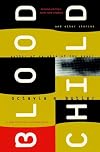
4.5/5
A stunning collection that shows some of the best writing from Butler that I've read to date. Butler has some of the best prose I know, but it's not the type that would dazzle anyone. It's much more due to her unique precision and economy of language that makes her works approachable, while at the same time letting a more seasoned reader marvel that no word is unnecessary or misplaced. Truly, I believe that Butler could write about a dull and amorphous ball of cells, and not only do so show more compellingly, but while somehow finding the humanity and emotion within. Several of these stories moved me to the point of tears.
Butler, who herself admits a dislike for writing short stories, is nonetheless more than capable of synthesizing a story down to it's most essential parts, stories that could easy be longer, novel-length works. It's impressive to read any collection and have an instinct to wish that the stories were longer.
The standouts in this collection, for me, were the tile story Bloodchild and Speech Sounds, both of which won awards when they were first published. What sets this collection apart though, is that while some of the stories didn't match these two in terms of quality, none of them dragged the collection down. None of them felt like filler, which seems to be an almost legal requirement for half of the stories included in any collection or anthology. show less
A stunning collection that shows some of the best writing from Butler that I've read to date. Butler has some of the best prose I know, but it's not the type that would dazzle anyone. It's much more due to her unique precision and economy of language that makes her works approachable, while at the same time letting a more seasoned reader marvel that no word is unnecessary or misplaced. Truly, I believe that Butler could write about a dull and amorphous ball of cells, and not only do so show more compellingly, but while somehow finding the humanity and emotion within. Several of these stories moved me to the point of tears.
Butler, who herself admits a dislike for writing short stories, is nonetheless more than capable of synthesizing a story down to it's most essential parts, stories that could easy be longer, novel-length works. It's impressive to read any collection and have an instinct to wish that the stories were longer.
The standouts in this collection, for me, were the tile story Bloodchild and Speech Sounds, both of which won awards when they were first published. What sets this collection apart though, is that while some of the stories didn't match these two in terms of quality, none of them dragged the collection down. None of them felt like filler, which seems to be an almost legal requirement for half of the stories included in any collection or anthology. show less
Lists
Page Turners (1)
1900s: America (1)
High Priority (1)
1980 great books (1)
Diverse Horror (1)
To Read - Horror (1)
Schwob Nederland (1)
Wishlist (1)
Summer 2026 (1)
Slavefic (1)
Literary SF/F (1)
Books for Birute (1)
1980s (1)
Best Audiobooks (1)
Gaming Bookclub (1)
1800s: America (1)
SFFCat 2015 (1)
el (1)
01 (1)
Plantations (1)
Florida (1)
Best Dystopias (2)
Literary Witches (3)
Favourite Books (3)
The Zora Canon (3)
2023 (2)
1990s (2)
Read in 2021 (2)
Overdue Podcast (2)
Female Author (6)
Black Authors (6)
Five star books (3)
Zora Canon (3)
Allie's Wishlist (1)
Unread books (1)
1970s (1)
Fiction For Men (1)
The "A" List (1)
Sense of place (1)
2021 (1)
Southern Fiction (1)
2024 (1)
Nebula Award (2)
AP Lit (2)
Nineties (2)
2020 (1)
Awards


You May Also Like


Associated Authors
Statistics
- Works
- 57
- Also by
- 53
- Members
- 55,700
- Popularity
- #265
- Rating
- 4.1
- Reviews
- 1,753
- ISBNs
- 394
- Languages
- 15
- Favorited
- 296
