
Paul Melko
Author of The Walls of the Universe
Series
Works by Paul Melko
Ten Sigmas [short story] 5 copies
Strength Alone 4 copies
Singletons in Love 3 copies
Fallow Earth 3 copies
SNAIL STONES 2 copies
The Summer of the Seven 1 copy
Carousel Safari 1 copy
The Light Of Evil 1 copy
The Burning Man 1 copy
Death Of The Egg King 1 copy
Ikara's Rose 1 copy
The Teosinte War 1 copy
Bolt 1 copy
Dysfunctional Family Cat 1 copy
The Summer of the Seven 1 copy
Ugly 1 copy
Associated Works
The Year's Best Science Fiction: Twenty-Second Annual Collection (2005) — Contributor — 578 copies, 11 reviews
The Year's Best Science Fiction: Twenty-First Annual Collection (2004) — Contributor — 572 copies, 6 reviews
Tagged
Common Knowledge
- Canonical name
- Melko, Paul
- Legal name
- Melko, Paul J.
- Birthdate
- 1968-05-22
- Gender
- male
- Education
- University of Cincinnati (BS|Nuclear Engineering)
University of Michigan (MS|Nuclear Engineering)
Ohio State University (MBA) - Occupations
- IT Strategist
IT consultant
Nuclear engineer - Organizations
- Science Fiction and Fantasy Writers of America
- Short biography
- Paul is a science fiction author, whose first novel Singularity's Ring was published in February of 2008. His next novel, Walls of the Universe, will be released in February of 2009 and is based on his Hugo-, Nebula-, and Sturgeon-nominated novella, "The Walls of the Universe." He lives in Ohio with his wife and four children. He is an active member of SFWA, representing the South-Central region of the U.S. on the SFWA board of directors and chairing the Grievance Committee.
- Nationality
- USA
- Birthplace
- Athens, Ohio, USA
- Places of residence
- Athens, Ohio, USA
- Associated Place (for map)
- Athens, Ohio, USA
Members
Reviews
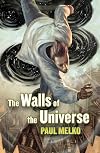
This was an extremely well written, upsetting and quite moving science fiction novel. At it's heart, it's about who we (as in people in general) are. But at the same time, it's also about who we aren't. The premise is that people can travel between universes, but it comes with a rather sinister price. Melko's writing is top notch, his characters are strong and the only reason I didn't give it a full five stars is because it was at times realistically painful to read. Highly recommended, show more especially to be people who like to push the line between straight fiction and science fiction. show less
Rating: 3.75* of five
The Book Description: John Rayburn thought all of his problems were the mundane ones of an Ohio farm boy in his last year in high school. Then his doppelgänger appeared, tempted him with a device that let him travel across worlds, and stole his life from him. John soon finds himself caroming through universes, unable to return home—the device is broken. John settles in a new universe to unravel its secrets and fix it.
Meanwhile, his doppelgänger tries to exploit the show more commercial technology he’s stolen from other Earths: the Rubik’s Cube! John’s attempts to lie low in his new universe backfire when he inadvertently introduces pinball. It becomes a huge success. Both actions draw the notice of other, more dangerous travelers, who are exploiting worlds for ominous purposes. Fast-paced and exciting, this is SF adventure at its best from a rising star.
My Review: Well, THAT was fun! I have a fondness for multiverse stories, and this one's as much fun as H. Beam Piper's Paratime series. It made me think of the Star Trek: TNG episode “Lower Decks,” which shows us for the first time what the actions of the Big Boys look like from the ordinary crewmember's PoV. And like the recent success story Redshirts by John Scalzi, the hero has to figure out what's happening and how to fix it without knowing the big picture.
Why I had to knock a quarter star off the top grade the book could ever reasonably have gotten was the mega-dumb love story part...both John Wilson, the dupe, and John Rayburn or John Prime as he's called in the description above, are world-class bunglers in love. It points up the small inelegance in the book: The characters, while I liked them and invested myself in their antics, didn't always make sense as they rocketed from idea to idea. Things that should've been second nature to any reasonable semi-adult just passed right by them and caused avoidable problems for the author. It would have given him more room to flesh out the other small inelegances, like a messy sense of elapsed in-story time and a few logical gaps (like when John Wilson drags a woman and child into another universe and conveniently forgets this while trying to determine the radius his device works in) that exist.
But heck! What's a little dent and scrape among friends? I can't wait to get the next one in the series! show less
The Book Description: John Rayburn thought all of his problems were the mundane ones of an Ohio farm boy in his last year in high school. Then his doppelgänger appeared, tempted him with a device that let him travel across worlds, and stole his life from him. John soon finds himself caroming through universes, unable to return home—the device is broken. John settles in a new universe to unravel its secrets and fix it.
Meanwhile, his doppelgänger tries to exploit the show more commercial technology he’s stolen from other Earths: the Rubik’s Cube! John’s attempts to lie low in his new universe backfire when he inadvertently introduces pinball. It becomes a huge success. Both actions draw the notice of other, more dangerous travelers, who are exploiting worlds for ominous purposes. Fast-paced and exciting, this is SF adventure at its best from a rising star.
My Review: Well, THAT was fun! I have a fondness for multiverse stories, and this one's as much fun as H. Beam Piper's Paratime series. It made me think of the Star Trek: TNG episode “Lower Decks,” which shows us for the first time what the actions of the Big Boys look like from the ordinary crewmember's PoV. And like the recent success story Redshirts by John Scalzi, the hero has to figure out what's happening and how to fix it without knowing the big picture.
Why I had to knock a quarter star off the top grade the book could ever reasonably have gotten was the mega-dumb love story part...both John Wilson, the dupe, and John Rayburn or John Prime as he's called in the description above, are world-class bunglers in love. It points up the small inelegance in the book: The characters, while I liked them and invested myself in their antics, didn't always make sense as they rocketed from idea to idea. Things that should've been second nature to any reasonable semi-adult just passed right by them and caused avoidable problems for the author. It would have given him more room to flesh out the other small inelegances, like a messy sense of elapsed in-story time and a few logical gaps (
But heck! What's a little dent and scrape among friends? I can't wait to get the next one in the series! show less
I’ve always loved the notion of parallel universes. Maybe ten universes from here there’s a Terry who went to grad school in English instead of law school, earned tenure at a good university, and met her sweetheart ten or twenty years earlier than in this universe and lived happily ever after. Maybe fifty universes away is a Terry who never broke up with the guy she dated through most of college, married him right after graduation, had a bunch of kids, and was thoroughly miserable. And show more maybe 100 universes in the other direction is the Terry who went to law school, loved every minute of practicing law, became a famous trial lawyer, and is single, rich and happily arguing in front of a jury right this minute. I can conjure up all the possibilities in my imagination with great pleasure.
Even more fun, though, is reading a book like Paul Melko’s The Walls of the Universe, which plays out the consequences of being able to jump between universes. Melko starts with two versions of John Rayburn. One is a high school senior who lives on a farm and is getting ready to go to college – not at Case Institute of Technology, where he really wants to go to study physics, but at the University of Toledo, which is affordable with a year or two of farm work. He’s in a bit of trouble at the moment, having beaten up his classmate, Ted Carson, but for the most part he’s a good kid with a solid head on his shoulders.
One fall morning shortly before Halloween, though, a boy comes out of the woods to greet him with a familiar face – his own. This is John Prime, a John Rayburn from another universe who has been jumping from universe to universe and is now hungry and tired and – though he doesn’t dare say so to John Rayburn – looking for a place to settle down and call home, earn a few bucks, get it on with Casey Nicholson, who is the girl for him in every universe. John Prime tricks John Rayburn into using the device that will take him into another universe, not telling Rayburn that it works in only one direction.
The book splits into two at this point, following each John in his separate universe(s). John Prime, who never did seem like such a great guy and who solidifies that impression when he tricks John Rayburn into using the device, has a pretty difficult time of it, despite the fact that he undertakes plans to market Rubick’s Cube, which was never invented in John Rayburn’s universe. John Rayburn manages to stay a pretty straightforward sort of guy. His anger when he finds that he has no way back to his own universe nearly gets the better of him, but after a close call or two he settles down into work and college. Despite himself, he finds that he has invented pinball, something never seen in the universe he lands in.
Both Johns, however, draw the attention of forces who believe themselves to be from the original and only universe, the one of which all others are copies. These individuals have been stranded in subsidiary universes, where they despise everyone and make a cushy living putting out artworks (like the rest of Beethoven’s symphonies – didn’t he write only three in his lifetime?) and devices that were never invented in the universes in which they are exiled. These people aren’t amused when someone else treads on their new invention turf, and they are especially not amused when they learn that John Rayburn has a universe-skipping device.
The book grows darker the longer one reads, and the pace never lets up. Seeing how John Prime and John Rayburn resolve their respective problems is exciting, interesting and just plain fun. The Walls of the Universe is a great use of an old trope. show less
Even more fun, though, is reading a book like Paul Melko’s The Walls of the Universe, which plays out the consequences of being able to jump between universes. Melko starts with two versions of John Rayburn. One is a high school senior who lives on a farm and is getting ready to go to college – not at Case Institute of Technology, where he really wants to go to study physics, but at the University of Toledo, which is affordable with a year or two of farm work. He’s in a bit of trouble at the moment, having beaten up his classmate, Ted Carson, but for the most part he’s a good kid with a solid head on his shoulders.
One fall morning shortly before Halloween, though, a boy comes out of the woods to greet him with a familiar face – his own. This is John Prime, a John Rayburn from another universe who has been jumping from universe to universe and is now hungry and tired and – though he doesn’t dare say so to John Rayburn – looking for a place to settle down and call home, earn a few bucks, get it on with Casey Nicholson, who is the girl for him in every universe. John Prime tricks John Rayburn into using the device that will take him into another universe, not telling Rayburn that it works in only one direction.
The book splits into two at this point, following each John in his separate universe(s). John Prime, who never did seem like such a great guy and who solidifies that impression when he tricks John Rayburn into using the device, has a pretty difficult time of it, despite the fact that he undertakes plans to market Rubick’s Cube, which was never invented in John Rayburn’s universe. John Rayburn manages to stay a pretty straightforward sort of guy. His anger when he finds that he has no way back to his own universe nearly gets the better of him, but after a close call or two he settles down into work and college. Despite himself, he finds that he has invented pinball, something never seen in the universe he lands in.
Both Johns, however, draw the attention of forces who believe themselves to be from the original and only universe, the one of which all others are copies. These individuals have been stranded in subsidiary universes, where they despise everyone and make a cushy living putting out artworks (like the rest of Beethoven’s symphonies – didn’t he write only three in his lifetime?) and devices that were never invented in the universes in which they are exiled. These people aren’t amused when someone else treads on their new invention turf, and they are especially not amused when they learn that John Rayburn has a universe-skipping device.
The book grows darker the longer one reads, and the pace never lets up. Seeing how John Prime and John Rayburn resolve their respective problems is exciting, interesting and just plain fun. The Walls of the Universe is a great use of an old trope. show less
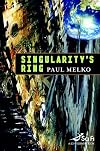
An impressive debut novel. The multiplexing clones who are the protagonists are creepy at first, but at the end of the book there is a convincing explanation for their existence. One minor nit is that practically every character has a self-descriptive name (is there a word for that? autonym?) Ultimately, a tough-minded meditation on what might lead us to a Singularity and what might happen after it.
Lists
Awards


You May Also Like


Associated Authors
Statistics
- Works
- 22
- Also by
- 8
- Members
- 676
- Popularity
- #37,361
- Rating
- 3.6
- Reviews
- 26
- ISBNs
- 16
- Languages
- 3
- Favorited
- 1