
William J. Mitchell (1) (1944–2010)
Author of City of Bits: Space, Place, and the Infobahn
For other authors named William J. Mitchell, see the disambiguation page.
About the Author
William J. Mitchell is Professor of Architecture and Media Arts and Sciences, Head of Media Arts and Sciences, and Dean of the School of Architecture and Planning at MIT.
Image credit: William J. Mitchell [credit: Webb Chappell]
Works by William J. Mitchell
Reinventing the Automobile: Personal Urban Mobility for the 21st Century (2010) 42 copies, 2 reviews
Beyond Productivity: Information, Technology, Innovation, and Creativity (2003) — Editor — 42 copies
Associated Works
Tagged
Common Knowledge
- Legal name
- Mitchell, William John
- Other names
- Mitchell, Bill
- Birthdate
- 1944-12-15
- Date of death
- 2010-06-11
- Gender
- male
- Education
- University of Cambridge (MA)
Yale University (Master of Environmental Design)
University of Melbourne (BArch) - Occupations
- architect
urban theorist
urban designer
university professor - Organizations
- Massachusetts Institute of Technology
Harvard University
University of California, Los Angeles
Yale University
Carnegie Mellon University
University of Cambridge (show all 8)
American Academy of Arts and Sciences
Royal Australian Institute of Architects - Awards and honors
- American Academy of Arts and Sciences (Fellow)
Royal Australian Institute of Architects (Fellow) - Nationality
- Australia (birth)
- Birthplace
- Horsham, Victoria, Australia
- Places of residence
- Cambridge, Massachusetts, USA
- Place of death
- Boston, Massachusetts, USA
Members
Reviews
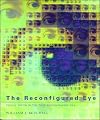
This is often a difficult book, but I believe that it will come to be recognized as one of the seminal texts in the subject of the trustability of photographic images. I'm not aware of any other book that so methodically discusses the technology relevant to the manipulation and outright fabrification of digital images. The author also gives a great deal of attention to the cultural and ethical issues associated with digital imagery, drawing on centuries of evolving practices for visual show more representation. Reading the book in 2008, it is all the more interesting that this was written in 1992, when Photoshop was young and digital manipulation was only practical on high-end professional workstations. 16 years later, the author's contention that "the growing circulation of the new graphic currency that digital imaging technology mints is relentlessly destabilizing the old photographic orthodoxy, denaturing the established rules of graphic communication, and disrupting the familiar practices of image production and exchange. show less
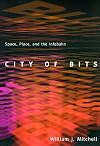
Written in 1995--which feels more than 15 years ago in terms of the technology that Mitchell deals with--the author's insights are quite prescient. He speculates on how technology will reach into various aspects of our lives, shaping architecture and cities. His technocratic view means some of his predictions are over-the-top and lacking any critical insight ("should" doesn't seem to enter the picture), but overall it is an important book for understanding technology's impact on physical show more space. Worth reading even these many years later. show less
The technical differences between film photography and digital two-dimensional representations challenge a lot of our assumptions about the status of photographic images as truth, even though photos too have always been manipulable and manipulated. Very interesting insights, including the point that a photograph captures both an instant and an instance, whereas many of these new images (electron microscope images, images of the universe from radio telescopes, etc.) are actually made over show more time and could more readily be said to represent a type rather than a specific individual. show less
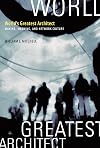
Spoiler alert - by "Worlds Greatest Architect" Mitchell does not reference himself. As usual, I appreciate Mitchell's witty observations about computers, Hurricanes, reality TV shows, cell towers, with the smooth syntax that could refer to God’s machinations as, “He’d just dream something up and go, like, ‘Let there be whatever.’” I wonder if his MIT colleagues are envious that he apparently leaves the campus once in a while.
You May Also Like


Associated Authors
Statistics
- Works
- 14
- Also by
- 1
- Members
- 1,040
- Popularity
- #24,754
- Rating
- 3.3
- Reviews
- 13
- ISBNs
- 75
- Languages
- 9
- Favorited
- 1