
Rodrigo Rey Rosa
Author of Severina
About the Author
Image credit: Rodrigo Rey Rosa
Works by Rodrigo Rey Rosa
And We Sold the Rain: Contemporary Fiction from Central America (1988) — Contributor — 47 copies, 2 reviews
El mar de Barcelo a la sala de Drets Humans a la sala de Drets Humans i Aliança de Civilitzacions de l'ONU (2008) 6 copies
Liberalismo y Republicanismo: Ensayos de Filosofia Politica (Coleccion Filosofica / Ediciones Universidad de Navarra) (2001) 2 copies
Bowles y Yo 2 copies
The Sea of Barcelo 1 copy
MIquel Barcelo: Toros 1 copy
El mar de Barceló- retapat rústica català: a la Sala dels Drets Humans i de l'Aliança de Civilitzacions de l'ONU a Ginebra (2011) 1 copy
The Proof {story} 1 copy
Associated Works
McSweeney's 46: Thirteen Crime Stories from Latin America (2014) — Contributor — 102 copies, 5 reviews
Sudden Fiction Latino: Short-Short Stories from the United States and Latin America (2010) — Contributor — 76 copies, 15 reviews
The Faber Book of Contemporary Latin American Short Stories (1989) — Contributor — 27 copies, 1 review
Tagged
Common Knowledge
- Canonical name
- Rey Rosa, Rodrigo
- Birthdate
- 1958-11-04
- Gender
- male
- Relationships
- Bowles, Paul (friend)
- Nationality
- Guatemala
- Birthplace
- Guatemala City, Guatemala
- Places of residence
- Guatemala City, Guatemala
- Associated Place (for map)
- Guatemala City, Guatemala
Members
Reviews
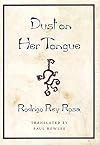
‘’If you exist, God, bring this bird back to life.’’
The familiar comforts of home and habit are distorted into something unrecognisable and threatening. Rodrigo Rey Rosa’s stories - brilliantly translated by Paul Bowles - exist in a state of high tension, where the ordinary world of village squares, family ties, and religious rituals is thin ice stretched over a dark, violent abyss. It is a world where silence is never peaceful; a world full of warnings and omens...
The Proof: A show more young boy wants to become a god or prove that God exists and the results are bloody…
''Why did she see nobody? What day of the week was it? She counted on her fingers. Monday? Sunday? Monday, probably. For a town to be this silent on a Sunday would have upset her too much. The place was dead. She remembered that the rooster had crowed, and that was some consolation, at least. Now she could hear the sound of her own footsteps on the stones. She came to the main square. At the end of the street, she saw the side of a church. Something warned her not to go any nearer. She stood still and looked up and down the street. Then she turned around and ran back, leaving the plaza behind. A cry had come feebly from somewhere. The cry of a child? It had issued from inside the church, or had she imagined it?’’
Dust on Her Tongue: In a hazy, eerie setting, a woman attempts to escape her husband’s violence. This is one of the most atmospheric moments in the collection.
Privacy: A man finds himself imprisoned in a psychiatric hospital according to the wishes of his sister.
The Burial: The narrator witnesses the funeral of a victim of the political upheaval in Guatemala and contemplates the suffocating silence of a moment when you can’t even mourn your dead.
Still Water: A woman decides to live in isolation in a cabin. A strange man and a frog trapped in a jar become symbols of a society condemned to captivity.
Coralia: Coralia is a woman whose personality is magnetic, but her egoism gets the better of her, giving her the means to exercise complete control over men who fall under her spell.
The Truth: In this terrifying story, a young boy causes a deadly accident. But he points the finger at a poor worker and manages to walk away clean as a whistle. The story is terrifying not because of ghosts and ghouls, but because there is nothing more frightening than escaping the consequences of your actions due to your father’s hefty bank account. This is the society Rey Rosa describes in his works. The ‘truth’ is determined through money, not actions.
Angelica: A woman takes a dark and delicious revenge on her abusive husband.
‘’It said that in the middle of the island, at the cloud -covered summit of the mountain, there is a lake of great depth, like a blue eye looking up at the sky. And in the center of the lake is another island, a tiny pile of rocks, the abode of a lone man who, perhaps because he has always been by himself, is not really a man.’’
The Host: An old man receives an unwanted visitor. The last paragraph is the bloodiest, most graphic in the entire collection.
People of the Head: In a story with a distinctive Eastern feeling, Magical Realism meets Folklore, and the East meets the rituals of Central America. A rather cryptic, thought-provoking story.
Las Lagrimas: An ethnographer wants to record the funeral chants of an isolated tribe. The problem is that he has to wait for someone to die. A story that exposes the selfish motives of the ‘civilised’ world during a research of dubious origins.
Xquic: A beautiful, dark story based on the myth of the Mayan princess Xquic, who was mysteriously impregnated. In the world built through Rey Rosa’s pen, the myth meets the cruel, mortal reality.
This collection is a perfect example of the way the domestic is merged with the uncanny, creating an atmosphere of constant threat. Rey Rosa creates characters in perfectly ordinary situations, but his ‘ordinary’ soon turns into terror, often unseen but intensely felt. He writes about a society violated by civil war, corruption, and state terrorism, where shadows are lurking in every corner, leading to hair-raising conclusions. Nothing is more hair-raising than the power exerted on the ‘disposable’ in a society condemned to limbo…
‘’The other evening I was thinking. God knows who might not be going underneath me at this minute - a murderer, or a saint. Someone with the key to the puzzle of my life, or of my ruin.’’
My reviews can also be found on: https://theopinionatedreaderblog.wordpress.com/ show less
The familiar comforts of home and habit are distorted into something unrecognisable and threatening. Rodrigo Rey Rosa’s stories - brilliantly translated by Paul Bowles - exist in a state of high tension, where the ordinary world of village squares, family ties, and religious rituals is thin ice stretched over a dark, violent abyss. It is a world where silence is never peaceful; a world full of warnings and omens...
The Proof: A show more young boy wants to become a god or prove that God exists and the results are bloody…
''Why did she see nobody? What day of the week was it? She counted on her fingers. Monday? Sunday? Monday, probably. For a town to be this silent on a Sunday would have upset her too much. The place was dead. She remembered that the rooster had crowed, and that was some consolation, at least. Now she could hear the sound of her own footsteps on the stones. She came to the main square. At the end of the street, she saw the side of a church. Something warned her not to go any nearer. She stood still and looked up and down the street. Then she turned around and ran back, leaving the plaza behind. A cry had come feebly from somewhere. The cry of a child? It had issued from inside the church, or had she imagined it?’’
Dust on Her Tongue: In a hazy, eerie setting, a woman attempts to escape her husband’s violence. This is one of the most atmospheric moments in the collection.
Privacy: A man finds himself imprisoned in a psychiatric hospital according to the wishes of his sister.
The Burial: The narrator witnesses the funeral of a victim of the political upheaval in Guatemala and contemplates the suffocating silence of a moment when you can’t even mourn your dead.
Still Water: A woman decides to live in isolation in a cabin. A strange man and a frog trapped in a jar become symbols of a society condemned to captivity.
Coralia: Coralia is a woman whose personality is magnetic, but her egoism gets the better of her, giving her the means to exercise complete control over men who fall under her spell.
The Truth: In this terrifying story, a young boy causes a deadly accident. But he points the finger at a poor worker and manages to walk away clean as a whistle. The story is terrifying not because of ghosts and ghouls, but because there is nothing more frightening than escaping the consequences of your actions due to your father’s hefty bank account. This is the society Rey Rosa describes in his works. The ‘truth’ is determined through money, not actions.
Angelica: A woman takes a dark and delicious revenge on her abusive husband.
‘’It said that in the middle of the island, at the cloud -covered summit of the mountain, there is a lake of great depth, like a blue eye looking up at the sky. And in the center of the lake is another island, a tiny pile of rocks, the abode of a lone man who, perhaps because he has always been by himself, is not really a man.’’
The Host: An old man receives an unwanted visitor. The last paragraph is the bloodiest, most graphic in the entire collection.
People of the Head: In a story with a distinctive Eastern feeling, Magical Realism meets Folklore, and the East meets the rituals of Central America. A rather cryptic, thought-provoking story.
Las Lagrimas: An ethnographer wants to record the funeral chants of an isolated tribe. The problem is that he has to wait for someone to die. A story that exposes the selfish motives of the ‘civilised’ world during a research of dubious origins.
Xquic: A beautiful, dark story based on the myth of the Mayan princess Xquic, who was mysteriously impregnated. In the world built through Rey Rosa’s pen, the myth meets the cruel, mortal reality.
This collection is a perfect example of the way the domestic is merged with the uncanny, creating an atmosphere of constant threat. Rey Rosa creates characters in perfectly ordinary situations, but his ‘ordinary’ soon turns into terror, often unseen but intensely felt. He writes about a society violated by civil war, corruption, and state terrorism, where shadows are lurking in every corner, leading to hair-raising conclusions. Nothing is more hair-raising than the power exerted on the ‘disposable’ in a society condemned to limbo…
‘’The other evening I was thinking. God knows who might not be going underneath me at this minute - a murderer, or a saint. Someone with the key to the puzzle of my life, or of my ruin.’’
My reviews can also be found on: https://theopinionatedreaderblog.wordpress.com/ show less
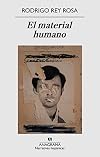
El nuevo libro de Rodrigo Rey Rosa se presenta como una novela, Pero se desarrolla en las arenas movedizas entre lo ficticio y lo histórico. Con la forma suelta y aparentemente ligera del diario de apuntes y notas, Rosa Rosa elude la novela de personajes, y la narración funciona como una gran fresco histórico o alegoría sobre la represión sanguinaria que ha sufrido Guatemala a lo largo de los últimos siglos.
La certera dirección del género Le permite acomodar los hechos de su vida show more personal, Contaminada por la violencia de Estado, Y combinarlos con una dudosa investigación en un vasto y caótico archivo policial. Esta posibilidad de atacar el mismo problema desde varias perspectivas y dentro de un texto aparentemente libre de toda obligación para con una sola línea argumental también abre camino para dosificar la ambigüedad, Qué constituye lo más logrado de su novela y Qué es característica de las acciones de extraordinario autor. show less
La certera dirección del género Le permite acomodar los hechos de su vida show more personal, Contaminada por la violencia de Estado, Y combinarlos con una dudosa investigación en un vasto y caótico archivo policial. Esta posibilidad de atacar el mismo problema desde varias perspectivas y dentro de un texto aparentemente libre de toda obligación para con una sola línea argumental también abre camino para dosificar la ambigüedad, Qué constituye lo más logrado de su novela y Qué es característica de las acciones de extraordinario autor. show less

Twenty-four Central America short stories collected here by editor Rasario Santos, each story more marvelous than the next. From the introduction: "In Central America the story is performing its primordial function of mediating history, interpreting a brutal and brutalizing reality, and keeping hope and dignity alive as it has for centuries on this frail bridge between worlds." Here are my brief comments on six unforgettable tales:
AND WE SOLD THE RAIN by Carmen Naranjo (1928-2012, Costa show more Rica)
Carmen Naranjo’s story takes the form of a black humor bug so black, so caustic, the bug chews its way through the entire guava fruit and comes out the other side as a ball of laugh-out-loud hilarity. What a story! Set in a Central American country so poor it doesn’t even have a name. But, for certain, this unnamed country has debt, a ton of debt, the president and all government officials are up to their soaking wet eyeballs in debt. Make no mistake, not only higher-ups sopping wet but the country’s entire population of poor people are waterlogged, drooping wet sombreros, fungus-filled toes, an entire country of people so wringing wet they are now the green people, living their shiny wet green lives in a country where it rains day and night, nonstop, seven days a week.
Just how poor are these poor people? They live on radish tops, bananas and garbage; the Public Welfare Agency rations rice and beans as if medicine; they dodge bullets from drug lords who operate uncontrolled. Meanwhile, the president asks, ““Doesn’t anyone in this whole goddamned country have an idea that could get us out of this?” The poor citizens tell him that he and his cabinet should prey to the virgin. In desperation they try, but the virgin has gone deaf and ignores their pleas for help despite the fact the whole government cabinet implores her at the top of their lungs.
One brilliant ideas came from someone in the government: levy a tax on air – ten colones per breath. Another suggestion: a contest “Miss Underdevelopment” to be chosen from the multitudes of skinny, dusky, round-shouldered, short-legged, half-bald girls with cavity-pocked smiles and suffering from parasites. “If we could only export the rain,” bemoaned one minister. A great aha moment! An aqueduct is built by French technicians, those guardians of European meritocracy, running to an oil-rich Middle Eastern nation. Sounds like the perfect solution but does anything ever really go right for such a poor country?
THE PROOF by Rodrigo Rey Rosa (Born 1958, Guatemala)
One night, all alone in his house, young teenager Miguel opens the birdcage and grabs the canary in his fist, staring at the little bird with his eager eyes as if seeking an omen. Feeling the canary’s small body and feather in the clutch of his fingers, he decides to go down to the cellar. We read: “He crouched in a corner under the high vaulted ceiling, as Indians and savages do, face down, his arms wrapped around his legs, and with the canary in his fist between his knees. Raising his eyes into the darkness, which at that moment looked red, he said in a low voice: “If you exist, God, bring this bird back to life.” As he spoke, he tightened his fist little by little, until his fingers felt the snapping of the fragile bones and an unaccustomed stillness in the little body.”
What happens after his parents return home and after Miguel experiences a night of insomnia that’s a kind of nightmare? What happens when the maid who cares for the canary arrives the next morning and then secretly decides to buy a new canary? And lastly, what happens after that, when his father finds feathers in the cellar? Sentence by sentence, Rodrigo Rey Rosa’s very short story builds in drama, layer by layer, image by image, and takes on qualities of myth, legend, fable and allegory. As you read this tale you will feel a tangible, urgent tug to enter ever more deeply into the spirit of Central American storytelling.
CONFINEMENT by Horacio Castellanos Moya (Born 1957, El Salvador)
Horacio Castellanos Moya is the author of over a dozen novels and short stories, one novel about a sex-obsessed boozehound writer employed by the Catholic Church he despises to clean up the written testimonies of survivors from the massacre and torture of thousands of indigenous villagers a decade earlier; another novel written as a furious one paragraph rant on the injustices committed against the people of El Salvador, a novel that earned the author death threats. In this short story Horacio Castellanos Moya lets us listen in on what goes through the mind of an El Salvador guerrilla in hiding, confined to a room in a home of a family sympathetic to his cause:
After three days, he feels a tightness in his chest as if facing the same four walls is a bad omen. He wishes he had a good book, knows he’s been on too many marches, wonders what his fellow guerrilla girlfriend is doing right now since his heart is all desire, like a mound of earth full of unsprouted seeds. Sure he writes poetry but tears up what he’s written. He really needs to find some peace and calm, frustrated that now when he has all the time in the world to examine his memories and emotions in depth, everything seems tedious.
He feels trapped in this hot room; he’d like to have a drink. If he could live his life over again, he’d live exactly as his instincts dictate; after all, he joined the revolution out of instinct, like a tiger sniffing out its prey. He thinks of the practice of confining a guerrilla is like the days Jonah spent in the belly of a whale. And when he gets out? He’d be happy, ready to dive back into the city, a good thing, like being born again.
THE PERFECT GAME by Sergio Ramírez (Born 1942, Nicaragua)
We sit in the stands with a father who has arrived at the stadium late (damn car broke down) to watch his eighteen-old-son’s professional baseball team, San Fernanco. Would the team use his son as a relief pitcher for the first time, ever? The father takes his seat high up in the cheep seats as he usually does, right behind home plate. He first looks up at the scoreboard – it’s the top of the 5th inning and both teams have failed not only score a run but both teams have failed to get a hit. He then looks over at the bullpen to catch a glimpse of his son. He doesn’t see him. What has happened? He looks down at the field and sees exactly what happened – his son is taking the mound. This is the very first time his son is pitching on the professional level. And he is the starting pitcher! Of all nights to have a breakdown on the highway! And not only is his son pitching but, glory of glories, so far he is pitching a perfect game!
So begins this heartwarming story of a father’s love for his baseball playing teenage son. And Sergio Ramírez has us right there in the stands living through each pitch as his son moves closer to pitching a perfect game and making history for himself, his team, his home town and for Nicaragua. Anybody who follows major league baseball knows how many baseball players are from Central America and perhaps is aware of the struggles these players endured beginning as kids out on a dirt lot next to a shanty town. And, of course, baseball in Sergio’s tale can be taken as a metaphor for life.
STORY OF THE MAESTRO WHO SPENT HIS WHOLE LIFE COMPOSING A PIECE FOR THE MARIMBA by Mario Payeras (1940-1995, Guatemala)
Half fable, half magic, this tale of how Patrocinio Raxtun went into the jungle and dedicated his entire life to building and playing the instrument he loved with all the rhythms and marimba energy he could feel in the animals and plants, earth and sky, days and nights along with his bones and his blood. When he finally began to play “what he attempted to capture had to do with the wild tails of spinning kites that trace the Great Bear in the immense night sky of the altiplano, with the sadness of the iron cocks on rusting weather vanes, with the invisible pathways of the birds.”
A MARCH GUAYACAN by Bertalicia Peralta (Born 1940, Panamá)
Hot steamy passion, anyone? One quote will say it all: “Calmly she went into the kitchen. She picked up a knife and gripped it firmly by the handle. She thrust it into the heart of the man more than once. The blood ran in torrents, first steaming, then more slowly until it stopped. A lot of blood. It smelled. She made sure he was dead. She thrust the knife three more times into the body.” show less
Rodrigo Rey Rosa (born 1958) -- A Guatemalan writer who bases the majority of his stories on indigenous Latin American legends and myths. Twelve short sparse tales in this collection set in Guatemala among everyday men and women. There is no explicit symbolism spelled out yet the relationships between objects, happenings and people are charged with compressed energy, infusing each scene with uncompromising and frequently harsh drama. To provide a taste of the author’s voice and the rhythm show more of his telling, I will focus on one tale I found particularly powerful:
CORALIA
An older gentleman at a table in a small restaurant tells his lady friend, a foreigner with auburn hair and very pale skin, about a woman he judges to be great and how she will really love this great woman.
Such an irksome, annoying statement – when we are told how we will love or have strong emotions toward another person without having once met that person.
Meanwhile, the plot thickens: overhearing this remark, a young man at the next table informs his girlfriend how the older gentleman is talking about Coralia and how Coralia has an ego as big as a cathedral.
At that moment Coralia herself enters the restaurant, head held high, looking neither to the left nor to the right. The older gentleman, Señor Méndez, rises to greet her. Coralia explains how she was, in fact, looking for him so as to ask the Señor if she could rent his truck to pick up some wood she already paid for.
Taking on the role of gallant friend, Señor Méndez tells Coralia that he himself will gladly pick up and deliver her wood. Delighted, Coralia offers to host coffee at five o'clock at her home for Señor and his lady friend as a way of extending her gratitude.
Coralia briskly walks to the door but catches sight of Enrique out of the corner of her eye and cries: “Enrique!” Enrique stands and hugs her.
Señor Méndez and his lady friend walk past and tell Coralia they will be at her home at five o’clock for that coffee.
Now that she knows her wood will be delivered, so much for Señor Méndez; Coralia has much better things to focus her attention on at this moment: a young man for whom, as we find out later in the story, she has a deep, powerful emotional attachment.
No sooner is Coralia in the front seat of Enrique's car, squeezed between driver and his girlfriend, Rita by name, then we read: “She informed them that she was a very candid person, and that she liked to tell the whole story from the beginning. She kept nothing back (she did not know what shame was) and that whoever objected to this should say so at the start.”
In so many words she is telling them: my life story is the most important thing in the world and I plan to command center stage and take as much time as I want to tell my whole story.
I’ve always found such obnoxious pronouncements, as this one by Coralia, disturbing and ugly in the extreme. And for a number of reasons, not the least of which is all the other people around them are reduced to passive listeners and tacitly judged inferior. A colossal egotism is at work here.
True to form, once Coralia begins telling her life story, it goes on for hours: how she emerged victorious from a hard childhood, suffering at the hands of drunken father and indifferent mother, how she heroically overcame the nuns at her convent school, but once she discovered the beauty of her voice . . . . bhah, bhah, bhah.
Enrique reminds Coralia of the time, that it is now well after five o’clock. Rita says “Poor Señor Méndez.” Coralia is surprised at the interruption of her story.
Coralia discovers the hard way there is a price to pay for ignoring her friends. Here is how Rodrigo Rey Rosa ends his tale: “A few yards after he had crossed the river Enrique had to make way suddenly for a small truck with blinding headlights which bore down upon them from the other direction. Rita turned to look. “Señor Méndez!” she exclaimed. Señor Méndez had stopped his truck at the edge of the river. They saw him climb into the back of the truck and leaning against the cabin’s partition, kick the logs furiously out of the truck, so that they rolled down the bank into the water and floated off downstream. The sky was full of stars.” show less
Lists
Awards


You May Also Like


Associated Authors
Statistics
- Works
- 44
- Also by
- 6
- Members
- 660
- Popularity
- #38,227
- Rating
- 3.6
- Reviews
- 27
- ISBNs
- 125
- Languages
- 11