
Jim Newton
Author of Justice for All: Earl Warren and the Nation He Made
About the Author
Jim Newton is a journalist who worked as a reporter, bureau chief, and editor of the Los Angeles Times, where he presently is the editor-at-large. He also is the author of several books including Eisenhower: The White House Years, Justice for All: Earl Warren and the Nation He Made, and Worthy show more Fights: A Memoir of Leadership in War and Peace written with Leon Panetta. (Bowker Author Biography) show less
Works by Jim Newton
Here Beside the Rising Tide: Jerry Garcia, the Grateful Dead, and an American Awakening (2025) 17 copies, 1 review
Ike's speech 1 copy
Our Most Famous Buckeyes 1 copy
Environmental auditing 1 copy
Associated Works
Tagged
Common Knowledge
- Birthdate
- 1963
- Gender
- male
- Education
- Dartmouth College (BA)
- Occupations
- journalist
editor
Professor of Communication Studies and Public Policy - Organizations
- Los Angeles Times
- Nationality
- USA
- Birthplace
- Palo Alto, California, USA
- Associated Place (for map)
- California, USA
Members
Reviews
5 stars: An exceptionally good book
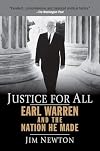
From the back cover: Drawing on unparalleled access to governmental, academic, and private documents pertaining to Warren’s life, Newton illuminates both the public and private Warren. As attorney general and then governor of California, and as chief justice of the United States from 1953 to 1969, Earl Warren changed the lives of millions of Americans and reshaped the role of the Supreme Court in American life. By overseeing landmark cases that show more desegregated schools, established a constitutional right to privacy, outlawed prayer in public schools and revolutionalized police procedure, Warren became a target for conservative idealogues. But he also carved a place in history for himself as one of the Supreme Court’s most respected justices. This is a monumental biography of a complicated and principled figure and a seminal work of twentieth century American history.
I don’t have adequate words to express what this book meant to me. A fabulous engaging biography of a man who was difficult to characterize. Perhaps thought of as a liberal, he was in fact a lifelong Republican, or the era (and in fact put on the court by) Eisenhower. He was personally conservative, but felt that society needed to progress. (one notable area that he struggled with this was pornography/ first amendment rights). I felt I could relate to Warren so well; and I found that my reactions to things was very often similar to his.
So many good quotes in this book and things I want to remember:
Once he had gone [to Berkeley from Bakersfield] Warren largely shut the door on his youth. Though he was tragically summoned back to his hometown in 1938 and though he appeared for high school class reunions in 1958 and 1973, life would rarely bring Warren back to Bakersfield. It remained a part of his past, and Warren was not inclined to dwell there. He preferred to move ahead.
Warren would sometimes be confounded by those who enjoyed the clamor of clashing views, of debate as intellectual exercise. His uneasiness with that style of argument would cause some to conclude he was less intelligent than he actually was. They were wrong to underestimate him.
[Gov Warren was the one who signed the orders for Japanese internment in WWII, the one true black mark on his career. The following anecdote in particular moved me]:
For Hideo Murata, the order to report was too much to bear. Murata was the proud recipient [of an award by Monterey County, for his service in WWI] ‘Our flag was assaulted and you gallantly took up its defense’. When the order to evacuate came, Murata presented the certificate to the county sheriff, hoping his military service and honorary citizenship would protect him. He was informed that it was serious and the order applied to him. So Murata paid for a hotel room and checked in. In his room, alone, he held his certificate in one hand. And then he killed himself.
“There is no place today for the so called reactionary, the person who still thinks the government exists only to protect the power of a successful few against the demands of plain people for a greater measure of health, comfort, and security in their daily lives. .. Our people want the opportunity to work, they want decent working conditions, they want their own homes and gardens, they want available education and vocational training for their children…. We must never forget that government is the instrument set up by the people to preserve their security and their freedom and that, therefore, it must never neglect the one nor destroy the other. The primary obligation of government is to develop policies that will advance the welfare of the people as a whole in their efforts to live decently under modern conditions. [speech running for governor, 1942].
[Anecdote about Warren being sick for a few weeks, after which he found sympathy for others who were felled, with little support financially]. “What does a fellow on a fixed income do when he has to go to the hospital? And then he told me what had happenhed to him when he was attorney general and having trouble stretching his salary from payday to payday. His check was late one month and so his health insurance was cancelled. He called the company and got it reinstated but he couldn’t help wondering what an ordinary working man would have done in a case like this.
By June 1947, the sections were struck from the code [allowing segregation in California] upon the signature of California’s Governor, Earl Warren. … Like much of Warren’s building legacy, it was accomplished with little fanfare. By the end of 1947, racial segregation in California schools was illegal; by the end of 1954 it would be for the nation as well. The same man was responsible for both.
“Where there is injustice, we should correct it; where there is poverty, we should eliminate it; where there is corruption, we should stamp it out; where there is violence, we should punish it; where there is neglect we should provide care; where there is war, we should restore peace, and wherever correctons are achieved we should add them to our storehouse of treasures.”
Like other experiences that deeply upset Warren, he responded by minimizing it, in this case pushing it out of his official history altogether. … Earl Warren liked order—depended on it, in fact—and it was [his wife]Nina who brought order to his life.
Reacting to Brown v. Board of Education, Martin Luther King, Jr wrote “came as a joyous daybreak to end the long night of human captivity”. The Court’s opinion had effectively written the Declaration of Independence—and its long neglected promise of equality—into the Constitution. With one unanimous opinion, the Warren court was born. Over the next 16 years the nation embarked on what would prove an uneven, controversial, halting and noble drive to imbue the Constitution with the values of the Declaration. The urgent pursuit of American equality, so long promised, so long avoided, was under way. Earl Warren was at its head.
Analyzing the Eighth Amendment’s protection against cruel and unusual punishment, Warren wrote, “The Amendment must draw its meaning from the evolving standards of decency that mark the progress of a maturing society.” Rarely has the idea of an evolving Constitution found better expression.
“It is neither sacrilegious nor antireligious to say that each separate government in this country should stay out of the business or writing or sanctioning official prayers and leave that purely religious function to the people themselves and to those the people choose to look to for religious guidance”—Justice Hugo Black
In 1953, segregation was legal and the accepted practice of much of the nation. Exposing Communists for the sake of degradation was a popular pastime, its wreckage strewn across ruined careers and lives. Police routinely violated the Constitution’s orders that they respect the security of home and papers. Five states sent poor defendants to jail without ever giving them the chance to speak with a lawyer. Schools opened their days with prayers and dared children who did not believe to separate themselves from their classmates. By 1963 all this had ended, and without an act of Congress or a presidential decree. It had changed because Warren and his colleagues had determined that a just country required more.
[Regarding the Warren Commission into the JFK assassination] Coincidences may not be satisfying to the conspiratorially minded, but there was no evidence that Ruby’s arrival at the driveway at just that moment was anything but a coincidence.
There was no reasonable evidence in 1964 that anyone helped Oswald carry out those murders or cover them up afterward. There is no such evidence today. For many, Earl Warren’s chairmanship of the Warren Commission would stand as the most momentous act of his large life. And for those inclined to see conspiracy in the Kennedy assassination, the Commission’s report has marked Warren as a dupe or even a fraud. Even some of his admiring biographers have tended to view the Warren Commission as an aberration from a grand career, a blemish standing alongside Warren’s advocacy of the Japanese internment. The criticism of Warren for abrogating the rights of those Japanese and Japanese Americans is more than upheld by history. But the attack on his Warren Commission service is manifestly unfair, as time and sober reflection have made clear. The Warren Commission was not perfect, nor was its chairman. But they were right.
“Periods of domestic dissension and of foreign war are especially liable to produce tendancies to disregard established rights in the name of national safety”—(1955)
[After resigning as Chief Justice, Justices Douglas and Brennan went to visit Warren in the hospital. This was during Watergate]. Warren took Douglas by the hand:” If Nixon is not forced to turn over tapes of his conversation with the ring of men who were conversing on their violations of the law, then liberty will soon be dead in this nation. If Nixon gets away with that, then Nixon makes the law as he goes along—not the Congress or the courts. The old Court you and I served so long will not be worthy of its traditions if Nixon can twist and fashion the law as he sees fit.” Brennan assured him that he would not be disappointed in the court. Warren died that night, and less than a month later, Nixon resigned.
Warren’s legacy is a perplexing one. To a polarized society whose leading cultural and political figures seem in constant search of affirmation, Warren offers both sides a little and neither side all it wants. Too straight and too establishment to fit the liberal model, too devoted to an expansive civil libertarianism for conservatives to honor him, Warren falls between our modern cracks. He is a reminder that centrism today is a lonely idea, honored mostly in the breach. show less
From the back cover: Drawing on unparalleled access to governmental, academic, and private documents pertaining to Warren’s life, Newton illuminates both the public and private Warren. As attorney general and then governor of California, and as chief justice of the United States from 1953 to 1969, Earl Warren changed the lives of millions of Americans and reshaped the role of the Supreme Court in American life. By overseeing landmark cases that show more desegregated schools, established a constitutional right to privacy, outlawed prayer in public schools and revolutionalized police procedure, Warren became a target for conservative idealogues. But he also carved a place in history for himself as one of the Supreme Court’s most respected justices. This is a monumental biography of a complicated and principled figure and a seminal work of twentieth century American history.
I don’t have adequate words to express what this book meant to me. A fabulous engaging biography of a man who was difficult to characterize. Perhaps thought of as a liberal, he was in fact a lifelong Republican, or the era (and in fact put on the court by) Eisenhower. He was personally conservative, but felt that society needed to progress. (one notable area that he struggled with this was pornography/ first amendment rights). I felt I could relate to Warren so well; and I found that my reactions to things was very often similar to his.
So many good quotes in this book and things I want to remember:
Once he had gone [to Berkeley from Bakersfield] Warren largely shut the door on his youth. Though he was tragically summoned back to his hometown in 1938 and though he appeared for high school class reunions in 1958 and 1973, life would rarely bring Warren back to Bakersfield. It remained a part of his past, and Warren was not inclined to dwell there. He preferred to move ahead.
Warren would sometimes be confounded by those who enjoyed the clamor of clashing views, of debate as intellectual exercise. His uneasiness with that style of argument would cause some to conclude he was less intelligent than he actually was. They were wrong to underestimate him.
[Gov Warren was the one who signed the orders for Japanese internment in WWII, the one true black mark on his career. The following anecdote in particular moved me]:
For Hideo Murata, the order to report was too much to bear. Murata was the proud recipient [of an award by Monterey County, for his service in WWI] ‘Our flag was assaulted and you gallantly took up its defense’. When the order to evacuate came, Murata presented the certificate to the county sheriff, hoping his military service and honorary citizenship would protect him. He was informed that it was serious and the order applied to him. So Murata paid for a hotel room and checked in. In his room, alone, he held his certificate in one hand. And then he killed himself.
“There is no place today for the so called reactionary, the person who still thinks the government exists only to protect the power of a successful few against the demands of plain people for a greater measure of health, comfort, and security in their daily lives. .. Our people want the opportunity to work, they want decent working conditions, they want their own homes and gardens, they want available education and vocational training for their children…. We must never forget that government is the instrument set up by the people to preserve their security and their freedom and that, therefore, it must never neglect the one nor destroy the other. The primary obligation of government is to develop policies that will advance the welfare of the people as a whole in their efforts to live decently under modern conditions. [speech running for governor, 1942].
[Anecdote about Warren being sick for a few weeks, after which he found sympathy for others who were felled, with little support financially]. “What does a fellow on a fixed income do when he has to go to the hospital? And then he told me what had happenhed to him when he was attorney general and having trouble stretching his salary from payday to payday. His check was late one month and so his health insurance was cancelled. He called the company and got it reinstated but he couldn’t help wondering what an ordinary working man would have done in a case like this.
By June 1947, the sections were struck from the code [allowing segregation in California] upon the signature of California’s Governor, Earl Warren. … Like much of Warren’s building legacy, it was accomplished with little fanfare. By the end of 1947, racial segregation in California schools was illegal; by the end of 1954 it would be for the nation as well. The same man was responsible for both.
“Where there is injustice, we should correct it; where there is poverty, we should eliminate it; where there is corruption, we should stamp it out; where there is violence, we should punish it; where there is neglect we should provide care; where there is war, we should restore peace, and wherever correctons are achieved we should add them to our storehouse of treasures.”
Like other experiences that deeply upset Warren, he responded by minimizing it, in this case pushing it out of his official history altogether. … Earl Warren liked order—depended on it, in fact—and it was [his wife]Nina who brought order to his life.
Reacting to Brown v. Board of Education, Martin Luther King, Jr wrote “came as a joyous daybreak to end the long night of human captivity”. The Court’s opinion had effectively written the Declaration of Independence—and its long neglected promise of equality—into the Constitution. With one unanimous opinion, the Warren court was born. Over the next 16 years the nation embarked on what would prove an uneven, controversial, halting and noble drive to imbue the Constitution with the values of the Declaration. The urgent pursuit of American equality, so long promised, so long avoided, was under way. Earl Warren was at its head.
Analyzing the Eighth Amendment’s protection against cruel and unusual punishment, Warren wrote, “The Amendment must draw its meaning from the evolving standards of decency that mark the progress of a maturing society.” Rarely has the idea of an evolving Constitution found better expression.
“It is neither sacrilegious nor antireligious to say that each separate government in this country should stay out of the business or writing or sanctioning official prayers and leave that purely religious function to the people themselves and to those the people choose to look to for religious guidance”—Justice Hugo Black
In 1953, segregation was legal and the accepted practice of much of the nation. Exposing Communists for the sake of degradation was a popular pastime, its wreckage strewn across ruined careers and lives. Police routinely violated the Constitution’s orders that they respect the security of home and papers. Five states sent poor defendants to jail without ever giving them the chance to speak with a lawyer. Schools opened their days with prayers and dared children who did not believe to separate themselves from their classmates. By 1963 all this had ended, and without an act of Congress or a presidential decree. It had changed because Warren and his colleagues had determined that a just country required more.
[Regarding the Warren Commission into the JFK assassination] Coincidences may not be satisfying to the conspiratorially minded, but there was no evidence that Ruby’s arrival at the driveway at just that moment was anything but a coincidence.
There was no reasonable evidence in 1964 that anyone helped Oswald carry out those murders or cover them up afterward. There is no such evidence today. For many, Earl Warren’s chairmanship of the Warren Commission would stand as the most momentous act of his large life. And for those inclined to see conspiracy in the Kennedy assassination, the Commission’s report has marked Warren as a dupe or even a fraud. Even some of his admiring biographers have tended to view the Warren Commission as an aberration from a grand career, a blemish standing alongside Warren’s advocacy of the Japanese internment. The criticism of Warren for abrogating the rights of those Japanese and Japanese Americans is more than upheld by history. But the attack on his Warren Commission service is manifestly unfair, as time and sober reflection have made clear. The Warren Commission was not perfect, nor was its chairman. But they were right.
“Periods of domestic dissension and of foreign war are especially liable to produce tendancies to disregard established rights in the name of national safety”—(1955)
[After resigning as Chief Justice, Justices Douglas and Brennan went to visit Warren in the hospital. This was during Watergate]. Warren took Douglas by the hand:” If Nixon is not forced to turn over tapes of his conversation with the ring of men who were conversing on their violations of the law, then liberty will soon be dead in this nation. If Nixon gets away with that, then Nixon makes the law as he goes along—not the Congress or the courts. The old Court you and I served so long will not be worthy of its traditions if Nixon can twist and fashion the law as he sees fit.” Brennan assured him that he would not be disappointed in the court. Warren died that night, and less than a month later, Nixon resigned.
Warren’s legacy is a perplexing one. To a polarized society whose leading cultural and political figures seem in constant search of affirmation, Warren offers both sides a little and neither side all it wants. Too straight and too establishment to fit the liberal model, too devoted to an expansive civil libertarianism for conservatives to honor him, Warren falls between our modern cracks. He is a reminder that centrism today is a lonely idea, honored mostly in the breach. show less
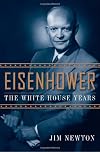
After 70 years, Eisenhower remains a respected president with a mostly positive influence. Not only did he lead the Allies to victory in World War II, but as president, he also organized the world for a lasting peace. He continued to develop the American economy so that over time, America would win the Cold War against communism while not annihilating the world in the process.
Newton analyzes these issues in careful detail, but he tends to be overly sympathetic with his subject. He does show more criticize Eisenhower on civil rights (Ike’s obvious weakness) and is consistently critical of Nixon. However, on almost every other issue, Newton sides with Eisenhower without much criticism. Sometimes, this is helpful – as when Newton uses Eisenhower to critique the directions of the 1960s conservative movement as well as the modern Republican party. Overall, it still appears that Newton identifies with Eisenhower too much.
Eisenhower’s greatest legacy in American history remains his deep mastery of international politics. Newton makes this clear and shows how much care Eisenhower brought to the task. The sophisticated nuance of Ike’s “middle way” stands to teach much to modern Republicanism, and Newton is not shy in bringing this out. Further, Eisenhower’s sense of balance would likewise benefit the modern Democratic movement as well – which is why Ike was also recruited by Democrats to run under their banner in 1952.
At their best, presidential biographies contain much to teach readers about national politics. The illuminate social trends that impacted the country over long swaths of time as brought out by the leader. They also teach the limits of any one person to impose their will on American politics. As Newton hints at, JFK was a reaction to Eisenhower’s lack of focus on domestic issues. America consistently remains larger than the presidential office.
This book has appeal to those who want to learn from American history first. As with study of Teddy Roosevelt, modern Republicans can pick up a deeper tapestry of their party from the history of their standard bearers. Reading this book can help readers to avoid an all-consuming grasp on the politics of the present. Further, it can teach all politically interested Americans about the care and nurture required to calm the international order.
Reading this book certainly made me long for a leader with as much practical wisdom about the world as Ike. Like all leaders, each American president has individual shortcomings, but reading books like Newton’s bring out the beauty of their strengths. Eisenhower’s eight years certainly secured with care the direction of the post-World-War-II order for a more peaceful world. show less
Newton analyzes these issues in careful detail, but he tends to be overly sympathetic with his subject. He does show more criticize Eisenhower on civil rights (Ike’s obvious weakness) and is consistently critical of Nixon. However, on almost every other issue, Newton sides with Eisenhower without much criticism. Sometimes, this is helpful – as when Newton uses Eisenhower to critique the directions of the 1960s conservative movement as well as the modern Republican party. Overall, it still appears that Newton identifies with Eisenhower too much.
Eisenhower’s greatest legacy in American history remains his deep mastery of international politics. Newton makes this clear and shows how much care Eisenhower brought to the task. The sophisticated nuance of Ike’s “middle way” stands to teach much to modern Republicanism, and Newton is not shy in bringing this out. Further, Eisenhower’s sense of balance would likewise benefit the modern Democratic movement as well – which is why Ike was also recruited by Democrats to run under their banner in 1952.
At their best, presidential biographies contain much to teach readers about national politics. The illuminate social trends that impacted the country over long swaths of time as brought out by the leader. They also teach the limits of any one person to impose their will on American politics. As Newton hints at, JFK was a reaction to Eisenhower’s lack of focus on domestic issues. America consistently remains larger than the presidential office.
This book has appeal to those who want to learn from American history first. As with study of Teddy Roosevelt, modern Republicans can pick up a deeper tapestry of their party from the history of their standard bearers. Reading this book can help readers to avoid an all-consuming grasp on the politics of the present. Further, it can teach all politically interested Americans about the care and nurture required to calm the international order.
Reading this book certainly made me long for a leader with as much practical wisdom about the world as Ike. Like all leaders, each American president has individual shortcomings, but reading books like Newton’s bring out the beauty of their strengths. Eisenhower’s eight years certainly secured with care the direction of the post-World-War-II order for a more peaceful world. show less
Jim Newton has written an exceptionally readable, fascinating and fair biography of a man who had a significant impact on American life. The narrative is exceptionally strong, taking us from childhood to the end, and never losing the reader's interest for a second. Newton does an exceptional job in terms of balance; he validates Warren's greatest decisions and calls him to task for his mistakes and limitations (such as Warren's support for the Japanese internment and his sexual prudishness). show more There are several interesting subplots that play out over the years, none more interesting than Warren's ongoing struggle with the phenomenon of Richard Nixon. The discussions of the Supreme Court decisions are fascinating, with just enough attention to the legal details to inform the reader without getting bogged down in legalese. Like Warren, Newton emphasizes the human impact of these decisions and how they have played out in the lives of Americans. Given the strength of his study of Eisenhower's presidency, I will definitely pre-order whatever book Jim Newton decides to write next. He is an author of the highest caliber. show less
4 stars: Very good
From the back cover: America's 34th president was belittled by his critics as the babysitter in chief. This new book reveals how wrong they were Dwight Eisenhower was bequeathed the atomic bomb and refused to use it. He ground down Joseph McCarthy and McCarthyism until both became, as he said, "McCarthywasism". He stimulated the economy to lift it from recession., built an interstate highway system, and turned an 8Billion deficit in 1953 into a $500 million surplus in show more 1960. Ike was the last president until Bill Clinton to leave his country in the black.
The President Eisenhower of popular imagination is a benign figure, armed with a putter, a winning smile, and little else. The Eisenhower of Jim Newton's rendering is shrewd, sentimental, and tempestuous. He mourned the death of his first son and doted on his grandchildren but could, one aide recalled, "peel the varnish off a desk" with his temper. Mocked as shallow and inarticulate, he was in fact a meticulous manager. Admired as a general, he was a champion of peace. In Korea and Vietnam, in Quemoy and Berlin, his generals urged him to wage nuclear war. Time and again he considered the idea and rejected it. And it was Eisenhower who appointed the liberal justices Earl Warren and William Brennan and who then called in the military to enforce desegregation in schools.
-------------
I first read Jim Newton's biography on Earl Warren, after hearing his speak at the Festival of Books. At fest, he mentioned that authoring the Warren book piqued his interest in Eisenhower, so he then tackled that subject next. I'm glad he did. I had little knowledge of the man, the president, or even more than his name as general.
I loved how the book was structured. A pet peeve of mine in biographies, is taking 300 pages to even get to the event/ time period that I as the reader am interested in. Not this book. Newton immediately names 8 people who were main influences: "...the lessons from his mother, the patience of his wife, the gallantry of George Patton, the patient tutoring of Fox Conner, the negative example of Douglas MacArthur, the serene leadership of George Marshall, and the wise political tutelage of Herbert Brownell." Newton then spends approximately 50 pages covering Eisenhower's life and relationships with the above 8 people, until we land at his decision to run for office. This was a tight, informative section which provided me the insight into the character to read the rest of the biography---without bogging me down with every meeting, anecdote and dinner conversation of the first 50 years of his life.
Some quotes I wanted to remember:
[Running against Adlai Stevenson] "Ike's friend George Allen felt Stevenson's inexperience in the area of foreign affairs and his intellectual distance from America's working people. He was stirring, yes, but also aloof and cerebral. For Stevenson, the campaign was an opportunity to educate; for Eisenhower, it was a battle to win. So while Stevenson formed arguments and theses, Ike turned to short advertisements and jingles. It struck some as trite, but by election day no adult American had not heard "I like Ike". The 1952 campaign not only created a winner; it changed the character of American politics."
In the height of McCarthyism, Eisenhower gave a speech at Dartmouth. This was his first public censure. of McCarthy. "Near the end of his speech, however, Eisenhower departed from his text. 'Don't join the book burners. Don't think you are going to conceal faults by concealing evidence that they ever existed. Don't be afraid to go in your library and read every book as long as any book does not offend your sense of decency. That should be the only censorship'."
From the famous "military industrial complex" speech: "Every gun that is made, every warship launched, every rocket fired, signifies, in the final sense, a theft from those who hunger and are not fed, those who are cold and are not clothed. This world in arms is not spending money alone. It is spending the sweat of its laborers, the genius of its scientists, the hopes of its children. The cost of one modern heavy bomber is this: a modern brick school in more than 30 cities. It is two electric power plants, each serving a town of 60,000. It is two fine, fully equipped hospitals. It is some 50 miles of concrete highway. We pay for a single fighter plane with a half million bushels of wheat. We pay for a single destroyer with new homes that could have housed more than 8,000 people."
Proposal to the UN: "The nuclear nations, he suggested should each make contributions of uranium and fissionable material to a UN agency, which would then apply that material to problems of agriculture, medicine and other peaceful activities. The argument for such a sharing of material was two fold: it would apply the fruits of development to peaceful purposes, and it would shrink the global supply of fissionable material available for destruction. It was a genuinely new idea in the still-nascent politics of the Cold War, through which Eisenhower was improvising a fragile peace. Morever, it reflected Ike's delicate triangulation of the conflict's forces: American defense, Soviet containment, and the thread of nuclear war."
"Faced with the awesome implications of the Soviet Union's ability to wage nuclear war, Eisenhower changed. The nuclear enthusiast of 1953 had become a more sober leader by 1956. .. Ike was haunted by images of wrecked society across Europe and America, of the Northern hemisphere so damaged it would "virtually cease to exist". He began to question the meaning of military victory in the modern world. Even as his top advisers planned for small nuclear wars in which America would use tactical weapons to contain Communist expansion, Eisenhower veered in the opposite direction. Military leaders were often appalled by his new approach, but he had nothing to prove to them. "
[when Khrushchev visited the US]. "Eisenhower urged Khrushchev to enjoy the American people and appreciate their commitment to peace, their disinterest in world domination. 'I assure you they have no ill will toward any other people, that they covet no territory, no additional power. Nor do they seek to interfere in the internal affairs of any other nation. I most sincerely hope that as you come to see and believe these truths about our people there will develop an improved basis on which we can together consider the problems that divide us'."
[Upon his imminent departure from office]. "During my entire life, until I came back from WWII as something of a VIP, I was known by my contemporaries as 'Ike'. Whether or not the deep friendships I enjoy have had their beginnings in the ante or post-war period, I now demand, as my right, that you, starting January 21, 1961, address me by that nickname. No longer do I propose to be excluded from the privileges that other friends enjoy."
In the acknowledgements section, Newton discusses the myriad news reports, published transcripts, and much more, of the era. He goes on to discuss the Oppenheimer letters and McCarthy transcripts. He says "Devotion to chronicling society in all its serious complexity was an article of faith for American society in all its serious complexity was an article of faith... the stewards of American journalism at its apex understood that it was expensive and difficult, that it was a job for serious, seasoned people, not amateurs, poseurs, or profiteers. They spent lavishly and constructed a vital business as well as a sustaining culture. It is a lesson that no engaged citizen should forget but that sadly, many have." show less
From the back cover: America's 34th president was belittled by his critics as the babysitter in chief. This new book reveals how wrong they were Dwight Eisenhower was bequeathed the atomic bomb and refused to use it. He ground down Joseph McCarthy and McCarthyism until both became, as he said, "McCarthywasism". He stimulated the economy to lift it from recession., built an interstate highway system, and turned an 8Billion deficit in 1953 into a $500 million surplus in show more 1960. Ike was the last president until Bill Clinton to leave his country in the black.
The President Eisenhower of popular imagination is a benign figure, armed with a putter, a winning smile, and little else. The Eisenhower of Jim Newton's rendering is shrewd, sentimental, and tempestuous. He mourned the death of his first son and doted on his grandchildren but could, one aide recalled, "peel the varnish off a desk" with his temper. Mocked as shallow and inarticulate, he was in fact a meticulous manager. Admired as a general, he was a champion of peace. In Korea and Vietnam, in Quemoy and Berlin, his generals urged him to wage nuclear war. Time and again he considered the idea and rejected it. And it was Eisenhower who appointed the liberal justices Earl Warren and William Brennan and who then called in the military to enforce desegregation in schools.
-------------
I first read Jim Newton's biography on Earl Warren, after hearing his speak at the Festival of Books. At fest, he mentioned that authoring the Warren book piqued his interest in Eisenhower, so he then tackled that subject next. I'm glad he did. I had little knowledge of the man, the president, or even more than his name as general.
I loved how the book was structured. A pet peeve of mine in biographies, is taking 300 pages to even get to the event/ time period that I as the reader am interested in. Not this book. Newton immediately names 8 people who were main influences: "...the lessons from his mother, the patience of his wife, the gallantry of George Patton, the patient tutoring of Fox Conner, the negative example of Douglas MacArthur, the serene leadership of George Marshall, and the wise political tutelage of Herbert Brownell." Newton then spends approximately 50 pages covering Eisenhower's life and relationships with the above 8 people, until we land at his decision to run for office. This was a tight, informative section which provided me the insight into the character to read the rest of the biography---without bogging me down with every meeting, anecdote and dinner conversation of the first 50 years of his life.
Some quotes I wanted to remember:
[Running against Adlai Stevenson] "Ike's friend George Allen felt Stevenson's inexperience in the area of foreign affairs and his intellectual distance from America's working people. He was stirring, yes, but also aloof and cerebral. For Stevenson, the campaign was an opportunity to educate; for Eisenhower, it was a battle to win. So while Stevenson formed arguments and theses, Ike turned to short advertisements and jingles. It struck some as trite, but by election day no adult American had not heard "I like Ike". The 1952 campaign not only created a winner; it changed the character of American politics."
In the height of McCarthyism, Eisenhower gave a speech at Dartmouth. This was his first public censure. of McCarthy. "Near the end of his speech, however, Eisenhower departed from his text. 'Don't join the book burners. Don't think you are going to conceal faults by concealing evidence that they ever existed. Don't be afraid to go in your library and read every book as long as any book does not offend your sense of decency. That should be the only censorship'."
From the famous "military industrial complex" speech: "Every gun that is made, every warship launched, every rocket fired, signifies, in the final sense, a theft from those who hunger and are not fed, those who are cold and are not clothed. This world in arms is not spending money alone. It is spending the sweat of its laborers, the genius of its scientists, the hopes of its children. The cost of one modern heavy bomber is this: a modern brick school in more than 30 cities. It is two electric power plants, each serving a town of 60,000. It is two fine, fully equipped hospitals. It is some 50 miles of concrete highway. We pay for a single fighter plane with a half million bushels of wheat. We pay for a single destroyer with new homes that could have housed more than 8,000 people."
Proposal to the UN: "The nuclear nations, he suggested should each make contributions of uranium and fissionable material to a UN agency, which would then apply that material to problems of agriculture, medicine and other peaceful activities. The argument for such a sharing of material was two fold: it would apply the fruits of development to peaceful purposes, and it would shrink the global supply of fissionable material available for destruction. It was a genuinely new idea in the still-nascent politics of the Cold War, through which Eisenhower was improvising a fragile peace. Morever, it reflected Ike's delicate triangulation of the conflict's forces: American defense, Soviet containment, and the thread of nuclear war."
"Faced with the awesome implications of the Soviet Union's ability to wage nuclear war, Eisenhower changed. The nuclear enthusiast of 1953 had become a more sober leader by 1956. .. Ike was haunted by images of wrecked society across Europe and America, of the Northern hemisphere so damaged it would "virtually cease to exist". He began to question the meaning of military victory in the modern world. Even as his top advisers planned for small nuclear wars in which America would use tactical weapons to contain Communist expansion, Eisenhower veered in the opposite direction. Military leaders were often appalled by his new approach, but he had nothing to prove to them. "
[when Khrushchev visited the US]. "Eisenhower urged Khrushchev to enjoy the American people and appreciate their commitment to peace, their disinterest in world domination. 'I assure you they have no ill will toward any other people, that they covet no territory, no additional power. Nor do they seek to interfere in the internal affairs of any other nation. I most sincerely hope that as you come to see and believe these truths about our people there will develop an improved basis on which we can together consider the problems that divide us'."
[Upon his imminent departure from office]. "During my entire life, until I came back from WWII as something of a VIP, I was known by my contemporaries as 'Ike'. Whether or not the deep friendships I enjoy have had their beginnings in the ante or post-war period, I now demand, as my right, that you, starting January 21, 1961, address me by that nickname. No longer do I propose to be excluded from the privileges that other friends enjoy."
In the acknowledgements section, Newton discusses the myriad news reports, published transcripts, and much more, of the era. He goes on to discuss the Oppenheimer letters and McCarthy transcripts. He says "Devotion to chronicling society in all its serious complexity was an article of faith for American society in all its serious complexity was an article of faith... the stewards of American journalism at its apex understood that it was expensive and difficult, that it was a job for serious, seasoned people, not amateurs, poseurs, or profiteers. They spent lavishly and constructed a vital business as well as a sustaining culture. It is a lesson that no engaged citizen should forget but that sadly, many have." show less
Lists
Awards


You May Also Like


Associated Authors
Statistics
- Works
- 8
- Also by
- 1
- Members
- 580
- Popularity
- #43,222
- Rating
- 3.8
- Reviews
- 13
- ISBNs
- 20
- Languages
- 1