
Suzanne Kamata
Author of Love You to Pieces: Creative Writers on Raising a Child with Special Needs
About the Author
Series
Works by Suzanne Kamata
Love You to Pieces: Creative Writers on Raising a Child with Special Needs (2008) 50 copies, 26 reviews
Squeaky Wheels: Travels with My Daughter by Train, Plane, Metro, Tuk-tuk and Wheelchair (2019) 6 copies
Associated Works
One Big Happy Family: 18 Writers Talk About Open Adoption, Mixed Marriage, Polyamory, Househusbandry, Single Motherhood, and Other Realities of Truly Modern Love (2009) — Contributor — 116 copies, 6 reviews
Tomo: Friendship through Fiction: An Anthology of Japan Teen Stories (2012) — Contributor — 41 copies
Tagged
Common Knowledge
- Canonical name
- Kamata, Suzanne
- Birthdate
- 1966
- Gender
- female
- Awards and honors
- Pushcart Award nominee
- Nationality
- USA
- Birthplace
- Grand Haven, Michigan, USA
- Places of residence
- Shikoku, Japan
South Carolina, USA - Associated Place (for map)
- USA
Members
Reviews
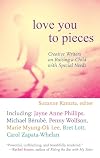
I'd like to say first that this collection of short stories, novel excerpts, poetry, and memoirs, stands on its own as good to great literature based solely on the writing: it's quality writing worth reading regardless of one's experience or education in the unique worlds of special needs. Having said that, if you do happen to live somewhere in these unique worlds, what a blessing to see your own struggles, isolations, fears, frustrations, dark thoughts of despair, anger & grief (and hopes show more and triumphs too!), bluntly and beautifully spelled out on the page as if you're reading a chapter out of your own life! My 9 year old daughter has Down syndrome & autism; and it's been hard! This compilation resonates with me--I don't feel quite so alone after reading each piece. For instance, when I read the following passage from "Without Strings" by Hannah Holborn:
"...my neighbors slept with confidence inside their heavily mortgaged homes knowing that their children would be icons of socially conscious fashion, win athletic awards, read before kindergarten, earn honors, be beautiful....They would make their parents proud.
"They would avoid my daughter like the plague."
I know I'm not the only parent who's felt the deep pain & ongoing disappointment, ongoing grief of watching my child oftentimes be misunderstood and avoided by her "normal" peers. That one line, "They would avoid my child like the plague," packs such an emotional punch I can't help but pause, feel the truth of the artistry in that one line, and think, "Wow, this writer, Hannah Holborn, really gets it!"
Each writer, of course, "gets it" in their own way. Carol Schmidt, in her poem, "A Question of Leaves," gets that moment of epiphany, when a special need's parent of a mentally challenged child reaches that point of understanding that her child will always be a child: "It might have been a sudden blast of wind / that made me catch my breath before / explaining to you carefully / that leaves in the spring are new, / not the old ones that fell off the trees in the fall".
In "Victoria's Wedding," by Margaret Mantle, another parent dreams of her daughter's wedding, but the grief that never really goes away in the knowledge that her daughter never will have a wedding, is such a loss and sadness to this mother, that she must, while still dreaming mind you, make the dream "go away before I will be allowed to wake up".
Yes, there's much shared sadness in these pieces, but it's not necessarily a sad or depressing read. When we share our sadness over our loss with a good friend, somehow the sharing of the loss eases the pain of loss and enables healing. I want to thank these writers for being so brave as to let us share in their sadness, in their stories; because I know I'm less sad and less isolated after reading them. show less
"...my neighbors slept with confidence inside their heavily mortgaged homes knowing that their children would be icons of socially conscious fashion, win athletic awards, read before kindergarten, earn honors, be beautiful....They would make their parents proud.
"They would avoid my daughter like the plague."
I know I'm not the only parent who's felt the deep pain & ongoing disappointment, ongoing grief of watching my child oftentimes be misunderstood and avoided by her "normal" peers. That one line, "They would avoid my child like the plague," packs such an emotional punch I can't help but pause, feel the truth of the artistry in that one line, and think, "Wow, this writer, Hannah Holborn, really gets it!"
Each writer, of course, "gets it" in their own way. Carol Schmidt, in her poem, "A Question of Leaves," gets that moment of epiphany, when a special need's parent of a mentally challenged child reaches that point of understanding that her child will always be a child: "It might have been a sudden blast of wind / that made me catch my breath before / explaining to you carefully / that leaves in the spring are new, / not the old ones that fell off the trees in the fall".
In "Victoria's Wedding," by Margaret Mantle, another parent dreams of her daughter's wedding, but the grief that never really goes away in the knowledge that her daughter never will have a wedding, is such a loss and sadness to this mother, that she must, while still dreaming mind you, make the dream "go away before I will be allowed to wake up".
Yes, there's much shared sadness in these pieces, but it's not necessarily a sad or depressing read. When we share our sadness over our loss with a good friend, somehow the sharing of the loss eases the pain of loss and enables healing. I want to thank these writers for being so brave as to let us share in their sadness, in their stories; because I know I'm less sad and less isolated after reading them. show less
 This review was written for LibraryThing Early Reviewers.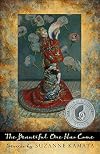
This superb collection of short stories is going to be one of my best of the year when it comes time to make up that list in December. Suzanne Kamata has given us a portrait of American women living in foreign countries, marrying foreigners, and often giving up life as they know it to reside in their husband's native country. Most were set in Japan, a setting that resonates with me, since I lived in Japan for a total of five years quite awhile ago.
I especially identified with the American show more woman in the story "You're so lucky" about a woman who is having a C-section in Japanese hospital--she looks at the clock as they begin to administer the anesthetic. It was shockingly similar to my own experience when my son was born there, although he was born in the American Naval hospital. Of course, she gives birth to twins, and must then begin to deal with physical disabilities that many preemie babies have.
In the next story, "The Naming," we are treated to almost the same event but from the perspective of the Japanese father, who as a baseball coach is struggling with a team that has lost 19 straight games. He is suddenly called away from his team when his wife goes into labor, and hurries to the hospital while his team of underdogs wins without him. His internal struggle with the children's disabilities mirrors his wife's, and it is not until he comes to grips with their ability to survive that he can face naming the children.
Kamata continues with stories of the family dealing with these children. In "Polishing the Halo" the mother is worried that "Not only was Ana a girl in a society that favored boys, not only was she a mixed race child in a country that cherished pure blood, but also she was disabled." As she watches, another mother, herself deaf, signs a halo and says she is an angel, giving Ana's mom hope and a new perspective.
Throughout all the story, Kamata's sympathetic and compelling picture of multi-cultural marriage, of different customs and traditions, and unmet expectations adds to her ability to give us insight into the hearts and minds of these women who have chosen to abandon the familiar in order to remain with the love of their lives.
Wyatt-MacKenzie Publishing proves again that small publishers can and do spot the winners. My thanks for the opportunity to review this one. show less
I especially identified with the American show more woman in the story "You're so lucky" about a woman who is having a C-section in Japanese hospital--she looks at the clock as they begin to administer the anesthetic. It was shockingly similar to my own experience when my son was born there, although he was born in the American Naval hospital. Of course, she gives birth to twins, and must then begin to deal with physical disabilities that many preemie babies have.
In the next story, "The Naming," we are treated to almost the same event but from the perspective of the Japanese father, who as a baseball coach is struggling with a team that has lost 19 straight games. He is suddenly called away from his team when his wife goes into labor, and hurries to the hospital while his team of underdogs wins without him. His internal struggle with the children's disabilities mirrors his wife's, and it is not until he comes to grips with their ability to survive that he can face naming the children.
Kamata continues with stories of the family dealing with these children. In "Polishing the Halo" the mother is worried that "Not only was Ana a girl in a society that favored boys, not only was she a mixed race child in a country that cherished pure blood, but also she was disabled." As she watches, another mother, herself deaf, signs a halo and says she is an angel, giving Ana's mom hope and a new perspective.
Throughout all the story, Kamata's sympathetic and compelling picture of multi-cultural marriage, of different customs and traditions, and unmet expectations adds to her ability to give us insight into the hearts and minds of these women who have chosen to abandon the familiar in order to remain with the love of their lives.
Wyatt-MacKenzie Publishing proves again that small publishers can and do spot the winners. My thanks for the opportunity to review this one. show less
This is a collection of short stories about being a foreigner in another country, about the realities of assimilating yourself into another culture and whether you can ever be truely accepted.
The early stories are very short and almost too light, but the stories gain in depth as you read on. You're So Lucky takes you through the premature birth of twins and the gentle but agonising horror of waiting to see what happens. Driving asks who is imprisoned in their marriage, the wife or the show more mother-in-law and who will find freedom easier to attain.
Some of the aspects of Japanese culture revealed are quite alien to Western views but are presented as facts rather than curiosities. They are also a window into the rambling way we think to ourselves about what is happening and why, and whether we should do something about it and if so, what.
There is the occasional feeling that a story ends suddenly with just a sentence to finish it off and a half dozen typographical errors detract from the writing. Overall though these are gentle thought provoking stories. show less
The early stories are very short and almost too light, but the stories gain in depth as you read on. You're So Lucky takes you through the premature birth of twins and the gentle but agonising horror of waiting to see what happens. Driving asks who is imprisoned in their marriage, the wife or the show more mother-in-law and who will find freedom easier to attain.
Some of the aspects of Japanese culture revealed are quite alien to Western views but are presented as facts rather than curiosities. They are also a window into the rambling way we think to ourselves about what is happening and why, and whether we should do something about it and if so, what.
There is the occasional feeling that a story ends suddenly with just a sentence to finish it off and a half dozen typographical errors detract from the writing. Overall though these are gentle thought provoking stories. show less
Love You to Pieces is not an easy book to read. Not because it is poorly written – on the contrary, the book contains beautifully written essays, poems, and stories about children with disabilities and the families and individuals who care for them. This book is difficult to read because of its realistic, painfully honest accounts of life with special needs children. But it is this candor that makes the book such compelling reading. Those who are willing to persevere will find the show more experience rewarding. show less
This review was written for LibraryThing Early Reviewers.Awards


You May Also Like


Associated Authors
Statistics
- Works
- 21
- Also by
- 4
- Members
- 328
- Popularity
- #72,310
- Rating
- 3.7
- Reviews
- 57
- ISBNs
- 43

