
Janet Fitch (1) (1955–)
Author of White Oleander
For other authors named Janet Fitch, see the disambiguation page.
About the Author
Image credit: Photo © Claudia Kunin
Series
Works by Janet Fitch
Associated Works
A Writer's Book of Days: A Spirited Companion and Lively Muse for the Writing Life (1999) — Foreword, some editions — 435 copies, 12 reviews
Tagged
Common Knowledge
- Birthdate
- 1955
- Gender
- female
- Education
- Reed College
- Occupations
- author
- Organizations
- University of Southern California
- Nationality
- USA
- Birthplace
- Los Angeles, California, USA
- Associated Place (for map)
- California, USA
Members
Reviews
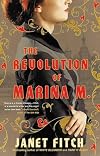
Marina Dmitrievna Makarova, as old as the century in 1916, can’t wait to break free of her constrained, privileged existence in Petrograd — or thinks that’s what she wants. Change is in the air, and desperation grips Russia, an empire bleeding its life away in a world war practically nobody supports, except her parents. Refusing to accept their rules or blandishments, she has a love affair or two, one with a fellow poet; marches on behalf of oppressed workers; and glories when the show more revolution topples the tsar. You can guess that this family will soon fracture even more.
But though Marina has been true to herself, she pays a terrible price. What the revolutionaries promise bears no relation to what happens in reality, and this passionate young woman, whose motto seems to be, “Act first, think afterward,” finds out the hard way. To name just two problems, it’s difficult to tell which threat is worse, famine or the Cheka, the Bolshevik secret police.
As a bourgeoise, Marina’s already an enemy of the state and can’t be too careful, constantly having to prove herself despite who she is, a direct opposite to the advantages she enjoyed in her youth. Taking care doesn't entirely square with her impulsive nature, but she’s also a quick study and finds she has more inner resources and survival skills than she knew.
The novel opens in California, 1932, so there’s no question she survives the revolution. As my regular readers know, I detest prologues, but there’s a practical reason for this one. The current volume is only the first of a series; the author has apparently decided not to leave the reader hanging at the end, and I think she’s right. Further, the journey’s more about how and why than where, and Marina covers a lot of ground, emotionally and physically.
Throughout, however, Fitch realizes the Russian atmosphere, be it Petrograd or rural peasantdom, with bold, lush strokes and complete authority. With unflagging attention to detail, she renders the idealism and mercilessness that suffuses the air, and gives you back alleys, great houses, and a Cheka prison.
Like the Russian novels Marina M. evokes, this one has much more to it than a sweeping lens and epic events — it’s the characters who count the most. Marina takes center stage, but her lovers come through with brilliant clarity, as do her mother, younger brother, and a radical revolutionary friend. You understand what motivates these people, all of whom have inner lives for the reader to navigate. So much happens that it seems our heroine has lived a full lifetime by her nineteenth birthday, but that weight never feels like a burden, even at over eight hundred pages. That’s because Fitch keeps you in touch with the feelings of the moment.
Much of the novel revolves around Marina’s sexual awakening, mirroring her political cognizance, as she learns more about attraction and sex as power. Though she enjoys men as lovers, she seldom loses her perspective on who gets to make decisions and who has to follow them; who gives the orders; and who does the work. This is particularly trenchant, because the revolution that was supposed to honor all work and eliminate the roles of master and servant clearly hasn’t touched relations between men and women.
Once, when she witnesses a peasant wife completely efface herself before her husband, Marina observes privately that Marx may have believed that power belongs to those who control the means of production, but this mother, who has produced four children, is her husband's chattel.
Marina M. is also about betrayal, involving parents, children, lovers, ideals, or merely the greed and envy of the comrade listening at the keyhole. Marina, both victim and perpetrator, wants what she wants and won’t be denied. If at times she seems excessively larger than life or has an insight perhaps more convenient than earned, these are minor blemishes on an otherwise exceptional, engrossing novel. show less
But though Marina has been true to herself, she pays a terrible price. What the revolutionaries promise bears no relation to what happens in reality, and this passionate young woman, whose motto seems to be, “Act first, think afterward,” finds out the hard way. To name just two problems, it’s difficult to tell which threat is worse, famine or the Cheka, the Bolshevik secret police.
As a bourgeoise, Marina’s already an enemy of the state and can’t be too careful, constantly having to prove herself despite who she is, a direct opposite to the advantages she enjoyed in her youth. Taking care doesn't entirely square with her impulsive nature, but she’s also a quick study and finds she has more inner resources and survival skills than she knew.
The novel opens in California, 1932, so there’s no question she survives the revolution. As my regular readers know, I detest prologues, but there’s a practical reason for this one. The current volume is only the first of a series; the author has apparently decided not to leave the reader hanging at the end, and I think she’s right. Further, the journey’s more about how and why than where, and Marina covers a lot of ground, emotionally and physically.
Throughout, however, Fitch realizes the Russian atmosphere, be it Petrograd or rural peasantdom, with bold, lush strokes and complete authority. With unflagging attention to detail, she renders the idealism and mercilessness that suffuses the air, and gives you back alleys, great houses, and a Cheka prison.
Like the Russian novels Marina M. evokes, this one has much more to it than a sweeping lens and epic events — it’s the characters who count the most. Marina takes center stage, but her lovers come through with brilliant clarity, as do her mother, younger brother, and a radical revolutionary friend. You understand what motivates these people, all of whom have inner lives for the reader to navigate. So much happens that it seems our heroine has lived a full lifetime by her nineteenth birthday, but that weight never feels like a burden, even at over eight hundred pages. That’s because Fitch keeps you in touch with the feelings of the moment.
Much of the novel revolves around Marina’s sexual awakening, mirroring her political cognizance, as she learns more about attraction and sex as power. Though she enjoys men as lovers, she seldom loses her perspective on who gets to make decisions and who has to follow them; who gives the orders; and who does the work. This is particularly trenchant, because the revolution that was supposed to honor all work and eliminate the roles of master and servant clearly hasn’t touched relations between men and women.
Once, when she witnesses a peasant wife completely efface herself before her husband, Marina observes privately that Marx may have believed that power belongs to those who control the means of production, but this mother, who has produced four children, is her husband's chattel.
Marina M. is also about betrayal, involving parents, children, lovers, ideals, or merely the greed and envy of the comrade listening at the keyhole. Marina, both victim and perpetrator, wants what she wants and won’t be denied. If at times she seems excessively larger than life or has an insight perhaps more convenient than earned, these are minor blemishes on an otherwise exceptional, engrossing novel. show less
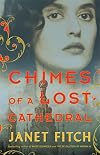
This lengthy novel serves as a sequel to The Revolution of Marina M. and it matches its predecessor in pace. Moving slowly, the plot plods along, with the pregnant Marina in the Russian countryside. She manages to take care of herself, but I struggled (as in the prior novel) to actually like Marina herself. She doesn't come across as a very sensible character - she presumes the friend she betrayed will take her in when she returns to Petrograd and she believes the early Soviet propaganda show more until reality knocks her over her head. Marina has some tough lessons to learn and plenty of tragedy comes her way as well. I appreciated her more as a woman by the end of this book, but I wish she had started to make that transformation a little earlier. show less
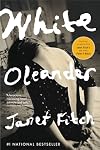
My aunt bought me this book for Christmas one year and at first I was really disappointed. I thought "Oh, that's nice... because I like to read you just got me the Oprah book club book of the month... thanks." But then I read it, and I'm now convinced that my aunt knows me better than maybe many of my close friends or better than I know myself. Not to be all cheesy and over-identify with something that isn't about me; but this book REALLY hit home for me in describing my relationship with my show more mother. This story is emotionally harrowing and beautifully told. The climax is gut-wrenching though subtle, and honestly made me cry. The movie didn't come close to doing any of this justice. This is one of those books that even if you had great parents, you can probably identify with, just because of how excellently the characters and story are rendered, and it's hard to believe that this author didn't live through anything like this herself. She makes a special point of noting in the preface (or back cover or something) that her and her mother get along great and are very close; to me that just makes this book more amazing because, well, damn. That's some powerful and realistic fiction. show less
“How many children had this happened to? How many children were like me, floating like plankton in the wide ocean? I thought how tenuous the links were between mother and children, between friends, family, things you think are eternal. Everything could be lost, more easily than anyone could imagine.”
Twelve-year-old Astrid Magnussen spends six years of her life in and out of foster homes (six foster homes and a state-funded home for those “returned”) after her selfish, manipulative show more mother, Ingrid, a free-spirited poet, is sent to jail for killing her lover.
Astrid’s feelings for her mother are conflicted. While her memories often take her back to happier times spent with her mother, Astrid cannot help but blame her mother for her present state and all the pain she has had to endure. In intermittent letters and the few visits with her mother in prison, Astrid recognizes her mother’s inability and unwillingness to comprehend the impact her actions have had on Astrid, to the extent that her cellmate wrote to Astrid telling her to only share happier moments in her letters as reading about Astrid’s difficulties makes her mother sad. Ingrid initially does not come across as repentant while sharing her accomplishments as a poet with her daughter, her poems being published and circulated while in jail, “a jail-house Plath“, also gaining a strong and sympathetic following in the outside world. Her response to her daughter’s hardships is for the most part devoid of compassion or concern and her biting wisdom borders on cruel , especially considering that she is writing her own child who has had her life and dreams taken away from her for no fault of her own.
“Loneliness is the human condition. Cultivate it. The way it tunnels into you allows your soul room to grow. Never expect to outgrow loneliness. Never hope to find people who will understand you, someone to fill that space. An intelligent, sensitive person is the exception, the very great exception. If you expect to find people who will understand you, you will grow murderous with disappointment. The best you'll ever do is to understand yourself, know what it is that you want, and not let the cattle stand in your way.”
“You are too nostalgic, you want memory to secure you, console you. The past is a bore. What matters is only oneself and what one creates from what one has learned. Imagination uses what it needs and discards the rest—where you want to erect a museum. Don’t hoard the past, Astrid. Don’t cherish anything. Burn it. The artist is the phoenix who burns to emerge.”
Over the next six years, Astrid’s life is a kaleidoscope of loneliness, rejection, negligence, jealousy, violence and inappropriate sexual relationships tempered with a few moments of kindness and kinship– moments, relationships, and hopes that never seem to stick, only adding to her misery and her sense of abandonment and loss.
“How easy I was. Like a limpet I attached to anything, anyone who showed me the least attention. I promised myself that when she returned, I would stay away, I would learn to be alone, it was better than the disappointment when you found it out anyway. Loneliness was the human condition, I had to get used to it.”
As the narrative progresses, Astrid grows and learns from her experiences. In the process of understanding and interpreting the world around her she channels her energy and emotions into her own creative pursuits. Though she learns to harden her heart, she does not completely lose herself, as we see in how she interacts with fellow foster students and how in her own way, though not quite in the manner she had hoped, she tries to find her place in the world. In her journey of self-discovery she also comes to terms with how she truly feels about her mother.
“I hated my mother but I craved her.”
Janet Fitch’s White Oleander paints a heart-wrenching picture of a dysfunctional mother-daughter relationship. The white oleander flower, while of particular significance as a plot point in the beginning of the novel, is also symbolically woven into the narrative as it manifests-both in its beauty and its toxicity- in the human relationships so vividly described in this story. Written in 1999, this is the kind of novel that stands the test of time. Dark and depressing (some content might be disturbing for readers) but so beautifully written that it holds you in its thrall- the kind of story that stays with you. This is so much more than a coming-of-age story. With its brilliantly poetic and powerful writing, fluid narrative and memorable characters Janet Fitch’s "White Oleander" is a modern masterpiece. I hadn’t watched the movie because I wanted to read the book first. I might pass on the movie but will definitely revisit this book in the future.
“Nobody took me away, Mother. My hand never slipped from your grasp. That wasn’t how it went down. I was more like a car you’d parked while drunk, then couldn’t remember where you’d left it. You looked away for seventeen years and when you looked back, I was a woman you didn’t recognize. So now I was supposed to feel pity for you and those other women who’d lost their own children during a holdup, a murder, a fiesta of greed? Save your poet’s sympathy and find some better believer. Just because a poet said something didn’t mean it was true, only that it sounded good. Someday I’d read it all in a poem for the New Yorker.” show less
Twelve-year-old Astrid Magnussen spends six years of her life in and out of foster homes (six foster homes and a state-funded home for those “returned”) after her selfish, manipulative show more mother, Ingrid, a free-spirited poet, is sent to jail for killing her lover.
Astrid’s feelings for her mother are conflicted. While her memories often take her back to happier times spent with her mother, Astrid cannot help but blame her mother for her present state and all the pain she has had to endure. In intermittent letters and the few visits with her mother in prison, Astrid recognizes her mother’s inability and unwillingness to comprehend the impact her actions have had on Astrid, to the extent that her cellmate wrote to Astrid telling her to only share happier moments in her letters as reading about Astrid’s difficulties makes her mother sad. Ingrid initially does not come across as repentant while sharing her accomplishments as a poet with her daughter, her poems being published and circulated while in jail, “a jail-house Plath“, also gaining a strong and sympathetic following in the outside world. Her response to her daughter’s hardships is for the most part devoid of compassion or concern and her biting wisdom borders on cruel , especially considering that she is writing her own child who has had her life and dreams taken away from her for no fault of her own.
“Loneliness is the human condition. Cultivate it. The way it tunnels into you allows your soul room to grow. Never expect to outgrow loneliness. Never hope to find people who will understand you, someone to fill that space. An intelligent, sensitive person is the exception, the very great exception. If you expect to find people who will understand you, you will grow murderous with disappointment. The best you'll ever do is to understand yourself, know what it is that you want, and not let the cattle stand in your way.”
“You are too nostalgic, you want memory to secure you, console you. The past is a bore. What matters is only oneself and what one creates from what one has learned. Imagination uses what it needs and discards the rest—where you want to erect a museum. Don’t hoard the past, Astrid. Don’t cherish anything. Burn it. The artist is the phoenix who burns to emerge.”
Over the next six years, Astrid’s life is a kaleidoscope of loneliness, rejection, negligence, jealousy, violence and inappropriate sexual relationships tempered with a few moments of kindness and kinship– moments, relationships, and hopes that never seem to stick, only adding to her misery and her sense of abandonment and loss.
“How easy I was. Like a limpet I attached to anything, anyone who showed me the least attention. I promised myself that when she returned, I would stay away, I would learn to be alone, it was better than the disappointment when you found it out anyway. Loneliness was the human condition, I had to get used to it.”
As the narrative progresses, Astrid grows and learns from her experiences. In the process of understanding and interpreting the world around her she channels her energy and emotions into her own creative pursuits. Though she learns to harden her heart, she does not completely lose herself, as we see in how she interacts with fellow foster students and how in her own way, though not quite in the manner she had hoped, she tries to find her place in the world. In her journey of self-discovery she also comes to terms with how she truly feels about her mother.
“I hated my mother but I craved her.”
Janet Fitch’s White Oleander paints a heart-wrenching picture of a dysfunctional mother-daughter relationship. The white oleander flower, while of particular significance as a plot point in the beginning of the novel, is also symbolically woven into the narrative as it manifests-both in its beauty and its toxicity- in the human relationships so vividly described in this story. Written in 1999, this is the kind of novel that stands the test of time. Dark and depressing (some content might be disturbing for readers) but so beautifully written that it holds you in its thrall- the kind of story that stays with you. This is so much more than a coming-of-age story. With its brilliantly poetic and powerful writing, fluid narrative and memorable characters Janet Fitch’s "White Oleander" is a modern masterpiece. I hadn’t watched the movie because I wanted to read the book first. I might pass on the movie but will definitely revisit this book in the future.
“Nobody took me away, Mother. My hand never slipped from your grasp. That wasn’t how it went down. I was more like a car you’d parked while drunk, then couldn’t remember where you’d left it. You looked away for seventeen years and when you looked back, I was a woman you didn’t recognize. So now I was supposed to feel pity for you and those other women who’d lost their own children during a holdup, a murder, a fiesta of greed? Save your poet’s sympathy and find some better believer. Just because a poet said something didn’t mean it was true, only that it sounded good. Someday I’d read it all in a poem for the New Yorker.” show less
Lists
Awards


You May Also Like


Associated Authors
Statistics
- Works
- 7
- Also by
- 4
- Members
- 14,260
- Popularity
- #1,617
- Rating
- 3.9
- Reviews
- 225
- ISBNs
- 145
- Languages
- 18
- Favorited
- 5
