
Helen Keller (1) (1880–1968)
Author of The Story of My Life
For other authors named Helen Keller, see the disambiguation page.
Series
Works by Helen Keller
The Faith of Helen Keller: The Life of a Great Woman with Selections from her Writings (1967) 68 copies, 2 reviews
The Touch of Magic- The Story of My Life. (Two Books in one volume, by separate authors) (2018) 62 copies
Autobiography and other writings: The Story of My Life / The World I Live In / Essays, Speeches, Letters and Journals (2024) 21 copies
Counting for God: The Life Story of Emma Helen Keller (1915-2005), Medical Missionary to Chad Africa (2007) 2 copies
Story Of My Life The 2 copies
Un bon exemple de PERSÉVÉRANCE 2 copies
Our duties to the blind (a paper) 2 copies
لو أبصرت ثلاثة أيام 1 copy
黑暗中的光 1 copy
Ni voyaĝas al Jugoslavio 1 copy
Anne Sullivan Macy 1 copy
Value Tales 1 copy
Why I Became an IWW 1 copy
The Seeing See Little 1 copy
Story of Helen Keller 1 copy
My Key of Life (Optimism) 1 copy
Helen Keller DVD 1 copy
Il mondo in cui vivo 1 copy
The Story of My Life 1 copy
Helen Keller in Her Story 1 copy
Dunkelheit 1 copy
Associated Works
This I Believe: The Personal Philosophies of Remarkable Men and Women (2006) — Contributor — 1,141 copies, 36 reviews
The Moral Life: An Introductory Reader in Ethics and Literature (1999) — Contributor — 205 copies, 2 reviews
The Mark Twain Anthology: Great Writers on His Life and Work (2010) — Contributor — 157 copies, 1 review
Writing New York: A Literary Anthology (Expanded 10th-Anniversary Edition) (2008) — Contributor — 101 copies, 1 review
Cape Cod Stories: Tales from Cape Cod, Nantucket, and Martha's Vineyard (1996) — Contributor — 59 copies, 5 reviews
Tagged
Common Knowledge
- Canonical name
- Keller, Helen
- Legal name
- Keller, Helen Adams
- Birthdate
- 1880-06-27
- Date of death
- 1968-06-01
- Gender
- female
- Education
- Perkins School for the Blind
Wright-Humason School for the Deaf
Horace Mann School for the Deaf
The Cambridge School for Young Ladies
Radcliffe College (BA|1904) - Occupations
- author
lecturer - Organizations
- American Civil Liberties Union
Helen Keller International
Industrial Workers of the World
American Foundation for the Blind
Socialist Party of America - Awards and honors
- Presidential Medal of Freedom (1964)
First deaf and blind person to earn a Bachelor of Arts degree (1904)
Alabama Women's Hall of Fame (1971)
American Academy of Arts and Letters (Literature ∙ 1933)
Alabama Writer's Hall of Fame (2015)
Phi Beta Kappa (1904) (show all 7)
National Women's Hall of Fame (1965) - Relationships
- Lee, Robert E. (cousin)
Twain, Mark (friend) - Nationality
- USA
- Birthplace
- Tuscumbia, Alabama, USA
- Places of residence
- Tuscumbia, Alabama, USA (birth)
Forest Hills, Queens, New York, USA
Montgomery, Alabama, USA
Easton, Connecticut, USA - Place of death
- Easton, Connecticut, USA
- Burial location
- Washington National Cathedral, Washington, D.C., USA
- Associated Place (for map)
- USA
Members
Reviews
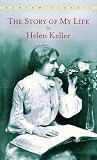
An amazing autobiography by Helen Keller. An illness makes her both deaf and blind as a little child. With the help of an untiring and patient teacher she learns how to communicate with the outer world through sign language signed into her hand, and later she learns to read and even reaches the university.
What struck me most was the joyous spirit she possesses. Her wonder and appreciation of nature, friends, art, litterature and just the exitement of the everyday events like smelling a show more flower or touching a dog. She enjoys going to the museum and let her hand grace the sculptures:
I sometimes wonder if the hand is not more sensitive to the beauties of sculpture than the eye. I should think the wonderful rhythmical flow of lines and curves could be more subtly felt than seen. Be this as it may, I know that I can feel the heartthrobs of the ancient Greeks in their marble gods and goddesses.
I found her determination and joy in the everyday life very refreshing and inspiring, despite of her limitations and sorrow.
Is it not true, then, that my life with all its limitations touches at many points the life of the World Beautiful? Everything has its wonders, even darkness and silence, and I learn, whatever state I may be in, therein to be content.
Sometimes, it is true, a sense of isolation enfolds me like a cold mist as I sit alone and wait at life’s shut gate. Beyond there is light, and music, and sweet companionship; but I may not enter. Fate, silent, pitiless, bars the way…. Silence sits immense upon my soul. Then comes hope with a gentle smile and whispers, “There is joy in selfforgetfulness”. So I try to make the light in others’ eyes my sun, the music in others’ ears my symphony, the smile on others’ lips my happiness. show less
What struck me most was the joyous spirit she possesses. Her wonder and appreciation of nature, friends, art, litterature and just the exitement of the everyday events like smelling a show more flower or touching a dog. She enjoys going to the museum and let her hand grace the sculptures:
I sometimes wonder if the hand is not more sensitive to the beauties of sculpture than the eye. I should think the wonderful rhythmical flow of lines and curves could be more subtly felt than seen. Be this as it may, I know that I can feel the heartthrobs of the ancient Greeks in their marble gods and goddesses.
I found her determination and joy in the everyday life very refreshing and inspiring, despite of her limitations and sorrow.
Is it not true, then, that my life with all its limitations touches at many points the life of the World Beautiful? Everything has its wonders, even darkness and silence, and I learn, whatever state I may be in, therein to be content.
Sometimes, it is true, a sense of isolation enfolds me like a cold mist as I sit alone and wait at life’s shut gate. Beyond there is light, and music, and sweet companionship; but I may not enter. Fate, silent, pitiless, bars the way…. Silence sits immense upon my soul. Then comes hope with a gentle smile and whispers, “There is joy in selfforgetfulness”. So I try to make the light in others’ eyes my sun, the music in others’ ears my symphony, the smile on others’ lips my happiness. show less
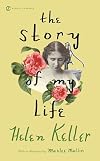
When a toddler, Helen Keller was stricken with a devastating illness which left her both deaf and blind. With no means of communicating her desires, needs or emotions with her family members, her next few years were tumultuous for all. Anne Sullivan, a teacher, arrived at their home when Keller was six years old and was successful over time in breaking through Keller's veil of darkness and silence, beginning by teaching her the names of objects in her environment by spelling words into her show more hand. Keller ultimately learned to read braille, to write and type using a braille typewriter, and even to speak aloud with intensive coaching. She also became a student of history, mathematics, and multiple languages, and graduated from college. This is the first of her autobiographies, written at age twenty.
In my youth I had read an abridged-for-children version of this autobiography, and that, combined with cultural knowledge absorbed, made her story already feel pretty familiar. As the book is overall relatively brief, the addition of correspondence was interesting, particularly Keller's earliest efforts, but I grew somewhat bored with her letters after a while. When I try to imagine how one could successfully learn abstract concepts without the benefit of sight or hearing it kind of blows my mind. Keller was clearly possessed of great intelligence and a brain starved for learning during her years of darkness. As someone with full use of all my senses I have difficulty imagining the rigor of her studies, not to mention the selfless dedication of Sullivan whose constant presence, and who had to spell every single word of every conversation and in every textbook out for Keller using the hand alphabet, made Keller's achievements possible. I find it impossible that Sullivan didn't experience burnout, but her own feelings about her 50-year commitment are rarely spoken of. show less
In my youth I had read an abridged-for-children version of this autobiography, and that, combined with cultural knowledge absorbed, made her story already feel pretty familiar. As the book is overall relatively brief, the addition of correspondence was interesting, particularly Keller's earliest efforts, but I grew somewhat bored with her letters after a while. When I try to imagine how one could successfully learn abstract concepts without the benefit of sight or hearing it kind of blows my mind. Keller was clearly possessed of great intelligence and a brain starved for learning during her years of darkness. As someone with full use of all my senses I have difficulty imagining the rigor of her studies, not to mention the selfless dedication of Sullivan whose constant presence, and who had to spell every single word of every conversation and in every textbook out for Keller using the hand alphabet, made Keller's achievements possible. I find it impossible that Sullivan didn't experience burnout, but her own feelings about her 50-year commitment are rarely spoken of. show less
Helen Keller: The Story of My Life and Selected Letters (Volume 8) (Classic Thoughts and Thinkers, 8) by Helen Keller
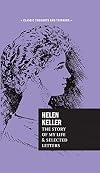
This goes straight to the Should be Read in Schools shelf, for so many reasons.
First, Helen Keller has always been one of my favourite people. A deaf-blind person becoming the first to earn a degree, and a woman, on top of that. Wow. Becoming a committed activist and intellectual. Double wow. Becoming a socialist activist. Triple wow. In the USA. WOW elevated to the fourth potency of wow.
Second, when I was a child I fell in love with the movie, starring Ann Bancroft.
show more target="_top">https://en.wikipedia.org/wiki/The_Miracle_Worker_(1962_film)
The teacher who helped Helen overcome her physical limitations and blossom to the outside world was a great personality on her own.
Third, one of the many qualities of Helen Keller was her natural communicative gift. Not something a deaf-blind person manages to see acknowledged easily, yet she did manage. After having read this autobiography, it is easy to understand why: a deeply personal narrative and, at the same time, a broader testimony in the name of the voiceless, vibrant with the urgency of a fight for the rights of people who are not always in the best position to fight for themselves. I often reflected that this must have been the factor that pushed Helen Keller towards socialism.
Yes, I would have it taught in school (if I didn't think that pretty much any school system would manage to make even Terry Pratchett unpalatable). show less
First, Helen Keller has always been one of my favourite people. A deaf-blind person becoming the first to earn a degree, and a woman, on top of that. Wow. Becoming a committed activist and intellectual. Double wow. Becoming a socialist activist. Triple wow. In the USA. WOW elevated to the fourth potency of wow.
Second, when I was a child I fell in love with the movie, starring Ann Bancroft.
show more target="_top">https://en.wikipedia.org/wiki/The_Miracle_Worker_(1962_film)
The teacher who helped Helen overcome her physical limitations and blossom to the outside world was a great personality on her own.
Third, one of the many qualities of Helen Keller was her natural communicative gift. Not something a deaf-blind person manages to see acknowledged easily, yet she did manage. After having read this autobiography, it is easy to understand why: a deeply personal narrative and, at the same time, a broader testimony in the name of the voiceless, vibrant with the urgency of a fight for the rights of people who are not always in the best position to fight for themselves. I often reflected that this must have been the factor that pushed Helen Keller towards socialism.
Yes, I would have it taught in school (if I didn't think that pretty much any school system would manage to make even Terry Pratchett unpalatable). show less

This is Helen Keller’s autobiography (for about the first half). Then, it includes some of the letters Helen wrote to various people. Helen, of course, was both blind and deaf in the late 19th century as a child when she and a teacher had a breakthrough as her teacher, Annie Sullivan, was trying to teach her to communicate. Helen grew up to become very educated and published more than one book.
I listened to the audio, and it was ok, but I did lose focus more than I would have liked. It show more turns out Helen loved books and reading, which was interesting. It was kind of repetitive between the biography portion, then much of what was in the letters had already also been mentioned in the autobiography. Helen Keller was a pretty impressive woman. show less
I listened to the audio, and it was ok, but I did lose focus more than I would have liked. It show more turns out Helen loved books and reading, which was interesting. It was kind of repetitive between the biography portion, then much of what was in the letters had already also been mentioned in the autobiography. Helen Keller was a pretty impressive woman. show less
Lists
Awards


You May Also Like


Associated Authors
Statistics
- Works
- 66
- Also by
- 13
- Members
- 7,126
- Popularity
- #3,446
- Rating
- 3.9
- Reviews
- 77
- ISBNs
- 395
- Languages
- 11
- Favorited
- 8


