
Joshua Palmatier
Author of The Skewed Throne
About the Author
Series
Works by Joshua Palmatier
Seeds and Mastihooba 1 copy
Game On! 1 copy
Artifice and Craft 1 copy
Seeds 1 copy
Daughter of the Sands 1 copy
The River 1 copy
Tears of Blood 1 copy
Mastihooba 1 copy
Razors Edge 1 copy
Associated Works
Unexpected Journeys — Contributor — 1 copy
Tagged
Common Knowledge
- Canonical name
- Palmatier, Joshua
- Birthdate
- 20th Century
- Gender
- male
- Nationality
- USA
Members
Reviews
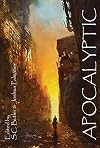
The idea that some apocalyptic event will trigger the end of the world has entered our collective subconcsious. It's not a shocking concept. For many of us the question isn't, "Will there be an apocalypse?" or even "How do we stop the apocalypse?" but "What kind of apocalypse will finally hit us?" and "What will I have to do to survive?" and (for some of us) "Would I want to survive?"
The thirteen stories in 'Apocalypse' each has a take on these questions. Some of the stories are funny (in a show more dark "You've gotta laugh or you'd cry" sort of way. Some are grimly pessimistic. Some are hopeful. Some smell of schadenfreude. All of them made me think. Many of them kept me entertained and some of them made me want to linger with the characters and see them safely through.
I'm always on the look-out for new-to-me authors to follow when I read anthologies. 'Apocalyptic' added four books to my TBR pile and I'll be looking for anthologies with stories by at least three more of the writers in this collection.
I've given a review of each story below.
COAFIELD'S CATALOG OF AVAILABLE APOCALYPSE EVENTS by Seanan McGuire
For me, this was an amusing but slightly weak start. Kudos to Seanan McGuire for coming up with an Apocalypse Event for each letter of the alphabet but this is more a back of a napkin after a lot of beers list than a story. Still, if you're looking for prompts to write an apocalypse story of you're own, this is a great resource.
SOLO COOKING FOR THE RECENTLY REVIVED by Aimee Picchi
This is one of the most original zombie apocalypse stories that I've read. Actually, it's a post-zombie-apocalypse story, told from the point of view of a 'cured' zombie. It starts in a what-a-fun-idea way. It gets sadder as the reality of living in a world that has just been through an apocalpyse beomes. I think it's a good story for thinking aboun any society that's survived violent struggles.
TO DUST WE SHALL RETURN by Tanya Huff
I first read this story in 'The Shorter Parts Of Valor'. I enjoyed reading it again, despite how sad it is. This time around, I understood why the ship Torin Kerr was assigned to was called the CFS Palmatier.
THE END OF ETERNITY by Nancy Holzner
This is a punchline science fiction story with a big Ta Da! at the end. The start hooked me. I was intrigued by the main character's reaction to the imminent end of the world. The explanation was bold and original. The rest of the story didn't have the traction it might have had because the main character had such a thin grip on his own memories. He'd turned his history into a romantic mantra, bleached of all colour and with all context lost. I began to lose interest in him and kept reading only to find out how the story ended. The ending was what I expected but it was well done.
I checked out Nancy Holzner's novels and bought "Deadtown"(2009) when I read the opening paragraph:
"TWO RULES I LIVE BY: NEVER ADMIT TO BEING A shapeshifter on a first, second, or third date with a human. And never, ever bring along a zombie apprentice wannabe on a demon kill."
LITTLE ARMAGEDONS by Stephen Blackmore
LIke the Seanan McGuire story, this one explores a long list of apocalyptic endings to the world but it does it with a lot more zest and it has a plot. I liked the way this story showed that scientists focused on collecting and analysing data may be no better placed than the rest of us to understand what the patterns in the data mean for our daily lives. Although the situation in the story is bleak, it's veined with humour arising from the question "Will data-obsessed scientists save the world or end it?"
ALMOST LIKE SNOW by Zakariah Johnson
This is a grim, rueful, realistic story about how we to struggle to survive even when we know that we're doomed, as long as the doom is happening a little at a time.
It's perfectly paced and beautifully told.
It pulled me onto the thin ledge of life that Charlie is clinging to above the apocalyptic abyss and then showed me what Charlie already knows: one day soon he will fall. but, he will not let go.
One paragraph in the story seemed to me to sum up the mood of a lot of climate fiction at the moment. It certainly sums up my thinking:
"By the early 2000s, we’d accepted that global warming would exterminate us by the end of the century. Not that we said as much, but inaction spoke louder than words. Fact was, dying via slow-motion suicide was easier than casting off the socio-economic system we’d fought five centuries of bloodyi wars to perfect—the system that fêted the most grasping among us and celebrated them for their gluttony. Through fanaticism or apathy, we agreed to defend the privileges of our masters to the death. Besides, we figured we had a few good decades left—enjoy the party and the hangover be damned, right?"
I liked Zakariah Johnson's writing so I've downloaded his 2023 novel 'Mink Skinning Time In Wisconsin'
SHADOWS BEHIND by Violette Malan
I like the idea of an apocalypse caused by a war between mages. I felt an immediate connection with the main character in the story. The world she lives in felt like it had a lot of depth in Violette Malan's imagination. That gave the story a solid foundation. The magic system was intriguing and novel. Then there was the cat and the dog and the violence. What more could I ask for?
I went looking for Violette Malan's novels. There are lots of them but not even the most recent are available in a digital format, so I'll be following her work through the other anthologies that feature her short stories.
A TALE OF TWO APOCALYPSES by Eleftherios Keramidas
This story felt like the pursuit of an idea for structuring storytelling. I can imagine the author asking themselves: "What would happen if I told two apocalpyse stories with the same cast but different triggers and outcomes and intercut them with one story starting at the end and the other story starting at the beginning like a literal DNA for the tale?", My answer? A well-crafted, ingenious piece of fiction where the form was so dominant that it distracted from the content and I didn't engage with either story.
ZODIAC CHORUS by James Enge
I loved the writing in this. There's a sustained sense of dislocation that serves to strengthen the impact of the apocalypse brings the devastation of the apocalypse to life. The narrator (there may be more than one, the narrator isn't sure) has memory problems. Amnesia has laid waste to his mind as much as the meteors have laid waste to his world. The first line sets the tone for the story:
"I know more than I remember, so I don't realy know what I know."
The Zodiac of the title seems to refer to a poem written as a sort of suicide note that the narrator comes across. The end of the poem stuck with me:
" Enough whining; enough weeping
He is greedy of life who grasps at living
when the wide world goes with him to the grave."
I think this might be my reaction to an apocalypse. I can't imagine finding the will to survive at any cost. I think it might be my reaction if I was unfortunate enough to still be alive when everyone I love is dead.
LAST LETTERS by Leah Ning
I loved the set up and young Alice, the main character, and the perfect pacing of the plot. "Last Letters" is one of those short stories that I wish there was more of, not because the story felt incomplete or unsatisfying but because I wanted to spend more time in this world and I wanted to know what happened to Alice.
There is some charm in NOT knowing what happened to Alice. Now, in my imagination, she'll always be at the start of something, facing the apocalypse with an optimism that only the young and the loved who have no memory of a BEFORE can summon. Alice and her generation would always be the best hope of humanity. It's those who are haunted by what has been lost who grieve.
GUT TRUCK by Thomas Vaughn
I admire the calm, down-to-earth way this story, which brings together AI, direct action, upper-class arrogance and a working man's schadenfreude, is told.
Way back in the twentieth century, William Gibson is alleged to have said "The future has arrived. It's just not evenly distributed yet." "Gut Truck" is a graphic and gory example of a truth I think many of us have absorbed through cultural osmosis: "The future will never be evenly distributed. The rich will keep it for themselves." and of a wish some of us (or is it just me?) harbour "When the apocalypse comes, I hope the rich die first."
I'll be reading Vaughn's novella, "The Ethereal Transit Society" (2020) in the coming months.
SASS AND SACRIFICE by Majorie King
I liked this original take on the need for the forms of protest to evolve to meet changing circumstances and the importance of nuturing a spirit of challenge and independence in the young, encouraging them to live up to the nickname 'Spitfire'.
The story is set after a conquest of Earth by aliens who see themselves as benign. Their mantra is Do no harm, To Self. To Others, To All which sounds fine except how they enforce that mantra is inimical to an important part of what it means to be human. The question the story asks and answers is "How do you protest against benign rule?"
I picked up 'Maverick Gambit' (2019), the first book in Majorie King's space opera. I'm expecting it to be a fun ride.
THE BALLAD OF RORY MCDANIELS by Joshua Palmatier
Initially, I was put of both the y the ballad/folksy storytelling style and by the 'life is an (American) football game' mindset, but the plot kept tickling my curiosity so I read to the end and then had to smile. It was a great ending, which transformed the whole story.
TRUST FALL by Blake Jessop
'Trust Fall' was imprestsive. It used a plot about a climb during a polar vortex to the top of the ruins of the 650 metre CommerzBank II Tower in Frankfurt to unfold a view of a post-apocalyptic world, have a remarkable AI facilitate an intergenerational disucssion about grief and guilt and how to move forward from them and deliver vivid, tense and exciting climbing scenes.
I loved Blake Jessop's story 'Swallowtail' in the 'Last-Ditch' anthologyI bought 'Apocalyptic' so that I could read more of his work. I'll be looking out for him in other anthologies. show less
The thirteen stories in 'Apocalypse' each has a take on these questions. Some of the stories are funny (in a show more dark "You've gotta laugh or you'd cry" sort of way. Some are grimly pessimistic. Some are hopeful. Some smell of schadenfreude. All of them made me think. Many of them kept me entertained and some of them made me want to linger with the characters and see them safely through.
I'm always on the look-out for new-to-me authors to follow when I read anthologies. 'Apocalyptic' added four books to my TBR pile and I'll be looking for anthologies with stories by at least three more of the writers in this collection.
I've given a review of each story below.
COAFIELD'S CATALOG OF AVAILABLE APOCALYPSE EVENTS by Seanan McGuire
For me, this was an amusing but slightly weak start. Kudos to Seanan McGuire for coming up with an Apocalypse Event for each letter of the alphabet but this is more a back of a napkin after a lot of beers list than a story. Still, if you're looking for prompts to write an apocalypse story of you're own, this is a great resource.
SOLO COOKING FOR THE RECENTLY REVIVED by Aimee Picchi
This is one of the most original zombie apocalypse stories that I've read. Actually, it's a post-zombie-apocalypse story, told from the point of view of a 'cured' zombie. It starts in a what-a-fun-idea way. It gets sadder as the reality of living in a world that has just been through an apocalpyse beomes. I think it's a good story for thinking aboun any society that's survived violent struggles.
TO DUST WE SHALL RETURN by Tanya Huff
I first read this story in 'The Shorter Parts Of Valor'. I enjoyed reading it again, despite how sad it is. This time around, I understood why the ship Torin Kerr was assigned to was called the CFS Palmatier.
THE END OF ETERNITY by Nancy Holzner
This is a punchline science fiction story with a big Ta Da! at the end. The start hooked me. I was intrigued by the main character's reaction to the imminent end of the world. The explanation was bold and original. The rest of the story didn't have the traction it might have had because the main character had such a thin grip on his own memories. He'd turned his history into a romantic mantra, bleached of all colour and with all context lost. I began to lose interest in him and kept reading only to find out how the story ended. The ending was what I expected but it was well done.
I checked out Nancy Holzner's novels and bought "Deadtown"(2009) when I read the opening paragraph:
"TWO RULES I LIVE BY: NEVER ADMIT TO BEING A shapeshifter on a first, second, or third date with a human. And never, ever bring along a zombie apprentice wannabe on a demon kill."
LITTLE ARMAGEDONS by Stephen Blackmore
LIke the Seanan McGuire story, this one explores a long list of apocalyptic endings to the world but it does it with a lot more zest and it has a plot. I liked the way this story showed that scientists focused on collecting and analysing data may be no better placed than the rest of us to understand what the patterns in the data mean for our daily lives. Although the situation in the story is bleak, it's veined with humour arising from the question "Will data-obsessed scientists save the world or end it?"
ALMOST LIKE SNOW by Zakariah Johnson
This is a grim, rueful, realistic story about how we to struggle to survive even when we know that we're doomed, as long as the doom is happening a little at a time.
It's perfectly paced and beautifully told.
It pulled me onto the thin ledge of life that Charlie is clinging to above the apocalyptic abyss and then showed me what Charlie already knows: one day soon he will fall. but, he will not let go.
One paragraph in the story seemed to me to sum up the mood of a lot of climate fiction at the moment. It certainly sums up my thinking:
"By the early 2000s, we’d accepted that global warming would exterminate us by the end of the century. Not that we said as much, but inaction spoke louder than words. Fact was, dying via slow-motion suicide was easier than casting off the socio-economic system we’d fought five centuries of bloodyi wars to perfect—the system that fêted the most grasping among us and celebrated them for their gluttony. Through fanaticism or apathy, we agreed to defend the privileges of our masters to the death. Besides, we figured we had a few good decades left—enjoy the party and the hangover be damned, right?"
I liked Zakariah Johnson's writing so I've downloaded his 2023 novel 'Mink Skinning Time In Wisconsin'
SHADOWS BEHIND by Violette Malan
I like the idea of an apocalypse caused by a war between mages. I felt an immediate connection with the main character in the story. The world she lives in felt like it had a lot of depth in Violette Malan's imagination. That gave the story a solid foundation. The magic system was intriguing and novel. Then there was the cat and the dog and the violence. What more could I ask for?
I went looking for Violette Malan's novels. There are lots of them but not even the most recent are available in a digital format, so I'll be following her work through the other anthologies that feature her short stories.
A TALE OF TWO APOCALYPSES by Eleftherios Keramidas
This story felt like the pursuit of an idea for structuring storytelling. I can imagine the author asking themselves: "What would happen if I told two apocalpyse stories with the same cast but different triggers and outcomes and intercut them with one story starting at the end and the other story starting at the beginning like a literal DNA for the tale?", My answer? A well-crafted, ingenious piece of fiction where the form was so dominant that it distracted from the content and I didn't engage with either story.
ZODIAC CHORUS by James Enge
I loved the writing in this. There's a sustained sense of dislocation that serves to strengthen the impact of the apocalypse brings the devastation of the apocalypse to life. The narrator (there may be more than one, the narrator isn't sure) has memory problems. Amnesia has laid waste to his mind as much as the meteors have laid waste to his world. The first line sets the tone for the story:
"I know more than I remember, so I don't realy know what I know."
The Zodiac of the title seems to refer to a poem written as a sort of suicide note that the narrator comes across. The end of the poem stuck with me:
" Enough whining; enough weeping
He is greedy of life who grasps at living
when the wide world goes with him to the grave."
I think this might be my reaction to an apocalypse. I can't imagine finding the will to survive at any cost. I think it might be my reaction if I was unfortunate enough to still be alive when everyone I love is dead.
LAST LETTERS by Leah Ning
I loved the set up and young Alice, the main character, and the perfect pacing of the plot. "Last Letters" is one of those short stories that I wish there was more of, not because the story felt incomplete or unsatisfying but because I wanted to spend more time in this world and I wanted to know what happened to Alice.
There is some charm in NOT knowing what happened to Alice. Now, in my imagination, she'll always be at the start of something, facing the apocalypse with an optimism that only the young and the loved who have no memory of a BEFORE can summon. Alice and her generation would always be the best hope of humanity. It's those who are haunted by what has been lost who grieve.
GUT TRUCK by Thomas Vaughn
I admire the calm, down-to-earth way this story, which brings together AI, direct action, upper-class arrogance and a working man's schadenfreude, is told.
Way back in the twentieth century, William Gibson is alleged to have said "The future has arrived. It's just not evenly distributed yet." "Gut Truck" is a graphic and gory example of a truth I think many of us have absorbed through cultural osmosis: "The future will never be evenly distributed. The rich will keep it for themselves." and of a wish some of us (or is it just me?) harbour "When the apocalypse comes, I hope the rich die first."
I'll be reading Vaughn's novella, "The Ethereal Transit Society" (2020) in the coming months.
SASS AND SACRIFICE by Majorie King
I liked this original take on the need for the forms of protest to evolve to meet changing circumstances and the importance of nuturing a spirit of challenge and independence in the young, encouraging them to live up to the nickname 'Spitfire'.
The story is set after a conquest of Earth by aliens who see themselves as benign. Their mantra is Do no harm, To Self. To Others, To All which sounds fine except how they enforce that mantra is inimical to an important part of what it means to be human. The question the story asks and answers is "How do you protest against benign rule?"
I picked up 'Maverick Gambit' (2019), the first book in Majorie King's space opera. I'm expecting it to be a fun ride.
THE BALLAD OF RORY MCDANIELS by Joshua Palmatier
Initially, I was put of both the y the ballad/folksy storytelling style and by the 'life is an (American) football game' mindset, but the plot kept tickling my curiosity so I read to the end and then had to smile. It was a great ending, which transformed the whole story.
TRUST FALL by Blake Jessop
'Trust Fall' was imprestsive. It used a plot about a climb during a polar vortex to the top of the ruins of the 650 metre CommerzBank II Tower in Frankfurt to unfold a view of a post-apocalyptic world, have a remarkable AI facilitate an intergenerational disucssion about grief and guilt and how to move forward from them and deliver vivid, tense and exciting climbing scenes.
I loved Blake Jessop's story 'Swallowtail' in the 'Last-Ditch' anthologyI bought 'Apocalyptic' so that I could read more of his work. I'll be looking out for him in other anthologies. show less
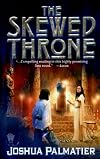
The Skewed Throne sits in the palace of the city of Amenkor, from where the Mistress guides the city. However, since the White Fire swept through the city more than six years ago, Amenkor has been degenerating, and the current Mistress's directions seem to be more and more detrimental than beneficial. From long habit, her orders are carried out and never questioned, but now the survival of the city is at stake. So she must be replaced; but it seems that the Skewed Throne will not accept a show more replacement for a Mistress who is still alive ...
We follow Varis as she steals through the Palace on a mission. As she moves through the corridors avoiding the guards, we learn her story, and the reasons and events in her hard life leading to this point.
Varis has been a child of the streets since the age of six. Not just any streets, but the streets beyond the Dredge, which separates the city of Amenkor from the slums where every day is hand to mouth survival. At fourteen, she killed a man in self-defence (not for the first time), and was found by Erick, the Seeker for the Mistress, whose job it was to find and assassinate criminals as directed by the Mistress. But the slums were getting tougher and more crowded, so he recruited her as his eyes and ears and dubbed her varis, which means 'hunter', when she was unable to tell him her name.
Though Erick trained her properly in knife fighting to defend herself and rewarded her with food whenever she found a mark for him, life was still tough for Varis. She had one more trick to survival, however; she could sense her surroundings, like being submerged in a river where everything was gray, but red indicated danger. She was surviving, but Varis wanted something more. She didn't want to turn into a killer.
Usually, violence will turn me away from a book, especially if it is gratuitous. Here, though, it is absolutely integral to the story. There is an ethereal sadness haunting the story, of what might have been. Varis is layered in wariness and grime, but underneath her suspicious nature, and unrecognised by her, she still hungers for the family she lost long ago.
This is Palmatier's fantasy debut, but it is a very strong novel, tightly woven and intense. I found it not so much a page-turner, where I couldn't wait to find out what happened next, as totally engrossing. The story pulled me in and swept me along until I emerged reluctantly much later; the pages turned themselves.
(Just one comment, though (minor point); it would have been nice to have had a map of the palace.)
Read it.
5 stars show less
We follow Varis as she steals through the Palace on a mission. As she moves through the corridors avoiding the guards, we learn her story, and the reasons and events in her hard life leading to this point.
Varis has been a child of the streets since the age of six. Not just any streets, but the streets beyond the Dredge, which separates the city of Amenkor from the slums where every day is hand to mouth survival. At fourteen, she killed a man in self-defence (not for the first time), and was found by Erick, the Seeker for the Mistress, whose job it was to find and assassinate criminals as directed by the Mistress. But the slums were getting tougher and more crowded, so he recruited her as his eyes and ears and dubbed her varis, which means 'hunter', when she was unable to tell him her name.
Though Erick trained her properly in knife fighting to defend herself and rewarded her with food whenever she found a mark for him, life was still tough for Varis. She had one more trick to survival, however; she could sense her surroundings, like being submerged in a river where everything was gray, but red indicated danger. She was surviving, but Varis wanted something more. She didn't want to turn into a killer.
Usually, violence will turn me away from a book, especially if it is gratuitous. Here, though, it is absolutely integral to the story. There is an ethereal sadness haunting the story, of what might have been. Varis is layered in wariness and grime, but underneath her suspicious nature, and unrecognised by her, she still hungers for the family she lost long ago.
This is Palmatier's fantasy debut, but it is a very strong novel, tightly woven and intense. I found it not so much a page-turner, where I couldn't wait to find out what happened next, as totally engrossing. The story pulled me in and swept me along until I emerged reluctantly much later; the pages turned themselves.
(Just one comment, though (minor point); it would have been nice to have had a map of the palace.)
Read it.
5 stars show less
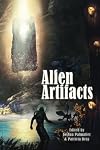
I read another Zombie Needs Brains anthology which completely blew me away--that one was My Batter Is Low and It Is Getting Dark (2020)--so I had high expectations of this one. Unfortunately, this particular anthology didn't come close to setting the high standard set by the publisher's more recent one. As anthologies go, it's not bad for a themed anthology, but it's also not great.
A big issue early on is repetitiveness--repetitiveness in tone, theme, voice, you name it, and this was show more probably the biggest disappointment since it's always what I fear from themed anthologies, but wasn't at all a problem in the other I read from ZNB. The other big issue, which came up over and over again, was a focus on concept over completeness. What I mean by that is that a good number of the stories--perhaps even the majority--seemed to be more focused on exploring a concept vs telling what felt like a complete story. As such, many of the stories felt like they ended just as they were getting interesting, with things cutting off into nothing as soon as the concept was fully explained and the reader was given a hook. It wouldn't surprise me at all if many of these authors ended up turning these 'stories' into novellas or even novels simply because what was presented here felt super-interesting conceptually, and well-written for a start, but also entirely unfinished.
I also have to note that some of the most well-known names here in the TOC ultimately offered up the least impressive stories, particularly in terms of concept and completeness, which made me wonder (not for the first time) if inviting authors to anchor a TOC is a double-edged sword, assuming you plan on accepting whatever they send in. I also have to admit to being annoyed by the inclusion of Gini Koch's "Alien Epilogue" because it's part of a larger series, and read like an out-take from the series. Although a complete story, I think only readers of her series would really appreciate it because there are so, so many characters, the first few pages are almost impossible to follow without re-reading, as the story seems to depend on you having knowledge of them already, to the extent that an intro to the story tells us where it would be placed in a series timeline. Maybe the editors expected this to sell more books, to followers of the series, but as a reader who hadn't read the series, I found it frustrating and, to be truthful, borderline offensive to unfamiliar readers and to all of the writers who went to pains to create new worlds for this story. Far from turning me on to Koch's work, it made me uninterested in reading her series as a result. It's possible that other stories from well-known authors here have similar connections--that might explain some of the lack of development--but I'm simply not sure.
All that said, there were some definite standouts in the collection. Seanan McGuire's story ended the anthology, and while it almost felt as if it suffered from the 'ends as soon as it begins' issue, it ultimately felt complete. My other favorites included James Van Pelt's "Titan Descanso," Sofie Bird's "And We Have No Words to Tell You" (probably worse the cover price all by itself, honestly), and "Pandora" by C.S. Friedman.
All told, I'll certainly read another ZNB anthology. Perhaps when this one was published, they just hadn't hit their groove yet in putting together anthologies, which could explain the big difference in quality since this was published 5 years before the other one I enjoyed so much. And as I said, at least one of these stories was such a gem that it made the whole anthology worthwhile, so that certainly says something, as well. show less
A big issue early on is repetitiveness--repetitiveness in tone, theme, voice, you name it, and this was show more probably the biggest disappointment since it's always what I fear from themed anthologies, but wasn't at all a problem in the other I read from ZNB. The other big issue, which came up over and over again, was a focus on concept over completeness. What I mean by that is that a good number of the stories--perhaps even the majority--seemed to be more focused on exploring a concept vs telling what felt like a complete story. As such, many of the stories felt like they ended just as they were getting interesting, with things cutting off into nothing as soon as the concept was fully explained and the reader was given a hook. It wouldn't surprise me at all if many of these authors ended up turning these 'stories' into novellas or even novels simply because what was presented here felt super-interesting conceptually, and well-written for a start, but also entirely unfinished.
I also have to note that some of the most well-known names here in the TOC ultimately offered up the least impressive stories, particularly in terms of concept and completeness, which made me wonder (not for the first time) if inviting authors to anchor a TOC is a double-edged sword, assuming you plan on accepting whatever they send in. I also have to admit to being annoyed by the inclusion of Gini Koch's "Alien Epilogue" because it's part of a larger series, and read like an out-take from the series. Although a complete story, I think only readers of her series would really appreciate it because there are so, so many characters, the first few pages are almost impossible to follow without re-reading, as the story seems to depend on you having knowledge of them already, to the extent that an intro to the story tells us where it would be placed in a series timeline. Maybe the editors expected this to sell more books, to followers of the series, but as a reader who hadn't read the series, I found it frustrating and, to be truthful, borderline offensive to unfamiliar readers and to all of the writers who went to pains to create new worlds for this story. Far from turning me on to Koch's work, it made me uninterested in reading her series as a result. It's possible that other stories from well-known authors here have similar connections--that might explain some of the lack of development--but I'm simply not sure.
All that said, there were some definite standouts in the collection. Seanan McGuire's story ended the anthology, and while it almost felt as if it suffered from the 'ends as soon as it begins' issue, it ultimately felt complete. My other favorites included James Van Pelt's "Titan Descanso," Sofie Bird's "And We Have No Words to Tell You" (probably worse the cover price all by itself, honestly), and "Pandora" by C.S. Friedman.
All told, I'll certainly read another ZNB anthology. Perhaps when this one was published, they just hadn't hit their groove yet in putting together anthologies, which could explain the big difference in quality since this was published 5 years before the other one I enjoyed so much. And as I said, at least one of these stories was such a gem that it made the whole anthology worthwhile, so that certainly says something, as well. show less

An interesting assortment of stories. Some are nearly horror (zombies, mutation by virus, mutation by comet...). There's a Torin Kerr story by Tanya Huff - a previously-untold (as far as I know) story of her time in Recon, and a very (very) nasty mission. Just who was testing what? There's some very rich stories about teamwork and partnership - the one about rescuing the alien, and the last story about the climbers, stick in my mind. And the recovered zombie. The weirdest one was the show more dimensional rift - and annoying, too, they knew how it ended (after all, it already happened). Overall, worth reading, and probably worth rereading - I may skip some of the stories, though (the Ropers is an annoying structure with a very creepy story in it, for instance - I could stand not reading that again. Well-written, just not for me). show less
Lists
Awards


You May Also Like


Associated Authors
Statistics
- Works
- 51
- Also by
- 8
- Members
- 1,283
- Popularity
- #19,989
- Rating
- 3.7
- Reviews
- 33
- ISBNs
- 93
- Languages
- 2
- Favorited
- 1
