
Belinda Rathbone
Author of The Guynd: A Scottish Journal
About the Author
Belinda Rathbone is a photography historian who has written widely on modern photographers. (Bowker Author Biography)
Image credit: Sarah Putnam
Works by Belinda Rathbone
The Boston Raphael: A Mysterious Painting, an Embattled Museum in an Era of Change, and a Daughter's Search for the Truth (2014) 62 copies, 4 reviews
Amy Archer 1 copy
Tagged
Common Knowledge
- Gender
- female
- Occupations
- photography historian
historian - Nationality
- USA
- Places of residence
- Cambridge, Massachusetts, USA
Scotland - Map Location
- USA
Members
Reviews
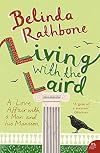
A wry and wistful second look at a real life "ever after." Belinda Rathbone (American, of Boston) meets and marries John Ochterlony, heir to the Guynd, an small but venerable estate in the Scottish lowlands that has been in his family for over four hundred years, the centerpiece of which is a (small for a mansion) elegant Georgian house, built in the early 1800's. The estate comes with several hundred acres, an ancient Dower House (the original manse), cottages, the official farmhouse and show more much more. As Belinda throws herself into restoration--taking on the task of sorting and chucking all the broken, useless items that the family has collected over the centuries, removing the brown lino that has covered all the floors since the house was requisitioned in the second world war, scraping, plastering, painting she comes up, again and again, against an immovable obstacle: her husband. There is great affection between the two and a lot of common sense and they have a child together that both adore. I won't spoil, it's neither a happy nor unhappy ending, not even an ending, but more the way life tends to be, nothing neatly tied up and good intentions everywhere. I loved it, loved the descriptions, loved Rathbone's honesty. Highly recommended. **** 1/2 show less
The Boston Raphael : a mysterious painting, an embattled museum in an era of change & a daughter's search for the truth by Belinda Rathbone
I do on occasion pick up a non-scholarly tale about a single work of art: as examples, I recently read, The Portland Vase, The Sarpedon Krater, The Lost Chalice, and The Vanishing Velazquez. All titles I recommend. So the title, "The Boston Raphael" was not off-putting.
Alas, this is hardly about Raphael, or even a work by Raphael, or in any way an appreciation or insight into his work, but instead a long trek through the career of a MFA museum director written fawningly by his daughter. I show more have now learned to be particularly cautious of books by a daughter who wants to resurrect the image of a parent!
The true story, missed entirely by the author, and not even hinted at, is how does a professional become so blinded in their quest for success that they overlook all signs that an artwork is misattributed or a fake? There are examples galore in U.S. museum curatorship, left unexamined here while the author instead looks for examples of smuggling art into collections to enhance their institutions prestige and appeal. But the story here is the work was not by Raphael, and heavily repainted, and the frame designed to be a deception--a fake!
Except in the first few pages, Raphael is not mentioned again until half way through this long detailed career of her father, and when you reach page 90 you find what could be a summary, repeated often throughout the book: "The combination of his high professional standards and personal approachability were qualities that had made Rathbone an effective leader, and the Museum a happy place to work." Few specific details are ever given, while mentioning each staff member hired puts a drag on the narration. You think these details might be important once the "Raphael" as a subject is picked up again, but that isn't true.
While praise is given for Rathbones's acquisitions--few (or none?) are mentioned. (Were any of those later discovered to be fakes or smuggled works?) And more than once mention of his success with an Andrew Wyeth exhibition is an even greater groaner now than it was in the 1970s.
Claiming many--if not all--of her father's problems centered on the changing nature of art institutions mid-century, and a difficult board of trustees out on a personal vendetta, does little to make this story interesting.
What about similar institutions facing change in the 60s and 70s: The Carnegie Museum of Art in Pittsburgh, The Philadelphia Museum, even the Los Angeles Museum of Art?
Most seriously, the author and her father--both transplants to Boston--seem out of touch with the cultural and artistic heritage of Boston and New England and this story lacks any insight into how that fits into this story--except for a general resentment that Boston failed to treat her father fairly. show less
Alas, this is hardly about Raphael, or even a work by Raphael, or in any way an appreciation or insight into his work, but instead a long trek through the career of a MFA museum director written fawningly by his daughter. I show more have now learned to be particularly cautious of books by a daughter who wants to resurrect the image of a parent!
The true story, missed entirely by the author, and not even hinted at, is how does a professional become so blinded in their quest for success that they overlook all signs that an artwork is misattributed or a fake? There are examples galore in U.S. museum curatorship, left unexamined here while the author instead looks for examples of smuggling art into collections to enhance their institutions prestige and appeal. But the story here is the work was not by Raphael, and heavily repainted, and the frame designed to be a deception--a fake!
Except in the first few pages, Raphael is not mentioned again until half way through this long detailed career of her father, and when you reach page 90 you find what could be a summary, repeated often throughout the book: "The combination of his high professional standards and personal approachability were qualities that had made Rathbone an effective leader, and the Museum a happy place to work." Few specific details are ever given, while mentioning each staff member hired puts a drag on the narration. You think these details might be important once the "Raphael" as a subject is picked up again, but that isn't true.
While praise is given for Rathbones's acquisitions--few (or none?) are mentioned. (Were any of those later discovered to be fakes or smuggled works?) And more than once mention of his success with an Andrew Wyeth exhibition is an even greater groaner now than it was in the 1970s.
Claiming many--if not all--of her father's problems centered on the changing nature of art institutions mid-century, and a difficult board of trustees out on a personal vendetta, does little to make this story interesting.
What about similar institutions facing change in the 60s and 70s: The Carnegie Museum of Art in Pittsburgh, The Philadelphia Museum, even the Los Angeles Museum of Art?
Most seriously, the author and her father--both transplants to Boston--seem out of touch with the cultural and artistic heritage of Boston and New England and this story lacks any insight into how that fits into this story--except for a general resentment that Boston failed to treat her father fairly. show less
Setting: an old country house in NE Scotland during the 1990s
First Line: I knew when I married the man that I married the mansion.
First off, for anyone who wants to know how to pronounce the name of the book, "The Guynd" rhymes with "the wind".
This memoir offers an American woman's view of rural Scotland today. It is an account of the author's marriage and her years spent at The Guynd, her husband's ancestral estate. She has a steep learning curve when it comes to dealing with a grand and show more crumbling mansion, an overgrown landscape, troublesome tenants, local aristocracy, Scottish rituals and a husband for whom change is anathema. A son and heir draws Belinda Rathbone into an intimate relationship with every tier of local society, while a visiting friend heightens the strain of the culture gap. Rathbone digs into family and local history in an effort to understand her surroundings and free her husband from the grip of the past. She was unsuccessful.
In reading the book, I never felt that Rathbone was deeply in love with her husband, and if I'm feeling cranky I'd say that she married the man so that she could have the house, for she did love it--a shambles of a Georgian manor house built in 1799 and being allowed to fall to bits because the past several generations of the family concentrated so fiercely on the past that they lost almost complete contact with the present and the future. The book shines most brightly when Rathbone describes the improvements she managed to make to the place despite her husband's fighting her every step of the way. I also learned a lot about Scottish society and how to pronounce quite a few words correctly. When I finished the last page, I couldn't help but think that the author's dream of being the Martha Stewart of Scotland gang badly a-gley. show less
First Line: I knew when I married the man that I married the mansion.
First off, for anyone who wants to know how to pronounce the name of the book, "The Guynd" rhymes with "the wind".
This memoir offers an American woman's view of rural Scotland today. It is an account of the author's marriage and her years spent at The Guynd, her husband's ancestral estate. She has a steep learning curve when it comes to dealing with a grand and show more crumbling mansion, an overgrown landscape, troublesome tenants, local aristocracy, Scottish rituals and a husband for whom change is anathema. A son and heir draws Belinda Rathbone into an intimate relationship with every tier of local society, while a visiting friend heightens the strain of the culture gap. Rathbone digs into family and local history in an effort to understand her surroundings and free her husband from the grip of the past. She was unsuccessful.
In reading the book, I never felt that Rathbone was deeply in love with her husband, and if I'm feeling cranky I'd say that she married the man so that she could have the house, for she did love it--a shambles of a Georgian manor house built in 1799 and being allowed to fall to bits because the past several generations of the family concentrated so fiercely on the past that they lost almost complete contact with the present and the future. The book shines most brightly when Rathbone describes the improvements she managed to make to the place despite her husband's fighting her every step of the way. I also learned a lot about Scottish society and how to pronounce quite a few words correctly. When I finished the last page, I couldn't help but think that the author's dream of being the Martha Stewart of Scotland gang badly a-gley. show less
The Boston Raphael: A Mysterious Painting, an Embattled Mueseum in an Era of Change, and a Daughter's Search for the Truth by Belinda Rathbone
Belinda Rathbone, daughter of Perry Rathbone who was director of the Museum of Fine Arts in Boston from 1955 to 1973, recounts her father's biography, focusing on the "scandal" in 1972. Using some dealings that may not have been completely aboveboard, Rathbone procured a previously unknown portrait, said to have been painted by Raphael. Between the efforts of a self-serving Italian "art sleuth" and an obnoxious board president, Rathbone is forced to retire.
Belinda Rathbone does an excellent show more of job of fair-handed writing. She obviously admires him, but is willing to admit that he may have made some errors. I came away from the book with strong feelings about all of the characters, and I attribute that to the excellent writing. show less
Belinda Rathbone does an excellent show more of job of fair-handed writing. She obviously admires him, but is willing to admit that he may have made some errors. I came away from the book with strong feelings about all of the characters, and I attribute that to the excellent writing. show less
You May Also Like


Statistics
- Works
- 9
- Members
- 360
- Popularity
- #66,629
- Rating
- 3.6
- Reviews
- 8
- ISBNs
- 17
- Languages
- 1