

Jorge Volpi
Author of In Search of Klingsor
About the Author
An author, scholar, and diplomat, Jorge Volpi won the Biblioteca Breve Prize in 1999 (previous winners include Carlos Fuentes and Mario Vargas Llosa). He is the author of nine novels and collections, a judge for the Dublin-IMPAC Prize, and the director of the Mexican Cultural Center in Paris
Image credit: "Jorge Volpi, en la Feria Internacional del Libro de Guadalajara (México) 2005." From Wikimedia user Soljaguar
Works by Jorge Volpi
La tejedora de sombras (Premio Planeta Casamérica 2012) (Spanish Edition) (2012) 24 copies, 2 reviews
Associated Works
Tagged
Common Knowledge
- Birthdate
- 1968-07-10
- Gender
- male
- Education
- National Autonomous University of Mexico
University of Salamanca - Occupations
- lawyer
novelist - Nationality
- Mexico
- Birthplace
- Mexico City, Mexico
- Places of residence
- Mexico City, Mexico
- Associated Place (for map)
- Mexico City, Mexico
Members
Reviews
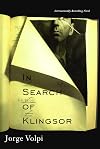
On the flyleaf of my edition, it says that this has been compared to The Name of the Rose. Either the person who wrote this has never read The Name of the Rose or they had in mind that they’re both books. The comparison stops right there.
Badly written, badly translated, badly edited, this should never in a million years have made it onto the 1001 Books list. Writing in the 2008 edition of 1001 Books You Must Read Before You Die, Oscar Rickett says the novel “moves on at a pace that show more allows for the development of the mystery.” Garbage. The mystery is about as hidden as a blancmange in a boxing ring. Mind you, I doubt Oscar Rickett’s view is too worthy of consideration. His bio in 1001 Books describes him as a “freelance writer and amateur clarinetist.”
You need look no further than the table of contents to find issues with this book. The page numbers bear no relation to the subsequent chapters. Further issues crop up regularly. For example, on page 43, a guy starts eating mushroom “vol au vents” before continuing to eat “mushroom sandwiches.”
But while the editor and translator bear some responsibility for this wreck, the bulk of the blame lies squarely with Volpi. The first hint that he might struggle with creative writing comes right off the bat with the choice of the name Francis Bacon for his protagonist. At this point, you’re holding hope that this is somehow symbolic. Will there be allusions to art, to philosophy? Er… no.
After Bacon inevitably gets involved with an obvious honeytrap, there’s a ludicrous piece of writing that literally goes like this
“Tell me what you do together”, Irene said as she took Bacon’s member into her hands, “What are you investigating?”
After he’s spilled the beans (no euphemism), the wordcraft continues
“I think it’s fascinating,” she whispered and, in place of her hands, her head travelled down along her lover’s body until her lips found themselves hovering upon Frank’s impatient penis.
Volpi wants to write a mystery. He’s ended up writing Mills & Boon.
Bacon sets out to discover the identity of Klingsor, a pseudonym for the scientist who controlled the Nazi nuclear programme. Along the way, he tracks down and interviews scientist after scientist with each interview demonstrating a wild array of questions many of which have no relevance to anything I could think of.
The book (or maybe the writer) suffers from schizophrenia. On the one hand Volpi wants to incorporate historical events such as (inexplicably) the 1944 attempt on Hitler’s life and every 1930s-40s nuclear scientist you can think of while on the other he attempts (and fails) to weave into this mess some kind of mystery.
In the end, you just don’t care who the eponymous Klingsor is. The novel drags so much that if you hitched it to the back of Hamilton’s Formula 1 car he wouldn’t finish a lap.
What Volpi has done here is utterly embarrassing. If you are at all interested in the historical events he touches on, do yourself a favour, avoid this and pick up a book from the wide array of relevant non-fiction by authors who can actually write. show less
Badly written, badly translated, badly edited, this should never in a million years have made it onto the 1001 Books list. Writing in the 2008 edition of 1001 Books You Must Read Before You Die, Oscar Rickett says the novel “moves on at a pace that show more allows for the development of the mystery.” Garbage. The mystery is about as hidden as a blancmange in a boxing ring. Mind you, I doubt Oscar Rickett’s view is too worthy of consideration. His bio in 1001 Books describes him as a “freelance writer and amateur clarinetist.”
You need look no further than the table of contents to find issues with this book. The page numbers bear no relation to the subsequent chapters. Further issues crop up regularly. For example, on page 43, a guy starts eating mushroom “vol au vents” before continuing to eat “mushroom sandwiches.”
But while the editor and translator bear some responsibility for this wreck, the bulk of the blame lies squarely with Volpi. The first hint that he might struggle with creative writing comes right off the bat with the choice of the name Francis Bacon for his protagonist. At this point, you’re holding hope that this is somehow symbolic. Will there be allusions to art, to philosophy? Er… no.
After Bacon inevitably gets involved with an obvious honeytrap, there’s a ludicrous piece of writing that literally goes like this
“Tell me what you do together”, Irene said as she took Bacon’s member into her hands, “What are you investigating?”
After he’s spilled the beans (no euphemism), the wordcraft continues
“I think it’s fascinating,” she whispered and, in place of her hands, her head travelled down along her lover’s body until her lips found themselves hovering upon Frank’s impatient penis.
Volpi wants to write a mystery. He’s ended up writing Mills & Boon.
Bacon sets out to discover the identity of Klingsor, a pseudonym for the scientist who controlled the Nazi nuclear programme. Along the way, he tracks down and interviews scientist after scientist with each interview demonstrating a wild array of questions many of which have no relevance to anything I could think of.
The book (or maybe the writer) suffers from schizophrenia. On the one hand Volpi wants to incorporate historical events such as (inexplicably) the 1944 attempt on Hitler’s life and every 1930s-40s nuclear scientist you can think of while on the other he attempts (and fails) to weave into this mess some kind of mystery.
In the end, you just don’t care who the eponymous Klingsor is. The novel drags so much that if you hitched it to the back of Hamilton’s Formula 1 car he wouldn’t finish a lap.
What Volpi has done here is utterly embarrassing. If you are at all interested in the historical events he touches on, do yourself a favour, avoid this and pick up a book from the wide array of relevant non-fiction by authors who can actually write. show less
Las elegidas (2015) del escritor mexicano Jorge Volpi es una novela corta escrita en verso, inspirada en hechos reales: en el año 2001, una red de proxenetas y polleros fue descubierta como la causante del secuestro de cientos de jovencitas que eran obligadas a prostituirse en las sórdidas plantaciones de fresas conocidas como los “campos del amor”, en San Ysidro, California. Se trata de un viaje al centro mismo de la soledad y la falta de oportunidades, de sueños rotos que colisionan show more con una horrenda realidad que abarca mentiras, maltrato y prostitución. El chino, el Gringo, Azucena y Salvina, son personajes que deambulan entre el polvo y la sangre de una historia que describe el horror de costumbres que se remontan a tiempos prehispánicos; concretamente en Tenancingo, Tlaxcala, los padres educan a sus hijas para convertirse en prostitutas, sometidas a una sumisión sin oportunidad de escape. Lo peor, también se alecciona a los hombres del pueblo a traficar con sus mujeres, en un pesadillesco mercado humano que “exporta” a los Estado Unidos inocentes almas que apenas comienzan su vida, tristemente destinadas a la desesperanza. Hay una denuncia social importante en el núcleo del libro; Jorge Volpi inventa personajes y situaciones a partir de una realidad macabra que describe sucesos vividos por miles de mujeres, ante el desinterés e incapacidad de una autoridad que es pieza importante del rompecabezas mismo. Tremendamente actual, Las elegidas suaviza la dureza de su trama por medio de un plácido uso del verso, que termina convirtiéndose en algo cercano a un himno al dolor; la traición de los hombres y la frustración del sueño americano para las jovencitas, son dos de los temas que atraviesan las 147 páginas del libro editado por Alfaguara. De Tlaxcala a Tijuana y de ahí a California, este esperpéntico argumento también inspiró la película homónima de David Pablos del 2015, otra desoladora mirada de un mismo tema tan presente y cercano que se incrusta en la médula de una sociedad que inevitablemente, se pudre día con día. show less

Jorge Volpe takes on the major international themes of the past several decades that include the disaster of Chernobyl, the fall of the Berlin wall, the collapse of the Soviet Union, the trials and failures of the IMF in Africa and Mexico, the Seattle WTO protests and the Human Genome project. This is a tremendous amount of material to cover even in 405 pages much less successfully integrate into a coherent story. But Volpe succeeds in an extraordinary fashion.
He employs the story of three show more remarkable female characters and their families. Much of the story centered on Russia but a major aspect also takes place in the U.S. with the IMF professional banker Jennifer Wells. Her sister Allison, a radical activist, takes the story to Palestine, Seattle and Arizona. In addition there are many real life characters such as Boris Yeltsin (always presented with the phrase "of strong arms" and President Clinton ("imperial seducer"). You will need the appendix that lists dozens of real and fictional characters.
The book raises issues as to how these great political and international themes affect global patterns and also individual life path. These events resonate simultaneously at the macro and micro levels and Volpe integrates them with an unmatched narrative skill. show less
He employs the story of three show more remarkable female characters and their families. Much of the story centered on Russia but a major aspect also takes place in the U.S. with the IMF professional banker Jennifer Wells. Her sister Allison, a radical activist, takes the story to Palestine, Seattle and Arizona. In addition there are many real life characters such as Boris Yeltsin (always presented with the phrase "of strong arms" and President Clinton ("imperial seducer"). You will need the appendix that lists dozens of real and fictional characters.
The book raises issues as to how these great political and international themes affect global patterns and also individual life path. These events resonate simultaneously at the macro and micro levels and Volpe integrates them with an unmatched narrative skill. show less
 This review was written for LibraryThing Early Reviewers.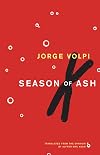
An exceptionally interesting novel. Volpi manages to portray all the competing influences during the fall of the Soviet Union through the interactions of his characters - from the pure, but ultimately soulless banker, to the ruthless capitalist, to the brilliant but disillusioned scientists, to the misguided affection of the wayward hippie, to the reporter that is overwhelmed by the emotion of it all, none escape the vortex of the collapse of the regime and the resulting scramble for wealth show more and power that ensues.
Interestingly enough, the beginning of the book is draped with human drama with the death of one of the main characters. This causes the reader to become invested in the characters early on, even as additional characters are introduced. At first it is difficult to keep all of the names straight, but the author has kindly provided a character index at the back of the book.
From these microcosm beginnings, the author then gradually increases the scope of his lens to examine the political and financial dealings taking place during the fall of the Soviet Union. Finally, during Act III, the lens again narrows as it focuses on the interpersonal relationships between the characters directly involved in the mapping of the human genome. The passions and struggles of the characters in this final act are detached and animalistic, and a fatalistic sense permeates the end of the book.
This book is an interesting read if you like historical fiction; it is exceptionally well-written and appears to be well-translated. show less
Interestingly enough, the beginning of the book is draped with human drama with the death of one of the main characters. This causes the reader to become invested in the characters early on, even as additional characters are introduced. At first it is difficult to keep all of the names straight, but the author has kindly provided a character index at the back of the book.
From these microcosm beginnings, the author then gradually increases the scope of his lens to examine the political and financial dealings taking place during the fall of the Soviet Union. Finally, during Act III, the lens again narrows as it focuses on the interpersonal relationships between the characters directly involved in the mapping of the human genome. The passions and struggles of the characters in this final act are detached and animalistic, and a fatalistic sense permeates the end of the book.
This book is an interesting read if you like historical fiction; it is exceptionally well-written and appears to be well-translated. show less
This review was written for LibraryThing Early Reviewers.Lists
Awards


You May Also Like


Associated Authors
Statistics
- Works
- 35
- Also by
- 2
- Members
- 1,183
- Popularity
- #21,723
- Rating
- 3.7
- Reviews
- 41
- ISBNs
- 167
- Languages
- 12
- Favorited
- 1
