
Cyprian (210–258)
Author of Early Latin Theology : Selections from Tertullian, Cyprian, Ambrose, and Jerome
About the Author
Cyprian was born and educated in traditional Roman religion. Two years after his conversion in 246, he became bishop of Carthage, the provincial capital. Beginning in 250, his diocese was faced with the Decian persecutions (250--251). Cyprian fled the city, subjecting himself to intense criticism show more and ruled his diocese from exile. During his absence many Christians lapsed from their faith, and many more obtained libelli pacis libelli pacis, government-issued certificates stating that they had sacrificed to the Roman divinities to avoid punishment. Much of Cyprian's extant correspondence deals with the reconciliation between the church and these lapsi (apostates). Critical issues included the necessity for re-baptism and the status of reconciled clergy. The most important principle was that a cleric who had apostatized was regarded as not in communion with the larger church and could not baptize or ordain. This issue was to haunt Christianity in North Africa and in Egypt (a separate Roman province) and lead to the Donatist and Melitian schisms, in their respective provinces, in the fourth and fifth centuries. Cyprian's intransigence regarding unity with the church led to his dictum: "Outside the Church there is no salvation." During the Valerianic persecutions in 258, he was martyred at Carthage. His writings are known for their attention to martyrs, ministry, and the sacraments. (Bowker Author Biography) show less
Image credit: Image © ÖNB/Wien
Works by Cyprian
Sancti Cæcilii Cypriani Opera 6 copies
La Chiesa : Sui cristiani caduti nella persecuzione ; L'unità della Chiesa cattolica ; Lettere scelte (1997) 4 copies
De idolorum vanitate 3 copies
Opera 2 copies
Sancti Cypriani Episcopi Opera 2 copies
Le lettere 1 copy
Cebri - Dossiê #5 - dec 2019 1 copy
Exhortation to Martyrdom 1 copy
The Epistles Of Cyprian 1 copy
Saint Cyprien. Lettres 1-20 1 copy
Cipriano. A Demetriano 1 copy
Epistolae D. Caecilii Cypriani Carthaginensis Episcopi Totius Africae Primatis Et Gloriosissimi Martyris (1755) (2009) 1 copy
De unitate ecclesiae 1 copy
Thasci Caecili Cypriani De habitu virginum : a commentary, with an introduction and translation 1 copy
On the Baptism of Heretics 1 copy
Treatise (11) 1 copy
Letters of St. Cyprian= 1-81 1 copy
Treatises 1 copy
Works 1 copy
S. Caecilii Cypriani Opera 1 copy
Associated Works
Ante-Nicene Fathers. Volume 5. Fathers of the Third Century: Hippolytus, Cyprian, Caius, Novatian, Appendix (1886) — Contributor — 414 copies, 6 reviews
The Divine Office, Volume 1: Daily Prayer for Advent, Christmastide and Weeks 1-9 (1974) — Contributor — 197 copies, 1 review
The Liturgy of the Hours According to the Roman Rite (Volume II Lenten Season and Easter Season) (1974) — Contributor — 189 copies
The Liturgy of the Hours According to the Roman Rite (Volume III: The Weeks of the Year 6 - 34) (1974) — Contributor — 71 copies
Witness of the Saints: Patristic Readings in the Liturgy of the Hours (2012) — Contributor — 29 copies, 1 review
Tagged
Common Knowledge
- Other names
- Cyprian of Carthage
Saint Cyprian of Carthage
Thascius Caecilius Cyprianus - Birthdate
- 210
- Date of death
- 258-09-14
- Gender
- male
- Occupations
- bishop (Carthage)
writer - Short biography
- Cyprian (Latin: Thascius Caecilius Cyprianus) (c. 200 – September 14, 258) was bishop of Carthage and an important Early Christian writer, many of whose Latin works are extant. He was born around the beginning of the 3rd century in North Africa, perhaps at Carthage, where he received a classical education. After converting to Christianity, he became a bishop in 249 and eventually died a martyr at Carthage.
- Cause of death
- execution (by beheading by sword)
- Nationality
- Roman Empire
- Places of residence
- Carthage, Africa, Roman Empire
- Place of death
- Carthage, Africa, Roman Empire
- Map Location
- Tunisia
Members
Reviews
On the Church: Select Treatises (St. Vladimir's Seminary Press "Popular Patristics" Series) (St. Vladimir's Seminary Press "Popular Patristics" Series) by St Cyprian of Carthage
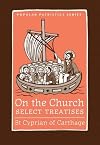
Just love his introduction to this treatise, which he wrote after the harvest and having some time for profound reflection on the holy Christian Church, sitting in the warm autumn sun, out of the wind and in view of the vineyards and rolling hilltops. Doing theology is the best occupation!

On the Unity of the Church is a tract by St. Cyprian of Carthage discussing the meaning and importance of a unified Church. He argues that in an age in which heresies and schisms are widespread, it is more important than ever to resist the urge to splinter and to remain attached to the true faith. He goes on to explain why and how the true faith cannot be torn asunder and why it is equally important to to leave it. A bit more accessible than some of my more recent Lenten patristics reading, show more I found it quite interesting. show less
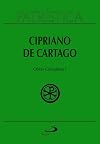
Cipriano de Cartago, primeiro bispo africano mártir, escreveu em resposta a questões pontuais surgidas durante o difícil decênio de seu episcopado. A conduta das virgens exorta ao cuidado com a vaidade e os vícios. Em Os lapsos, Cipriano afronta a questão daqueles cristãos que negaram a própria fé durante uma das perseguições do Império Romano e que não deviam ser readmitidos na comunidade sem passar pela disciplina eclesiástica. A unidade da Igreja católica exorta os fiéis a show more não abandonar o único rebanho de Cristo para seguir aqueles que dele se separaram. A oração do Senhor é um comentário ao Pai-Nosso, síntese da fé cristã. A mortalidade, composto em meio a uma peste, admoesta os cristãos a não temer a morte. As boas obras e a esmola incita os fiéis a fazer o bem: a salvação recebida no batismo deve desdobrar-se em caridade constante, que é feita principalmente ao próprio Deus. O bem da paciência convida a imitar a paciência de Deus em meio às dificuldades deste mundo. show less

You May Also Like


Associated Authors
Statistics
- Works
- 117
- Also by
- 7
- Members
- 1,368
- Popularity
- #18,795
- Rating
- 4.3
- Reviews
- 12
- ISBNs
- 77
- Languages
- 8

