
Jon Ewbank Manchip White (1924–2013)
Author of Everyday Life in Ancient Egypt
About the Author
Image credit: Wikipedia
Works by Jon Ewbank Manchip White
Marshal of France;: The life and times of Maurice, comte de Saxe, 1696-1750 (2011) 31 copies, 1 review
The land God made in anger : reflections on a journey through South West Africa (1969) 6 copies, 1 review
Associated Works
Tagged
Common Knowledge
- Legal name
- White, Jon Manchip
- Birthdate
- 1924
- Date of death
- 2013
- Gender
- male
- Education
- Cambridge (anthropology diploma)
- Occupations
- story editor (BBC)
senior executive officer (British Foreign Service)
screenwriter
English professor - Awards and honors
- Honours degree, English (Cambridge)
Honours degree, prehistoric archaeology (Cambridge)
Honours degree, Oriental languages (Cambridge) - Nationality
- UK (Wales)
- Associated Place (for map)
- UK
Members
Reviews

A random charity shop purchase which looked a bit intriguing. The cover and Ace publication made me think it was set in an American city, but Manchip White is Welsh, and all the action in this one is in continental Europe: Madrid, Paris, the Aegean and Greece. The climbing theme is spread a bit thinly and at one point includes a woeful anti-climax. Some bits are quite atmospheric and psychological, but it shows its age as a 1960s male fantasy thriller. Manchip White worked in the movies, and show more it kind of reads like a novelised film treatment, I won’t be seeking out any more of his work. show less

Underrated collection of Welsh themed spook stories not always set in Wales. A couple of five star stories and no duds at all. Not always about ghosties but a lot about retribution and bad luck. Don't mess with the Welsh! Do some modern people really still speak exclusively Welsh at home in Wales? I'm not talking about rural folk, but people with city jobs too.
The land God made in anger : reflections on a journey through South West Africa by Jon Ewbank Manchip White

The Land God Made in Anger is a non fiction travel book about a journey through the country South West Africa and was published in 1969 . Today the country is called Namibia and it is still a land of few people and vast open spaces but very beautiful in its distances . At the time of the author's journey, South West Africa was a South African mandated territory that South Africa had been allocated by the League of Nations in 1920 as an integral part of the then Union of South Africa, as show more following the first world war German had been dispossessed of her empire. South West Africa had been a German colony from 1884 until conquest by the South African army under Louis Botha in the First World War. Today South West Africa is the independent country of Namibia with a population of 2.1 million , one of the least populated countries in the world, following a liberation war led by Sam Nujoma (who , for 15 years was the country's first post independence President) . Jon Manchip White is a Welshborn writer who has over 30 fiction and non fiction books to his credit; he emigrated to Texas and taught English in a University but also travelled widely.
Although this book was written at the end of the sixties, some 4 decades ago when a very different political arrangement was in place, it is still readable as an account of a journey filled with interesting people and encounters . It is also a useful background work that has now slipped into history and considering how few books have been written about South West Africa/ Namibia it is still a worthwhile addition to a small collection on this small country with a troubled and tense history . White was interested in anthropology so writes well about the different groups of people who came to occupy Namibia ...the San, the Damara, the Namas, the Herero, the Ovambo, the Germans, and the Basters and attempts to explain where they settled and why. South West Africa was annexed by Bismarck, to be a jewel in the German African empire and Windhoek the capital became a very Germanic colonial frontier town, with an authentic German architecture and which today is a heritage draw card. Visitors always comment on how German the towns look. Rhenish castles were dropped into the desert landscape. Elsewhere there are ghost towns, or you will find a fort in the desert with no military purpose, like Fort Namutoni . There is a photo of a rather romantic castellated sprawling fortification. Etosha Pan is one of the great sights of Africa with its bird and animal life,
A similar book on South West Africa , with which this book can be compared, is Lawrence Green's The Lords of the Last Frontier. The book is well illustrated with some black and white photos though there are better photographic studies of Nambia ( Alice Mertens or Olga Levinson) and there are some informative maps, The title of the book, is not original as it was the San who called the desert land in land from the West African coast and the Namib desert "the land God Made in Anger". The title was also later appropriated or attached by John Gordon Davis for his novel "The Land God Made in Anger" .. In fact a more popular and better known book than the White book .
South West Africa always lacked water and the distances between towns are vast . Another name for the hundreds of Kms of desert like coastal strip is the Skeleton Coast, littered with whalebones, washed up seaweed and the wrecks of stranded ships. The economic resources of the country were fishing along the coat, the guana industiry, a naval base and enclave at Walvis Bay , karakul sheep farming and most treacherously of all, diamonds from the desert. The Land God made in Anger , gives a sense of the harsh physical attributes of the country but it is a title that also captures the complicated and bitter man made history of the last 200 years. What a tragedy the Herero uprising in 1904 and then the brutal genocide of the Herero and Nama people was. Later South Africa used it as a military positioning post for incursions into Anglo and SWA was treated almost as a fifth province with peculiar plans for "homelands" for indigenous people . White describes that period rather well. This is a book that makes one reflect on human foolishness, grand plans for empty empires (whether German or South African ) , futile political struggles, desert wealth and desert dreams and the capacity of the human spirit to survive. I have not visited Namibia but is is on my list of to be visited destinations . show less
Although this book was written at the end of the sixties, some 4 decades ago when a very different political arrangement was in place, it is still readable as an account of a journey filled with interesting people and encounters . It is also a useful background work that has now slipped into history and considering how few books have been written about South West Africa/ Namibia it is still a worthwhile addition to a small collection on this small country with a troubled and tense history . White was interested in anthropology so writes well about the different groups of people who came to occupy Namibia ...the San, the Damara, the Namas, the Herero, the Ovambo, the Germans, and the Basters and attempts to explain where they settled and why. South West Africa was annexed by Bismarck, to be a jewel in the German African empire and Windhoek the capital became a very Germanic colonial frontier town, with an authentic German architecture and which today is a heritage draw card. Visitors always comment on how German the towns look. Rhenish castles were dropped into the desert landscape. Elsewhere there are ghost towns, or you will find a fort in the desert with no military purpose, like Fort Namutoni . There is a photo of a rather romantic castellated sprawling fortification. Etosha Pan is one of the great sights of Africa with its bird and animal life,
A similar book on South West Africa , with which this book can be compared, is Lawrence Green's The Lords of the Last Frontier. The book is well illustrated with some black and white photos though there are better photographic studies of Nambia ( Alice Mertens or Olga Levinson) and there are some informative maps, The title of the book, is not original as it was the San who called the desert land in land from the West African coast and the Namib desert "the land God Made in Anger". The title was also later appropriated or attached by John Gordon Davis for his novel "The Land God Made in Anger" .. In fact a more popular and better known book than the White book .
South West Africa always lacked water and the distances between towns are vast . Another name for the hundreds of Kms of desert like coastal strip is the Skeleton Coast, littered with whalebones, washed up seaweed and the wrecks of stranded ships. The economic resources of the country were fishing along the coat, the guana industiry, a naval base and enclave at Walvis Bay , karakul sheep farming and most treacherously of all, diamonds from the desert. The Land God made in Anger , gives a sense of the harsh physical attributes of the country but it is a title that also captures the complicated and bitter man made history of the last 200 years. What a tragedy the Herero uprising in 1904 and then the brutal genocide of the Herero and Nama people was. Later South Africa used it as a military positioning post for incursions into Anglo and SWA was treated almost as a fifth province with peculiar plans for "homelands" for indigenous people . White describes that period rather well. This is a book that makes one reflect on human foolishness, grand plans for empty empires (whether German or South African ) , futile political struggles, desert wealth and desert dreams and the capacity of the human spirit to survive. I have not visited Namibia but is is on my list of to be visited destinations . show less
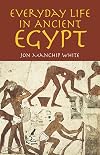
This concise book gives the reader a general idea about the main aspects of life in ancient Egypt. As the title suggests the author didn't focus only on the great Pharaohs of ancient Egypt, but also on other important figures such as priests, artists, scribes, and more importantly on the characterization of everyday life in ancient Egypt.
As an Egyptian it is interesting for me to discern between ancient and modern Egypt, especially regarding rulers, religion, and the view of the dead (living show more with the dead). show less
As an Egyptian it is interesting for me to discern between ancient and modern Egypt, especially regarding rulers, religion, and the view of the dead (living show more with the dead). show less
You May Also Like


Statistics
- Works
- 32
- Also by
- 1
- Members
- 430
- Popularity
- #56,814
- Rating
- 3.7
- Reviews
- 9
- ISBNs
- 49
- Favorited
- 1