
Tamara Talbot Rice (1904–1993)
Author of A Concise History of Russian Art
About the Author
Image credit: Tamara Talbot Rice. (Scanned from the dust jacket of Ancient Arts of Central Asia)
Works by Tamara Talbot Rice
Charles Cameron 1740-1812: architectural drawings and photographs from the Hermitage Collection, Leningrad and the Architectural Museum, Moscow (1967) 2 copies
I selgiuchidi 1 copy
I selgiuchidi in Asia Minore 1 copy
Bizans'ta Günlük Yaşam 1 copy
Icons. 1 copy
L'Arte Russa. 1 copy
Russian Icons 1 copy
Associated Works
Tagged
Common Knowledge
- Canonical name
- Rice, Tamara Talbot
- Legal name
- Talbot Rice, Tamara Abelson
- Birthdate
- 1904-06-19
- Date of death
- 1993-09-24
- Gender
- female
- Education
- University of Oxford (St. Hugh's College)
Cheltenham Ladies College - Occupations
- ISNI 0000 0001 0929 0612
art historian
art scholar
memoirist
biographer - Relationships
- Rice, David Talbot (husband)
Tolstoy, Leo (godfather)
Waugh, Evelyn (friend)
Acton, Harold (friend) - Short biography
- Tamara Talbot Rice was born Elena Abelson in St. Petersburg, Russia. Her father Israel Boris Abelevich Abelson was a wealthy businessman and member of the Tsar's financial administration. Leo Tolstoy, a family friend, was her godfather. She had a privileged childhood in St. Petersburg, where she attended the elite Tagantzeva Girls' School, until the Russian Revolution of 1917 caused her family to flee the country. They settled in London and Paris. She attended Cheltenham Ladies' College and then Oxford University, where she was a member of the circle of friends that included Evelyn Waugh, Harold Acton, and David Talbot Rice, her future husband. She left Oxford without a degree and worked at various jobs, including as a film extra, journalist, and researcher. In 1927, she married Talbot Rice, an archaeologist, and spent years traveling with him to Greece, Yugoslavia, Bulgaria, Georgia, Persia, and Turkey on his excavations. She and her husband co-wrote the book The Icons of Cyprus, published in 1937. During World War II, she worked in the Ministry of Information's Turkish division. After the war, she became a distinguished scholar of Russian and Byzantine art and art historian, and wrote The Scythians (1957), The Seljuks in Asia Minor (1961), and Everyday Life in Byzantium (1967), among others. Her final book was the biography Elizabeth Petrovna, Empress of Russia (1970). After her death, her memoirs were published by her daughter Elizabeth Talbot Rice as Tamara: Memoirs of St. Petersburg, Paris, Oxford and Byzantium (1996).
- Nationality
- Russian Empire (birth)
UK - Birthplace
- St. Petersburg, Russia
- Places of residence
- St. Petersburg, Russia
Oxford, Oxfordshire, England, UK
Paris, France - Place of death
- Bourton-on-the-Water, Gloucestershire, England, UK
- Burial location
- Churchyard of St Andrew's, Coln Rogers, Gloucestershire, England, UK
- Associated Place (for map)
- England, UK
Members
Reviews

I keep dipping in and out of this book, which I've owned for 40 years, whenever I want to review Central Asian art history. It takes a very complex subject and manages in 250 pages to make it a coherent whole despite the periods when there simply are 'gaps' that we still haven't been able to fill in. Since the book was published (in 1965), there's been many more archaeological finds, but there has also been an equal amount of archaeological 'damage' in these regions. It's difficult to read show more about the great Buddhas of Bamiyan, for example, in the author's present-tense voice and not be angry. Or to read for that matter about many other Afghanistan and Pakistan (Bactria and the Hindu Kush) locations mentioned, to know that they probably also no longer exist. On the other hand, I have been to ancient 'Chorasmia' (today's Turkmenistan) and the Ordos and 'Kashgaria' (The Tarim Basin region), and my visits have been all the richer for having read this book beforehand. I will doubtlessly be re-reading this book the rest of my life for each time I read it, I'm trying to fill in different parts of the puzzle of Central Asian art.
The book's shortfall is the use of outdated spellings and transcription systems. If you haven't grown up with Wade-Giles or Sanskrit, be prepared to puzzle over Ho Ch'up'ing (in Pinyin, Huo Qubing) and Tch'ang-ugen (Ch'ang-an, or modern Xi'an).
This volume is also best read with a historical atlas at one's side, unless you already know where Keriya, Endere, Begram, Saripul, Damghan, Balasagun and Tepe Maredjan are located because to read this volume without following the geographical identifiers would be a waste of your time. It's the geography and the cultures that count with Central Asian art, as the author warns us in the Introduction "the political conditions which developed in various sections of the vast area dealt with in this volume were often so fluid and complex that, for reasons both of brevity and clarity, it has seemed best to deal with the artistic schools peculiar to each region on a geographical rather than a chronological basis" (p. 10). And therein lies the value of this volume...together with scholar Talbot Rice's constant reminders to 'look back', to see the links, the influences, and to want to continue the search for the missing links. show less
The book's shortfall is the use of outdated spellings and transcription systems. If you haven't grown up with Wade-Giles or Sanskrit, be prepared to puzzle over Ho Ch'up'ing (in Pinyin, Huo Qubing) and Tch'ang-ugen (Ch'ang-an, or modern Xi'an).
This volume is also best read with a historical atlas at one's side, unless you already know where Keriya, Endere, Begram, Saripul, Damghan, Balasagun and Tepe Maredjan are located because to read this volume without following the geographical identifiers would be a waste of your time. It's the geography and the cultures that count with Central Asian art, as the author warns us in the Introduction "the political conditions which developed in various sections of the vast area dealt with in this volume were often so fluid and complex that, for reasons both of brevity and clarity, it has seemed best to deal with the artistic schools peculiar to each region on a geographical rather than a chronological basis" (p. 10). And therein lies the value of this volume...together with scholar Talbot Rice's constant reminders to 'look back', to see the links, the influences, and to want to continue the search for the missing links. show less
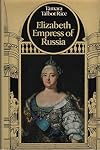
This was a very interesting look at the life of the forerunner of Catherine the Great. Empress Elizabeth was the daughter of Peter the Great. Her mother, Catherine I, also ruled Russia in her own right. However, Elizabeth came to the throne vastly unprepared for the task set before her. She was sorely lacking in book knowledge, yet she didn't hesitate to provide opportunities for her subjects to advance their education.
The book makes the case that had their been no Elizabeth, there could show more have been no Catherine the Great. Catherine modeled a lot of her reign and some of her behavior on her predecessor. The book delves into the impact Elizabeth made on the arts. This can become a little dry. I wish that an author will be able to write a more up to date biography of this seemingly little known Empress of Russia. show less
The book makes the case that had their been no Elizabeth, there could show more have been no Catherine the Great. Catherine modeled a lot of her reign and some of her behavior on her predecessor. The book delves into the impact Elizabeth made on the arts. This can become a little dry. I wish that an author will be able to write a more up to date biography of this seemingly little known Empress of Russia. show less

This what it says, a good attempt to make us understand some of the differences and similarities between this different place and ourselves. Of course, being written in 1966 - 67, there are now some differences between Byzantium and the "now" Rice was writing for, and our current "now". But we must take what we can get, this being history and not a lab science.

2684 Elizabeth Empress of Russia, by Tamara Talbot Rice (read 18 Dec 1994) This is a 1970 book. Elizabeth was the daughter of Peter the Great and was born Dec. 18, 1709 (Russian calendar) and was not the daughter of Peter's wife--not till 1711 did Peter marry Elizabeth's mother. Elizabeth on Nov. 24-25, 1741, seized the throne from Ivan, a child of one or two years. Elizabeth died Dec 25, 1761, and of course her death saved Frederick the Great from losing the Seven Years War. Elizabeth was show more rather ignorant, addicted to luxury, erratic--but this book looks rather favorably upon her. Not a bad book, but less exciting than the biographies of Peter the Great and Catherine the Great which I have read. show less
Lists
You May Also Like


Associated Authors
Statistics
- Works
- 21
- Also by
- 2
- Members
- 640
- Popularity
- #39,394
- Rating
- 4.0
- Reviews
- 12
- ISBNs
- 24
- Languages
- 4
