
Lucy Lethbridge
Author of Servants: A Downstairs History of Britain from the Nineteenth Century to Modern Times
About the Author
Lucy Lethbridge has written foe the Observer the Sunday Telegraph, the Independent on Sunday Telegraph, the Independent on Sunday, the Times Literary Supplement, Art New, and Art + Auction. She lives in London.
Works by Lucy Lethbridge
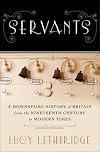
Servants: A Downstairs History of Britain from the Nineteenth Century to Modern Times (2013) 443 copies, 10 reviews
Associated Works
Tagged
Common Knowledge
- Birthdate
- 1963
- Gender
- female
- Occupations
- nonfiction author
London correspondent
literary editor - Organizations
- The Tablet (literary editor)
The Catholic Herald (literary editor)
ARTnews (London correspondent)
Guardian (contributor)
Slightly Foxed (contributor) - Nationality
- UK
- Birthplace
- London, England, UK
- Map Location
- UK
Members
Reviews

Lucy Lethbridge gives an entertaining and thought provoking view of the realities of servant life in the twentieth century. From the swan song of the great country house with its servant for every task to the inter-war years when the impossibility of finding a good servant seemed to be at the forefront of many a (female) writer's mind, to the Second World War when the place of home grown domestics was frequently taken by Jewish refugees brought up to have servants of their own, to today's show more completely different social climate, where the middle and upper classes retain a mixture of cleaning ladies, gardeners, au-pairs and nannies (but of course never servants).
There's a tendency to think of servants as existing in the world of Downton Abbey and Upstairs Downstairs but for the majority of servants life was very different. Of the one and a half million female servants in Edwardian Britain (out of a total female workforce of four million) the majority worked in single servant households. And when you consider how far down the social structure servant keeping went this isn't perhaps surprising. With the middle-classes servant keeping was a requirement of respectability but even prosperous members of the working class, faced with a growing family and housework that was a much more back-breaking operation than it was today would be tempted to hire a servant:
And those maids of all work would not have the good food and decent living conditions that might be expected in the big houses either. A bed in the kitchen and breakfast of bread and dripping with herring every day for dinner might be all that was available from them.
And as the century progressed, and more and more opportunities opened for women elsewhere the middle classes became more and more desperate to find the servants that they consider essential. And it's clear that they really did consider them essential: labour-saving devices having failed to make an early appearance in British homes largely because of the perception that the 'labour' that they purportedly saved was that of the servants, who would somehow be 'spoilt' if their jobs were made too easy. And it's clear that most of the women writers of the period, while very clear on their own rights to a fulfilling intellectual and cultural life, were rather more vague when it came to the same rights of their female servants.
There are some many quotes from this book that I'd like to share, but here is just one piece of advice offered by a mother-in-law to a new wife that illustrates the appalling snobbery that existed at the beginning of the period in question:
One thing which I hadn't appreciated before reading this book was that the gulf in the status of the servant employing classes and the servants themselves was one that to a large part had been a creation of the nineteenth century. In earlier centuries the divide had been much less fixed and more fluid, so that servants were almost part of the family (albeit a less important part). This makes sense when I consider some of the particularly old books I have read, but was something I hadn't really given any thought to previously. show less
There's a tendency to think of servants as existing in the world of Downton Abbey and Upstairs Downstairs but for the majority of servants life was very different. Of the one and a half million female servants in Edwardian Britain (out of a total female workforce of four million) the majority worked in single servant households. And when you consider how far down the social structure servant keeping went this isn't perhaps surprising. With the middle-classes servant keeping was a requirement of respectability but even prosperous members of the working class, faced with a growing family and housework that was a much more back-breaking operation than it was today would be tempted to hire a servant:
Among the higher class artisans, the little nurse-girl, the young slavey or general and the periodical char woman are quite frequent; for in this class the daughters of the house on leaving school are generally put out to some trade, and the mother of the house has her hands full with the cooking, mending and washing, for a family with a standard to maintain; but it is rare to find an adult servant in possession of all her faculties until you come to the shop-keeping class.
And those maids of all work would not have the good food and decent living conditions that might be expected in the big houses either. A bed in the kitchen and breakfast of bread and dripping with herring every day for dinner might be all that was available from them.
And as the century progressed, and more and more opportunities opened for women elsewhere the middle classes became more and more desperate to find the servants that they consider essential. And it's clear that they really did consider them essential: labour-saving devices having failed to make an early appearance in British homes largely because of the perception that the 'labour' that they purportedly saved was that of the servants, who would somehow be 'spoilt' if their jobs were made too easy. And it's clear that most of the women writers of the period, while very clear on their own rights to a fulfilling intellectual and cultural life, were rather more vague when it came to the same rights of their female servants.
There are some many quotes from this book that I'd like to share, but here is just one piece of advice offered by a mother-in-law to a new wife that illustrates the appalling snobbery that existed at the beginning of the period in question:
Army or naval officers, diplomats or clergymen might be invited to lunch or dinner. The vicar might be in invited regularly to Sunday lunch or supper if he was a gentleman. Doctors and solicitors might be invited to garden parties, though never, of course, to lunch or dinner. Anyone engaged in the arts, the stage, trade or commerce, no matter how well connected, could not be asked to the house at all.
One thing which I hadn't appreciated before reading this book was that the gulf in the status of the servant employing classes and the servants themselves was one that to a large part had been a creation of the nineteenth century. In earlier centuries the divide had been much less fixed and more fluid, so that servants were almost part of the family (albeit a less important part). This makes sense when I consider some of the particularly old books I have read, but was something I hadn't really given any thought to previously. show less
Servants: A Downstairs History of Britain from the Nineteenth Century to Modern Times by Lucy Lethbridge
An info-packed and engrossing social history that got a bit repetitious at times but was very worth reading.
Lethbridge draws on a range of biographies and memoirs of servants and those they served to show how the roles and lives of people in service in England changed from the late 19th century through the present day. While the book actually continues almost right up to the now, less space is devoted to the decades after the 1960s, when service in England dramatically changed with the show more influx of foreign workers and the growth of things like the au pair program. She also weaves in a history of things like cleanliness standards, the rise of the labor movement, domestic architecture, and the invention of labor-saving devices, as changes in these fields affected the lives of servants and were themselves affected by issues the supply and demand for servants.
I particularly enjoyed Lethbridge's discussions of the knotty relationships between the middle class or the new rich and their servants. As not having servants seems to have been a true class demarcation, people scrimped and scraped to afford this help, which often meant that servants in middle and lower-class homes saw their employers as stingy and barely more well-off than they were. Newly middle-class or wealthy people often did not know how to behave with their servants, which lead both sides to trespass and then reinforce social boundaries. The newly rich often could not discern all-important social distinctions and relied on their experienced servants to do the distinguishing for them. As middle class woman began to see leisure time and intellectual enrichment as a right, they often relied on the labor of poorer women to pursue these rights, oblivious to the fact that their servants might desire learning as well. Even class-conscious socialist women writers and activists fell victim to this bias, so entrenched was the feeling that some people were just meant to serve others.
I loved when Lethbridge looked at labor saving technologies or amenities like central heating and discussed the reluctance of Britons, particularly the wealthiest, to adopt these innovations. There were many reasons, including the fear that easing the burden on servants would make them lazy, the British upper class ethic that equated bodily discomfort with virtue (drafts build character), and the feeling that human hard work (as long as it was done by others) built character and was more effective. What this meant in practice was that servants had to keep pace with increasingly rigid standards of cleanliness with increasingly obsolete tools.
Lethbridge discusses the impact of WWI on servants and the served but highlights how in the 1920s and 1930s, many women who had left service or who had never been in service in were forced into the life by economic desperation or the belief that they should give up factory jobs to men returning from the war. This was something I hadn't really been aware of and explains how WWII was the true death knell for service as the dominant occupation in Britain.
Lethbridge also includes a fascinating section on the pre-WWII immigration of Germans and Austrians, mostly Jews, to Britain to fill growing shortages in service positions as a way of escaping the rising threats to them in Continental Europe. She looks at how these often wealthy and educated people found themselves considerably reduced in order to survive, the cultural shocks that a lot of Continentals experienced when confronted with the relative uncleanliness and technological backwardness of British homes, and the suspicion that many found themselves under when war did break out.
A great read, lots more I probably could include in this review. Highly recommended for anyone interested in service, England, social history, or gender history. show less
Lethbridge draws on a range of biographies and memoirs of servants and those they served to show how the roles and lives of people in service in England changed from the late 19th century through the present day. While the book actually continues almost right up to the now, less space is devoted to the decades after the 1960s, when service in England dramatically changed with the show more influx of foreign workers and the growth of things like the au pair program. She also weaves in a history of things like cleanliness standards, the rise of the labor movement, domestic architecture, and the invention of labor-saving devices, as changes in these fields affected the lives of servants and were themselves affected by issues the supply and demand for servants.
I particularly enjoyed Lethbridge's discussions of the knotty relationships between the middle class or the new rich and their servants. As not having servants seems to have been a true class demarcation, people scrimped and scraped to afford this help, which often meant that servants in middle and lower-class homes saw their employers as stingy and barely more well-off than they were. Newly middle-class or wealthy people often did not know how to behave with their servants, which lead both sides to trespass and then reinforce social boundaries. The newly rich often could not discern all-important social distinctions and relied on their experienced servants to do the distinguishing for them. As middle class woman began to see leisure time and intellectual enrichment as a right, they often relied on the labor of poorer women to pursue these rights, oblivious to the fact that their servants might desire learning as well. Even class-conscious socialist women writers and activists fell victim to this bias, so entrenched was the feeling that some people were just meant to serve others.
I loved when Lethbridge looked at labor saving technologies or amenities like central heating and discussed the reluctance of Britons, particularly the wealthiest, to adopt these innovations. There were many reasons, including the fear that easing the burden on servants would make them lazy, the British upper class ethic that equated bodily discomfort with virtue (drafts build character), and the feeling that human hard work (as long as it was done by others) built character and was more effective. What this meant in practice was that servants had to keep pace with increasingly rigid standards of cleanliness with increasingly obsolete tools.
Lethbridge discusses the impact of WWI on servants and the served but highlights how in the 1920s and 1930s, many women who had left service or who had never been in service in were forced into the life by economic desperation or the belief that they should give up factory jobs to men returning from the war. This was something I hadn't really been aware of and explains how WWII was the true death knell for service as the dominant occupation in Britain.
Lethbridge also includes a fascinating section on the pre-WWII immigration of Germans and Austrians, mostly Jews, to Britain to fill growing shortages in service positions as a way of escaping the rising threats to them in Continental Europe. She looks at how these often wealthy and educated people found themselves considerably reduced in order to survive, the cultural shocks that a lot of Continentals experienced when confronted with the relative uncleanliness and technological backwardness of British homes, and the suspicion that many found themselves under when war did break out.
A great read, lots more I probably could include in this review. Highly recommended for anyone interested in service, England, social history, or gender history. show less
Servants: A Downstairs History of Britain from the Nineteenth Century to Modern Times by Lucy Lethbridge
This book feels like a wildly informative chat with a well-informed friend. Lethbridge definitely has scoured all the sources: contemporary accounts, movies, literature, newspaper articles, "sits vac" ads in the papers, the job registry and list goes on. Her grasp of the topic is momentous though she never feels the need to boast, simply to share the wealth.
A fascinating subject for me, an adequate book might have left me somewhat enthralled. What a treat to have something fantastic to read show more instead! show less
A fascinating subject for me, an adequate book might have left me somewhat enthralled. What a treat to have something fantastic to read show more instead! show less
Servants: A Downstairs History of Britain from the Nineteenth Century to Modern Times by Lucy Lethbridge
The perfect antidote to those people who are living in the golden haze produced by too many hours watching Downton Abbey and other movie/TV shows that portray English servants in the early twentieth century as happy employees in harmony with their upper class employers, this well-researched book will put to rest any such fantasies. Instead it shows servants in the first half of the century to be over worked while being underpaid as well as under appreciated.
The typical domestic worker show more entered service at age fourteen or fifteen (although some were even younger) and worked until they died as most were not provided with pensions of any kind. Employers, especially the aristocracy and upper middle classes eschewed any kind of labor saving devices - even electricity as "vulgar," preferring to adhere to the old artisan methods of cooking and house keeping that had been in place since the eighteenth century. It wasn't until the 1920's, when the after effects of the First World War forced changes to the system, that modern conveniences started to trickle down to the servants hall.
Even worse than the hard labor, however, was the attitude of employer to employee. Those employing servants seemed not to consider even the basic needs of their cooks, housemaids or footman, requiring them to be invisible as they went about their jobs of making like pleasant for those who lived above stairs.
The author uses interviews, letters and diaries of former servants to bring this long gone world to life. Highly recommended. show less
The typical domestic worker show more entered service at age fourteen or fifteen (although some were even younger) and worked until they died as most were not provided with pensions of any kind. Employers, especially the aristocracy and upper middle classes eschewed any kind of labor saving devices - even electricity as "vulgar," preferring to adhere to the old artisan methods of cooking and house keeping that had been in place since the eighteenth century. It wasn't until the 1920's, when the after effects of the First World War forced changes to the system, that modern conveniences started to trickle down to the servants hall.
Even worse than the hard labor, however, was the attitude of employer to employee. Those employing servants seemed not to consider even the basic needs of their cooks, housemaids or footman, requiring them to be invisible as they went about their jobs of making like pleasant for those who lived above stairs.
The author uses interviews, letters and diaries of former servants to bring this long gone world to life. Highly recommended. show less
Lists
Unread books (1)
Awards

You May Also Like


Associated Authors
Statistics
- Works
- 12
- Also by
- 3
- Members
- 1,153
- Popularity
- #22,290
- Rating
- 3.8
- Reviews
- 16
- ISBNs
- 50
- Languages
- 5