
Glenn C. Loury
Author of The anatomy of racial inequality
About the Author
Boston University professor Glenn Loury was educated at Northwestern University and the Massachusetts Institute of Technology. Loury has taught at Harvard University, Northwestern University and the University of Michigan. He is currently on the commission for the National Academy of Science and show more was elected vice president of the American Economics Association in 1997. Loury has contributed writing to The New York Times, Wall Street Journal, Washington Post and National Review. He also is an editor for The New Republic. Loury's book "One by One, From the Inside Out: Essays and Reviews on Race and Responsibility in America," which won the 1996 American Book Award and the 1996 Christianity Today Award. He has also received a Guggenheim Fellowship. (Bowker Author Biography) show less
Image credit: BloggingHeads.tv
Works by Glenn C. Loury
Associated Works
The Question of Discrimination: Racial Inequality in the U.S. Labor Market (1989) — Contributor — 6 copies
Tagged
Common Knowledge
- Canonical name
- Glenn C. Loury
- Legal name
- Loury, Glenn Cartman
- Birthdate
- 1948-09-03
- Gender
- male
- Education
- Northwestern University (BA | Mathematics | 1972)
Massachusetts Institute of Technology (PhD | Economics | 1976) - Occupations
- professor (Economics | University of Michigan | 1979-1982)
professor (Economics | Harvard University | 1982-1991)
professor (Institute on Race and Social Division | Boston University | 1991-2005)
professor (Economics | Brown University | 2005- ) - Nationality
- USA
- Places of residence
- Chicago, Illinois, USA (birth)
- Associated Place (for map)
- Illinois, USA
Members
Reviews
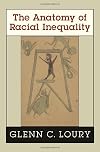
very clear and insightful discussion of persisting racial inequality in america. if you know thomas schelling's model of how segregated neighborhoods can arise spontaneously from even very weak preferences to live near your race, this book takes a similar microeconomic approach (loury studied under schelling) to many aspect of race beyond housing. the last half or so goes in a political philosophical direction, discussing whether race-blind liberal individualism is simply incapable of show more pulling us out of these bad (but "freely" chosen) equilibria we've gotten ourselves into, and whether and when racial solidarity can be appropriate. the best part of this book is actually the sociological bits that borrow irving goffman's concept of stigma and apply it to race and the way we frame policy discussions about black-white inequality.
if you know loury's podcast, you may be surprised at how leftwing the book can seem. that said, note that he credits communitarians for critique of the libs, and this book is mostly not about policy solutions. still, i am pleased how the best neolib econ thought on the topic converges with the best socialist thinking. i note that he and the socialist karen fields each cite the other favorably.
in summary this is a good, theory-heavy book offering models from economics and sociology that explain persistent racial inequality and show up the irrelevance of much mainstream lib and conservative thinking on the topic. show less
if you know loury's podcast, you may be surprised at how leftwing the book can seem. that said, note that he credits communitarians for critique of the libs, and this book is mostly not about policy solutions. still, i am pleased how the best neolib econ thought on the topic converges with the best socialist thinking. i note that he and the socialist karen fields each cite the other favorably.
in summary this is a good, theory-heavy book offering models from economics and sociology that explain persistent racial inequality and show up the irrelevance of much mainstream lib and conservative thinking on the topic. show less
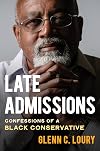
This autobiography of a brilliant economist and current affairs commentator is deeply personal and poignant. I must admit that I had a favorable impression of the author going into this book, and the information about his life helped me better comprehend his perspective.

This is a pretty short book but would make a good primer for anyone interested in the topic.
From Publishers Weekly
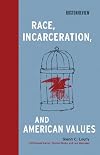
In this pithy discussion, renowned scholars debate the American penal system through the lens—and as a legacy—of an ugly and violent racial past. Economist Loury argues that incarceration rises even as crime rates fall because we have become increasingly punitive. According to Loury, the disproportionately black and brown prison populations are the victims of civil rights opponents who successfully moved the country's race dialogue to a seemingly race-neutral show more concern over crime. Loury's claims are well-supported with genuinely shocking statistics, and his argument is compelling that even if the racial argument about causes is inconclusive, the racial consequences are clear. Three shorter essays respond: Stanford law professor Karlan examines prisoners as an inert ballast in redistricting and voting practices; French sociologist Wacquant argues that the focus on race has ignored the fact that inmates are first and foremost poor people; and Harvard philosophy professor Shelby urges citizens to break with Washington's political outlook on race. The group's respectful sparring results in an insightful look at the conflicting theories of race and incarceration, and the slim volume keeps up the pace of the argument without being overwhelming. Copyright © Reed Business Information, a division of Reed Elsevier Inc. All rights reserved. show less
In this pithy discussion, renowned scholars debate the American penal system through the lens—and as a legacy—of an ugly and violent racial past. Economist Loury argues that incarceration rises even as crime rates fall because we have become increasingly punitive. According to Loury, the disproportionately black and brown prison populations are the victims of civil rights opponents who successfully moved the country's race dialogue to a seemingly race-neutral show more concern over crime. Loury's claims are well-supported with genuinely shocking statistics, and his argument is compelling that even if the racial argument about causes is inconclusive, the racial consequences are clear. Three shorter essays respond: Stanford law professor Karlan examines prisoners as an inert ballast in redistricting and voting practices; French sociologist Wacquant argues that the focus on race has ignored the fact that inmates are first and foremost poor people; and Harvard philosophy professor Shelby urges citizens to break with Washington's political outlook on race. The group's respectful sparring results in an insightful look at the conflicting theories of race and incarceration, and the slim volume keeps up the pace of the argument without being overwhelming. Copyright © Reed Business Information, a division of Reed Elsevier Inc. All rights reserved. show less
Lists
Awards


You May Also Like


Associated Authors
Statistics
- Works
- 8
- Also by
- 3
- Members
- 294
- Popularity
- #79,673
- Rating
- 4.2
- Reviews
- 6
- ISBNs
- 22
- Favorited
- 1