
Sean McDowell
Author of More Than a Carpenter
About the Author
Sean McDowell is an author, speaker, and associate professor at the Talbot School of Theology at Biola University. He has two master's degrees and a PhD in apologetics and worldview studies. He is active on social media and has a popular YouTube channel. He has authored or edited more than twenty show more books, including Chasing Love: Sex, Love, and Relationships in a Confused Culture and So the Next Generation Will Know. Sean is married to his high school sweetheart, Stephanie. They have three children and live in San Juan Capistrano, California. show less
Image credit: via Amazon.com
Works by Sean McDowell
Apologetics for a New Generation: A Biblical and Culturally Relevant Approach to Talking About God (ConversantLife.com®) (2009) 213 copies, 1 review
Same-Sex Marriage: A Thoughtful Approach to God's Design for Marriage (Thoughtful Response) (2014) — Author — 180 copies, 1 review
Is God Just a Human Invention? And Seventeen Other Questions Raised by the New Atheists (2010) 134 copies, 18 reviews
So the Next Generation Will Know: Preparing Young Christians for a Challenging World (2019) 127 copies, 1 review
A New Kind of Apologist: *Adopting Fresh Strategies *Addressing the Latest Issues *Engaging the Culture (2016) 97 copies
A Rebel's Manifesto: Choosing Truth, Real Justice, and Love amid the Noise of Today's World (2022) 45 copies, 1 review
The Fate of the Apostles: Examining the Martyrdom Accounts of the Closest Followers of Jesus (2016) 45 copies, 1 review
Apologetics for an Ever-Changing Culture: A Biblical and Culturally Relevant Approach to Talking About God (2025) 20 copies
So the Next Generation Will Know Participant's Guide: Preparing Young Christians for a Challenging World (2019) 13 copies
So the Next Generation Will Know Video Series: Prepairing Young Christians for a Challenging World (2019) 2 copies
Amor en verdad - Estudio bíblico para jóvenes: El amor en verdad espera (Spanish Edition) (2022) 1 copy
The Fate of the Apositles 1 copy
Search for Meaning 1 copy
Chasing Love 1 copy
Same-Sex Marriage 1 copy
Tagged
Common Knowledge
- Gender
- male
Members
Reviews
A Rebel's Manifesto: Choosing Truth, Real Justice, and Love amid the Noise of Today's World by Sean McDowell
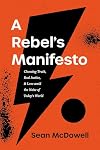
This is a solid, 100-level approach to encouraging teens and adults alike to think critically and, frankly, civilly engage with each other, heh. (It's sad we adults even need that, but um...if anyone wonders, have they been on social media lately?)
At times more black-and-white than I expected (which, in retrospect, I appreciate), the read challenged me to think critically about my own views and how they may have changed over the years. I was a child of the 80s/90s, grew up in the purity show more culture, and am fairly familiar with McDowell's dad Josh's works (which I think I'd like to re-read now, ha!); this was a great challenge in asking "why do I believe this, why did it change from XYZ time, and is the change warranted?" Truth will stand up to investigation, and I'm learning to not be afraid of that process. :) This book will help with that.
A solid pairing with this read would be Jonathan Morrow's _Welcome to College_, a perhaps 102-level book on similar topics. I'd also recommend Bobby Conway (The One-Minute Apologist)'s books _The Fi5th Gospel_ and _Doubting Toward Faith_, solid and approachable reads on apologetics regardless of age.
I received an eARC of the book from the publisher via NetGalley. All opinions are my own. show less
At times more black-and-white than I expected (which, in retrospect, I appreciate), the read challenged me to think critically about my own views and how they may have changed over the years. I was a child of the 80s/90s, grew up in the purity show more culture, and am fairly familiar with McDowell's dad Josh's works (which I think I'd like to re-read now, ha!); this was a great challenge in asking "why do I believe this, why did it change from XYZ time, and is the change warranted?" Truth will stand up to investigation, and I'm learning to not be afraid of that process. :) This book will help with that.
A solid pairing with this read would be Jonathan Morrow's _Welcome to College_, a perhaps 102-level book on similar topics. I'd also recommend Bobby Conway (The One-Minute Apologist)'s books _The Fi5th Gospel_ and _Doubting Toward Faith_, solid and approachable reads on apologetics regardless of age.
I received an eARC of the book from the publisher via NetGalley. All opinions are my own. show less
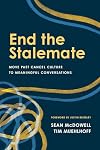
This book is a timely, effective and perspective-altering journey into our own insights in the way we handle communication. McDowell and Muehlhoff are the ideal duo to co-author such a book; one a PhD holding philosopher and theologian, the other a PhD holding communications specialist. Both authors host their own podcasts and produce YouTube content, and regularly engage with an array of guests on their programs, many of whom share completely different worldviews and perspectives on a show more multitude of topics.
What is most engaging about this read is the fluidity and the sincerity of the topics and the tactics suggested to "end the stalemate" and remove the barriers that prevent fruitful discussions from happening in the first place. Both authors are transparent about their own shortcomings in the past and humility they possess knowing that they will look back and probably change some of the behaviors and tactics they employ today. This transparency is critical in building trust with authors outside of their past work and credentials.
If you are looking for a book that proves Christianity is the best method for communication, or winning tactics for evangelism and persuasion, this is not the goal of the book. Yes, understanding the Christian approach to ending the stalemate in our culture is revealed as a hopeful outcome by the authors, but this book is primed to help anybody of any faith, background or community to engage in civil, fruitful dialogue and learn to treat one another graciously as fellow human beings first, and let the common ground expand from there. I could not recommend this book enough, especially in the divisive times we live in at present. show less
What is most engaging about this read is the fluidity and the sincerity of the topics and the tactics suggested to "end the stalemate" and remove the barriers that prevent fruitful discussions from happening in the first place. Both authors are transparent about their own shortcomings in the past and humility they possess knowing that they will look back and probably change some of the behaviors and tactics they employ today. This transparency is critical in building trust with authors outside of their past work and credentials.
If you are looking for a book that proves Christianity is the best method for communication, or winning tactics for evangelism and persuasion, this is not the goal of the book. Yes, understanding the Christian approach to ending the stalemate in our culture is revealed as a hopeful outcome by the authors, but this book is primed to help anybody of any faith, background or community to engage in civil, fruitful dialogue and learn to treat one another graciously as fellow human beings first, and let the common ground expand from there. I could not recommend this book enough, especially in the divisive times we live in at present. show less
The Fate of the Apostles: Examining the Martyrdom Accounts of the Closest Followers of Jesus by Sean McDowell
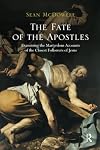
Sean McDowell’s The Fate of the Apostles presents a stalwart unpacking of the evidence surrounding the travels, persecution, and ultimate demise of each of the Apostles of Jesus Christ. McDowell analyzes the historical data surrounding the claim that the Apostles either died or were willing to die as martyrs for their belief that Jesus had risen from the grave and was Israel’s prophesized Messiah. At the start of his study, McDowell carefully identifies the scale he will be using for show more assessing confidence in a historical source, ranging from not possibly true to highest possible probability—which equates to near-historical certainty. After thoroughly explaining the definition of “martyrdom” and other relevant terms, McDowell then dissects virtually all the available historical resources surrounding each Apostle’s journey and ultimate demise.
McDowell holds all historical claims to the same objective standard of accountability, often even dismissing the historical “probability” of evidence that was generally believed to be true by most Christians. However, this strict criterion only strengthens the case for the “highly probable” evidence that actually meets that high standard. McDowell also does an excellent job in his summaries at the end of his study of each Apostle, detailing every claim that was discussed, assigning the appropriate rating, and then re-listing all the reference sources that supported that rating. The cohesiveness and objectivity throughout this study are exemplary for any audience. McDowell is a master at drawing in any audience—regardless of background or beliefs—with a sincere, genuine tone throughout this book’s truth-seeking journey. While this book is arguably among the most thorough pieces of literature ever written about the collective Apostles’ martyrdom, don’t expect to find any detailed theological arguments in this book. This book is a super-focused, unprecedented gathering and assessment of virtually all the available historical data surrounding the fate of the Apostles, and it need not distract itself from that task. McDowell’s pioneering efforts yielded an absolute academic gem of a book for anybody needing to find information on this subject. I give this book the highest possible rating! show less
McDowell holds all historical claims to the same objective standard of accountability, often even dismissing the historical “probability” of evidence that was generally believed to be true by most Christians. However, this strict criterion only strengthens the case for the “highly probable” evidence that actually meets that high standard. McDowell also does an excellent job in his summaries at the end of his study of each Apostle, detailing every claim that was discussed, assigning the appropriate rating, and then re-listing all the reference sources that supported that rating. The cohesiveness and objectivity throughout this study are exemplary for any audience. McDowell is a master at drawing in any audience—regardless of background or beliefs—with a sincere, genuine tone throughout this book’s truth-seeking journey. While this book is arguably among the most thorough pieces of literature ever written about the collective Apostles’ martyrdom, don’t expect to find any detailed theological arguments in this book. This book is a super-focused, unprecedented gathering and assessment of virtually all the available historical data surrounding the fate of the Apostles, and it need not distract itself from that task. McDowell’s pioneering efforts yielded an absolute academic gem of a book for anybody needing to find information on this subject. I give this book the highest possible rating! show less
Is God Just a Human Invention? And Seventeen Other Questions Raised by the New Atheists by Sean McDowell
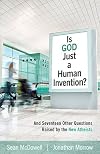
In this book, authors Sean McDowell and Jonathan Morrow use the arguments of Richard Dawkins, Sam Harris, Christopher Hitchens, and other prominent atheists as the jumping-off point to discuss questions of God's existence, Christian morality, science, evolution/creationism, history, Scripture, and more. The style is engaging and friendly, even when dealing with the kind of vicious statements that Dawkins in particular likes to make, and this is refreshing. And much of the evidence that show more McDowell and Morrow offer is compelling. You can probably sense the "but" coming up here shortly... we'll get there.
At first I was enamored of the book. Look at all this amazing proof! The evidence for a Creator is astounding! The reasons for faith are powerful! How can anyone even argue? But as I read further, I began to bump into things that were problematic, little theological statements that weren't quite right or that told only a part of the truth. I understand not wanting to just cite Scripture to people who don't accept it as authoritative, but some things cannot be explained any other way. In short, this book approaches the question of God from an evidentialist perspective, which basically means that it relies on sources outside Scripture (such as our observations of life, common sense, reason, history, studies, science, etc.) to make its case.
I think it can be very helpful to examine the evidence outside of Scripture for God's existence, and there is certainly a place for this type of apologetic approach when dialoguing with skeptics. But if we rely solely on an evidentialist argument, we've cut the ground from under our own feet, because our foundation is Christ as revealed in His Word. As Christians, we believe that the Bible is always relevant and always right. Our interpretations aren't always infallible, but we can trust God. A solely evidentialist approach discounts the power and perfection of Scripture in favor of human arguments — some of which may be right, but none of which is authoritative.
There are some disappointing theological statements in the book. In particular, the chapter on Hell — while making some great points, such as Hell being relational — really falls down. The truth is, we can't postulate about Hell outside of Scripture because we simply don't know. We will never be able to justify Hell to skeptics, but our efforts are even more futile when we attempt to explain spiritual things in carnal language. We can't depart from divine revelation when we are explaining divine things; we will not arrive at a correct conclusion with only our own wisdom to guide us. I agreed with many things in this chapter, but on the whole it was a disappointment.
Also the authors candidly admit that they wish God never told the Israelites to conquer the Canaanites and obliterate them completely. We may not like certain things in Scripture, but if God included it, it is His Word and we are to love it. It's okay to be honest about our reactions to things in the Bible, but we need to wrestle with those things and rest in the knowledge that God's wisdom is greater than ours. If it pleases Him to include it, it should please me to learn from it. Again, this is an area in which the authors try too hard to make sense to a skeptic. Some things just won't make sense until we are converted, and even then we may struggle with understanding God's purposes. It really does come back to faith in the end.
Despite my overall sense of the book's faults, I learned much from it. The discussion of naturalism is particularly helpful. Naturalism is the belief that everything we are is a product of our physical bodies and environments, that personality and selfhood are myths we've created to comfort ourselves, and that ultimately we are nothing more than the sum of the atoms that comprise our physical selves. There is no spiritual component to man and when we die physically, we simply cease to exist. This is the root belief that atheism comes from. It isn't atheism versus Christianity; it is naturalism versus theism.
I really appreciated the chapters on evolution and science and the supposed disconnect between science and creationism. Dawkins loves to say that no educated or intelligent person believes in creationism, but he is patently incorrect in this claim, as McDowell and Morrow demonstrate with quotes from many leading scientists. (As a side note, I would love to hear Dawkins' response to the consistent, verifiable refutations of his claims that McDowell and Morrow have gathered from various scholarly sources.) But we don't believe a thing because leading scientists and philosophers do; both sides can produce impressive lists of supporters. And this is where the evidentialist side of the argument is very valuable; Scripture says such-and-such, and look! here's a bunch of evidence that corresponds to what the Bible has been saying for centuries. It won't convince people who are determined to believe the opposite, but it may raise questions for those with open minds.
I liked having galley proofs of this book because I felt free (and had room) to write in the margins, to underline and circle and star the important bits. I also engaged in some argumentative marginalia (always fun stuff) when McDowell and Morrow made statements I did not find Scripturally supportable.
For atheists who enjoy being scornful of and belittling people who profess faith in God, this book will probably not hold much appeal. McDowell and Morrow aren't interested in getting nastily personal or in gleefully pointing out the stupidity of their opponents. Instead they try to take on real questions and provide viable answers from Christianity. They don't succeed perfectly, but there is much of value here to the person who is sincerely seeking.
Overall, I think I'd recommend this book — to my atheist/skeptic friends as a discussion-starter (with a few caveats), and to fellow believers as encouragement in our faith. The empirical evidence we have for the existence of God is not conclusive, nor is it the whole story; I am thankful we have His Word to teach us to place our faith not in ourselves or our wisdom, but in the God who has revealed Himself to us in Scripture. show less
At first I was enamored of the book. Look at all this amazing proof! The evidence for a Creator is astounding! The reasons for faith are powerful! How can anyone even argue? But as I read further, I began to bump into things that were problematic, little theological statements that weren't quite right or that told only a part of the truth. I understand not wanting to just cite Scripture to people who don't accept it as authoritative, but some things cannot be explained any other way. In short, this book approaches the question of God from an evidentialist perspective, which basically means that it relies on sources outside Scripture (such as our observations of life, common sense, reason, history, studies, science, etc.) to make its case.
I think it can be very helpful to examine the evidence outside of Scripture for God's existence, and there is certainly a place for this type of apologetic approach when dialoguing with skeptics. But if we rely solely on an evidentialist argument, we've cut the ground from under our own feet, because our foundation is Christ as revealed in His Word. As Christians, we believe that the Bible is always relevant and always right. Our interpretations aren't always infallible, but we can trust God. A solely evidentialist approach discounts the power and perfection of Scripture in favor of human arguments — some of which may be right, but none of which is authoritative.
There are some disappointing theological statements in the book. In particular, the chapter on Hell — while making some great points, such as Hell being relational — really falls down. The truth is, we can't postulate about Hell outside of Scripture because we simply don't know. We will never be able to justify Hell to skeptics, but our efforts are even more futile when we attempt to explain spiritual things in carnal language. We can't depart from divine revelation when we are explaining divine things; we will not arrive at a correct conclusion with only our own wisdom to guide us. I agreed with many things in this chapter, but on the whole it was a disappointment.
Also the authors candidly admit that they wish God never told the Israelites to conquer the Canaanites and obliterate them completely. We may not like certain things in Scripture, but if God included it, it is His Word and we are to love it. It's okay to be honest about our reactions to things in the Bible, but we need to wrestle with those things and rest in the knowledge that God's wisdom is greater than ours. If it pleases Him to include it, it should please me to learn from it. Again, this is an area in which the authors try too hard to make sense to a skeptic. Some things just won't make sense until we are converted, and even then we may struggle with understanding God's purposes. It really does come back to faith in the end.
Despite my overall sense of the book's faults, I learned much from it. The discussion of naturalism is particularly helpful. Naturalism is the belief that everything we are is a product of our physical bodies and environments, that personality and selfhood are myths we've created to comfort ourselves, and that ultimately we are nothing more than the sum of the atoms that comprise our physical selves. There is no spiritual component to man and when we die physically, we simply cease to exist. This is the root belief that atheism comes from. It isn't atheism versus Christianity; it is naturalism versus theism.
I really appreciated the chapters on evolution and science and the supposed disconnect between science and creationism. Dawkins loves to say that no educated or intelligent person believes in creationism, but he is patently incorrect in this claim, as McDowell and Morrow demonstrate with quotes from many leading scientists. (As a side note, I would love to hear Dawkins' response to the consistent, verifiable refutations of his claims that McDowell and Morrow have gathered from various scholarly sources.) But we don't believe a thing because leading scientists and philosophers do; both sides can produce impressive lists of supporters. And this is where the evidentialist side of the argument is very valuable; Scripture says such-and-such, and look! here's a bunch of evidence that corresponds to what the Bible has been saying for centuries. It won't convince people who are determined to believe the opposite, but it may raise questions for those with open minds.
I liked having galley proofs of this book because I felt free (and had room) to write in the margins, to underline and circle and star the important bits. I also engaged in some argumentative marginalia (always fun stuff) when McDowell and Morrow made statements I did not find Scripturally supportable.
For atheists who enjoy being scornful of and belittling people who profess faith in God, this book will probably not hold much appeal. McDowell and Morrow aren't interested in getting nastily personal or in gleefully pointing out the stupidity of their opponents. Instead they try to take on real questions and provide viable answers from Christianity. They don't succeed perfectly, but there is much of value here to the person who is sincerely seeking.
Overall, I think I'd recommend this book — to my atheist/skeptic friends as a discussion-starter (with a few caveats), and to fellow believers as encouragement in our faith. The empirical evidence we have for the existence of God is not conclusive, nor is it the whole story; I am thankful we have His Word to teach us to place our faith not in ourselves or our wisdom, but in the God who has revealed Himself to us in Scripture. show less
 This review was written for LibraryThing Early Reviewers.
Lists
You May Also Like


Associated Authors
Statistics
- Works
- 49
- Members
- 7,301
- Popularity
- #3,346
- Rating
- 3.9
- Reviews
- 49
- ISBNs
- 162
- Languages
- 18
