

Cory Doctorow
Author of Little Brother
About the Author
Writer and activist Cory Doctorow was born in Toronto, Canada on July 17, 1971. In 1999 he co-founded a free software company called Opencola and served as Canadian Regional Director of the Science Fiction and Fantasy Writers of America. For four years he worked as European Affairs Coordinator for show more the Electronic Frontier Foundation and in 2007 won its Pioneer Award. His first novel, Down and Out in the Magic Kingdom, won a Locus Award for Best First Novel. His short story collection A Place So Foreign and Eight More won a Sunburst Award, and his bestselling novel Little Brother received the 2009 Prometheus Award, a Sunburst Award, and the John W. Campbell Memorial Award. Doctorow also writes nonfiction books and articles, and he co-edits the blog Boing Boing. (Bowker Author Biography) show less
Series
Works by Cory Doctorow
Enshittification: Why Everything Suddenly Got Worse and What to Do About It (2025) — Author — 503 copies, 22 reviews
Content: Selected Essays on Technology, Creativity, Copyright, and the Future of the Future (2008) 360 copies, 15 reviews
Context: Further Selected Essays On Productivity, Creativity, Parenting, And Politics In The 21st Century (2011) 129 copies, 5 reviews
The reverse centaur's guide to life after AI : How to think about artificial intelligence, before it's too late (2026) 34 copies, 2 reviews
Flowers from Alice 4 copies
To Go Boldly 4 copies
Power Punctuation 3 copies
Liberation Spectrum 3 copies
Car Wars 3 copies
Canny Valley 3 copies
Epoch 3 copies
To Market, To Market 3 copies
Con/Game 2 copies
Beat Me Daddy [Eight To The Bar] 2 copies
All Day Sucker 2 copies
Attack Surface Sneak Peek 1 copy
Le rapt d'Internet: Manuel de déconstruction des Big Tech, ou comment récupérer les moyens de production numérique (2025) 1 copy
Utopia 1 copy
Pester Power 1 copy
Un miliard de sanse 1 copy
Little Brother Series & More 1 copy
Constitutional Crisis 1 copy
Internet: Stories 1 copy
Sole and Despotic Dominion 1 copy
Sensored 1 copy
The Right Book 1 copy
Dming For Your Toddler 1 copy
Little Brother 1 copy
Associated Works
The Chronicles of Harris Burdick: Fourteen Amazing Authors Tell the Tales (2011) — Contributor — 979 copies, 48 reviews
The Thackery T. Lambshead Pocket Guide to Eccentric and Discredited Diseases (2003) — Contributor — 809 copies, 20 reviews
Steampunk! An Anthology of Fantastically Rich and Strange Stories (2011) — Contributor — 759 copies, 26 reviews
The Big Book of Science Fiction: The Ultimate Collection (2016) — Contributor — 522 copies, 8 reviews
The Year's Best Science Fiction: Sixteenth Annual Collection (1999) — Contributor — 516 copies, 1 review
The Year's Best Science Fiction: Twenty-Fourth Annual Collection (2007) — Contributor — 457 copies, 6 reviews
The Mammoth Book of Extreme Science Fiction: New Generation Far-Future SF (2006) — Contributor — 350 copies, 7 reviews
The Year's Best Science Fiction: Twenty-Eighth Annual Collection (2011) — Contributor — 328 copies, 3 reviews
Chokepoint Capitalism: How Big Tech and Big Content Captured Creative Labor Markets and How We'll Win Them Back (2022) — Author, some editions — 265 copies, 5 reviews
The Best Science Fiction and Fantasy of the Year, Volume 1 (2007) — Contributor — 217 copies, 6 reviews
The Year's Best Science Fiction: Thirty-Second Annual Collection (2015) — Contributor — 204 copies, 8 reviews
Frankenstein: Annotated for Scientists, Engineers, and Creators of All Kinds (2017) — Contributor — 171 copies, 1 review
The Best Science Fiction and Fantasy of the Year, Volume 5 (2011) — Contributor — 165 copies, 4 reviews
The Best Science Fiction and Fantasy of the Year, Volume 6 (2012) — Contributor — 162 copies, 4 reviews
The Anthology at the End of the Universe: Leading Science Fiction Authors on Douglas Adams' The Hitchhiker's Guide to th (2005) — Contributor — 139 copies, 2 reviews
Bound by Law? Tales from the Public Domain (2007) — Introduction, some editions — 137 copies, 3 reviews
McSweeney's 45: Hitchcock and Bradbury Fistfight in Heaven (2013) — Contributor — 118 copies, 6 reviews
Gateways: A Feast of Great New Science Fiction Honoring Grand Master Frederik Pohl (2010) — Contributor — 111 copies, 2 reviews
Cyberpunk: Stories of Hardware, Software, Wetware, Evolution, and Revolution (1995) — Contributor — 95 copies, 1 review
Northern Suns : The New Anthology of Canadian Science Fiction (1999) — Contributor — 69 copies, 1 review
More Human Than Human: Stories of Androids, Robots, and Manufactured Humanity (2017) — Contributor — 62 copies, 2 reviews
Before They Were Giants: First Works from Science Fiction Greats (2010) — Contributor — 54 copies, 2 reviews
In the Shadow of the Towers: Speculative Fiction in a Post-9/11 World (2015) — Contributor — 41 copies
Send My Love and a Molotov Cocktail! Stories of Crime, Love, and Rebellion (2011) — Contributor — 37 copies
Share or Die: Voices of the Get Lost Generation in the Age of Crisis (2012) — Foreword — 30 copies, 1 review
Communications Breakdown: SF Stories about the Future of Connection (2023) — Contributor — 28 copies, 1 review
Imaginarium 3: The Best Canadian Speculative Writing (The Imaginarium Series) (2015) — Contributor — 22 copies
Imaginarium 4: The Best Canadian Speculative Writing (The Imaginarium Series) (2016) — Contributor — 14 copies, 1 review
Asimov's Science Fiction: Vol. 24, No. 12 [December 2000] (2000) — Contributor — 12 copies, 2 reviews
Brave New Worlds {Second Edition ebook} — Contributor, some editions — 11 copies
The Tomorrow Project Anthology: Conversations About the Future (2011) — Contributor — 8 copies, 1 review
Shapers of Worlds Volume III: Science fiction and fantasy by authors featured on The Worldshapers podcast (2022) — Contributor — 5 copies
Subterranean Magazine Summer 2010 — Contributor — 2 copies
Locus, July 2011 (606) — Contributor — 1 copy
FenCon X: Infinite Possibilities — Contributor — 1 copy
Tagged
Common Knowledge
- Legal name
- Doctorow, Cory Efram
- Birthdate
- 1971-07-17
- Gender
- male
- Education
- SEED school, Toronto
- Occupations
- novelist
blogger
journalist
science fiction writer - Organizations
- Creative Commons
Electronic Frontier Foundation
Boing Boing
Science Fiction and Fantasy Writers of America
SF Canada - Awards and honors
- John W. Campbell Award (2000|Best New Writer)
EFF Pioneer Award (2007) - Agent
- Russell Galen
- Nationality
- Canada
- Birthplace
- Toronto, Ontario, Canada
- Places of residence
- Toronto, Ontario, Canada
London, England, UK - Associated Place (for map)
- Canada
Members
Discussions
JUNE - SPOILERS - Little Brother in The Green Dragon (June 2014)
JUNE - NO SPOILERS - Little Brother in The Green Dragon (May 2014)
Reviews
The reverse centaur's guide to life after ai : how to think about artificial intelligence-before it's too late by Cory Doctorow

Rating: 5* of five
The Publisher Says: Whether you want to criticize, kill, or use AI, you have to get through the hype and uncover the real story.
Start with labor: in automation theory, a centaur is a person who chooses to use technology to help them do the things that matter to them. A reverse centaur is a person who has been conscripted to serve as a helper for a machine, at an inhuman, machine pace: a driver made to deliver all day long, nonstop; a warehouse worker made to work without show more food or bathroom breaks; a programmer made to crank out impossible amounts of code. As Doctorow says: it's not enough to ask what the technology does—we have to understand who it's doing it for and who it's doing it to.
The intended audience for AI hype isn't the people who are forced to use AI. The AI show is a performance staged for bosses and investors. Investment bankers claim AI will to be worth more than $16 trillion: a number that only makes sense if AI replaces vast swathes of the wage-earning human workforce. To justify that level of "value," every story about AI must be presented as inevitable, world-changing disruption. Even the tales of the robot apocalypse are a calculated attempt to bolster the fearsome power of AI.
Anything that can't go on forever eventually stops. When the AI bubble bursts, what will we salvage? Is there something in the wreckage that everyday people will find useful? In The Reverse Centaur's Guide to Life After AI—as he so successfully did in Enshittification—Doctorow recounts both how we found ourselves in this dire situation and how we can get through it, to a life "after" AI in which the tools work for us, not the other way around.
I RECEIVED A DRC FROM THE PUBLISHER VIA NETGALLEY. THANK YOU.
My Review: The argument I myownself have against "AI" (which isn't and won't be intelligent the way humans are) is financial. There is an AI bubble running right now that's gifted us the utterly brummagem world's first trillionaire. Look a little more deeply into SpaceX's IPO, you'll see how much of it's built on AI (which was partially trained on stolen US Government data via the little dickweeds from DOGE).
It really looks a lot like a gigantic pump-and-dump scheme when one reads Author Cory's work as digested and documented in this scathing book. He's been in the trenches reporting on tech matters for what feels like forever. Enshittification, anyone? It must make the guy a crazy person to present his deeply researched, well sourced and informed conclusions to general apathy. It lights fires under some of us, my dude, so please don't stop!
Especially relevant to my eagerness to share this book with all y'all is the centering of "AI"'s intended impact on labor. It's Author Cory's clear statement that the bubble's partly fueled by tech scum's intense desire to destroy any power of workers over their work, the conditions and rewards thereof, and the very nature of employment as reconstituted post-Great Depression. Wealth inequality is something "AI" is designed to entrench.
I hope a skilled human copyeditor went over this book after my DRC was created. There are some amusing errors of fact that, honestly, trouble me a bit, eg referring to trustbusting under FDR instead of his distant cousin TR. Some other errors niggled at me, but...well...consider the subject matter, maybe these sorts of issues are proof positive of the validity of Author Cory's thesis...?
I'm very serious when I say this: reading this book can give you tools to manage your personal interactions with the "AI" being rammed down our unwilling throats to further enrich the riches scum ever to rise to the controlling positions they're now it. It can do this by alerting the complacent or avoidant reader to what is actually at risk in this economic bubble's inflation.
An easy prose style delivers a hard-to-fathom message. It's one of my favorite reads of 2026. Please get one and read it. Libraries are very likely to have copies in stock now. Of course, if you can, making the purchase for your own shelves or devices is the best way to support Author Cory in his quest to wake us all up to the threats...and the opportunities knowing they're there present...to our essential human nature. show less
The Publisher Says: Whether you want to criticize, kill, or use AI, you have to get through the hype and uncover the real story.
Start with labor: in automation theory, a centaur is a person who chooses to use technology to help them do the things that matter to them. A reverse centaur is a person who has been conscripted to serve as a helper for a machine, at an inhuman, machine pace: a driver made to deliver all day long, nonstop; a warehouse worker made to work without show more food or bathroom breaks; a programmer made to crank out impossible amounts of code. As Doctorow says: it's not enough to ask what the technology does—we have to understand who it's doing it for and who it's doing it to.
The intended audience for AI hype isn't the people who are forced to use AI. The AI show is a performance staged for bosses and investors. Investment bankers claim AI will to be worth more than $16 trillion: a number that only makes sense if AI replaces vast swathes of the wage-earning human workforce. To justify that level of "value," every story about AI must be presented as inevitable, world-changing disruption. Even the tales of the robot apocalypse are a calculated attempt to bolster the fearsome power of AI.
Anything that can't go on forever eventually stops. When the AI bubble bursts, what will we salvage? Is there something in the wreckage that everyday people will find useful? In The Reverse Centaur's Guide to Life After AI—as he so successfully did in Enshittification—Doctorow recounts both how we found ourselves in this dire situation and how we can get through it, to a life "after" AI in which the tools work for us, not the other way around.
I RECEIVED A DRC FROM THE PUBLISHER VIA NETGALLEY. THANK YOU.
My Review: The argument I myownself have against "AI" (which isn't and won't be intelligent the way humans are) is financial. There is an AI bubble running right now that's gifted us the utterly brummagem world's first trillionaire. Look a little more deeply into SpaceX's IPO, you'll see how much of it's built on AI (which was partially trained on stolen US Government data via the little dickweeds from DOGE).
It really looks a lot like a gigantic pump-and-dump scheme when one reads Author Cory's work as digested and documented in this scathing book. He's been in the trenches reporting on tech matters for what feels like forever. Enshittification, anyone? It must make the guy a crazy person to present his deeply researched, well sourced and informed conclusions to general apathy. It lights fires under some of us, my dude, so please don't stop!
Especially relevant to my eagerness to share this book with all y'all is the centering of "AI"'s intended impact on labor. It's Author Cory's clear statement that the bubble's partly fueled by tech scum's intense desire to destroy any power of workers over their work, the conditions and rewards thereof, and the very nature of employment as reconstituted post-Great Depression. Wealth inequality is something "AI" is designed to entrench.
I hope a skilled human copyeditor went over this book after my DRC was created. There are some amusing errors of fact that, honestly, trouble me a bit, eg referring to trustbusting under FDR instead of his distant cousin TR. Some other errors niggled at me, but...well...consider the subject matter, maybe these sorts of issues are proof positive of the validity of Author Cory's thesis...?
I'm very serious when I say this: reading this book can give you tools to manage your personal interactions with the "AI" being rammed down our unwilling throats to further enrich the riches scum ever to rise to the controlling positions they're now it. It can do this by alerting the complacent or avoidant reader to what is actually at risk in this economic bubble's inflation.
An easy prose style delivers a hard-to-fathom message. It's one of my favorite reads of 2026. Please get one and read it. Libraries are very likely to have copies in stock now. Of course, if you can, making the purchase for your own shelves or devices is the best way to support Author Cory in his quest to wake us all up to the threats...and the opportunities knowing they're there present...to our essential human nature. show less
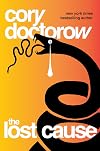
Contemplating [b:Blue Skies|62586053|Blue Skies|T.C. Boyle|https://i.gr-assets.com/images/S/compressed.photo.goodreads.com/books/1679715783l/62586053._SY75_.jpg|98330370] and [b:The Lost Cause|65213928|The Lost Cause|Cory Doctorow|https://i.gr-assets.com/images/S/compressed.photo.goodreads.com/books/1683246232l/65213928._SX50_.jpg|100097093] has made me realise I'm getting quite touchy about what genre climate change novels are assigned to. It is my firm opinion that [b:Blue show more Skies|62586053|Blue Skies|T.C. Boyle|https://i.gr-assets.com/images/S/compressed.photo.goodreads.com/books/1679715783l/62586053._SY75_.jpg|98330370] isn't sci-fi and [b:The Lost Cause|65213928|The Lost Cause|Cory Doctorow|https://i.gr-assets.com/images/S/compressed.photo.goodreads.com/books/1683246232l/65213928._SX50_.jpg|100097093] isn't dystopian; the former is general literature and the latter is utopian, if anything. I care about this because climate change is happening right now. 2023 was the hottest year ever recorded and featured droughts, floods, superstorms, heatwaves, and wildfires all over the world. Depicting that in fiction isn't speculative or science fiction, it's realism. Moreover, extrapolating climate change getting worse in the future isn't dystopian. If it was, then Intergovernmental Panel on Climate Change reports would also be dystopias.
I think of dystopian literature as exploring extrapolated or exaggerated systems that are worse than the present. [b:The Lost Cause|65213928|The Lost Cause|Cory Doctorow|https://i.gr-assets.com/images/S/compressed.photo.goodreads.com/books/1683246232l/65213928._SX50_.jpg|100097093] depicts better systems than the USA has in the present; it is a best case scenario in which America has somehow implemented an effective Green New Deal and suppressed monopoly capitalism/techno-feudalism. The fact that it focuses on remaining flaws in that system and groups that are resisting decarbonisation doesn't change that, in my view. The title is ironic to the point that I kept mis-remembering it as 'The Last Chance' (which would be similarly ironic). This passage really convinced me that [b:The Lost Cause|65213928|The Lost Cause|Cory Doctorow|https://i.gr-assets.com/images/S/compressed.photo.goodreads.com/books/1683246232l/65213928._SX50_.jpg|100097093] is utopian in structure and spirit:
Genre quibbles aside, I think Doctorow is doing something interesting and original here. I found it invigorating, distinctive, timely, and genuinely tense. I particularly enjoyed his subversion of the gun on the mantlepiece trope and the final scene. [b:The Lost Cause|65213928|The Lost Cause|Cory Doctorow|https://i.gr-assets.com/images/S/compressed.photo.goodreads.com/books/1683246232l/65213928._SX50_.jpg|100097093] is less emotional and epic than [b:Hopeland|43063809|Hopeland|Ian McDonald|https://i.gr-assets.com/images/S/compressed.photo.goodreads.com/books/1677839645l/43063809._SY75_.jpg|66853368], another recent utopian sci-fi novel about climate change, but the two compliment each other well. The great strength of Doctorow's fiction is his insight into the dynamics between technological, political, and social change in the US. I'm glad he's turned his attention to climate change, as this novel makes thoughtful points about community resilience, generation gaps, and policy struggling to keep up with technology, among other things.
On the other hand, having read six of Doctorow's other novels, I knew exactly what to expect from the protagonist as he's essentially the same guy every time. Your man is adept with technology, an energetic problem-solver, drinks cold brew, likes cooking, and has a hot girlfriend who is inexplicably really into him. (I would hypothesise that it's his cooking, except everyone in Doctorow's novels is enthusiastic about food and great at cooking somehow.) This isn't a problem, as the Doctorow protagonist exists as a viewpoint from which to observe the technological, political, and environmental stuff going on around him. I found [b:The Lost Cause|65213928|The Lost Cause|Cory Doctorow|https://i.gr-assets.com/images/S/compressed.photo.goodreads.com/books/1683246232l/65213928._SX50_.jpg|100097093] a grounded, ingenious, and hopeful vision of the 2050s - not a dystopia. show less
I think of dystopian literature as exploring extrapolated or exaggerated systems that are worse than the present. [b:The Lost Cause|65213928|The Lost Cause|Cory Doctorow|https://i.gr-assets.com/images/S/compressed.photo.goodreads.com/books/1683246232l/65213928._SX50_.jpg|100097093] depicts better systems than the USA has in the present; it is a best case scenario in which America has somehow implemented an effective Green New Deal and suppressed monopoly capitalism/techno-feudalism. The fact that it focuses on remaining flaws in that system and groups that are resisting decarbonisation doesn't change that, in my view. The title is ironic to the point that I kept mis-remembering it as 'The Last Chance' (which would be similarly ironic). This passage really convinced me that [b:The Lost Cause|65213928|The Lost Cause|Cory Doctorow|https://i.gr-assets.com/images/S/compressed.photo.goodreads.com/books/1683246232l/65213928._SX50_.jpg|100097093] is utopian in structure and spirit:
I was free. If Burbank caught fire and burned to the ground, I could go anywhere and start over, as long as there was a library, solar panels, and good panels. The world was on fire, and the fires would burn every year for many years to come. This might be the best year for wildfires we'd have for the rest of my life. When things weren't on fire, we'd be harrowed by plagues, scoured by storms, flooded and droughted.
And yet... And yet. I had arrived at a place of circulating abundance amid all of that tragedy and terror. Wherever I was, I could be happy, fed, surrounded by good people and hard work.
Genre quibbles aside, I think Doctorow is doing something interesting and original here. I found it invigorating, distinctive, timely, and genuinely tense. I particularly enjoyed his subversion of the gun on the mantlepiece trope and the final scene. [b:The Lost Cause|65213928|The Lost Cause|Cory Doctorow|https://i.gr-assets.com/images/S/compressed.photo.goodreads.com/books/1683246232l/65213928._SX50_.jpg|100097093] is less emotional and epic than [b:Hopeland|43063809|Hopeland|Ian McDonald|https://i.gr-assets.com/images/S/compressed.photo.goodreads.com/books/1677839645l/43063809._SY75_.jpg|66853368], another recent utopian sci-fi novel about climate change, but the two compliment each other well. The great strength of Doctorow's fiction is his insight into the dynamics between technological, political, and social change in the US. I'm glad he's turned his attention to climate change, as this novel makes thoughtful points about community resilience, generation gaps, and policy struggling to keep up with technology, among other things.
On the other hand, having read six of Doctorow's other novels, I knew exactly what to expect from the protagonist as he's essentially the same guy every time. Your man is adept with technology, an energetic problem-solver, drinks cold brew, likes cooking, and has a hot girlfriend who is inexplicably really into him. (I would hypothesise that it's his cooking, except everyone in Doctorow's novels is enthusiastic about food and great at cooking somehow.) This isn't a problem, as the Doctorow protagonist exists as a viewpoint from which to observe the technological, political, and environmental stuff going on around him. I found [b:The Lost Cause|65213928|The Lost Cause|Cory Doctorow|https://i.gr-assets.com/images/S/compressed.photo.goodreads.com/books/1683246232l/65213928._SX50_.jpg|100097093] a grounded, ingenious, and hopeful vision of the 2050s - not a dystopia. show less
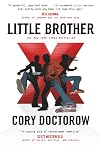
Wow. For a book about a lot of computer technicalities, this one has heart, humour and even the littlest bit of sex (safe, of course). The topic is completely appropriate for today- there is a terrorist attack on San Francisco and the government uses it as an excuse to move in and remove civil rights. Everyone gets followed, everywhere, through the little electronic tags we are in actuality already carrying around. Menacing "Homeland Security" people move in; people start vanishing. But what show more is really going on? Who is behind the government aggression? How can anyone stop it?
A seventeen year old computer whiz kid who has memorized the Declaration of Independence has some ideas that he puts into action...
Excellent. I'm not a fan of fiction where all the techniques are explained (exhausting) but Cory Doctorow makes it interesting and easy to understand. Everyone in the US should read this book now, while you still can. show less
A seventeen year old computer whiz kid who has memorized the Declaration of Independence has some ideas that he puts into action...
Excellent. I'm not a fan of fiction where all the techniques are explained (exhausting) but Cory Doctorow makes it interesting and easy to understand. Everyone in the US should read this book now, while you still can. show less

I read this book in two sittings--and would have read it in one if I didn't need to get up and go somewhere the next morning. There isn't a dull moment, and there is hardly a moment that doesn't make me boiling mad at what our country is being turned into by unchecked government power. Little Brother starts with a terrorist attack in San Francisco, in which a group of teenagers is caught up. Swept up by the Department of Homeland Security as suspicious characters, they are whisked away to show more the middle of San Francisco Bay and treated like terrorists, forced to hand over their cellphone passwords and stripped of their dignity and their rights as American citizens. After Marcus Yallow is released, he watches in horror as San Francisco is rapidly turned into a police state. Citizens movements are tracked through their Fast Passes, their transit cards, and by surveillance cameras everywhere. Marcus has a weapon, however--he is a hacker. And soon he has a band of followers who are successfully throwing monkey wrench after monkey wrench into the DHS's assault on the privacy and freedom of San Franciscans. Can a teenager succeed in his quixotic quest to make people put away their fear of terrorists and realize that the greatest danger to our freedom comes from within? Can he make anyone understand and appreciate the meaning of the Bill of Rights or of the words of the Declaration of Independence? You'll just have to read the book to find out.
Doctorow compares the current security insanity with an autoimmune disease: "Right now, America is going into anaphylactic shock over its own freedoms, and we need to inoculate ourselves against this."
If you have any interest in technology, you will be riveted. Of course, things change quickly, and the recent horrifying revelations of the NSA's illegal spying and their ability to perhaps compromise encryption techniques thought to be secure, makes this book a little dated. Although Doctorow exaggerates a bit to induce in the reader the necessary state of paranoia to understand and embrace the book's message, these recent revelations show that he was definitely on the right track. Every American should read this book and follow in the footsteps of Marcus Yallow. Our freedom is at stake. show less
Doctorow compares the current security insanity with an autoimmune disease: "Right now, America is going into anaphylactic shock over its own freedoms, and we need to inoculate ourselves against this."
If you have any interest in technology, you will be riveted. Of course, things change quickly, and the recent horrifying revelations of the NSA's illegal spying and their ability to perhaps compromise encryption techniques thought to be secure, makes this book a little dated. Although Doctorow exaggerates a bit to induce in the reader the necessary state of paranoia to understand and embrace the book's message, these recent revelations show that he was definitely on the right track. Every American should read this book and follow in the footsteps of Marcus Yallow. Our freedom is at stake. show less
Lists
Books Read in 2024 (14)
culture (1)
Favourite Books (1)
Awards


You May Also Like


Associated Authors
Statistics
- Works
- 121
- Also by
- 114
- Members
- 25,890
- Popularity
- #803
- Rating
- 3.7
- Reviews
- 1,316
- ISBNs
- 453
- Languages
- 15
- Favorited
- 96


