
Kristin Ross
Author of Communal Luxury: The Political Imaginary of the Paris Commune
About the Author
Image credit: http://www.nyu.edu
Works by Kristin Ross
Associated Works
Tagged
Common Knowledge
Members
Reviews
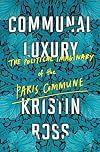
My second train book was [b:The Road: Stories, Journalism, and Essays|7662339|The Road Stories, Journalism, and Essays|Vasily Grossman|http://images.gr-assets.com/books/1320541144s/7662339.jpg|10253760], however I switched to ‘Communal Luxury’ once I got to Grossman’s famous essay ‘The Hell of Treblinka’. I have read it several times before and, let me tell you, the experience is even more painful when you are on a train. I needed a break from the horror, so turned to this rather show more delightful little book of theory centred on the lived experience of the Paris Commune. It takes quite a different perspective to everything else I’ve read about the Commune. The reader is assumed to already know what happened and who was involved - this is not a narrative history. Instead, the chapters discuss the philosophies of the Commune, not only during its existence but before and after. Ross specifically sets out to show both the political practises that the Commune sprung from and its lasting impact. The concept of ‘communal luxury’ is an appealing one: the particular pleasure of everyone owning everything. I found the eclecticism of the book appealing and thought-provoking. It isn’t erratic and opaque (cough-Žižek-cough) or dogmatic (cough-Badiou-cough) in its analysis of the Commune. I was particularly interested in the sections discussing the redefinition of art and rejection of disciplinary boundaries in education. Ross synthesises inspiring points like this from the Commune’s legacy:
Another highlight is the examination of how the spirit of the Commune lived on in those who survived it and were sent into exile, as well as those who weren’t there but were changed by it. Amongst the latter were Marx and William Morris, both of whose responses to the Commune are considered in some detail. I hadn’t realised that Morris was so influenced by it. Scattered throughout the book are such thought-provoking tidbits. I will admit, I’d never thought of this before, although it seems obvious in retrospect:
In a neat link to [b:The Shock of the Anthropocene: The Earth, History and Us|25387295|The Shock of the Anthropocene The Earth, History and Us|Christophe Bonneuil|http://images.gr-assets.com/books/1443545959s/25387295.jpg|45137920], which I’m currently reading, there is discussion of concern for nature amongst the Communards. Further reason to reject the idea that environmentalism and sustainability are recent inventions and didn’t exist during the industrial revolution. (Refuting this is a key theme of [b:The Shock of the Anthropocene: The Earth, History and Us|25387295|The Shock of the Anthropocene The Earth, History and Us|Christophe Bonneuil|http://images.gr-assets.com/books/1443545959s/25387295.jpg|45137920].) Another insight that will stay with me is the link between France’s colonial oppression of Algeria and the vicious repression of the Commune. The former prepared the army for the latter. There really is a great deal of original and fascinating material in this small book. It also has a charming cover, fittingly featuring a William Morris design, and ends on this excellent note:
‘Communal Luxury’ reinvigorated my fascination with the Paris Commune and reminded me why it’s such an enduringly radical and inspiring event. Books containing this much political theory very rarely manage to be so uplifting, which earns this one five stars. An excellent train read. show less
More important than any laws the Communards were able to enact was simply the way in which their daily workings inverted entrenched hierarchies and divisions - first and foremost between manual and artistic or intellectual labour. The world is divided between those who can and those who cannot afford the luxury of playing with words and images. When that division is overcome, as it was under the Commune, or as it is conveyed in the phrase ‘Communal luxury’, what matters more than any images conveyed, laws passed, or institutions founded are the capacities set in motion. You do not have to start at the beginning - you can start anywhere.
Another highlight is the examination of how the spirit of the Commune lived on in those who survived it and were sent into exile, as well as those who weren’t there but were changed by it. Amongst the latter were Marx and William Morris, both of whose responses to the Commune are considered in some detail. I hadn’t realised that Morris was so influenced by it. Scattered throughout the book are such thought-provoking tidbits. I will admit, I’d never thought of this before, although it seems obvious in retrospect:
Russian scientists and the view from the north uniformly rejected Malthusian competition. They saw it as theoretical expression that could only have emerged from the experience of a small, crowded, hyper-industrial country whose economic ideal was the open competition of the ‘free market’, and from research conducted, as was Darwin’s, in the teeming, environmentally rich, and varied flora and fauna of the tropics. Marx, too, had come to conclusion that Darwin was, to all intents and purposes, a little Englander.
In a neat link to [b:The Shock of the Anthropocene: The Earth, History and Us|25387295|The Shock of the Anthropocene The Earth, History and Us|Christophe Bonneuil|http://images.gr-assets.com/books/1443545959s/25387295.jpg|45137920], which I’m currently reading, there is discussion of concern for nature amongst the Communards. Further reason to reject the idea that environmentalism and sustainability are recent inventions and didn’t exist during the industrial revolution. (Refuting this is a key theme of [b:The Shock of the Anthropocene: The Earth, History and Us|25387295|The Shock of the Anthropocene The Earth, History and Us|Christophe Bonneuil|http://images.gr-assets.com/books/1443545959s/25387295.jpg|45137920].) Another insight that will stay with me is the link between France’s colonial oppression of Algeria and the vicious repression of the Commune. The former prepared the army for the latter. There really is a great deal of original and fascinating material in this small book. It also has a charming cover, fittingly featuring a William Morris design, and ends on this excellent note:
What counts as prosperity? What is wealth? For solidarity with nature to exist, rather than purely mercantile interests, a transformation of values must occur that is itself predicated on a complete transformation of the social order: the abolition of private property and of the state. Nature would then be not just a productive force or stockpile of resources but valued as an end in itself. Environmental sustainability is not a technical problem but a question of what society values, what it considers wealth.
‘Communal Luxury’ reinvigorated my fascination with the Paris Commune and reminded me why it’s such an enduringly radical and inspiring event. Books containing this much political theory very rarely manage to be so uplifting, which earns this one five stars. An excellent train read. show less
pretty loaded and full of surprises
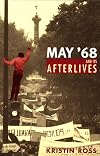
Three passages from May ’68 and Its Afterlives:
For May ’68 itself was not an artistic moment. It was an event that transpired amid very few images; French television, after all, was on strike. Drawings, political cartoons – by Siné, Willem, Cabu, and others – proliferated; photographs were taken. Only the most “immediate” of artistic techniques, it seems, could keep up with the speed of events. But to say this is already to point out how much politics was exerting a magnetic show more pull on culture, yanking it out of its specific and specialized realm. For what does it mean that art should suddenly see its purpose as that of keeping apace with events, with achieving a complete contemporaneity with the present and with what is happening around it?
The incommensurability or asymmetry that seems to govern the relation between culture and politics holds true for the ’68 period in France. In fact, that incommensurability is what the event is about: the failure of cultural solutions to provide an answer, the invention and deployment of political forms in direct contestation with existing cultural forms, the exigency of political practices over cultural ones. Nowhere is this more apparent than in the experience of the Beaux-Arts students who occupied their school in mid-May 1968, proclaimed it the revolutionary Atelier populaire des Beaux-Arts, and began producing, at breakneck speed, the posters supporting the strike that covered the walls of Paris during those months. The “message” of the majority of posters, stark and direct, was the certification, and at times the imperative, that whatever it was that was happening – the interruption, the strike, the “moving train” – that it simply continue: “Continuons le combat.” “La grève continue.” “Contre offensive: la grève continue.” “Chauffeurs de taxi: la lute continue.” “Maine Montparnasse: la lute continue.” Nothing, that is, in the message aspires to a level of “representing” what was occurring; the goal, rather, is to be at one with – at the same time with, contemporary with – whatever was occurring. Speed, a speedy technique, was of the essence; students learned this soon enough when they abandoned lithography early on because, at ten to fifteen printings an hour, it was far too slow to respond to the needs of a mass movement. Serigraphy, which was light and easy to use, yielded up to 250 printings an hour. Speed and flexible mediums facilitated the absolute interpenetration of art and event achieved by the posters, but speed is not the most important factor in rendering art capable of living the temporality of an event. Writing thirty years later, one of the militants active in the Atelier populaire, Gérard Fromanger, recalls the genesis of the posters in a brief memoir. His title, “Art Is What Makes Life More Interesting Than Art,” goes far in giving a sense of the dizzying opening created when the social refuses to stay “out there,” distinct from art, or when art achieves presentation, rather than representation:
May ’68 was that. Artists no longer in their studios, they no longer work, they can’t work any more because the real is more powerful than their inventions. Naturally, they become militants, me among them. We create the Atelier populaire des Beaux-Arts and we make posters. We’re there night and day making posters. The whole country is on strike and we’ve never worked harder in our lives. We’re finally necessary.
Fromanger describes in greater detail the stages in the dismantling of art and artists during May: how, as the mass demonstrations got under way in mid-May, art students first “got down off their horses to gather the flowers,” as the Maoists would say, how they left art behind as they ran from demo to demo. “We artists had been in the movement for ten days, we run into each other at the demos. We had separated from everything we had before. We don’t sleep in the studios… we live in the streets, in the occupied spaces… We no longer paint, we don’t think about it anymore.” The next phase describes a retreat to familiar spaces: “We painters say to ourselves that we have to do something at Beaux-Arts, that we can’t let the buildings be empty, closed up.” An old lithograph machine is located; the first poster, USINE-UNIVERSITE-UNION, is produced immediately. The thought at that point is for someone to run the thirty copies down to a gallery on the rue Dragon to sell them to help the movement. But it is at this point that “the real,” in the shape of the movement, literally intervenes, short-circuiting the steps that art must take to be art in bourgeois culture and hijacking it, so to speak, off that path, bringing it into the now. There is no time, it seems, for the art object to remain a commodity, even one that had been redirected in the service of the movement. On the way to the gallery, the copies are snatched out of the arms of the student carrying them and plastered immediately on the first available wall. The poster becomes a poster.
“Bourgeois culture,” reads the statement that accompanied the founding of the Atelier populaire, “separates and isolates artists from other workers by according them a privileged status. Privilege encloses the artist in an invisible prison. We have decided to transform what we are in society.”
On October 17, 1961, the first mass demonstration of the 1960s occurred, organized by the FLN to protest a recent curfew set by the prefect of police that prohibited Algerians in the Paris region from being on the street after 8:30 PM. Informed in advance of the demonstration, the police, along with the CRS and the mobile gendarmerie, are armed with bidules, a longer version of the matraque with greater leverage and range, capable of breaking a skull open in a single swing when adroitly applied. The police have also been virtually exonerated in advance of any “police excesses” that might occur; in the preceding weeks Papon has visited the various commissariats, imparting these messages: “Settle your affairs with the Algerian yourselves. Whatever happens, you’re covered,” and “For one blow, give then back ten.” And, to overcome the scruples of certain more hesitant members of his forces, he adds: “You don’t need to complicate things. Even if the Algerians are not armed, you should think of them always as armed.”
The Algerians – between thirty and forty-thousand men, women and children – are, in fact, unarmed, and the demonstration is peaceful. Many of the Algerians are wearing their best “Sunday” clothes, in the interest of impressing the French and the international communities with their peaceful motives. Nevertheless, police open fire almost immediately. Confrontations occur simultaneously throughout the city wherever the Algerians are concentrated. Police “combat groups” charge the crowd in the main thoroughfares and boulevards, while other police ranks stand behind in the side streets, blocking escape routes and splitting the crowd into small pockets of two or three individuals, each of whom is then surrounded by police, and men and women are methodically clubbed. Along the Seine, police lift unconscious and already dead or dying Algerians and toss them into the river. A document published soon after the massacre by a group of progressive police describes what went on in one part of the city:
At one end of the Neuilly Bridge, police troops, and on the other, CRS riot police, slowly moved toward one another. All the Algerians caught in this immense trap were struck down and systematically thrown into the Seine. At least a hundred of them underwent this treatment. The bodies of the victims floated to the surface daily and bore traces of blows and strangulation.
Some of the arrested men and women are taken to the courtyard of the prefecture of police where, as Pierre Vidal-Baquet reports, “If I believe the testimony of one policeman, gathered immediately after the event by Paul Thibaud and that I’ve often had occasion to evoke since then, Papon had several dozen Algerians beaten [matraqué] to death in front of his eyes in the courtyard of the police prefecture.” Some six thousand others are taken to several sports stadiums reserved by police for that purpose. In all of these places, people die while in custody – of wounds they had already received or of new blows administered by police “welcoming committees” arranged in a kind of gauntlet outside the entrance to the sports arenas.
On the night of October 17, the police publish a communiqué stating that the Algerians had fired on police, who were then forced to return fire. The official death count, originally two, was revised the next morning by Papon’s office to three. The almost total news blackout that surrounded the event makes it very hard to determine the exact number of Algerians – for no police were injured – who actually died. Most knowledgeable estimates put the number at around two hundred.
But the real question, I believe, lies elsewhere, outside the parameters of revolution, failed or not. Why did something happen rather than nothing? And what was the nature of the event that occurred? The attention given to the problematics of power has effaced another set problems at issue in May, and 1960s culture more generally, which we might begin to group under the heading of a no less political question – the question of equality. I mean equality not in any objective sense of status, income, function, or the supposedly “equal” dynamics of contracts or reforms, nor as an explicit demand or a program, but rather as something that emerges in the course of the struggle and is verified subjectively, declared and experienced in the here and now as what is, and not what should be. Such an experience lies to the side of “seizing state power;” outside of that story. The narrative of a desired or failed seizure of power, in other words, is a narrative determined by the logic of the state, the story the state tells to itself. For the state, people in the streets are people always already failing to seize state power. In 1968, “seizing state power” was not only part of the state’s narrative, it expressed the state’s informing desire to complete itself – that is, to totally assimilate the everyday to its own necessities. Limiting May ’68 to that story, to the desire or the failure to seize centralized power, has circumscribed the very definition of “the political,” crushing or effacing in the process a political dimension to the events that may in fact have constituted the true threat to the forces of order, the reason for their panic. That dimension lay in a subjectivation enabled by the synchronizing of two very different temporalities: the world of the worker and the world of the student. It lay in the central idea of May ’68: the union of intellectual contestation with workers’ struggle. It lay in the verification of equality not as any objective of action, but as something that is part and parcel of action, something that emerges in the struggle and is lived and declared as such. In the course of the struggle, practices were developed that demonstrated such a synchronization, that acted to constitute a common – though far from consensual – space and time. And those practices verified the irrelevance of the division of labour – what for Durkheim was nothing more and nothing less that that which holds a society together and guarantees the continuity of its reproduction. As such, these practices form as direct an intervention into the logic and workings of capital as any seizure of state – perhaps more so.
. show less
For May ’68 itself was not an artistic moment. It was an event that transpired amid very few images; French television, after all, was on strike. Drawings, political cartoons – by Siné, Willem, Cabu, and others – proliferated; photographs were taken. Only the most “immediate” of artistic techniques, it seems, could keep up with the speed of events. But to say this is already to point out how much politics was exerting a magnetic show more pull on culture, yanking it out of its specific and specialized realm. For what does it mean that art should suddenly see its purpose as that of keeping apace with events, with achieving a complete contemporaneity with the present and with what is happening around it?
The incommensurability or asymmetry that seems to govern the relation between culture and politics holds true for the ’68 period in France. In fact, that incommensurability is what the event is about: the failure of cultural solutions to provide an answer, the invention and deployment of political forms in direct contestation with existing cultural forms, the exigency of political practices over cultural ones. Nowhere is this more apparent than in the experience of the Beaux-Arts students who occupied their school in mid-May 1968, proclaimed it the revolutionary Atelier populaire des Beaux-Arts, and began producing, at breakneck speed, the posters supporting the strike that covered the walls of Paris during those months. The “message” of the majority of posters, stark and direct, was the certification, and at times the imperative, that whatever it was that was happening – the interruption, the strike, the “moving train” – that it simply continue: “Continuons le combat.” “La grève continue.” “Contre offensive: la grève continue.” “Chauffeurs de taxi: la lute continue.” “Maine Montparnasse: la lute continue.” Nothing, that is, in the message aspires to a level of “representing” what was occurring; the goal, rather, is to be at one with – at the same time with, contemporary with – whatever was occurring. Speed, a speedy technique, was of the essence; students learned this soon enough when they abandoned lithography early on because, at ten to fifteen printings an hour, it was far too slow to respond to the needs of a mass movement. Serigraphy, which was light and easy to use, yielded up to 250 printings an hour. Speed and flexible mediums facilitated the absolute interpenetration of art and event achieved by the posters, but speed is not the most important factor in rendering art capable of living the temporality of an event. Writing thirty years later, one of the militants active in the Atelier populaire, Gérard Fromanger, recalls the genesis of the posters in a brief memoir. His title, “Art Is What Makes Life More Interesting Than Art,” goes far in giving a sense of the dizzying opening created when the social refuses to stay “out there,” distinct from art, or when art achieves presentation, rather than representation:
May ’68 was that. Artists no longer in their studios, they no longer work, they can’t work any more because the real is more powerful than their inventions. Naturally, they become militants, me among them. We create the Atelier populaire des Beaux-Arts and we make posters. We’re there night and day making posters. The whole country is on strike and we’ve never worked harder in our lives. We’re finally necessary.
Fromanger describes in greater detail the stages in the dismantling of art and artists during May: how, as the mass demonstrations got under way in mid-May, art students first “got down off their horses to gather the flowers,” as the Maoists would say, how they left art behind as they ran from demo to demo. “We artists had been in the movement for ten days, we run into each other at the demos. We had separated from everything we had before. We don’t sleep in the studios… we live in the streets, in the occupied spaces… We no longer paint, we don’t think about it anymore.” The next phase describes a retreat to familiar spaces: “We painters say to ourselves that we have to do something at Beaux-Arts, that we can’t let the buildings be empty, closed up.” An old lithograph machine is located; the first poster, USINE-UNIVERSITE-UNION, is produced immediately. The thought at that point is for someone to run the thirty copies down to a gallery on the rue Dragon to sell them to help the movement. But it is at this point that “the real,” in the shape of the movement, literally intervenes, short-circuiting the steps that art must take to be art in bourgeois culture and hijacking it, so to speak, off that path, bringing it into the now. There is no time, it seems, for the art object to remain a commodity, even one that had been redirected in the service of the movement. On the way to the gallery, the copies are snatched out of the arms of the student carrying them and plastered immediately on the first available wall. The poster becomes a poster.
“Bourgeois culture,” reads the statement that accompanied the founding of the Atelier populaire, “separates and isolates artists from other workers by according them a privileged status. Privilege encloses the artist in an invisible prison. We have decided to transform what we are in society.”
On October 17, 1961, the first mass demonstration of the 1960s occurred, organized by the FLN to protest a recent curfew set by the prefect of police that prohibited Algerians in the Paris region from being on the street after 8:30 PM. Informed in advance of the demonstration, the police, along with the CRS and the mobile gendarmerie, are armed with bidules, a longer version of the matraque with greater leverage and range, capable of breaking a skull open in a single swing when adroitly applied. The police have also been virtually exonerated in advance of any “police excesses” that might occur; in the preceding weeks Papon has visited the various commissariats, imparting these messages: “Settle your affairs with the Algerian yourselves. Whatever happens, you’re covered,” and “For one blow, give then back ten.” And, to overcome the scruples of certain more hesitant members of his forces, he adds: “You don’t need to complicate things. Even if the Algerians are not armed, you should think of them always as armed.”
The Algerians – between thirty and forty-thousand men, women and children – are, in fact, unarmed, and the demonstration is peaceful. Many of the Algerians are wearing their best “Sunday” clothes, in the interest of impressing the French and the international communities with their peaceful motives. Nevertheless, police open fire almost immediately. Confrontations occur simultaneously throughout the city wherever the Algerians are concentrated. Police “combat groups” charge the crowd in the main thoroughfares and boulevards, while other police ranks stand behind in the side streets, blocking escape routes and splitting the crowd into small pockets of two or three individuals, each of whom is then surrounded by police, and men and women are methodically clubbed. Along the Seine, police lift unconscious and already dead or dying Algerians and toss them into the river. A document published soon after the massacre by a group of progressive police describes what went on in one part of the city:
At one end of the Neuilly Bridge, police troops, and on the other, CRS riot police, slowly moved toward one another. All the Algerians caught in this immense trap were struck down and systematically thrown into the Seine. At least a hundred of them underwent this treatment. The bodies of the victims floated to the surface daily and bore traces of blows and strangulation.
Some of the arrested men and women are taken to the courtyard of the prefecture of police where, as Pierre Vidal-Baquet reports, “If I believe the testimony of one policeman, gathered immediately after the event by Paul Thibaud and that I’ve often had occasion to evoke since then, Papon had several dozen Algerians beaten [matraqué] to death in front of his eyes in the courtyard of the police prefecture.” Some six thousand others are taken to several sports stadiums reserved by police for that purpose. In all of these places, people die while in custody – of wounds they had already received or of new blows administered by police “welcoming committees” arranged in a kind of gauntlet outside the entrance to the sports arenas.
On the night of October 17, the police publish a communiqué stating that the Algerians had fired on police, who were then forced to return fire. The official death count, originally two, was revised the next morning by Papon’s office to three. The almost total news blackout that surrounded the event makes it very hard to determine the exact number of Algerians – for no police were injured – who actually died. Most knowledgeable estimates put the number at around two hundred.
But the real question, I believe, lies elsewhere, outside the parameters of revolution, failed or not. Why did something happen rather than nothing? And what was the nature of the event that occurred? The attention given to the problematics of power has effaced another set problems at issue in May, and 1960s culture more generally, which we might begin to group under the heading of a no less political question – the question of equality. I mean equality not in any objective sense of status, income, function, or the supposedly “equal” dynamics of contracts or reforms, nor as an explicit demand or a program, but rather as something that emerges in the course of the struggle and is verified subjectively, declared and experienced in the here and now as what is, and not what should be. Such an experience lies to the side of “seizing state power;” outside of that story. The narrative of a desired or failed seizure of power, in other words, is a narrative determined by the logic of the state, the story the state tells to itself. For the state, people in the streets are people always already failing to seize state power. In 1968, “seizing state power” was not only part of the state’s narrative, it expressed the state’s informing desire to complete itself – that is, to totally assimilate the everyday to its own necessities. Limiting May ’68 to that story, to the desire or the failure to seize centralized power, has circumscribed the very definition of “the political,” crushing or effacing in the process a political dimension to the events that may in fact have constituted the true threat to the forces of order, the reason for their panic. That dimension lay in a subjectivation enabled by the synchronizing of two very different temporalities: the world of the worker and the world of the student. It lay in the central idea of May ’68: the union of intellectual contestation with workers’ struggle. It lay in the verification of equality not as any objective of action, but as something that is part and parcel of action, something that emerges in the struggle and is lived and declared as such. In the course of the struggle, practices were developed that demonstrated such a synchronization, that acted to constitute a common – though far from consensual – space and time. And those practices verified the irrelevance of the division of labour – what for Durkheim was nothing more and nothing less that that which holds a society together and guarantees the continuity of its reproduction. As such, these practices form as direct an intervention into the logic and workings of capital as any seizure of state – perhaps more so.
. show less
Kristin Ross writes:
The logic of emancipation concerned concrete relations between individuals. The logic of the institution, on the other hand, is always nothing more than the indefinite reproduction of itself. Emancipation is not the result but the condition for instruction.
and:
Time or temporality is a human, social construction, and as such is tainted by the contemporary biases and dominant prejudices of the moment - such as the idea that dominates our own time that one should accumulate show more the most capital one can, hoard it to oneself, and then die.
. show less
The logic of emancipation concerned concrete relations between individuals. The logic of the institution, on the other hand, is always nothing more than the indefinite reproduction of itself. Emancipation is not the result but the condition for instruction.
and:
Time or temporality is a human, social construction, and as such is tainted by the contemporary biases and dominant prejudices of the moment - such as the idea that dominates our own time that one should accumulate show more the most capital one can, hoard it to oneself, and then die.
. show less
You May Also Like


Associated Authors
Statistics
- Works
- 12
- Also by
- 2
- Members
- 611
- Popularity
- #41,143
- Rating
- 3.7
- Reviews
- 6
- ISBNs
- 44
- Languages
- 4
