
Ed Gorman (1941–2016)
Author of City of Night
About the Author
Edward Joseph Gorman was born on November 2, 1941 in Cedar Rapids, Iowa. He attended Coe College, but didn't graduate. Before becoming a full-time author, he worked for 23 years in advertising, public relations, and politics. His first novel, Rough Cut, was published in 1984. In 1985, he founded show more Mystery Scene Magazine and was the executive editor until 2002. He wrote crime fiction, horror fiction, and western fiction under his own name and several pseudonyms. Using the pseudonym Daniel Ransom, he wrote horror and science fiction books including Daddy's Little Girl, The Babysitter, Nightmare Child, The Fugitive Stars, and Zone Soldiers. Using the pseudonym Richard Driscoll, he and Kevin D. Randle co-wrote the Star Precinct trilogy. Under his own name, he wrote crime and mystery books including Wolf Moon, The First Lady, the Sam McCain Mystery series, the Robert Payne Mystery series, the Jack Dwyer Mystery series, and the Dev Conrad Mystery series. His novel The Poker Club was adapted into a movie in 2008. He also wrote The First Lady and Senatorial Privilege under the pseudonym E. J. Gorman. He edited many volumes of science fiction, horror, and crime. He received numerous awards including a Spur Award for Best Short Fiction for The Face in 1992, the Anthony Award for Best Critical Work for The Fine Art of Murder in 1994, and an International Horror Guild Award for Cages in 1995. He also received the Shamus Award, the Bram Stoker Award, the International Fiction Writers Award, and The Eye, the lifetime achievement award given out by the Private Eye Writers of America. He died after a long battle with cancer on October 14, 2016 at the age of 74. (Bowker Author Biography) show less
Image credit: Ed Gorman
Series
Works by Ed Gorman
Stalkers: 19 Original Tales by the Masters of Terror (1989) — Editor; Contributor — 265 copies, 6 reviews
By Hook or By Crook and 30 More of the Best Crime and Mystery Stories of the Year (2010) — Editor — 87 copies
The World's Finest Mystery and Crime Stories: Second Annual Collection (2001) — Editor — 57 copies, 1 review
Between the Dark and the Daylight and 27 More of the Best Crime and Mystery Stories of the Year (2009) — Editor — 44 copies, 1 review
The Adventure of the Missing Detective and 19 of the Year's Finest Crime and Mystery (2005) — Editor — 40 copies
Speaking of Murder: Interviews With the Masters of Mystery and Suspense, Vol. 2 (1999) — Editor — 29 copies
Four Halloweens — Author — 10 copies
Gunslinger, and Nine Other Action-Packed Stories of the Wild West: And Nine Other Action-Packed Stories of the Wild West (1995) 8 copies
The Widow of Slane: Six More of the Best Crime and Mystery Novellas of the Year! (2006) — Editor — 7 copies
Wolf Woman Bay and 9 More of the Finest Crime and Mystery Novellas of the Year! (2007) — Editor — 6 copies
The Year's 25 Finest Crime and Mystery Stories: Sixth Annual Edition (1997) — Editor — 5 copies, 1 review
The Ugly File [short story] 3 copies
A Harlot's Tears 2 copies
Drifter 2 copies
Scream Queen 2 copies
Idol 2 copies
The Old Ways [short story] 2 copies
Track Down [short fiction] 2 copies
Eye of the Beholder [short story] 2 copies
Valentine from a Vampire 1 copy
Mystery Scene: 79 issues from #1 to #88 — Founder — 1 copy
Short Stories: Volume 1 1 copy
Angie 1 copy
Surrogate 1 copy
Masque 1 copy
Moral Imperative 1 copy
The Christmas Kitten 1 copy
The Long Silence After 1 copy
Duty 1 copy
Unfinished Business 1 copy
Selection Process 1 copy
Yesterday's Dreams 1 copy
The Wind From Midnight 1 copy
Associated Works
The Year's Best Fantasy and Horror: Sixth Annual Collection (1993) — Contributor — 219 copies, 1 review
The Vampire Archives: The Most Complete Volume of Vampire Tales Ever Published (2007) — Contributor — 217 copies, 5 reviews
He Is Legend: An Anthology Celebrating Richard Matheson (2009) — Contributor — 208 copies, 6 reviews
A Century of Great Western Stories-An Anthology of Western Fiction (2000) — Contributor — 126 copies
Malice Domestic 02: An Anthology of Original Traditional Mystery Stories (1993) — Contributor — 111 copies, 1 review
Frankenstein: Prodigal Son / City of Night / Dead and Alive (2010) — Co-Author — 88 copies, 1 review
In Pursuit of Spenser: Mystery Writers on Robert B. Parker and the Creation of an American Hero (2012) — Contributor — 81 copies, 6 reviews
Writing the Private Eye Novel: A Handbook by the Private Eye Writers of America (1997) — Contributor — 60 copies
Top Suspense: 13 Classic Stories by 12 Masters of the Genre (2011) — Contributor — 30 copies, 1 review
The Julius Katz Collection (Julius Katz Detective) (2014) — Foreword, some editions — 23 copies, 2 reviews
Greatest Hits: Original Stories of Hitmen, Hired Guns, and Private Eyes (2005) — Contributor — 18 copies
A Date Which Will Live in Infamy: An Anthology of Pearl Harbor Stories That Might Have Been (2001) — Contributor — 16 copies
The Year's 25 Finest Crime and Mystery Stories: Second Annual Edition (1993) — Contributor — 13 copies
One is a Lonely Number / Black Wings Has My Angel (2012) — Introduction, some editions — 12 copies, 1 review
Greatest Hits: Original Stories of Assassins, Hit Men and Hired Guns (2006) — Contributor — 9 copies
The Year's 25 Finest Crime and Mystery Stories: Fifth Annual Edition (1996) — Contributor — 7 copies
Tagged
Common Knowledge
- Legal name
- Gorman, Edward Joseph
- Other names
- Ransom, Daniel
Foster, Jake
Gorman, Edward
Chase, Robert David
Keegan, Christopher
McCarrick, Chris Shea (show all 9)
North, Chris
Driscoll, Richard
Gorman, E. J. - Birthdate
- 1941-11-02
- Date of death
- 2016-10-14
- Gender
- male
- Occupations
- writer
- Awards and honors
- International Fiction Writers Award
The Eye (Lifetime Achievement Award, PWA 2011) - Relationships
- Gorman, Carol (wife)
- Cause of death
- multiple myeloma
- Nationality
- USA
- Birthplace
- Cedar Rapids, Iowa, USA
- Places of residence
- Cedar Rapids, Iowa, USA
- Place of death
- Cedar Rapids, Iowa, USA
- Associated Place (for map)
- Cedar Rapids, Iowa, USA
Members
Reviews
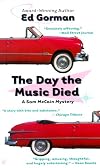
Sam McCain is a young lawyer in Black River Falls, Iowa in the late 1950s. Unfortunately, Black River Falls already has more than their fair share of lawyers so McCain is forced to do detective work for Judge Esme Anne Whitney who represents all the wealth, power, and eccentricities of Old Money. Sam has just arrived home after attending the final concert by Buddy Holly, when he is ordered by the judge to go to her son’s house. McCain hates the son who has always been a bully and a snob show more but what he discovers there makes him feel only sorrow for the man. Now, Sam finds himself embroiled in what looks like a murder/suicide. However, he has his doubts. Unfortunately, the sheriff disagrees and Sam is on his own to discover what really happened.
McCain is an extremely likable character. He is witty and smart but he is also empathetic and nonjudgmental. He recognizes his own flaws as well as those of others but, for the most part, accepts people for who they are while despising all the myriad large and small injustices that permeate the town and the decade. He likes rock’n’roll, hot rods, and has loved the wrong girl since the fourth grade. He also loves his parents and his little sister and will do anything to protect them. The judge is wonderfully eccentric and, although most of the rest of the characters lack much depth, they make for some very interesting reading.
Author Ed Gorman is easily the best living writer of noir today in the tradition of Dashiell Hammett. His style of writing is clean and sparse and his characters and his plots tend to lean toward the darker side of life. The book may be set in the 1950s but this is definitely no Norman Rockwell picture of small town Americana. Set against the backdrop of the plane crash that killed Buddy Holly, Richie Valens and the Big Bopper and which inspired the Don McLean song, The Day the Music Died, author Ed Gorman’s fifties display all the racism, inequality, and hatred of the decade. In this, the first of the McCain series, Gorman looks at racism, domestic violence, adultery, and the human cost of illegal abortions.
Due to the content of this book, it will clearly not appeal to everyone. As in most historical fiction, there are some minor inconsistencies in the history but not enough to effect my enjoyment of the tale. However, for fans of noir and who like their mysteries with a touch of social commentary and the cerebral, I can’t recommend it highly enough. show less
McCain is an extremely likable character. He is witty and smart but he is also empathetic and nonjudgmental. He recognizes his own flaws as well as those of others but, for the most part, accepts people for who they are while despising all the myriad large and small injustices that permeate the town and the decade. He likes rock’n’roll, hot rods, and has loved the wrong girl since the fourth grade. He also loves his parents and his little sister and will do anything to protect them. The judge is wonderfully eccentric and, although most of the rest of the characters lack much depth, they make for some very interesting reading.
Author Ed Gorman is easily the best living writer of noir today in the tradition of Dashiell Hammett. His style of writing is clean and sparse and his characters and his plots tend to lean toward the darker side of life. The book may be set in the 1950s but this is definitely no Norman Rockwell picture of small town Americana. Set against the backdrop of the plane crash that killed Buddy Holly, Richie Valens and the Big Bopper and which inspired the Don McLean song, The Day the Music Died, author Ed Gorman’s fifties display all the racism, inequality, and hatred of the decade. In this, the first of the McCain series, Gorman looks at racism, domestic violence, adultery, and the human cost of illegal abortions.
Due to the content of this book, it will clearly not appeal to everyone. As in most historical fiction, there are some minor inconsistencies in the history but not enough to effect my enjoyment of the tale. However, for fans of noir and who like their mysteries with a touch of social commentary and the cerebral, I can’t recommend it highly enough. show less
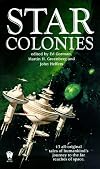
Exploring and colonizing the stars is the theme, a classic science fiction idea. But only a couple of stories here have any chance of becoming classics. Many are bland and mediocre
.
Two classic science fiction tales, A.E. van Vogt's "Far Centaurus" and Arthur C. Clarke's "The Sentinel, provide the inspiration for a mediocre story and a bland story. The mediocre one is Robert J. Sawyer's "The Shoulders of Giants" with a starship racing to a frontier already settled by humanity. The bland story show more is Eric Kotani's "Edgeworld" with its discovery of an alien artifact.
Also on the bland side are Jack Williamson's "Eden Star", with family conflicts played out on a planet with light-worshipping aliens, and Edo van Belkom's "Coming of Age" about colonists who discover that their children are doomed to permanent pre-pubescence. The weakest story, in terms of originality, is the entirely predictable "Full Circle" by Mike Resnick and Kristine Kathryn Rusch. Even humor can not save this old plot about futilely trying to get rid of one noxious pest by importing another.
On the marginally interesting edge of the spectrum are Paul Levinson's "The Suspended Fourth", about a planet where birdsong may hold the key to avoiding disasters, and Alan Dean Foster's "The Muffin Migration", another of those stories where colonists rue ignoring the natives' advice about the local fauna. Dana Stabenow's "No Place Like Home" has a few plot holes but its black humor and mean-spiritedness make up for it in a tale weighing the relative values of human life and that of alien bacteria.
Both Allen Steele's "The Boid Hunt" and Tom Piccirilli's "I Am a Graveyard Hated by the Moon" are character centered stories. The Steele tale is a deadly coming of age story and an examination of courage before and during a hunt for alien predators. Piccirilli's mixture of virtual reality, nanotechnology, characters who think they're gods, and landscapes haunting characters doesn't quite work but is an enjoyable story reminiscent of Roger Zelazny.
Peter Ullian's "The Vietnamization of Centauri V" is not a strict retelling of the Vietnam War on an alien world but, rather, how three soldiers are differently affected by the carnage around them to which they sometimes contribute, sometimes balk at. Its plot may not be that original, but it rings psychologically true.
The best stories of the anthology, both very much worth reading and both sharing settings from their authors' novels, are Robert Charles Wilson's "The Dryad's Wedding" and Pamela Sargent's "Dream of Venus". Set on the same planet as the setting for his BIOS, "The Dryad's Wedding" features a woman's whose memories and personality were re-set by a trauma that almost killed her when she was sixteen. Nineteen years later she is set to again marry her old husband. Wandering the planet Isis, with its ecosystem lethal to any one not genetically engineered to live there, she has began to notice some strange things . . . like a mound of talking spiders. Set in the same universe as her trilogy about terraforming Venus, Sargent's "Dream of Venus" is about the conflict between artistic integrity and political realities. Rich, aimless, and young Hassan hopes producing a propagandistic "mind-tour" on the Venus project will be a ladder to the kind of Earth-side job his father wants for him. He's partnered with brilliant Miriam, a poor woman from the North America provinces. She has something different in mind other than a simple celebration of the centuries-long terraforming project.
This collection is worth reading despite the bland and predictable tales. There are enough interesting, if flawed, stories here, and a couple of very good ones, to make it worthwhile. show less
.
Two classic science fiction tales, A.E. van Vogt's "Far Centaurus" and Arthur C. Clarke's "The Sentinel, provide the inspiration for a mediocre story and a bland story. The mediocre one is Robert J. Sawyer's "The Shoulders of Giants" with a starship racing to a frontier already settled by humanity. The bland story show more is Eric Kotani's "Edgeworld" with its discovery of an alien artifact.
Also on the bland side are Jack Williamson's "Eden Star", with family conflicts played out on a planet with light-worshipping aliens, and Edo van Belkom's "Coming of Age" about colonists who discover that their children are doomed to permanent pre-pubescence. The weakest story, in terms of originality, is the entirely predictable "Full Circle" by Mike Resnick and Kristine Kathryn Rusch. Even humor can not save this old plot about futilely trying to get rid of one noxious pest by importing another.
On the marginally interesting edge of the spectrum are Paul Levinson's "The Suspended Fourth", about a planet where birdsong may hold the key to avoiding disasters, and Alan Dean Foster's "The Muffin Migration", another of those stories where colonists rue ignoring the natives' advice about the local fauna. Dana Stabenow's "No Place Like Home" has a few plot holes but its black humor and mean-spiritedness make up for it in a tale weighing the relative values of human life and that of alien bacteria.
Both Allen Steele's "The Boid Hunt" and Tom Piccirilli's "I Am a Graveyard Hated by the Moon" are character centered stories. The Steele tale is a deadly coming of age story and an examination of courage before and during a hunt for alien predators. Piccirilli's mixture of virtual reality, nanotechnology, characters who think they're gods, and landscapes haunting characters doesn't quite work but is an enjoyable story reminiscent of Roger Zelazny.
Peter Ullian's "The Vietnamization of Centauri V" is not a strict retelling of the Vietnam War on an alien world but, rather, how three soldiers are differently affected by the carnage around them to which they sometimes contribute, sometimes balk at. Its plot may not be that original, but it rings psychologically true.
The best stories of the anthology, both very much worth reading and both sharing settings from their authors' novels, are Robert Charles Wilson's "The Dryad's Wedding" and Pamela Sargent's "Dream of Venus". Set on the same planet as the setting for his BIOS, "The Dryad's Wedding" features a woman's whose memories and personality were re-set by a trauma that almost killed her when she was sixteen. Nineteen years later she is set to again marry her old husband. Wandering the planet Isis, with its ecosystem lethal to any one not genetically engineered to live there, she has began to notice some strange things . . . like a mound of talking spiders. Set in the same universe as her trilogy about terraforming Venus, Sargent's "Dream of Venus" is about the conflict between artistic integrity and political realities. Rich, aimless, and young Hassan hopes producing a propagandistic "mind-tour" on the Venus project will be a ladder to the kind of Earth-side job his father wants for him. He's partnered with brilliant Miriam, a poor woman from the North America provinces. She has something different in mind other than a simple celebration of the centuries-long terraforming project.
This collection is worth reading despite the bland and predictable tales. There are enough interesting, if flawed, stories here, and a couple of very good ones, to make it worthwhile. show less
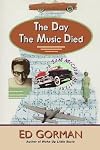
This was an odd mixture of great story-telling, catchy style, appealing main characters, poor research, rotten editing and abrupt ending. I was really caught up in the story, thinking I had found a new author I could turn to when I just wanted to lose myself for a couple hours, but then he threw me right out with an anachronism that no man born in 1941 should be guilty of. Mentioning his parents' attitude toward black people, the main character referred to his mother getting tears in her show more eyes when she saw "little Negro kids blasted off the streets with fire hoses" on the nightly news. My civil rights time-line tells me that happened in 1963. If your title makes a point of the precise date when your story begins, (that’s February 3, 1958, just so you don’t have to go look it up), it just doesn't do to get your historical facts wrong. Gorman also has one of his characters, a Judge, suggest that the Democrats had recently put John Kennedy forward as a potential Presidential candidate; again, the history I know about that is that Kennedy started looking pretty strong for the nomination when the New Hampshire State Democratic Committee endorsed him late in 1959, but in February of 1958 was he considered a strong contender already? In Iowa, a Republican stronghold? I don’t know, but it doesn’t feel right. Another reviewer has pointed out a couple of minor cultural goofs that I didn't even notice, so there may be other references that should have been vetted more closely by someone before this book went to print. There were also at least two instances of a character referring to the content of a conversation that had taken place earlier in the book, by way of saying “aha---that was a clue!”. The only trouble is, the clue wasn’t mentioned in the version of the conversation the reader got. Finally, and fatally, partly due to those missing clues, the revelation of who the murderer was came almost completely out of the blue. This is the first in a series, but not the author’s first novel, by any means. I’d like to read more of his stuff, because I like his setting and his characters, and love his titles. But I don’t trust him now. show less
Sam McCain—everyone calls him just McCain—is a young man who finished law school and instead of striking out for new territory, returned to the little Iowa town where he grew up. There he moons after the beautiful girl he fell in love with in high school, who is in love with someone else. He tries to be nice to the girl who’s loved him since high school, meanwhile being bullied by his boss the judge and by the police chief. Some of us would think of suicide at this point, and in fact show more one of McCain’s old schoolmates does commit suicide in the first chapters of the book, thus starting an investigation that no one seems to think McCain capable of finishing.
The book begins on the night of February 3, 1959, as McCain drives back from the last concert given by Ritchie Valens, Buddy Hollly, and the Bog Bopper, J. P. Richardson. Gorman captures the late fifties in small town America and its mix of innocence, provinciality, racial bigotry, complacence, and Cold War tension. He neglects neither the good side of the social cohesion of small town life fifty years ago, nor the ugly side that included coat-hangar abortions and the aggregation of power in the hands of two or three moneyed families.
One of the town’s plutocrats, a spoiled and alcoholic do-nothing, has apparently killed his wife and himself—McCain arrives on the scene before the suicide. But McCain discovers that the guns for the two killings were different, and as he searches for the wife’s real killer, his own family, his boss, and his old friends from high school all become part of the story.
I won’t quibble that it was a yellow, not a pink polka-dot bikini, that the record players ought to be Hi Fi rather than stereo, or that the car in Route 66 was a Corvette rather than a Thunderbird. For the most part, Gorman gets it right. His picture of 50s life is hardly sugar-coated: his people are not happy and terrible things happen. Yet the book will still feed nostalgia for the 50s. If you have that old-time feeling and want to go back when Ike was still in office, J. Edgar Hoover was railing about the Communist menace, John Kennedy was a rising Senator, and poodle skirts were just beginning to lose their fashion edge, you’ll like The Day the Music Died, and probably the other McCain books Ed Gorman has written, Wake Up Little Susie, Save the Last Dance for Me, Everybody’s Somebody’s Fool, and Will You Still Love Me Tomorrow?. show less
The book begins on the night of February 3, 1959, as McCain drives back from the last concert given by Ritchie Valens, Buddy Hollly, and the Bog Bopper, J. P. Richardson. Gorman captures the late fifties in small town America and its mix of innocence, provinciality, racial bigotry, complacence, and Cold War tension. He neglects neither the good side of the social cohesion of small town life fifty years ago, nor the ugly side that included coat-hangar abortions and the aggregation of power in the hands of two or three moneyed families.
One of the town’s plutocrats, a spoiled and alcoholic do-nothing, has apparently killed his wife and himself—McCain arrives on the scene before the suicide. But McCain discovers that the guns for the two killings were different, and as he searches for the wife’s real killer, his own family, his boss, and his old friends from high school all become part of the story.
I won’t quibble that it was a yellow, not a pink polka-dot bikini, that the record players ought to be Hi Fi rather than stereo, or that the car in Route 66 was a Corvette rather than a Thunderbird. For the most part, Gorman gets it right. His picture of 50s life is hardly sugar-coated: his people are not happy and terrible things happen. Yet the book will still feed nostalgia for the 50s. If you have that old-time feeling and want to go back when Ike was still in office, J. Edgar Hoover was railing about the Communist menace, John Kennedy was a rising Senator, and poodle skirts were just beginning to lose their fashion edge, you’ll like The Day the Music Died, and probably the other McCain books Ed Gorman has written, Wake Up Little Susie, Save the Last Dance for Me, Everybody’s Somebody’s Fool, and Will You Still Love Me Tomorrow?. show less
Lists
Awards


You May Also Like


Associated Authors
Statistics
- Works
- 236
- Also by
- 126
- Members
- 8,827
- Popularity
- #2,711
- Rating
- 3.6
- Reviews
- 131
- ISBNs
- 626
- Languages
- 14
- Favorited
- 3
