
Mário de Sá-Carneiro (1890–1916)
Author of Lucio's Confession
About the Author
Works by Mário de Sá-Carneiro
Cartas Escolhidas - Volume II Introdução, apêndice documental e notas de António Quadros (1992) 2 copies
Céu em Fogo 2 copies
Nur noch das Irrenhaus: Mário de Sá-Carneiro, Fernando Pessoa und die Zeitschrift "Orpheu" (2005) 2 copies
Cartas a Fernando Pessoa. Vol. 1 2 copies
Cartas a Fernando Pessoa. 2 2 copies
Cartas a Fernando Pessoa II 1 copy
O Incesto 1 copy
Titok 1 copy
A CONFISSÃO DE LÚCIO. 1 copy
Cartas Escolhidas II 1 copy
Cartas Escolhidas I 1 copy
céu em fogo - novelas 1 copy
Céu em fogo 1 copy
Indícios de Oiro 1 copy
Mário de Sá-Carneiro 1 copy
Meu amigo de alma 1 copy
Poesias II 1 copy
O Homem dos Sonhos 1 copy
Poesia 1 copy
A Alma 1 copy
Revista Orpheu Nº 2 1 copy
Cartas Escolhidas - Volume I Introdução, apêndice documental e notas de António Quadros (1992) 1 copy
Revista Orpheu Nº 1 1 copy
Revista Orpheu Nº 3 1 copy
Cartas a Fernando Pessoa II 1 copy
Obra poética 1 copy
Associated Works
The Dedalus Book of Portuguese Fantasy (European Literary Fantasy Anthologies) (1994) — Contributor — 53 copies, 1 review
Tagged
Common Knowledge
- Canonical name
- Sá-Carneiro, Mário de
- Birthdate
- 1890-05-19
- Date of death
- 1916-04-26
- Gender
- male
- Education
- Sorbonne
- Occupations
- poet
novelist - Relationships
- Pessoa, Fernando
- Nationality
- Portugal
- Birthplace
- Lisbon, Portugal
- Place of death
- Paris, France
- Associated Place (for map)
- Portugal
Members
Reviews

Written by one of Portugal’s greatest Modernists, Lucio’s Confession is a short novel that defies a logical explanation of its plot. The narrative purports to a confession in which Lucio, recently released from jail after serving ten years for murder, decides to tell the truth; Lucio maintains that he is innocent and that now he will state the facts of what really happened when his friend, Ricardo, died, even if those facts defy reason. And so begins a mind-bending story about art, show more literature, love, sexual obsession, deceit, madness and guilt.
Lucio is a struggling artist in Paris in 1895 when he meets the poet Ricardo de Loureiro. Their friendship quickly turns into a secret obsession for the timid Lucio, who admires the lively Ricardo. Trouble steps in when Ricardo, who seemed unable to ever devote himself to a married life, suddenly introduces his wife to Lucio. This changes everything between the two, but Lucio believes things can still be the way they were before.
This all seems very banal until the facts in the novel start contradicting themselves and the protagonist starts running out of explanations for the inconsistencies. Slowly it becomes obvious we’ll never know the whole story, and we’re drawn into a world of fantasy and madness for a fascinating ride through a shattered mind.
This prose nightmare was written in 1914, just two years before the author committed suicide in Paris. show less
Lucio is a struggling artist in Paris in 1895 when he meets the poet Ricardo de Loureiro. Their friendship quickly turns into a secret obsession for the timid Lucio, who admires the lively Ricardo. Trouble steps in when Ricardo, who seemed unable to ever devote himself to a married life, suddenly introduces his wife to Lucio. This changes everything between the two, but Lucio believes things can still be the way they were before.
This all seems very banal until the facts in the novel start contradicting themselves and the protagonist starts running out of explanations for the inconsistencies. Slowly it becomes obvious we’ll never know the whole story, and we’re drawn into a world of fantasy and madness for a fascinating ride through a shattered mind.
This prose nightmare was written in 1914, just two years before the author committed suicide in Paris. show less

After spending ten years in prison for murder, Lúcio is writing the story of how Ricardo de Loureiro was actually killed in order to prove his own innocence. This was considered quite shocking at the time of publication and it's somewhat unnerving even today, because of the eerie mood caused by the reader never getting to be completely sure of what is reality and what is the narrator's madness. Also, the questionable sexualities may not be disturbing today, but for an early 20th century show more audience, it may have been outright alarming. Sá-Carneiro was part of the "Geração D'Orpheu" (named for the avant-garde publication Orpheu) which was responsible for introducing Modernism to Portugal, but his style is very purple compared to someone like Pessoa, for example, so be prepared for some very flowery language. I've not read anything else by the author, but I will be reading more for sure, since I am intrigued to see if his other works are as "trippy" as this one. As usual, Margaret Jull Costa shines as translator - you can't go wrong when you're in her safe hands. show less
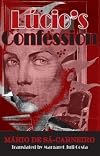
Aestheticism and decadence meet existential crises of gender, sexuality, identity, and the tenuous boundary between reality and fantasy, illusion and madness. S��-Carneiro killed himself at age 26, and I believe this is the only one of his novels to have been translated into English. Apparently, there are many others from this quizzical genius; I hope someone translates them soon���they must be similarly wonderful and maddeningly surreal as Lucio's Confession was, and more people show more should read his work and know his name outside of his native Portugal. show less
"Deep down, I did hate those people – the artists. That is, those false artists whose work consists of the poses they strike: saying outrageous things, cultivating complicated tastes and appetites, being artificial, irritating, [and] unbearable. People who, in fact, take from art only what is false and external.”
In “Lucio's Confession” by Mário de Sá-Carneiro, Margaret Jull Costa (translator)
From the street, two floors below my hotel window in a dreary urban business park slash show more hotel district, I heard desperate, blood chilling cries for help. I rushed to the window, expecting to see the victim of a hit and run car accident lying bloodied at the curb-side but instead, I saw a young man with a tear stained face wearing only a long sleeved, open-cuffed shirt walking this way and then that, each time with purpose, until the moment he changed his mind. Shouting, pleading with his hands outstretched. For a heartbreaking moment, I thought he looked like a guy I knew from work. It was early morning and there was no-one on the street to hear his shouting; I guessed he’d been up all night. For some reason, I felt I understood his problem; he should be in a field somewhere herding cattle for the morning milking or chopping wood for winter but instead, he’s been dumped in this incomprehensible, concrete and steel alien landscape, except that it isn’t alien … we made it, we imposed it on the poor bastard and it just doesn’t make sense. Before I had time to decide whether or not I should go outside and see if he was OK, a police car turned up and scooped him away.
I was reminded of this incident by reading “Lucio’s Confession” by Mário de Sá-Carneiro. They speak to me of the same kind of lost soul drowning in the same kind of fin-de-siècle urban nightmare – not at all of a celebration of life or of happiness or even of anything particularly specific to men or women. Coveting another woman’s wife is one of those symptoms for which people can be sectioned instantly. Are we so different from the protagonist Lucio? Our supposed lucidity is reliable, especially in a world where it is not impossible, for example, to fall in love with an image on the computer, and often before this virtual reality, we fantasize about being another person, and let the fantasies dominate? The novel left me very strong impressions; it seemed to me to be within a dream and at the same time within a reality that denies itself, re-creating it. Madness? Not sure. Maybe it’s just the way we see Art depicting Life.
I agree with Mário de Sá-Carneiro. This is not art, it is a symptom.
Mário de Sá-Carneiro killed himself in 1916.
Coda: “Like Pessoa, Sá-Carneiro had a horror of madness and abnormality in general, the reason, perhaps, why the whole of his work was a concerted effort to exorcise those demons.” Yes, we all know about the influence Sá-Carneiro had on the Pessoa’s Heteronimity. The letters between those two is something everyone interested on these matters should read.
By Eugénio Lisboa in the introduction to “Lucio's Confession” by Mário de Sá-Carneiro, Margaret Jull Costa (translator) show less
In “Lucio's Confession” by Mário de Sá-Carneiro, Margaret Jull Costa (translator)
From the street, two floors below my hotel window in a dreary urban business park slash show more hotel district, I heard desperate, blood chilling cries for help. I rushed to the window, expecting to see the victim of a hit and run car accident lying bloodied at the curb-side but instead, I saw a young man with a tear stained face wearing only a long sleeved, open-cuffed shirt walking this way and then that, each time with purpose, until the moment he changed his mind. Shouting, pleading with his hands outstretched. For a heartbreaking moment, I thought he looked like a guy I knew from work. It was early morning and there was no-one on the street to hear his shouting; I guessed he’d been up all night. For some reason, I felt I understood his problem; he should be in a field somewhere herding cattle for the morning milking or chopping wood for winter but instead, he’s been dumped in this incomprehensible, concrete and steel alien landscape, except that it isn’t alien … we made it, we imposed it on the poor bastard and it just doesn’t make sense. Before I had time to decide whether or not I should go outside and see if he was OK, a police car turned up and scooped him away.
I was reminded of this incident by reading “Lucio’s Confession” by Mário de Sá-Carneiro. They speak to me of the same kind of lost soul drowning in the same kind of fin-de-siècle urban nightmare – not at all of a celebration of life or of happiness or even of anything particularly specific to men or women. Coveting another woman’s wife is one of those symptoms for which people can be sectioned instantly. Are we so different from the protagonist Lucio? Our supposed lucidity is reliable, especially in a world where it is not impossible, for example, to fall in love with an image on the computer, and often before this virtual reality, we fantasize about being another person, and let the fantasies dominate? The novel left me very strong impressions; it seemed to me to be within a dream and at the same time within a reality that denies itself, re-creating it. Madness? Not sure. Maybe it’s just the way we see Art depicting Life.
I agree with Mário de Sá-Carneiro. This is not art, it is a symptom.
Mário de Sá-Carneiro killed himself in 1916.
Coda: “Like Pessoa, Sá-Carneiro had a horror of madness and abnormality in general, the reason, perhaps, why the whole of his work was a concerted effort to exorcise those demons.” Yes, we all know about the influence Sá-Carneiro had on the Pessoa’s Heteronimity. The letters between those two is something everyone interested on these matters should read.
By Eugénio Lisboa in the introduction to “Lucio's Confession” by Mário de Sá-Carneiro, Margaret Jull Costa (translator) show less
Lists
Awards


You May Also Like


Associated Authors
Statistics
- Works
- 84
- Also by
- 1
- Members
- 595
- Popularity
- #42,222
- Rating
- 3.9
- Reviews
- 12
- ISBNs
- 123
- Languages
- 11
- Favorited
- 5