
Harold Brodkey (1930–1996)
Author of Stories in an Almost Classical Mode
About the Author
Harold Brodkey was a novelist, short-story writer, and essayist. He was born in Alton, Illinois, in 1930. He graduated from Harvard University. Brodkey worked briefly as a page at NBC before a story he had shown to an editor at The New Yorker was published in 1953. His first short-story collection show more "First Love and Other Stories" was published in 1958. Brodkey was also a longtime staff writer at The New Yorker. He became legendary for a novel that he spent much of his adult life writing with parts being published in his 1988 short-story collection, Stories in an Almost Classical Mode before it was finally published as The Runaway Soul. In 1993, Brodkey announced to the readers of The New Yorker that he had AIDS. He chronicled his illness in a diary that was published in The New Yorker. Harold Brodkey died on January 26, 1996. (Bowker Author Biography) show less
Image credit: Artist: Howard Coale for The New Yorker, 1995
Series
Works by Harold Brodkey
Innocence 3 copies
Spring Fugue 2 copies
Brodkey Harold 1 copy
Avedon Photographs 1947-1977 1 copy
The State of Grace 1 copy
Associated Works
The Art of the Tale: An International Anthology of Short Stories (1986) — Contributor — 382 copies, 3 reviews
First Fiction: An Anthology of the First Published Stories by Famous Writers (1994) — Contributor — 195 copies, 1 review
An American Album: One Hundred and Fifty Years of Harper's Magazine (2000) — Contributor — 146 copies, 1 review
Who's Writing This? Notations on the Authorial I, with Self-Portraits {not Antæus} (1995) — Contributor — 76 copies
Literary Traveller: An Anthology of Contemporary Short Fiction (1994) — Contributor — 55 copies, 1 review
The Literary Lover: Great Stories of Passion and Romance (1993) — Contributor — 55 copies, 2 reviews
Tagged
Common Knowledge
- Canonical name
- Brodkey, Harold
- Other names
- Weintraub, Aaron Roy
- Birthdate
- 1930-10-25
- Date of death
- 1996-01-26
- Gender
- male
- Education
- Harvard University (BA, 1952)
- Occupations
- Staff Writer (1987 -)
- Organizations
- The New Yorker
- Awards and honors
- National Endowment for the Arts Fellowship
National Adademy in Rome Fellowship
Guggenheim Fellowship - Relationships
- Schwamm, Ellen (wife)
- Short biography
- HAROLD BRODKEY is the author of the novel The Runaway Soul, several collections of stories: First Love and Other Sorrows, Stories in an Almost Classical Mode, and The World Is the Home of Love and Death; travel writing: My Venice; essays: Sea Battles on Dry Land, and a memoir of his experience with AIDS, This Wild Darkness: The Story of My Death. His many honors include two first-place O. Henry Prizes as well as fellowships from the National Endowment for the Arts, the American Adademy in Rome, and the John Simon Guggenheim Memorial Foundation. He lived in New York City with his wife, the novelist Ellen Schwamm, until his death in 1996.
- Nationality
- USA
- Birthplace
- Staunton, Illinois, USA
- Places of residence
- New York, New York, USA
Venice, Italy - Place of death
- New York, New York, USA
- Associated Place (for map)
- USA
Members
Reviews

In Harold Brodkey's short story, "The State of Grace," (first published in 1954) that opens his exceptional debut collection from 1958, First Love and Other Sorrows, Brodkey, autobiographically speaking through his thirteen-year-old protagonist, recollects babysitting a seven year old boy. The boy was lonely, but unaware of his loneliness, as children that age can't help but be, and he'd light up each time Brodkey arrived at his house to keep an eye on him. Brodkey sensed the boy's subtle show more unhappiness over time, but being so unhappy himself, would not reciprocate the boy's adoration. Oh, he'd play with the boy -- perfunctorily -- keep him entertained and looked-after properly while his parents dined out and saw a movie or a play, but he would not give the boy what he knew the boy wanted from him -- his love.
Brodkey, now the adult, as the story concludes, and he looks back, wonders why it was so hard for him -- as that thirteen year old babysitter -- to give the boy what he needed, when it was obvious to everyone in the neighborhood that the kid just needed a big brother to love and guide him since his own father was so distant, practically no more materialized as a real presence in the boy's life than a ghost's. Just like Brodkey's Papa -- a phantom father. All the kid needed was some affirmation and acceptance, Brodkey! Couldn't you at least have given the boy that?
And Brodkey lamented that he couldn't (or wouldn't) give the boy what he needed; not because he didn't have anything to give, but because he resented his own parents not giving him the same thing he sensed the boy needing from him -- nurturing, esteem -- and perhaps felt a false sense of empowerment in similarly denying the boy as likewise Brodkey's parents denied him, withholding from that deprived seven-year-old those primal and vital emotional needs.
Looking back further, Brodkey regrets his mistake of needlessly withholding warmth and praise from the boy, berating himself for the sins of his youth, wishing, dreaming that he could go back in time and love the boy like the big brother that boy so desperately needed, exhorting his younger self to make that connection somehow, even though time had long since crushed the possibility of connection, and left instead in its inexorable wake, regret, loss, and self-loathing, over the wasted opportunity.
It's a painful conclusion to a powerful story, dramatizing how the past, no matter how well remembered (and my does Brodkey remember!), can never be recaptured (my apologies, Proust) at least in terms of removing its stained accumulation of regrets, or recaptured to induce some magical reenactment of a different, wished-for outcome, no matter how earnestly one yearns or imagines themselves vociferously instructing their younger, long-disappeared, unreachable self.
Poignant evocation of regret and loss, Brodkey! Bravo, Sir! Perhaps too evocative?
When I was in middle school, there was this girl. In retrospect, she obviously liked me. At the time, though, being so gangly and awkward and nervous around anybody and not just the opposite sex -- so insecure and uncomfortable in my own skin and lonely and mostly friendless because of it -- I didn't know, having never experienced a girl's attention before, how to react to it. To what were friendly advances accented maybe with that mysterious feminine vibe of attraction (a glance, a touch of her hair, a certain smile of hers) that I instinctively intuited meant more than her just being friendly, especially considering her persistence, poor girl, day after day and week after week in the classroom and junior high hallways, approaching me with that irrepressible "vibe". That "vibe" that rattled and alarmed me and, frankly, scared the shit out of me. I was afraid of the girl and embarrassed by her attentiveness, made overly-anxious and self conscious by it, stupid hypersensitive boy that I was. And lacking the internal tools to appropriately reciprocate her advances, and meanwhile realizing that I lacked the know-how to respond to her anyway, and that she held such power in exposing my opposite-sex ineptitude just by approaching me, I began to secretly loathe her. Just as Brodkey began resenting the boy for his unspoken needs.
My solution to this girl who would not go away?: Avoid her. Ignore her. Shun her. But not overtly; I couldn't be that rude. I mean avoid her by looking right through her, never directly at her even though our eyes sometimes met. I could keep her distanced and disengaged this way, no matter how relentless she became. Went on all school year like that. The more I resisted, the more she persisted. At least persisted up to a point; her point being the last day of class. Kids performing the yearly June ritual passing around their school annuals for signing and sentimentalized memorials of "good luck," "goodbye" and "friends forever".
The girl took my annual. I took hers. I did my (by then) rote don't-engage-her routine one last time. There was nothing grandiose or sentimental in what she handed back to me, her last words in my yearbook annual: "I just wish we could've become friends".
Killed me. How it hurt, her honest words. And why shouldn't it have hurt? Wasn't I in dire need of some friends? Wasn't I lonely? Hadn't she been generously, beyond-patient with me, offering me a balm to loneliness and outsider'd-ness -- her friendship and maybe more -- all damn yearlong? Would it have been so exceedingly difficult for me to have just woken up -- "wake up, Freeque!" as Harold Brodkey exhorted his immature thirteen-year-old self to do regarding the boy he babysat -- and to (damn it!) befriend the poor girl, merely accept what she was offering? It's what she needed from me. It's what the neglected boy Brodkey babysat needed from him. It's what Brodkey himself needed and I needed too, and what none of us got.
Beware all who approach the First Love and Other Sorrows of Harold Brodkey's, lest his writing resurrect memories and regrets you'd might rather have remained dead. show less
Brodkey, now the adult, as the story concludes, and he looks back, wonders why it was so hard for him -- as that thirteen year old babysitter -- to give the boy what he needed, when it was obvious to everyone in the neighborhood that the kid just needed a big brother to love and guide him since his own father was so distant, practically no more materialized as a real presence in the boy's life than a ghost's. Just like Brodkey's Papa -- a phantom father. All the kid needed was some affirmation and acceptance, Brodkey! Couldn't you at least have given the boy that?
And Brodkey lamented that he couldn't (or wouldn't) give the boy what he needed; not because he didn't have anything to give, but because he resented his own parents not giving him the same thing he sensed the boy needing from him -- nurturing, esteem -- and perhaps felt a false sense of empowerment in similarly denying the boy as likewise Brodkey's parents denied him, withholding from that deprived seven-year-old those primal and vital emotional needs.
Looking back further, Brodkey regrets his mistake of needlessly withholding warmth and praise from the boy, berating himself for the sins of his youth, wishing, dreaming that he could go back in time and love the boy like the big brother that boy so desperately needed, exhorting his younger self to make that connection somehow, even though time had long since crushed the possibility of connection, and left instead in its inexorable wake, regret, loss, and self-loathing, over the wasted opportunity.
It's a painful conclusion to a powerful story, dramatizing how the past, no matter how well remembered (and my does Brodkey remember!), can never be recaptured (my apologies, Proust) at least in terms of removing its stained accumulation of regrets, or recaptured to induce some magical reenactment of a different, wished-for outcome, no matter how earnestly one yearns or imagines themselves vociferously instructing their younger, long-disappeared, unreachable self.
Poignant evocation of regret and loss, Brodkey! Bravo, Sir! Perhaps too evocative?
When I was in middle school, there was this girl. In retrospect, she obviously liked me. At the time, though, being so gangly and awkward and nervous around anybody and not just the opposite sex -- so insecure and uncomfortable in my own skin and lonely and mostly friendless because of it -- I didn't know, having never experienced a girl's attention before, how to react to it. To what were friendly advances accented maybe with that mysterious feminine vibe of attraction (a glance, a touch of her hair, a certain smile of hers) that I instinctively intuited meant more than her just being friendly, especially considering her persistence, poor girl, day after day and week after week in the classroom and junior high hallways, approaching me with that irrepressible "vibe". That "vibe" that rattled and alarmed me and, frankly, scared the shit out of me. I was afraid of the girl and embarrassed by her attentiveness, made overly-anxious and self conscious by it, stupid hypersensitive boy that I was. And lacking the internal tools to appropriately reciprocate her advances, and meanwhile realizing that I lacked the know-how to respond to her anyway, and that she held such power in exposing my opposite-sex ineptitude just by approaching me, I began to secretly loathe her. Just as Brodkey began resenting the boy for his unspoken needs.
My solution to this girl who would not go away?: Avoid her. Ignore her. Shun her. But not overtly; I couldn't be that rude. I mean avoid her by looking right through her, never directly at her even though our eyes sometimes met. I could keep her distanced and disengaged this way, no matter how relentless she became. Went on all school year like that. The more I resisted, the more she persisted. At least persisted up to a point; her point being the last day of class. Kids performing the yearly June ritual passing around their school annuals for signing and sentimentalized memorials of "good luck," "goodbye" and "friends forever".
The girl took my annual. I took hers. I did my (by then) rote don't-engage-her routine one last time. There was nothing grandiose or sentimental in what she handed back to me, her last words in my yearbook annual: "I just wish we could've become friends".
Killed me. How it hurt, her honest words. And why shouldn't it have hurt? Wasn't I in dire need of some friends? Wasn't I lonely? Hadn't she been generously, beyond-patient with me, offering me a balm to loneliness and outsider'd-ness -- her friendship and maybe more -- all damn yearlong? Would it have been so exceedingly difficult for me to have just woken up -- "wake up, Freeque!" as Harold Brodkey exhorted his immature thirteen-year-old self to do regarding the boy he babysat -- and to (damn it!) befriend the poor girl, merely accept what she was offering? It's what she needed from me. It's what the neglected boy Brodkey babysat needed from him. It's what Brodkey himself needed and I needed too, and what none of us got.
Beware all who approach the First Love and Other Sorrows of Harold Brodkey's, lest his writing resurrect memories and regrets you'd might rather have remained dead. show less
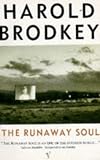
An audacious behemoth, a veritable leviathan of a work, certainly a book you could never recommend to anyone, doing so would be like off-loading a puppy or a plant or a reptile or a disabled child to someone, you’re palming off an incredible time sink, an excursion up to Everest in a seemingly innocuous 835 pages. You have to schedule this book in, you’re an analyst sitting down with a pipe in your mouth listening to this man bloviate about his entire history, mapping it out in show more excruciating detail, as you unwittingly become ingrained into his syntax, into his laws, in fact merging and moving towards an almost complete absorption by him, sinking into his panoramic contemplations, subsumed by this alien consciousness which takes page after page to become synchronised with - up until the metamorphosis culminates and all of a sudden becomes complete.
Brodkey has achieved something marvellous by being able to maintain such a precarious state of vertigo for this many pages, the edifice of his life standing like a mountain range laying for miles around, insuperable. The Runaway Soul is a book of dizziness, of arcane and archaic speech, of minute facial gestures and tautly examined motives. It is infantile, pretentious, and wholly autistic, but it is a magnificent achievement, as taxing as all taxonomies must be - by necessity.
There is a glib sentiment I’ve heard proffered in many different places, and attributed to (at least according to my hasty google search), of all people, Stephenie Meyer (that genius of prose). It’s the platitude that we live many lives by reading many books, that we achieve some kind of transcendence via a kaleidoscopic glimpse into the lives of others by the act of reading itself. The issue is that these lives, in a great deal of novels and fiction you will read at least, are hastily conjured-up, regurgitated, and essentially artificial fabrication of real lives - they can be beautiful, you can be charmed by them, you can even be disgusted by them, and if the writer is of a high enough calibre you may even be so incredulous (or perhaps generous enough) to call their portrayals realistic, making the huge gambit that they in some way manage to shore up to the infinite complexity of a single lived moment. But surely the intensity of a single life, displayed in its harrowing minutiae and triviality, trumps such shallowness? Brodkey’s book seems to pole vault across this hurdle, this giant obstacle concerning the sheer complexity of character and biography, and allows you to be consumed, thrown as you are into its quixotic quotidian reflection of mid century Midwestern existence - his answer is a howling yes, an affirmation of the achingly singular and particular, a great globule of phlegm in the face of the idea of easily-digestible 'characters'.
Brodkey’s prose is in a sense incomprehensible, his references and dialect and mental associations are nigh on inaccessible to a reader from the modern day. An alterior mind chugs and churns before you, in all of its failures and manifest (and exhibited with masochistic pleasure at every opportunity, mind you) maladaptions, in all of its interrupted flows, in its pain and paltry pleasures. Brodkey’s individuality and experience comes to the fore with a searing effect of reality - a light too bright to be looked at, an intelligence both boundless and tedious that must be contended with (that is, if you have the sheer stamina to follow his densely-thicketed trains of thought).
I mean, do you want to talk about one of the great auteurs of the 20th century? My God. I don’t know if I loved it, but I stand before it amazed, it is an exercise of architectonics applied to the puzzle of fiction, an infinite labyrinthine jungle gym of a confessional. Don’t read it, it’s that good. I don’t know if I truly understood it all, maybe that by itself is of some minor significance, and maybe it is a positive that I didn’t. It spurns me to write and to speak of it in glowing terms, and to gush over it when speaking to friends, so that's probably a good sign that I thoroughly enjoyed it, even if I'm a little too close to this ordeal to say that I cherished it or would ever wish it on another. Taken as a whole, it’s too much - but then again, maybe it’s just enough.
(It’s funny to note that I never found an album to listen to in conjunction with this book, something that rarely ever happens. Brodkey is his own idiosyncratic composition, and no amount of John Fahey or Toumani Diabaté was able to change that fact. Oh yeah, and I’ve been reading this since fucking January/February (I’m writing this in October) - the eight month slog that this tome took out of me should hopefully be indicative of its brutally solipsistic density. Gravity's Rainbow and Moby Dick are a drop in Runaway Soul's ocean when it comes to the dedication and discipline required to get to its last page. Good luck!!) show less
Brodkey has achieved something marvellous by being able to maintain such a precarious state of vertigo for this many pages, the edifice of his life standing like a mountain range laying for miles around, insuperable. The Runaway Soul is a book of dizziness, of arcane and archaic speech, of minute facial gestures and tautly examined motives. It is infantile, pretentious, and wholly autistic, but it is a magnificent achievement, as taxing as all taxonomies must be - by necessity.
There is a glib sentiment I’ve heard proffered in many different places, and attributed to (at least according to my hasty google search), of all people, Stephenie Meyer (that genius of prose). It’s the platitude that we live many lives by reading many books, that we achieve some kind of transcendence via a kaleidoscopic glimpse into the lives of others by the act of reading itself. The issue is that these lives, in a great deal of novels and fiction you will read at least, are hastily conjured-up, regurgitated, and essentially artificial fabrication of real lives - they can be beautiful, you can be charmed by them, you can even be disgusted by them, and if the writer is of a high enough calibre you may even be so incredulous (or perhaps generous enough) to call their portrayals realistic, making the huge gambit that they in some way manage to shore up to the infinite complexity of a single lived moment. But surely the intensity of a single life, displayed in its harrowing minutiae and triviality, trumps such shallowness? Brodkey’s book seems to pole vault across this hurdle, this giant obstacle concerning the sheer complexity of character and biography, and allows you to be consumed, thrown as you are into its quixotic quotidian reflection of mid century Midwestern existence - his answer is a howling yes, an affirmation of the achingly singular and particular, a great globule of phlegm in the face of the idea of easily-digestible 'characters'.
Brodkey’s prose is in a sense incomprehensible, his references and dialect and mental associations are nigh on inaccessible to a reader from the modern day. An alterior mind chugs and churns before you, in all of its failures and manifest (and exhibited with masochistic pleasure at every opportunity, mind you) maladaptions, in all of its interrupted flows, in its pain and paltry pleasures. Brodkey’s individuality and experience comes to the fore with a searing effect of reality - a light too bright to be looked at, an intelligence both boundless and tedious that must be contended with (that is, if you have the sheer stamina to follow his densely-thicketed trains of thought).
I mean, do you want to talk about one of the great auteurs of the 20th century? My God. I don’t know if I loved it, but I stand before it amazed, it is an exercise of architectonics applied to the puzzle of fiction, an infinite labyrinthine jungle gym of a confessional. Don’t read it, it’s that good. I don’t know if I truly understood it all, maybe that by itself is of some minor significance, and maybe it is a positive that I didn’t. It spurns me to write and to speak of it in glowing terms, and to gush over it when speaking to friends, so that's probably a good sign that I thoroughly enjoyed it, even if I'm a little too close to this ordeal to say that I cherished it or would ever wish it on another. Taken as a whole, it’s too much - but then again, maybe it’s just enough.
(It’s funny to note that I never found an album to listen to in conjunction with this book, something that rarely ever happens. Brodkey is his own idiosyncratic composition, and no amount of John Fahey or Toumani Diabaté was able to change that fact. Oh yeah, and I’ve been reading this since fucking January/February (I’m writing this in October) - the eight month slog that this tome took out of me should hopefully be indicative of its brutally solipsistic density. Gravity's Rainbow and Moby Dick are a drop in Runaway Soul's ocean when it comes to the dedication and discipline required to get to its last page. Good luck!!) show less
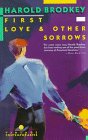
I really have no idea why when going for a collection of short stories to read aloud with my wife the name Harold Brodkey popped into my head as the obvious answer. He must have been lurking somewhere in there for some time just waiting for his chance. Brodkey was well known in his day, the fifties through the eighties or so, for his short stories and as staff writer on The New Yorker. He kept the literary world waiting for decades for his debut novel, which when finally released in 1991 as show more an 800 page behemoth was met with all the critical enthusiasm of a wet fart and which has now disappeared from the public consciousness so comprehensively that on Goodreads it has all of 63 ratings and fewer than a dozen reviews of more than one line. Amazing.
This is his debut collection, containing the stories that launched his reputation and ultimately ill-fated career. The brilliance they contain lay in their close examination of the characters' inner states of mind, their thoughts and feelings and contradictory emotions. The collection is a story of two halves. The first four stories are of some length and concern Brodkey's youth in St. Louis and college years at Harvard. The final five stories are much shorter and are attempts at portraying a young woman and mother, I'm assuming modeled after Brodkey's older sister.
I enjoyed the first half much more than the second half, I must say. Brodkey had more to say in them and of course he had easy access to his own past mind to mine. He could describe his protagonist's state of inner feeling with crystal clarity. A 13 year old's insecurity and feeling of otherness is brilliantly portrayed in State of Grace and an account of a college age young man's spending a year cycling through France with a friend describes the peril that can arise from getting to know anyone too closely for too long with amusing aplomb in The Quarrel.
The second batch of stories he's trying to do the same with a literary stand in for his sister, whom he apparently thought of as shallow and incredibly vain. Sometimes it succeeds I think but for me he misses more often than he hits with these. I miss the feeling of authorial sympathy for his protagonist that the earlier stories have, and I think the length of these compared to the length of the earlier stories reflects that he didn't have as good a grasp on this character and was floundering a bit.
So then, Harold Brodkey, I hope this raising you to the forefront of my consciousness for this time has served to scratch whatever itch you planted at some past moment into my own mind. I'm sorry you've faded from fame so greatly, but hey, there's always the chance you'll get rediscovered, even for that novel to get reevaluated and declared an unjustly ignored classic. You never know. show less
This is his debut collection, containing the stories that launched his reputation and ultimately ill-fated career. The brilliance they contain lay in their close examination of the characters' inner states of mind, their thoughts and feelings and contradictory emotions. The collection is a story of two halves. The first four stories are of some length and concern Brodkey's youth in St. Louis and college years at Harvard. The final five stories are much shorter and are attempts at portraying a young woman and mother, I'm assuming modeled after Brodkey's older sister.
I enjoyed the first half much more than the second half, I must say. Brodkey had more to say in them and of course he had easy access to his own past mind to mine. He could describe his protagonist's state of inner feeling with crystal clarity. A 13 year old's insecurity and feeling of otherness is brilliantly portrayed in State of Grace and an account of a college age young man's spending a year cycling through France with a friend describes the peril that can arise from getting to know anyone too closely for too long with amusing aplomb in The Quarrel.
The second batch of stories he's trying to do the same with a literary stand in for his sister, whom he apparently thought of as shallow and incredibly vain. Sometimes it succeeds I think but for me he misses more often than he hits with these. I miss the feeling of authorial sympathy for his protagonist that the earlier stories have, and I think the length of these compared to the length of the earlier stories reflects that he didn't have as good a grasp on this character and was floundering a bit.
So then, Harold Brodkey, I hope this raising you to the forefront of my consciousness for this time has served to scratch whatever itch you planted at some past moment into my own mind. I'm sorry you've faded from fame so greatly, but hey, there's always the chance you'll get rediscovered, even for that novel to get reevaluated and declared an unjustly ignored classic. You never know. show less
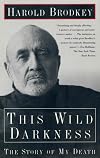
I had only read Brodkey's collection, Stories in an Almost Classical Mode, probably a dozen years ago, and admired his writing. This is necessarily a very dark book, an examination of his last years and months after he learns he has AIDS. It sounds incongruous, I suppose, to say I felt a kinship with Brodkey, but I did, and it was mostly because of this statement - "I am an addict of language, of storytelling and of journalism. I read, not frenziedly anymore, but constantly. I long to love show more other people's words, other people for their words, their ideas." Well I am not terminally ill, as Brodkey knew he was when he wrote those words, but I knew what he meant. The importance of life: our lives, other people's lives; and the stories from those lives are equally important, to preserve those lives. Brodkey continued to feel this way right up to the end, as evidenced in one of the final entries in This Wild Darkness - "And I am still writing, as you see. I am practicing making entries in my journal, recording my passage into nonexistence. This identity, this mind, this particular cast of speech, is nearly over." This was not, of course, a happy book, but it is an important one from a very talented writer. - Tim Bazzett, author of Love, War & Polio show less
Lists
Awards


You May Also Like


Associated Authors
Statistics
- Works
- 38
- Also by
- 22
- Members
- 1,727
- Popularity
- #14,886
- Rating
- 3.8
- Reviews
- 21
- ISBNs
- 90
- Languages
- 7
- Favorited
- 5