
Christopher Morley (1890–1957)
Author of The Haunted Bookshop
About the Author
Image credit: From Project Gutenburg
Series
Works by Christopher Morley
The Complete Sherlock Holmes Volume 1 by Arthur Doyle (With a Preface by Christopher Morley) (1930) — Preface — 68 copies
Notes on Bermuda 13 copies
The goldfish under the ice 12 copies
The middle kingdom : poems, 1929-1944 11 copies
Christopher Morley's briefcase 11 copies
The BLUE & The GRAY or, War is Hell. From an old script by Judson Kilpatrick and J. Owen Moore. (1930) 9 copies, 1 review
Rehearsal 9 copies
Passivity program 9 copies
One act plays 9 copies
Hostages to fortune 8 copies
Don't open until Christmas 6 copies
The Bowling Green 6 copies
Musings from "The Old Mandarin" 6 copies
Friends, Romans .... 6 copies
Rubaiyat of account overdue 6 copies
Thursday evening 6 copies
Sherlock Holmes and Dr. Watson 5 copies
Apologia pro sua preoccupatione 5 copies
Outward bound 5 copies
"No Crabb, no Christmas" 5 copies
Two fables 4 copies
Sherlock Holmes's prayer 4 copies
An apology for Boccaccio 4 copies
On the nose 4 copies
Really, my dear : a play in one act 4 copies
Good theatre : a fancy in one scene 4 copies
Blythe mountain, Vermont, 4 copies
The child and the book 4 copies
Proofreader's mind 3 copies
Sherlock Holmes Returns 3 copies
The Ship Tusitala 3 copies
Sherlockiana : two sonnets 3 copies
Rare Books: An Essay 3 copies
Kitty Foyle matchbook 3 copies
Old thoughts for Christmas 3 copies
Christmas Eve 3 copies
Sir Kenelm reads in bed 3 copies
The Last Pipe 3 copies
Kitty 3 copies
A message for Vincent Starrett 3 copies
Poscimur 2 copies
Old Mole 2 copies
Literary Blood-Transfusion 2 copies
Morrell 1936 household calendar 2 copies
The Mark Twain commemoration 2 copies
The Fifth Seal 2 copies
[Note card] 2 copies
Information Please 2 copies
The Foundry 2 copies
Christopher Morley 2 copies
The Week-End Library 2 copies
I wonder if you can somehow pass on to friends in The Trade a private word about John Mistletoe. 2 copies
Trade Winds 2 copies
Paumanok 2 copies
Barns 2 copies
Baedeker Fibbed 2 copies
A Hymn for America 2 copies
Lincoln's doctor's dog 2 copies
The worst Christmas story 2 copies
For Goodness' Sake 2 copies
Foggy Bottom 2 copies
On belonging to clubs 2 copies
Murder in Red and Green 2 copies
Unpublished Epigrams 2 copies
Christmas cards 2 copies
In an auction room : Letter of John Keats to Fanny Brawne, Anderson Galleries, March 15, 1920 2 copies
Andrew McGill's idea of happiness 2 copies
BR's secret passion 2 copies
A golden string 2 copies
The Christmas tobacco : [a Yuletide doggerel] : sent with all honest greetings by the author 2 copies
Mr. Morley Takes the Train 2 copies
Friends of the Library; 2 copies
Footnotes for an Centennial 2 copies
The Christopher Morley Inn blotter 2 copies
Passport : Hoboken Free State 2 copies
Christopher Morley's scrapbook 2 copies
The Gutenberg address 2 copies
Goudiamus igitur 2 copies
Cricket & Morley Unincorporated 2 copies
Eumenides of book collecting 2 copies
A song about Cider 1 copy
Untitled essay set in France 1 copy
March 25, 1930 1 copy
Animal Farm by George Orwell 1 copy
Parnassus at Home 1 copy
Reversible Sonnet 1 copy
Oxford Yarns 1 copy
Paumonok archive 1 copy
Powders of Sympathy 1 copy
Bran Gems recipe 1 copy
Gilbert and Sullivan 1 copy
Pulling Seaweed 1 copy
17 Heriot Row 1 copy
Trojan Horse ad 1 copy
Saki 1 copy
Fluctuat nec Mergitur 1 copy
Expense report 1 copy
Hulbert Footner (1877–1944) 1 copy
In memoriam Sherlock Holmes 1 copy
The Smart set anthology 1 copy
Letters of Rudyard Kipling 1 copy
Left to their own devices 1 copy
The great American parade 1 copy
The commutation chophouse 1 copy
Kinder im Traum; Roman 1 copy
Geladen Atmosfeer 1 copy
Garridebean games 1 copy
Time to Light the Furnace 1 copy
On Ben Abramson 1 copy
Manners Makyth the Man 1 copy
Kitty Foyle Archive 1 copy
Autograph 1 copy
Confessions of a Smoker 1 copy
Elegy in a Railroad Station 1 copy
Quatre Morceaux 1 copy
Virtigo 1 copy
A Conversation by Mail 1 copy
Lucky Dio 1 copy
Walt : a one-act portrait 1 copy
Thirty Out of Forty-Eight 1 copy
East of Eden 1 copy
Cluny Brown by Margery Sharp 1 copy
Two Sherlock Holmes episodes 1 copy
In Geneva 1 copy
Second-hand bookshop 1 copy
Mlle de Sombreuil 1 copy
Below Zero 1 copy
Morley's mountain 1 copy
Only a matter of time 1 copy
Two enthusiasms 1 copy
Phonetics in the House 1 copy
A Southdown Christmas 1 copy
Thoughts on redheads 1 copy
Continuity 1 copy
A casual thought 1 copy
Christopher Morley alcove 1 copy
On books and libraries 1 copy
La serviette oubliée 1 copy
Atomic fission, April 1387 1 copy
Motto from Human Being 1 copy
Thunder on the Left 1 copy
Songs for a Little House 1 copy
Map of Roslyn Estates 1 copy
Dressers Decorative Design 1 copy
Where the blue begins / 1 copy
Letter 15. September 1932 1 copy
Letter to Miss Baker 1 copy
Letter to Walter G. Ziegler, 1 copy
An American Pilgrim 1 copy
Meandering with Morley 1 copy
A New Yorker in London 1 copy
The Argus returns 1 copy
Escape by Ethel Vance 1 copy
More Poems by A. E. Housman 1 copy
Red Plush by Guy McCrone 1 copy
Mr. Skeffington by Elizabeth 1 copy
Matador by Marguerite Steen 1 copy
Gentlemen's Relish {poem} 1 copy
Jerry's Back Room 1 copy
When You Sell A Man A Book 1 copy
Grandpa sings to himself 1 copy
The man 1 copy
Old farmer's almanac 1 copy
Conrad 25 years after 1 copy
In re: Logan Pearsall Smith 1 copy
Bedroom suite 1 copy
A charm 1 copy
The Prize package 1 copy
What is your favorite tie? 1 copy
The Stupid magician 1 copy
One of the Family 1 copy
Notes with a Yellow Pen 1 copy
The Claque quacks 1 copy
"Origin of a Clever Quip" 1 copy
Notes on Baker Street 1 copy
The Havefordian 1 copy
When We Were Parted 1 copy
Motto to Hang on a Wall 1 copy
Verloren, Verloren 1 copy
Washing the dishes 1 copy
Two sonnets 1 copy
Two Pictures from Normandy 1 copy
Traffic 1 copy
Animal Crackers 1 copy
The Black Beetles 1 copy
Dandy Dandelion 1 copy
To the Little House 1 copy
To His Executors 1 copy
Thomas Bird Mosher 1 copy
Te Deum Laudanum 1 copy
Heywood 1 copy
Pleased to Meet You Playbill 1 copy
Match books 1 copy
Autographed slip 1 copy
This is not Rex Stout 1 copy
Tusitala, Outward Bound 1 copy
Bright Cages publicity 1 copy
Surprise Package 1 copy
A Salute to Christmas 1 copy
Pope Club 1 copy
Floating Particles 1 copy
Hamlet 1 copy
The Owl 1 copy
This Book Belongs to 1 copy
Barometers & bookshops 1 copy
The adventure of the F.W.L. 1 copy
The Unmentionable 1 copy
Jemima Plays Her Soft Guitar 1 copy
Bartender's Moustache 1 copy
1930 Colophon:Vol.1,#3 - Paris Street Woodcut - Afro French Poetry in Louisiana - California School of Printing (1930) 1 copy
LETTER TO LEONORA 1 copy
Poems By Christopher Morley 1 copy
The Red and White Girdle 1 copy
Madonna and Child 1 copy
Morley on the Prenatal Word 1 copy
Excerpt from Human Being 1 copy
[Editorial Room Broadside] 1 copy
The author to the printer 1 copy
Pessimism 1 copy
A Christmas salute 1 copy
Esoterica viniana 1 copy
Epigrams in a cellar 1 copy
Deus haec Otia Fecit 1 copy
Bookmark 1 copy
A Goodbye 1 copy
Set of six photographs 1 copy
Soft Shoulders poster 1 copy
Kitty Foyle Lobby Card 1 copy
Unique 1 copy
On visiting bookshops 1 copy
The Century 1 copy
Ben Abramson, Bookseller 1 copy
Christopher D. Morley card 1 copy
Around the clock 1 copy
Check 1 copy
Purely Original 1 copy
Satisfaction Piece, Amss 9pp 1 copy
Really, My Dear, Amss 15pp. 1 copy
Elysian Fields, Amss, 6pp. 1 copy
The Birth of God, Amss 4pp 1 copy
An essay on Transylvania 1 copy
Bifurcation, 7pp. Amss 1 copy
A Little Back Room 1 copy
The Autogenesis of a Poet 1 copy
Abandoned Husbands 1 copy
Behave Yourself 1 copy
No turn on Red! 1 copy
One Night Stand 1 copy
Sun Cured carbon typescript 1 copy
New York One Way 1 copy
Miss Libby 1 copy
Kathleen, film script 1 copy
Strong sensual germs 1 copy
The Old Mandarin proof sheet 1 copy
The Ship "Tusitala" offprint 1 copy
Ode to the Comp. Room 1 copy
Associated Works
William Shakespeare: The Complete Works (1623) — Preface, some editions — 35,675 copies, 177 reviews
Leaves of Grass (1855) — Introduction, some editions; Editor, some editions — 12,099 copies, 100 reviews
The Life and Opinions of Tristram Shandy, Gentleman (1759) — Introduction, some editions — 8,530 copies, 125 reviews
Sherlock Holmes: The Complete Novels and Stories, Vol. 1 (Bantam Classics 1/2) (1887) — Preface, some editions — 4,068 copies, 22 reviews
The Complete Sherlock Holmes, Vol. II of II (Barnes & Noble Classics) (2003) — Preface, some editions — 2,712 copies, 11 reviews
The Illustrated Treasury of Children's Literature, Volumes 1-2 (1955) — Contributor — 521 copies, 4 reviews
The Complete Sherlock Holmes : V1 (unspecified) (1930) — Preface, some editions — 380 copies, 1 review
Literary England: Photographs of Places Made Memorable in English Literature (1943) — Preface, some editions — 324 copies, 4 reviews
The Glorious American Essay: One Hundred Essays from Colonial Times to the Present (2020) — Contributor — 116 copies
Writing New York: A Literary Anthology (Expanded 10th-Anniversary Edition) (2008) — Contributor — 101 copies, 1 review
Gentlemen, Scholars and Scoundrels: A Treasury of the Best of Harper's Magazine from 1850 to the Present (1972) — Contributor — 62 copies
Books alive; a profane chronicle of literary endeavor and literary misdemeanor (1940) — some editions — 45 copies, 1 review
Strange and Fantastic Stories: Fifty Tales of Terror, Horror and Fantasy (1946) — Introduction — 33 copies, 1 review
To the Queen's Taste: The First Supplement to 101 Years Entertainment Consisting of the Best Stories Published in the First Four Years of Ellery Queen's Mystery Magazine (1946) — Contributor — 28 copies
Jurgen and the censor. Report of the Emergency committee organized to protest against the suppression of James Branch Cabell's Jurgen (1920) — Contributor — 10 copies
Breaking into print; being a compilation of papers wherein each of a select group of authors tells of the difficulties of authorship & how such trials are met (1937) — Contributor — 9 copies
1935 Essay Annual — Contributor — 4 copies
To Doctor R.: Essays Here Collected and Published in Honor of the Seventieth birthday of Dr. A. S. W. Rosenbach, July 22, 1946 — Contributor — 2 copies, 1 review
The Ethnic Image in Modern American Literature, 1900-1950, Volumes 1-2 (1984) — Contributor — 1 copy
Saturday Review of Literature, Volume VI Number 46: Saturday, June 7, 1930 — Contributor — 1 copy
Saturday Review of Literature, Volume VI Number 30: Saturday, February 5, 1930 — Contributor — 1 copy
Tagged
Common Knowledge
- Legal name
- Morley, Christopher Darlington
- Birthdate
- 1890-05-05
- Date of death
- 1957-03-28
- Gender
- male
- Education
- Haverford College
New College, Oxford - Occupations
- journalist
novelist
essayist
poet
columnist - Organizations
- American Academy of Arts and Letters (Literature, 1936)
Baker Street Irregulars (founder)
Book-of-the-Month Club (judge)
New York Post (New York Evening Post) - Relationships
- Morley, Felix (brother)
Morley, F. V. (brother)
Morley, Frank (father) - Short biography
- Christopher Morley (5 May 1890 – 28 March 1957) was an American journalist, novelist, essayist and poet. He also produced stage productions for a few years and gave college lectures.
Morley was born in Bryn Mawr, Pennsylvania. His father, Frank Morley, was a mathematics professor at Haverford College; his mother, Lilian Janet Bird, was a violinist who provided Christopher with much of his later love for literature and poetry.
In 1900 the family moved to Baltimore, Maryland. In 1906 Christopher entered Haverford College, graduating in 1910 as valedictorian. He then went to New College, Oxford, for three years on a Rhodes scholarship, studying modern history.
In 1913 Morley completed his Oxford studies and moved to New York City, New York. On June 14, 1914, he married Helen Booth Fairchild, with whom he would have four children, including Louise Morley Cochrane. They first lived in Hempstead, and then in Queens Village. They then moved to Philadelphia, Pennsylvania, and in 1920 they made their final move, to a house they called "Green Escape" in Roslyn Estates, New York. They remained there for the rest of his life. In 1936 he built a cabin at the rear of the property (The Knothole), which he maintained as his writing study from then on.
In 1951 Morley suffered a series of strokes, which greatly reduced his voluminous literary output. He died on 28 March 1957, and was buried in the Roslyn Cemetery in Nassau County, New York. After his death, two New York newspapers published his last message to his friends:
Read, every day, something no one else is reading. Think, every day, something no one else is thinking. Do, every day, something no one else would be silly enough to do. It is bad for the mind to continually be part of unanimity. - Nationality
- USA (birth)
- Birthplace
- Bryn Mawr, Pennsylvania, USA
- Places of residence
- Bryn Mawr, Pennsylvania, USA
New York, New York, USA
Philadelphia, Pennsylvania, USA
Roslyn Heights, New York, USA - Place of death
- Roslyn Heights, Long Island, New York, USA
- Burial location
- Roslyn Cemetery, Roslyn, New York, USA
- Associated Place (for map)
- New York, USA
Members
Reviews

“When you sell a man a book you don’t sell him just twelve ounces of paper and ink and glue - you sell him a whole new life. Love and friendship and humor and ships at sea by night - there’s all heaven and earth in a book, a real book I mean.”
What a delightful little humorous gem. About a traveling book-salesman, Roger Mifflin, who sells his “business” - an old horse-driven carriage with a lot of books - to 39-year-old Helen McGill - she buys it on a whim partly because she’s show more tired of taking care of her older brother, Andrew. Off she goes on an adventure of her life - and why not some romance along the way?
This short novel is crammed with life wisdom - mostly delivered by the wonderful Roger Mifflin.
“Oh, silly woman! Leave your stove, your pots and pans and chores, even if only for one day! Come out and see the sun in the sky and the river in the distance!” show less
What a delightful little humorous gem. About a traveling book-salesman, Roger Mifflin, who sells his “business” - an old horse-driven carriage with a lot of books - to 39-year-old Helen McGill - she buys it on a whim partly because she’s show more tired of taking care of her older brother, Andrew. Off she goes on an adventure of her life - and why not some romance along the way?
This short novel is crammed with life wisdom - mostly delivered by the wonderful Roger Mifflin.
“Oh, silly woman! Leave your stove, your pots and pans and chores, even if only for one day! Come out and see the sun in the sky and the river in the distance!” show less
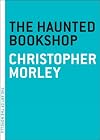
The irrepressible bookseller, Roger “Professor” Mifflin, is back. Now married to Helen McGill (as was implied might happen at the end of Parnassus on Wheels), Roger is ensconced in a second-hand bookshop in Brooklyn. He likes to describe it as haunted by the ghosts of all great literature. He continues to enthuse and pontificate, somewhat, on the ameliorative effects of literature and thus the vital service to society contributed by booksellers. As part of his social efforts he has show more agreed to take on staff the daughter of a book loving industrialist who would like his (he thinks wayward) daughter to gain some perspective and proper proportion through association with great literature. Titania is exquisitely beautiful, for Brooklyn, and naturally becomes the object of the delusional affection of Roger’s other young acquaintance, the advertising copywriter, Aubrey Gilbert. If that were not enough, there is a plot afoot to assassinate President Wilson as he journeys to the Peace Conference subsequent to the armistice of 1918. Only Roger and Aubrey can save the day!
In many ways, though somewhat lengthier this novel is slighter than its predecessor. Or perhaps Christopher Morley lost his head a bit to the enthusiasm that greeted his first novel in 1917. Here, the Mifflin character comes across as (somewhat) tedious. Aubrey Gilbert is thoroughly obnoxious in his efforts to take on the role of the action hero, all with an eye to winning Titania’s affection. And the melodramatic plot is risible. It remains a curious article of Americana from the inter-war years, but little more. Not recommended. show less
In many ways, though somewhat lengthier this novel is slighter than its predecessor. Or perhaps Christopher Morley lost his head a bit to the enthusiasm that greeted his first novel in 1917. Here, the Mifflin character comes across as (somewhat) tedious. Aubrey Gilbert is thoroughly obnoxious in his efforts to take on the role of the action hero, all with an eye to winning Titania’s affection. And the melodramatic plot is risible. It remains a curious article of Americana from the inter-war years, but little more. Not recommended. show less

I’ve been looking forward to reading this book ever since I finished Parnassus on Wheels. It took ages to get back to it, though, but I’m thankful I took the time to read this one! In my opinion, it suffered from second-book-in-a-series syndrome to some extent, but it proved to be a delightful read, anyway.
One facet of this book that I ended up loving the most (and which took me by surprise!) was the theory on reading and how reading changes people and nations. That theme was felt show more throughout the whole story, and I loved getting Roger Mifflin’s perspective on reading. I can’t say that I fully agree with him, but there was much I did agree with, and it gave me a lot of food for thought. Oh, and his wall-hanging about a borrowed book being returned? 100% with him. I loved it so much I showed it to my mom, and she said we ought to print that out and hang it in our home library!
The rest of the story—the mystery and the romance—were engaging and sweet. They weren’t stand-outish in any way, but I enjoyed them.
If you’ve enjoyed Parnassus on Wheels, you’ll love being back with Roger Mifflin again—just be prepared for some rather philosophical discussions! show less
One facet of this book that I ended up loving the most (and which took me by surprise!) was the theory on reading and how reading changes people and nations. That theme was felt show more throughout the whole story, and I loved getting Roger Mifflin’s perspective on reading. I can’t say that I fully agree with him, but there was much I did agree with, and it gave me a lot of food for thought. Oh, and his wall-hanging about a borrowed book being returned? 100% with him. I loved it so much I showed it to my mom, and she said we ought to print that out and hang it in our home library!
The rest of the story—the mystery and the romance—were engaging and sweet. They weren’t stand-outish in any way, but I enjoyed them.
If you’ve enjoyed Parnassus on Wheels, you’ll love being back with Roger Mifflin again—just be prepared for some rather philosophical discussions! show less

Parnassus on Wheels by Christopher Morley ~ 1917. This edition: J.B. Lippincott, 1955. Introduction by John T. Winterich. Illustrations by Douglas Gorsline. Hardcover. 160 pages.
My rating: 9/10. An unexpected story, boisterously told. The point off is for narrator Helen’s continued refrain of “I’m so fat and plain! I’m so dull and unintellectual!” Well, Helen, if you continue to sell yourself short like that, don’t be surprised if people treat you like a doormat. A minor issue, show more but one that I ground my teeth at a bit. Helen’s actions negated her sorry opinion of herself, by the way.
*****
This is the prequel to the perennially popular 1919 bestseller, The Haunted Bookshop. Though the books share a certain joie de vivre, they are quite different in style and presentation. Parnassus on Wheels is much less consciously intellectual; the narrator has a distinctive voice which is exclusive to her story, while Bookshop is a different kettle of fish entirely. I liked them both, in different ways.
Thirty-nine-year-old spinster Helen McGill lives a contented life on the small farm she owns with her brother Andrew. At least, it was contented, a happy contrast from her previous occupation as a governess in the city, which she joyfully left in order to join her brother in his quest for a more congenial way of life to combat his ill-health. The farm was just the ticket; Andrew has been usefully occupied with crops and pigs and mild rural pleasures, while Helen has kept the home fires burning and her chickens productively producing eggs.
But something has happened to change all of that. An elderly great-uncle has died, leaving the two his library, and Andrew, stimulated by the sudden abundance of literature at his disposal, has decided to become a writer himself. He pens an ode to the rural life, Paradise Regained, and sends it off to a New York publisher. The book catches the fancy of the jaded city dwellers everywhere, and Andrew is suddenly a best-selling author. He has started neglecting the farm to hob nob with the urban literati, and between city visits tramps the countryside looking for new material. Happiness and Hayseed follows, and then a book of poems. Through all of this Helen keeps the home fires burning and the farm on an even keel, but she is starting to get rather jaded herself in her role as “rural Xantippe” and “domestic balance-wheel that kept the great writer close to the homely realities of life”, as she has seen herself described by one of Andrew’s doting biographers.
Helen is ripe for rebellion, and when her chance to shake her brother up a bit comes she seizes it with both hands. Andrew is out one day, when up drives a horse-drawn van, with the following legend painted on its side:
R. MIFFLIN’S
TRAVELLING PARNASSUS
GOOD BOOKS FOR SALE
SHAKESPEARE, CHARLES LAMB, R.L.S.
HAZLITT, AND ALL OTHERS
The driver of the van, one Roger Mifflin, is looking for Andrew McGill. He presents Helen with his card:
ROGER MIFFLIN’S
TRAVELLING PARNASSUS
Worthy friends, my wain doth hold
Many a book, both new and old:
Books, the truest friends of man,
Fill this rolling caravan.
Books to satisfy all uses,
Golden lyrics of the Muses,
Books on cookery and farming,
Novels passionate and charming,
Every kind for every need
So that he who buys may read.
What librarian can surpass us?
Helen chuckles, and is immediately interested. She does, after all, appreciate a good book herself, though not to the excess her brother has shown. And Roger Mifflin has a business proposition of sorts. The van is a travelling bookshop, and he thinks it would be just the thing for Andrew to take over. Roger announces his intention of selling his business, lock, stock, horse Peg (short for Pegasus), and all.
Helen, imagining an even more complete neglect of the farm should her brother take on this attractive offer, is aghast. She tries to send Mifflin on his way, with no success.
The two joust back and forth, and Helen gets the gleam of an idea. She will purchase the travelling bookstore, and leave Andrew to watch the farm. She has some money saved, and turn-about is fair play, after all…
The deed is duly done, and, leaving the Swedish hired lady in charge, Helen hits the road with Roger along to show her the ropes. Needless to say, Andrew is flabbergasted at his sister’s sudden whim, and sets out in hot pursuit.
Hi-jinks ensue for numerous chapters, until a satisfyingly romantic conclusion is reached.
A grand little romp of a book, something of a period piece, but happy and playful, and well worth the short few hours it takes to gobble it up.
Lippincott’s 1955 edition, which I was lucky enough to stumble upon in Langley last week, has the extra bonus of a very informative explanatory foreword by John Winterich, which added greatly to my understanding and enjoyment of both Parnassus on Wheels and The Haunted Bookshop - I believe it was written to accompany the omnibus volume of both stories which I’ve seen listed on ABE - though this is a stand-alone volume. Clever line illustrations by Douglas Gorsline added an extra fillip to the tale.
*****
After I’d read Parnassus, I stumbled upon a little bit of interesting news regarding Christopher Morley’s inspiration for the story. Turns out that this novel is a send-up of another contemporary novelist of best-selling “rural odes”, one Ray Stannard Baker, writing under the pseudonym David Grayson. Baker-Grayson’s 1907 book, Adventures in Contentment, was immensely popular and gained a large following of people yearning after “the simple life”; it was followed by eight other volumes. Though Baker himself lived a completely urban lifestyle, as a hard-hitting newspaper reporter and journalist, his alter-ego “Grayson” fictionally left the city for the peaceful rural life of a small farm, where he was joined by his sister “Harriet”; the two enjoyed a rural idyll centered on the simple pleasures of country life and wholesome labour. show less
My rating: 9/10. An unexpected story, boisterously told. The point off is for narrator Helen’s continued refrain of “I’m so fat and plain! I’m so dull and unintellectual!” Well, Helen, if you continue to sell yourself short like that, don’t be surprised if people treat you like a doormat. A minor issue, show more but one that I ground my teeth at a bit. Helen’s actions negated her sorry opinion of herself, by the way.
*****
This is the prequel to the perennially popular 1919 bestseller, The Haunted Bookshop. Though the books share a certain joie de vivre, they are quite different in style and presentation. Parnassus on Wheels is much less consciously intellectual; the narrator has a distinctive voice which is exclusive to her story, while Bookshop is a different kettle of fish entirely. I liked them both, in different ways.
Thirty-nine-year-old spinster Helen McGill lives a contented life on the small farm she owns with her brother Andrew. At least, it was contented, a happy contrast from her previous occupation as a governess in the city, which she joyfully left in order to join her brother in his quest for a more congenial way of life to combat his ill-health. The farm was just the ticket; Andrew has been usefully occupied with crops and pigs and mild rural pleasures, while Helen has kept the home fires burning and her chickens productively producing eggs.
But something has happened to change all of that. An elderly great-uncle has died, leaving the two his library, and Andrew, stimulated by the sudden abundance of literature at his disposal, has decided to become a writer himself. He pens an ode to the rural life, Paradise Regained, and sends it off to a New York publisher. The book catches the fancy of the jaded city dwellers everywhere, and Andrew is suddenly a best-selling author. He has started neglecting the farm to hob nob with the urban literati, and between city visits tramps the countryside looking for new material. Happiness and Hayseed follows, and then a book of poems. Through all of this Helen keeps the home fires burning and the farm on an even keel, but she is starting to get rather jaded herself in her role as “rural Xantippe” and “domestic balance-wheel that kept the great writer close to the homely realities of life”, as she has seen herself described by one of Andrew’s doting biographers.
Helen is ripe for rebellion, and when her chance to shake her brother up a bit comes she seizes it with both hands. Andrew is out one day, when up drives a horse-drawn van, with the following legend painted on its side:
R. MIFFLIN’S
TRAVELLING PARNASSUS
GOOD BOOKS FOR SALE
SHAKESPEARE, CHARLES LAMB, R.L.S.
HAZLITT, AND ALL OTHERS
The driver of the van, one Roger Mifflin, is looking for Andrew McGill. He presents Helen with his card:
ROGER MIFFLIN’S
TRAVELLING PARNASSUS
Worthy friends, my wain doth hold
Many a book, both new and old:
Books, the truest friends of man,
Fill this rolling caravan.
Books to satisfy all uses,
Golden lyrics of the Muses,
Books on cookery and farming,
Novels passionate and charming,
Every kind for every need
So that he who buys may read.
What librarian can surpass us?
Helen chuckles, and is immediately interested. She does, after all, appreciate a good book herself, though not to the excess her brother has shown. And Roger Mifflin has a business proposition of sorts. The van is a travelling bookshop, and he thinks it would be just the thing for Andrew to take over. Roger announces his intention of selling his business, lock, stock, horse Peg (short for Pegasus), and all.
Helen, imagining an even more complete neglect of the farm should her brother take on this attractive offer, is aghast. She tries to send Mifflin on his way, with no success.
The two joust back and forth, and Helen gets the gleam of an idea. She will purchase the travelling bookstore, and leave Andrew to watch the farm. She has some money saved, and turn-about is fair play, after all…
The deed is duly done, and, leaving the Swedish hired lady in charge, Helen hits the road with Roger along to show her the ropes. Needless to say, Andrew is flabbergasted at his sister’s sudden whim, and sets out in hot pursuit.
Hi-jinks ensue for numerous chapters, until a satisfyingly romantic conclusion is reached.
A grand little romp of a book, something of a period piece, but happy and playful, and well worth the short few hours it takes to gobble it up.
Lippincott’s 1955 edition, which I was lucky enough to stumble upon in Langley last week, has the extra bonus of a very informative explanatory foreword by John Winterich, which added greatly to my understanding and enjoyment of both Parnassus on Wheels and The Haunted Bookshop - I believe it was written to accompany the omnibus volume of both stories which I’ve seen listed on ABE - though this is a stand-alone volume. Clever line illustrations by Douglas Gorsline added an extra fillip to the tale.
*****
After I’d read Parnassus, I stumbled upon a little bit of interesting news regarding Christopher Morley’s inspiration for the story. Turns out that this novel is a send-up of another contemporary novelist of best-selling “rural odes”, one Ray Stannard Baker, writing under the pseudonym David Grayson. Baker-Grayson’s 1907 book, Adventures in Contentment, was immensely popular and gained a large following of people yearning after “the simple life”; it was followed by eight other volumes. Though Baker himself lived a completely urban lifestyle, as a hard-hitting newspaper reporter and journalist, his alter-ego “Grayson” fictionally left the city for the peaceful rural life of a small farm, where he was joined by his sister “Harriet”; the two enjoyed a rural idyll centered on the simple pleasures of country life and wholesome labour. show less
Lists
Book ideas (1)
Best Audiobooks (1)
Biblio-Mysteries (1)
1910s (1)
First Novels (1)
Awards


You May Also Like


Associated Authors
Statistics
- Works
- 622
- Also by
- 65
- Members
- 7,510
- Popularity
- #3,259
- Rating
- 4.3
- Reviews
- 257
- ISBNs
- 444
- Languages
- 10
- Favorited
- 24


