
Steve Aylett
Author of Slaughtermatic
About the Author
Series
Works by Steve Aylett
Associated Works
The Thackery T. Lambshead Pocket Guide to Eccentric and Discredited Diseases (2003) — Contributor — 810 copies, 20 reviews
Last Drink Bird Head : A Flash Fiction Anthology for Charity (2009) — Contributor — 33 copies, 1 review
Tagged
Common Knowledge
- Canonical name
- Aylett, Steve
- Birthdate
- 1967
- Gender
- male
- Nationality
- UK
- Birthplace
- Bromley, London, England, UK
- Places of residence
- Bromley, England, UK
- Associated Place (for map)
- England, UK
Members
Discussions
143. Heart of the Original by Steve Aylett in Backlisted Book Club (March 2022)
Reviews
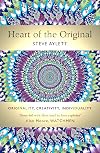
If you're going to write a book banging on about the importance of originality in thought and expression, you'd better make sure it's written in a really god-damn original way. And Steve Aylett's prose is, right enough, so original that after a few pages many readers may be forgiven for thinking that that's quite enough originality for one day, thanks. Like Nabokov, but to an infinitely greater degree, Aylett creates sentences so utterly stripped of banalities and stock phrases that they show more almost repel: it's not so much that he is not at home to Mr Cliché, but rather that he's waiting behind the front door to garrotte Mr Cliché and bury him under the back patio. You fly over his craggy paragraphs exhausted, searching desperately for somewhere smooth enough to land. Quite often, you end up travelling somewhere else by mistake.
I said earlier that readers might be forgiven for finding it all too much, but then I am a more tolerant person than Steve Aylett, who himself shows no sympathy whatsoever for those content to recycle other people's ideas, or to consume the results with bland satisfaction. ‘While many claim to crave originality,’ he says, ‘they feel an obscure revulsion when confronted with it.’ But though he acknowledges the revulsion, he obviously thinks we should all be doing more to get over it, instead of just buying further paperbacks from writers who ‘have as much artistic ambition as a fossilized spud’.
Part of the fun of this book is seeing him get specific about this, as when he suddenly launches an unexpected attack on other writers:
In American Psycho, Ellis pretended to say what everyone knew already about consumer society, but when trying to embed what he really meant he found he didn't know whether to shoot a cake or kiss an ostrich. He gave up, leaving only the decoy, a husk which met with great success and was taken as a standard template for the modern novel. To believe it went otherwise is to accept that he was a conscious fraud. Perhaps if a book is entirely empty we shouldn't feel bad about filling it.
Even better are the pithy throwaways.
Many make do with China Mieville, quite simply one of the science fiction writers in the UK.
These things are thrown out mid-paragraph, like a knives lobbed into a crowd by a horribly committed dadaist. In the end, surveying the range of lifts, borrowings and imitations in most artistic creation, Aylett concludes with magisterial derision: ‘It's pathetic to have someone else's gut feeling.’
True originality, by contrast, ‘increases the options, not merely the products’. He does touch on a few writers that he seems to admire (Tove Jansson, Greg Egan and – bafflingly to me – Michael Moorcock are all mentioned with approbation), and enjoins readers to ‘be ravenous’ in order to dig out their own gems. ‘Real creativity is a ferocity of consciousness,’ he suggests, and for him this begins at the level of individual word choice, which gets an attention that I found particularly gratifying.
Words have the device-like detailed architecture of diatoms, and a glowing soul. A word will present itself as armatured with potential, as though with arms open, calling via your intuition to another word in another environment. You can enrich the stuff of life by bringing together two words which have never, ever been introduced to one another before. Perhaps because they dwell in different contexts or in the jargon of different disciplines, they are never held in the attention at the same time. Yet when put together, their cogs mesh as if they were made for each other and a massive amount of energy is released.
Any Aylett sentence will provide examples of such unexpected and productive collocations – as, for instance, when he describes Antonin Artaud as having ‘a face like a wet kestrel’, or when he writes that ‘A system is never so good that it couldn't be improved by a hen on a rampage’. In fact one of the surprises of Heart of the Original is just how practical some of the advice in here is, despite its quasi-parodic clothing. I loved this:
I was doing a story about a childhood visit to the circus and wrote ‘They pounced, two clowns holding me by the arms while a fourth beat the bejesus out of me.’ I found this mistake of the missing third clown very funny but didn't know why. When the mind has to jump a gap, the spark it fires can tickle the brain's surface or ignite unused pathways, depending on the guidelines placed on either side.
The book is itself a demonstration of the technique, compressed and elided at times to the point of incomprehensibility but frequently exhilarating anyway. He refers in passing, for instance, to Jesus' ‘suicide-by-cop’, or writes of creative expression that ‘It leaves you raw enough to feel your reflection granulate across a mirror's surface’.
Somewhere beyond the literary ectopia characterising Aylett's writing, there is – perhaps surprisingly – a core of real emotion and belief which in lazy shorthand you might call political. In this book, it's especially exhilarating because it's not just about other artists and how they should be assessed, it's also about how you can think and feel and react more creatively yourself. The consequences of this go beyond the world of the arts and soak into almost everything else. As Aylett cautions, ‘You may even live a life with repercussions.’ show less
I said earlier that readers might be forgiven for finding it all too much, but then I am a more tolerant person than Steve Aylett, who himself shows no sympathy whatsoever for those content to recycle other people's ideas, or to consume the results with bland satisfaction. ‘While many claim to crave originality,’ he says, ‘they feel an obscure revulsion when confronted with it.’ But though he acknowledges the revulsion, he obviously thinks we should all be doing more to get over it, instead of just buying further paperbacks from writers who ‘have as much artistic ambition as a fossilized spud’.
Part of the fun of this book is seeing him get specific about this, as when he suddenly launches an unexpected attack on other writers:
In American Psycho, Ellis pretended to say what everyone knew already about consumer society, but when trying to embed what he really meant he found he didn't know whether to shoot a cake or kiss an ostrich. He gave up, leaving only the decoy, a husk which met with great success and was taken as a standard template for the modern novel. To believe it went otherwise is to accept that he was a conscious fraud. Perhaps if a book is entirely empty we shouldn't feel bad about filling it.
Even better are the pithy throwaways.
Many make do with China Mieville, quite simply one of the science fiction writers in the UK.
These things are thrown out mid-paragraph, like a knives lobbed into a crowd by a horribly committed dadaist. In the end, surveying the range of lifts, borrowings and imitations in most artistic creation, Aylett concludes with magisterial derision: ‘It's pathetic to have someone else's gut feeling.’
True originality, by contrast, ‘increases the options, not merely the products’. He does touch on a few writers that he seems to admire (Tove Jansson, Greg Egan and – bafflingly to me – Michael Moorcock are all mentioned with approbation), and enjoins readers to ‘be ravenous’ in order to dig out their own gems. ‘Real creativity is a ferocity of consciousness,’ he suggests, and for him this begins at the level of individual word choice, which gets an attention that I found particularly gratifying.
Words have the device-like detailed architecture of diatoms, and a glowing soul. A word will present itself as armatured with potential, as though with arms open, calling via your intuition to another word in another environment. You can enrich the stuff of life by bringing together two words which have never, ever been introduced to one another before. Perhaps because they dwell in different contexts or in the jargon of different disciplines, they are never held in the attention at the same time. Yet when put together, their cogs mesh as if they were made for each other and a massive amount of energy is released.
Any Aylett sentence will provide examples of such unexpected and productive collocations – as, for instance, when he describes Antonin Artaud as having ‘a face like a wet kestrel’, or when he writes that ‘A system is never so good that it couldn't be improved by a hen on a rampage’. In fact one of the surprises of Heart of the Original is just how practical some of the advice in here is, despite its quasi-parodic clothing. I loved this:
I was doing a story about a childhood visit to the circus and wrote ‘They pounced, two clowns holding me by the arms while a fourth beat the bejesus out of me.’ I found this mistake of the missing third clown very funny but didn't know why. When the mind has to jump a gap, the spark it fires can tickle the brain's surface or ignite unused pathways, depending on the guidelines placed on either side.
The book is itself a demonstration of the technique, compressed and elided at times to the point of incomprehensibility but frequently exhilarating anyway. He refers in passing, for instance, to Jesus' ‘suicide-by-cop’, or writes of creative expression that ‘It leaves you raw enough to feel your reflection granulate across a mirror's surface’.
Somewhere beyond the literary ectopia characterising Aylett's writing, there is – perhaps surprisingly – a core of real emotion and belief which in lazy shorthand you might call political. In this book, it's especially exhilarating because it's not just about other artists and how they should be assessed, it's also about how you can think and feel and react more creatively yourself. The consequences of this go beyond the world of the arts and soak into almost everything else. As Aylett cautions, ‘You may even live a life with repercussions.’ show less
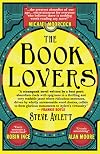
Nothing can prepare you for the bamboozling headed your way if you dare to read this novel. Not even previous association with Steve Aylett’s oeuvre will protect you. This is nonsense on stilts in stilettos. My one suspicion and fervid wish is that it is in fact a fifth column movement set on dismantling generative AI: once ingested it’s curtains.
The more surprising thing is that I read the whole book. Which proves nothing since it clearly isn’t readable. This is a work for a highly show more select audience, possibly of one.
Not recommended unless you are that one. show less
The more surprising thing is that I read the whole book. Which proves nothing since it clearly isn’t readable. This is a work for a highly show more select audience, possibly of one.
Not recommended unless you are that one. show less
Atom by Steve Aylett
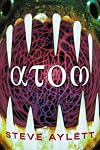
Describing Steve Aylett’s wild ride Atom is a lot like holding water in your hands. The thought stays with you for a mere moment until it just runs through your fingers. You remember the experience vividly, but are unable to accurately explain the sensation.
Three figures emerged from Atom’s brownstone. A cloaked cadaver cradling its gored face, followed by a naked Atom and the fat gent carrying a fishtank between them. In the tank’s gloom rocked a giant mouth with a tail.
Atom is Taffy show more Atom, private detective (or private defective as he is referred to early on). His partner is Madison “Maddy” Drowner, weapons designer (Creator of such unique weapons as the Syndication bomb, which strips the pretext out of everything.) and best friend Jed Helms, an intelligent piranha. With even stranger villains, Aylett’s world is Dick Tracy on acid. Like a runaway Maltese Falcon, the plot defies description. With only glimpses and moments of what we know and how it should be, it all somehow makes sense.
It is a testament to Aylett’s skill that he keeps the reader’s rapt attention throughout. His sense of humor is dead on, with several passages demanding to be read aloud. His timing is exemplary, and Aylett knows when to give the reader a breather. With all the excitement and laughter, I loathed for the adventure to end. Luckily for me (and other readers), the climax is oddly satisfying.
"Ladies and gentleman," said Atom, "if you'll indulge me. I have assigned a musical note to every grade of human lie. Here's my rendition of the President's inaugural address." And he took out a clarinet.
Aylett maintains the insanity right up until the last page playing a game of psychic chicken and refusing to swerve. Atom takes you on a wild ride far afield of ordinary fiction (SF or not), and it’s a ride not soon forgotten. show less
Three figures emerged from Atom’s brownstone. A cloaked cadaver cradling its gored face, followed by a naked Atom and the fat gent carrying a fishtank between them. In the tank’s gloom rocked a giant mouth with a tail.
Atom is Taffy show more Atom, private detective (or private defective as he is referred to early on). His partner is Madison “Maddy” Drowner, weapons designer (Creator of such unique weapons as the Syndication bomb, which strips the pretext out of everything.) and best friend Jed Helms, an intelligent piranha. With even stranger villains, Aylett’s world is Dick Tracy on acid. Like a runaway Maltese Falcon, the plot defies description. With only glimpses and moments of what we know and how it should be, it all somehow makes sense.
It is a testament to Aylett’s skill that he keeps the reader’s rapt attention throughout. His sense of humor is dead on, with several passages demanding to be read aloud. His timing is exemplary, and Aylett knows when to give the reader a breather. With all the excitement and laughter, I loathed for the adventure to end. Luckily for me (and other readers), the climax is oddly satisfying.
"Ladies and gentleman," said Atom, "if you'll indulge me. I have assigned a musical note to every grade of human lie. Here's my rendition of the President's inaugural address." And he took out a clarinet.
Aylett maintains the insanity right up until the last page playing a game of psychic chicken and refusing to swerve. Atom takes you on a wild ride far afield of ordinary fiction (SF or not), and it’s a ride not soon forgotten. show less
Lint by Steve Aylett
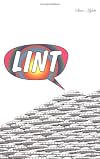
Bonkers. Stark raving bonkers. But also brilliant. From its opening epigraph to its closing acknowledgements, this fictional biography of science fiction “legend” Jeff Lint is a breathtaking tour-de-force. It traces Lint’s life from his birth in 1928 to his death in 1994. Typically, Lint’s death was immediately preceded by a near-death experience. He was that kind of guy.
Lint’s life, such as it was, really began when he sought to publish his first stories during the hey-day of show more pulp science fiction. Lint’s stories were beyond the edge of sensible. So much so that quoting from any of them would render this account senseless. And his periodic forays into other media — comics, film, even pop music — were equally bizarre and disastrous. It’s the kind of life you won’t struggle to remember.
Aylett’s attention to detail is astounding. There is a bibliography at the end that stretches to a hundred blissfully imagined publications. He provides pages of “Lint Quotations” with such memorable lines as, “When the abyss gazes into you, bill it.” And there is a comprehensive 11 page index. Did I mention it was bonkers?
The downside of all this inventiveness is that reading the book is exhausting. Even a few pages at a time. I kept wondering how exhausting it must have been for Steve Aylett to write. And why. Certainly he has created something utterly unique. We can only hope it remains that way.
Cautiously recommended to those who either already are bonkers, or are hoping to go there. show less
Lint’s life, such as it was, really began when he sought to publish his first stories during the hey-day of show more pulp science fiction. Lint’s stories were beyond the edge of sensible. So much so that quoting from any of them would render this account senseless. And his periodic forays into other media — comics, film, even pop music — were equally bizarre and disastrous. It’s the kind of life you won’t struggle to remember.
Aylett’s attention to detail is astounding. There is a bibliography at the end that stretches to a hundred blissfully imagined publications. He provides pages of “Lint Quotations” with such memorable lines as, “When the abyss gazes into you, bill it.” And there is a comprehensive 11 page index. Did I mention it was bonkers?
The downside of all this inventiveness is that reading the book is exhausting. Even a few pages at a time. I kept wondering how exhausting it must have been for Steve Aylett to write. And why. Certainly he has created something utterly unique. We can only hope it remains that way.
Cautiously recommended to those who either already are bonkers, or are hoping to go there. show less
Lists
Awards


You May Also Like


Associated Authors
Statistics
- Works
- 29
- Also by
- 10
- Members
- 1,485
- Popularity
- #17,290
- Rating
- 3.6
- Reviews
- 35
- ISBNs
- 72
- Languages
- 3
- Favorited
- 14