
Aubrey de Selincourt (1894–1962)
Author of The World of Herodotus
About the Author
Image credit: De Sélincourt (seated, right) in Holzminden prisoner-of-war camp, c.1918
Works by Aubrey de Selincourt
One Good Tern 3 copies
Cat's Cradle 3 copies
Six great thinkers: Socrates, St. Augustine, Lord bacon, Rousseau, Coleridge, John Stuart Mill (The "Six great" series) (1977) 2 copies
Isle of Wight 2 copies
Sailing - A Guide for Everyman 2 copies
Herodotus: The Histories 1 copy
The early history of Rome 1 copy
Odysseus the Wonderer 1 copy
The Campaigns of Alexander 1 copy
The Ravens Nest 1 copy
One more Summer 1 copy
On reading poetry 1 copy
Calicut lends a hand 1 copy
Kestrel 1 copy
Micky 1 copy
Histories, The 1 copy
L'univers D'herodote 1 copy
Associated Works
History of Rome, books 1-5 [in translation] (0027) — Translator, some editions; Translator, some editions — 3,921 copies, 20 reviews
Tagged
Common Knowledge
- Legal name
- de Sélincourt, Aubrey
- Birthdate
- 1894-06-07
- Date of death
- 1962-12-20
- Gender
- male
- Education
- Rugby
University of Oxford (University College) - Occupations
- writer
classical scholar
translator
teacher
head teacher
sailor - Organizations
- Royal Flying Corps (WWI)
- Relationships
- McLeod, Irene Rutherford (wife)
de Sélincourt, Guy (brother)
Milne, A. A. (brother-in-law)
de Sélincourt, Ernest (brother)
Milne, Dorothy de Sélincourt (sister-in-law)
Milne, Christopher Robin (nephew) - Nationality
- UK
- Places of residence
- Isle of Wight, England, UK
- Associated Place (for map)
- England, UK
Members
Reviews

Written over four hundred years after Alexander’s death, Arrian reviews the campaigns of Alexander with the experience of a military commander. Much is made of Alexander's impressive feats both individually and as head of a multinational, empire-destroying force. Much is made of him following in the conquering footsteps of Dionysus and his proud desire to outdo his kinsman Heracles at Aornos
He tells of Alexander’s violent suppression of rebellions, especially toward his end, his total show more defeat of Persia, and his campaigns through Egypt, India and Babylon. Alexander established new cities, placed in the modern world as well as can be done in footnotes.
Overall, he is seen as an unparalleled and charismatic leader that could win over his murmuring troops while never totally overcoming the criticisms of "orientalism" for taking Persian/Asiatic dress, wives, comrades, etc.
While 'His passion was for glory only, and in that he was insatiable', Arrian does credit him with respect of the religions of conquered peoples. Was this inclination the root of his image-weakening orientalism?
This edition has a good index. show less
He tells of Alexander’s violent suppression of rebellions, especially toward his end, his total show more defeat of Persia, and his campaigns through Egypt, India and Babylon. Alexander established new cities, placed in the modern world as well as can be done in footnotes.
Overall, he is seen as an unparalleled and charismatic leader that could win over his murmuring troops while never totally overcoming the criticisms of "orientalism" for taking Persian/Asiatic dress, wives, comrades, etc.
While 'His passion was for glory only, and in that he was insatiable', Arrian does credit him with respect of the religions of conquered peoples. Was this inclination the root of his image-weakening orientalism?
Alexander treated the religion of the Egyptians (and other conquered peoples) with respect, and was enthroned as Pharaoh at Thebes. By contrast Cambyses had actually stabbed the Apis (Herodotus) ...
This edition has a good index. show less

This book was recommended as in introduction to Herodotus’s Histories. I don’t think it fulfills that task as well as the more recent volume by James Romm (Yale University Press, 1998).
What Sélincourt’s treatment offers instead is a tour d’horizon of Greek culture in antiquity. The main interest here is the author’s dissent from consensus opinions about the ancient Greeks, based on his thorough knowledge and love of the literature. The achievement of his Greeks was, in many ways, show more admirable, but they were not, as some maintain, our betters in all aspects of civilization. Their matter-of-fact cruelty and mendacity, indeed, their overall “self-regarding ethics,” to use Sélincourt’s phrase, mean there is no need to idealize them. Unfortunately, Sélincourt doesn’t trust the reader to remember this insight the first, second, or third time he shares it.
This book was also useful in helping me to realize that we oversimplify when we refer in a general way to “the ancient Greeks.” Are we talking about the dim antiquity of the Trojan War? Of Homer’s gathering and shaping of legends of it centuries later? Of the flowering of science and philosophy on the Ionian coast? Of Periclean Athens? There was continuity, but also change. One example of change (not for the better) is in the position of women in society, which seems to have been better in earlier days.
In addition to overselling the author’s central insight, the book suffers in general from being wordy and repetitive. Phrases such as “as I have said” and “as we shall see” abound. I savored in particular, “it bears repeating.” My interest sagged in the middle of the book when the author retells material Herodotus reports; for that, I’d rather get it from the original. Sélincourt’s love of Greek lyric poetry, however, is infectious, and he is especially good on Plato. So on balance, I’m glad I stuck it out. He convinces me of the greatness of Sappho, makes me want to reread Homer and Sophocles, and try some more Plato, For this, I’m grateful. show less
What Sélincourt’s treatment offers instead is a tour d’horizon of Greek culture in antiquity. The main interest here is the author’s dissent from consensus opinions about the ancient Greeks, based on his thorough knowledge and love of the literature. The achievement of his Greeks was, in many ways, show more admirable, but they were not, as some maintain, our betters in all aspects of civilization. Their matter-of-fact cruelty and mendacity, indeed, their overall “self-regarding ethics,” to use Sélincourt’s phrase, mean there is no need to idealize them. Unfortunately, Sélincourt doesn’t trust the reader to remember this insight the first, second, or third time he shares it.
This book was also useful in helping me to realize that we oversimplify when we refer in a general way to “the ancient Greeks.” Are we talking about the dim antiquity of the Trojan War? Of Homer’s gathering and shaping of legends of it centuries later? Of the flowering of science and philosophy on the Ionian coast? Of Periclean Athens? There was continuity, but also change. One example of change (not for the better) is in the position of women in society, which seems to have been better in earlier days.
In addition to overselling the author’s central insight, the book suffers in general from being wordy and repetitive. Phrases such as “as I have said” and “as we shall see” abound. I savored in particular, “it bears repeating.” My interest sagged in the middle of the book when the author retells material Herodotus reports; for that, I’d rather get it from the original. Sélincourt’s love of Greek lyric poetry, however, is infectious, and he is especially good on Plato. So on balance, I’m glad I stuck it out. He convinces me of the greatness of Sappho, makes me want to reread Homer and Sophocles, and try some more Plato, For this, I’m grateful. show less

Aubrey de Selincourt was a Greek scholar, educated at Oxford, who was a fighter pilot in WW1, shot down and taken prisoner until the war's end. He then completed his degree, and became a school teacher, then translator of Greek and Latin for the Penquin classics series. He did a translation of Herodotus in 1954, This book was published in 1962, as a companion to Herodotus, to explain Greek culture and history at the time Herodotus wrote. The book discusses first Herodotus as a historian, his show more credulity and biases, and the general feeling of Greeks for history that interweaves myth and incident. The long middle of the book goes over the history that Herodotus wrote about, so much so that I questioned if I should just be reading the original Histories. The final two parts review Greek literature, including lyric poems, epics and drama, and finally discusses Athenian or Greek democracy and institutions. Selincourt has a near worshipful view of Herodotus, and a fluid style, but I sometimes struggled to keep interested. show less
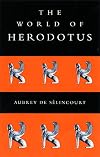
This odd project from 1962 is a discussion and analysis of Herodotus. Herodotus is fairly straightforward to read and the author mentions most of his stories just as an outline while adding his opinionated (and now dated) commentary on ancient Greek history and culture. A final segment of the book adds discussion of Greek literature in general with large quoted extracts. About 30% of the way into the book, one wonders whether it would be better to read one of the annotated translations of show more Herodotus directly (e.g. The Landmark edition). show less
Lists
You May Also Like


Associated Authors
Statistics
- Works
- 34
- Also by
- 6
- Members
- 279
- Popularity
- #83,280
- Rating
- 4.1
- Reviews
- 5
- ISBNs
- 10
- Favorited
- 1