
Susan Doran
Author of The Tudor Chronicles
About the Author
Susan Doran teaches Early Modern History at Christ Church, Oxford.
Image credit: Jesus College
Works by Susan Doran
Doubtful and Dangerous: The Question of Succession in Late Elizabethan England (2014) — Editor — 7 copies
Bill and the Kid: Let's Dig 1 copy
Associated Works
Tagged
Common Knowledge
- Legal name
- Doran, Susan Michelle
- Birthdate
- 1948-02-07
- Gender
- female
- Education
- University College London (Ph.D)
St Anne's College, Oxford (B.A.) - Occupations
- professor
- Organizations
- Oxford University (Christ Church)
- Short biography
- Susan Doran is a member of the history faculty at Christ Church, Oxford University, where her specific area of interest is stated as being Early Modern British and European history. Previously, Prof. Doran was a reader in history, senior lecturer in history and teaching studies and director of the history program at St. Mary's College, Strawberry Hill, part of the University of Surrey.
She is also a senior research fellow for history at Jesus College. - Nationality
- UK
- Associated Place (for map)
- UK
Members
Reviews
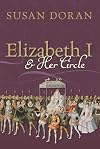
I received this through NetGalley in exchange for an honest review.
I have always had a fascination with the Tudors so I was very eager to read this new account of Elizabeth I’s life. So many times these books can be dull and lackluster but Susan Doran’s writing brought history to life in this new book. There were so many new things I learned. One of the things that interested me the most in her account was Elizabeth’s relationship with Henry VIII. In most accounts, Elizabeth is always show more shown to greatly admire and love her father in a way that makes it seem as if they were very close, even after sentencing her mother to die. Contrary to those beliefs, Doran points out why this was not necessarily the case. Royal children generally do not spend much time with their parents, often seeing them only a few times per year. And even when they do meet, it is not the type of quality time that modern parents share with their children. I thought that this book was incredibly fascinating and would recommend it 100% to any lover of history or of Elizabeth and the Tudor family.
https://thewornbookmark.wordpress.com/2015/02/10/book-review-elizabeth-i-her-cir... show less
I have always had a fascination with the Tudors so I was very eager to read this new account of Elizabeth I’s life. So many times these books can be dull and lackluster but Susan Doran’s writing brought history to life in this new book. There were so many new things I learned. One of the things that interested me the most in her account was Elizabeth’s relationship with Henry VIII. In most accounts, Elizabeth is always show more shown to greatly admire and love her father in a way that makes it seem as if they were very close, even after sentencing her mother to die. Contrary to those beliefs, Doran points out why this was not necessarily the case. Royal children generally do not spend much time with their parents, often seeing them only a few times per year. And even when they do meet, it is not the type of quality time that modern parents share with their children. I thought that this book was incredibly fascinating and would recommend it 100% to any lover of history or of Elizabeth and the Tudor family.
https://thewornbookmark.wordpress.com/2015/02/10/book-review-elizabeth-i-her-cir... show less
I have been reading about Elizabeth I for 40 years. When I choose something new to read about this remarkable woman and her era, I hope to learn even more. Unfortunately this doesn't always occur, but this book has given me some deeper insight into Elizabeth's relationship with some of her most important councilors. For that, I am thrilled and I give it five stars.
I didn't learn much new from this book, but it was a good review of who was who and what went on at court. I especially liked the structure of the book. It is divided into three parts: Kin, Courtiers, and Councillors, and each section is divided into chapters focused on small groups or specific persons. "Kin" has chapter on Parents & Siblings, The Suffolk Cousins, Mary Queen of Scots, and James VI of Scotland (her eventual heir to the English throne). Three favorites are the chapter subjects show more of "Courtiers": Robert Dudley, Earl of Leicester; Sir Christopher Hatton; and Robert Devereux, Earl of Essex. The section has an additional chapter on the noblewomen who served as ladies in waiting to the queen. Part Three, "Councillors," includes chapters on William Cecil, Lord Burghley; Sir Francis Walsingham; and Burghley's son, Robert Cecil. In the course of the book, relationships between the various subjects and Elizabeth are analyzed and important events (the succession, Elizabeth's "marriage game," the Spanish Armada, the Dutch wars, religious dissent, etc.) are discussed in detail. In short, it's a nice primer or reference book on Elizabeth's reign. show less
This is a thoroughly researched, well-structured book that studies Elizabeth I through the lens of her relationships with others: her family, her courtiers, and her councillors. It is a good book to read if you’re interested in the period, but it requires sustained attention. I’d like to try it again sometime, or another book by Doran.
Lists
You May Also Like


Associated Authors
Statistics
- Works
- 25
- Also by
- 1
- Members
- 827
- Popularity
- #30,853
- Rating
- 4.0
- Reviews
- 14
- ISBNs
- 80
- Languages
- 1