
Benerson Little
Author of The Golden Age of Piracy: The Truth Behind Pirate Myths
About the Author
Benerson Little is the author of multiple books and numerous articles on pirates, has twice appeared on the History Channel to discuss piracy, and has served as a historical analyst for the Starz pirate drama Black Sails. A former Navy SEAL, he has worked as a naval special warfare analyst, an show more intelligence analyst, and a consultant on maritime subjects. He lives in Huntsville, Alabama. show less
Works by Benerson Little
Associated Works
Desperta Ferro Moderna. Piratas en el Caribe — Contributor — 2 copies
Tagged
Common Knowledge
- Birthdate
- 20th Century
- Gender
- male
- Education
- Tulane University
- Occupations
- Navy SEAL
- Relationships
- United States Navy
- Nationality
- USA
- Birthplace
- Key West, Florida, USA
- Places of residence
- Huntsville, Alabama, USA
- Associated Place (for map)
- USA
Members
Reviews
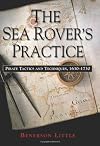
Benerson Little, the author of The Sea Rover’s Practice, is a former SEAL who’s now a fencing instructor. I suppose this makes him uniquely qualified to write a book on pirate tactics. It’s a nice history; the extensive bibliography makes it clear that Little has mastered pirate literature, from the original sources and in several languages. His organization and presentation is meticulous: definition of terms, how a pirate captain went about recruiting a crew, what kind of ships were show more favored and why, weaponry, the routine at sea, the techniques of chasing prey, boarding actions, shore raids, and spending the loot. Little writes with just enough deliberate archaisms (“surprizal” instead of “surprise”, for example) to provide an interesting “voice” without getting annoying.
There were a number of surprizals for me:
*Many pirate actions took place from very small boats, often shore based canoes or rowboats that would sally out to seize anything they could catch.
*Despite the Hollywood image of Captain Blood laying his frigate alongside for a broadside gun duel, the most common weapon for pirates was the musket. Pirate crews were generally larger than potential prey and could easily clear the decks of an opponent with rapid small arms fire. When larger guns were used, they were typically charged with canister; at least one pirate had exactly one roundshot on board, which the cook used to crush spices and crack nuts. Grenades were also common, and often homemade out of old bottles.
*Audacity often paid off; in one case a French pirate with a small ship and a crew of 28 took a Spanish 50-gun ship when the Spanish captain simply refused to believe that anyone would attempt anything so foolhardy. He was playing cards below decks when a pirate entered the cabin, pressed a pistol against his head, and made an offer he couldn’t refuse. Little mentions a similar incident where SEALS captured a US Navy vessel in a training exercise.
*Shore raids were very common; the most famous being Morgan’s capture of Panama.
On the minus side, all of Little’s evidence is anecdotal accounts from period memoirs and documents. There’s no discussion of the potential truthfulness of the informants and certainly former pirates had plenty of incentive to either deprecate or exaggerate their activities. Little also confines his discussion to piracy by Europeans in the Caribbean, with only passing reference to the “Barbary Coast” and Indian Ocean pirates. Admittedly, this is already a pretty extensive book and I imagine contemporary accounts of nonEuropean piracy are scarce and difficult to access. Lastly, the book could use some more maps and diagrams. There’s a useful illustration of the sail positions for square versus fore-and-aft rigged vessels for various points of sailing, but I would have liked some diagrams showing exactly how the pirate and prey maneuvered during a chase.
A pleasant read, with a valuable glossary and references. Four stars. show less
There were a number of surprizals for me:
*Many pirate actions took place from very small boats, often shore based canoes or rowboats that would sally out to seize anything they could catch.
*Despite the Hollywood image of Captain Blood laying his frigate alongside for a broadside gun duel, the most common weapon for pirates was the musket. Pirate crews were generally larger than potential prey and could easily clear the decks of an opponent with rapid small arms fire. When larger guns were used, they were typically charged with canister; at least one pirate had exactly one roundshot on board, which the cook used to crush spices and crack nuts. Grenades were also common, and often homemade out of old bottles.
*Audacity often paid off; in one case a French pirate with a small ship and a crew of 28 took a Spanish 50-gun ship when the Spanish captain simply refused to believe that anyone would attempt anything so foolhardy. He was playing cards below decks when a pirate entered the cabin, pressed a pistol against his head, and made an offer he couldn’t refuse. Little mentions a similar incident where SEALS captured a US Navy vessel in a training exercise.
*Shore raids were very common; the most famous being Morgan’s capture of Panama.
On the minus side, all of Little’s evidence is anecdotal accounts from period memoirs and documents. There’s no discussion of the potential truthfulness of the informants and certainly former pirates had plenty of incentive to either deprecate or exaggerate their activities. Little also confines his discussion to piracy by Europeans in the Caribbean, with only passing reference to the “Barbary Coast” and Indian Ocean pirates. Admittedly, this is already a pretty extensive book and I imagine contemporary accounts of nonEuropean piracy are scarce and difficult to access. Lastly, the book could use some more maps and diagrams. There’s a useful illustration of the sail positions for square versus fore-and-aft rigged vessels for various points of sailing, but I would have liked some diagrams showing exactly how the pirate and prey maneuvered during a chase.
A pleasant read, with a valuable glossary and references. Four stars. show less
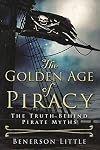
This book takes myths about pirates and piracy and debunks them one by one. It limits itself with piracy by Europeans in 1650-1725 primarily in the Caribbean. The book is quite interesting, rich in details, with large bibliography and massive footnotes. Sometimes it goes too greatly into the details like discussing which fencing techniques and more specifically feints and hits could have been used by dueling pirates and the like. It cites a lot of fiction and film and show where they err.
The show more [non-exhaustive] list of myths:
- Pirates usually used black flags with skull and bones
- They used galleons as their ships and hunted galleons
- They often fought and boarded ships
- Their primary weapon is a cutlass
- They primarily hunted in the open ocean
- They were rebels
- They fought slavers
- There was a pirate kingdom
- There were female pirate captains
- There were non-white pirate captains
- There were pirate treasures
Most of these things had a grain of truth but were exaggerated out of proportion.
An interesting read for all the lovers of pirate fiction. show less
The show more [non-exhaustive] list of myths:
- Pirates usually used black flags with skull and bones
- They used galleons as their ships and hunted galleons
- They often fought and boarded ships
- Their primary weapon is a cutlass
- They primarily hunted in the open ocean
- They were rebels
- They fought slavers
- There was a pirate kingdom
- There were female pirate captains
- There were non-white pirate captains
- There were pirate treasures
Most of these things had a grain of truth but were exaggerated out of proportion.
An interesting read for all the lovers of pirate fiction. show less
This was such an interesting read. Pirates have always been fascinating, but this book really helped to differentiate between the fact and the fiction surrounding these mythologized characters of history. I highly recommend it as a read.
Lists
You May Also Like


Associated Authors
Statistics
- Works
- 7
- Also by
- 1
- Members
- 322
- Popularity
- #73,504
- Rating
- 4.0
- Reviews
- 3
- ISBNs
- 17
- Languages
- 1