
About the Author
Image credit: John Burlinson
Works by Josh Frank
Giraffes on Horseback Salad: Salvador Dalí, the Marx Brothers, and the Strangest Movie Never Made (2019) 121 copies, 8 reviews
In Heaven Everything Is Fine: The Unsolved Life of Peter Ivers and the Lost History of New Wave Theatre (2008) 35 copies, 2 reviews
Tagged
Common Knowledge
- Gender
- male
- Places of residence
- Austin, Texas, USA
- Map Location
- USA
Members
Reviews

As an admirer of both the Marx Brothers and Salvador Dalí (and who isn't?) I was surprised that I had never heard of their abortive Hollywood film project Giraffes on Horseback Salad until finding this book, which resurrects and fulfills it in the form of a graphic novel. In the "unmade movies" department of my cultural awareness, it now has a roost next to the documentary Jodorowsky's Dune, which also involves Dalí, strangely enough.
Josh Frank is responsible for the research and show more reconstruction of the film from the preliminary script, studio pitch, and notes by Dalí, and he also supplies most of the front matter and end matter with notes on his process, history of the project, Dalí's relevant biography, and related speculation. There is also a note from comedian Tim Heidecker, who helped to flesh out the reconstructed feature, and a short essay on "Dalí and Harpo" by Bill Marx, Harpo's son.
The artist for the central graphic novel is Manuela Pertega. Her drawings are expressive and effective, and I was especially pleased by the large full-page panels and two-page spreads depicting irruptions of the surreal. Her ability to represent the Marx Brothers as comics characters unfortunately falls well short of the lofty standard set by Dave Sim in Cerebus, but is nevertheless a reasonable success. Happily, she is in no way constrained by cinematic feasibility of the 1930s. It would be a treat to see a short based on her visual imagination in one of the more extreme scenes, now that digital effects make nearly any concept realizable on the screen.
Dalí's "film" tells the story of Jimmy, an expatriate Spanish aristocrat in the US, who is torn between the forces of mundane power and transformative dream, represented in the persons of his fiancée Linda and the mysterious Woman Surreal, respectively. It includes several musical numbers, designed after the American stage and cinematic tradition to be easily abstracted from their narrative context. Although there is no musical scoring in the book, the verses are hypothetically realized with never-written tunes by Cole Porter.
I enjoyed this book for its historical perspectives and creative efforts. show less
Josh Frank is responsible for the research and show more reconstruction of the film from the preliminary script, studio pitch, and notes by Dalí, and he also supplies most of the front matter and end matter with notes on his process, history of the project, Dalí's relevant biography, and related speculation. There is also a note from comedian Tim Heidecker, who helped to flesh out the reconstructed feature, and a short essay on "Dalí and Harpo" by Bill Marx, Harpo's son.
The artist for the central graphic novel is Manuela Pertega. Her drawings are expressive and effective, and I was especially pleased by the large full-page panels and two-page spreads depicting irruptions of the surreal. Her ability to represent the Marx Brothers as comics characters unfortunately falls well short of the lofty standard set by Dave Sim in Cerebus, but is nevertheless a reasonable success. Happily, she is in no way constrained by cinematic feasibility of the 1930s. It would be a treat to see a short based on her visual imagination in one of the more extreme scenes, now that digital effects make nearly any concept realizable on the screen.
Dalí's "film" tells the story of Jimmy, an expatriate Spanish aristocrat in the US, who is torn between the forces of mundane power and transformative dream, represented in the persons of his fiancée Linda and the mysterious Woman Surreal, respectively. It includes several musical numbers, designed after the American stage and cinematic tradition to be easily abstracted from their narrative context. Although there is no musical scoring in the book, the verses are hypothetically realized with never-written tunes by Cole Porter.
I enjoyed this book for its historical perspectives and creative efforts. show less
Giraffes on Horseback Salad: Salvador Dali, the Marx Brothers, and the Strangest Movie Never Made by Josh Frank
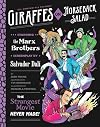
I don't usually go for weird fiction or art, but I adore the Marx Brothers, and the almost preposterous nature of this graphic novel piqued my curiosity. I tried to win a galley from the publisher, and didn't luck out. Then I was on a dream-come-true trip to Edinburgh, Scotland, of all places, and in the Transreal bookstore. Lo and behold, there was the book. I had to buy it as a special souvenir.
Even having read the book, I can't help but shake my head in awe of the incredible story behind show more its making: Salvador Dali struck up a friendship with Harpo Marx and decided to write a Marx Brothers screenplay. He wrote up a film treatment, and with Harpo, he pitched it to Louis B. Mayer in Hollywood. The idea was shot down. It was the kind of thing that earned mention in Dali and Marx interviews over later decades, but no one living person seemed to know much about the project.
Author Josh Frank set out to change that, doing some heavy-duty research--hiring a translator, meeting Harpo's son Bill Marx--and pieced together bits and pieces of Dali's surreal movie concept. He made it into a graphic novel, lavishly illustrated by Manuel Pertega.
Again, I don't typically go for surreal stuff, but this book is incredible. I found it even more so when I reached the end to find pictures of Dali's original treatment. Pertega did an admirable job of translating Dali's vision--dripping roast chickens strapped to musicians' heads and all. To my utter delight, they really researched their Marx Brothers, too. The banter between Groucho and Chico feels genuine and is laugh-out-loud funny, though a bit anachronistic at times. The story follows a wealthy, ambitious young man, Jimmy, who scorns his controlling fiance as he falls in love with Surrealist Woman--a woman whose fantastical imaginings become real. In true 1930s style, there are even songs written into the book!
The book is totally bonkers, but that's totally true to concept. I found it to be a joy to read, and I'm so grateful that the author and team took a weird historical footnote and gave it life at long last. show less
Even having read the book, I can't help but shake my head in awe of the incredible story behind show more its making: Salvador Dali struck up a friendship with Harpo Marx and decided to write a Marx Brothers screenplay. He wrote up a film treatment, and with Harpo, he pitched it to Louis B. Mayer in Hollywood. The idea was shot down. It was the kind of thing that earned mention in Dali and Marx interviews over later decades, but no one living person seemed to know much about the project.
Author Josh Frank set out to change that, doing some heavy-duty research--hiring a translator, meeting Harpo's son Bill Marx--and pieced together bits and pieces of Dali's surreal movie concept. He made it into a graphic novel, lavishly illustrated by Manuel Pertega.
Again, I don't typically go for surreal stuff, but this book is incredible. I found it even more so when I reached the end to find pictures of Dali's original treatment. Pertega did an admirable job of translating Dali's vision--dripping roast chickens strapped to musicians' heads and all. To my utter delight, they really researched their Marx Brothers, too. The banter between Groucho and Chico feels genuine and is laugh-out-loud funny, though a bit anachronistic at times. The story follows a wealthy, ambitious young man, Jimmy, who scorns his controlling fiance as he falls in love with Surrealist Woman--a woman whose fantastical imaginings become real. In true 1930s style, there are even songs written into the book!
The book is totally bonkers, but that's totally true to concept. I found it to be a joy to read, and I'm so grateful that the author and team took a weird historical footnote and gave it life at long last. show less
In Heaven Everything Is Fine: The Unsolved Life of Peter Ivers and the Lost History of New Wave Theatre by Josh Frank
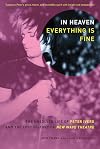
I had never heard of Peter Ivers before this book, which means I also had not heard of New Wave Theatre. He was a man who needed a book to help people like me know who he was and why he was so important and influential, even though his name is not remembered to the degree that his influence should dictate. The book as a whole is a look at how the Ivy League drama departments and National Lampoon magazine spawned Saturday Night Live, a whole bunch of hilarious 70s films like Caddyshack, and show more how Peter Ivers was a member of all those specific tribes as well as being a pioneer who introduced punk and new wave music to America on an early cable station.
Peter Ivers was one of those people who was perpetually ahead of the curve, able to know instinctively what was going to be the next big thing. Educated at Harvard, Ivers was primarily a musician and a song writer but his influence spilled over into much of the entertainment industry. Yet despite having his finger on many pulses, he never really achieved the level of fame his talent and perspicacity deserved. Worse, he was murdered right when it looked like he was about to become as famous as the people in his circles, like Harold Ramis, John Belushi, and Chevy Chase. His is a very sad story in so many ways, but at the same time the overwhelming sadness wasn’t apparent to me until I began to write this discussion because this book really is such an engaging, rollicking read that the sheer entertainment value of the book blunted the injustice of Ivers’ murder. That’s not a flaw, either, because eventually the reality of the waste of life hits you, but it’s also a testament to the interesting nature of Ivers’ life and the interesting nature of those around him that this is not a wholly sad book.
It’s actually maddening to realize what an interesting person Ivers was and know that he slipped under my radar for all these years, and the reason he was not even a blip on the mainstream radar is because he was indeed so far ahead of the curve that the public didn’t appreciate his efforts until the moment was gone. Muddy Waters once said that Ivers, who never missed a chance to jump up on stage and jam with blues men of great renown, was the best blues harmonica player alive, but Ivers’ band’s new wave album was released and received with little fanfare. However, David Lynch heard Ivers’ album and decided that Ivers’ sound was just what he needed for his bizarre film school effort, Eraserhead.
You can read my entire discussion on Odd Things Considered: http://www.oddthingsconsidered.com/in-heaven-everything-is-fine-by-josh-frank-wi... show less
Peter Ivers was one of those people who was perpetually ahead of the curve, able to know instinctively what was going to be the next big thing. Educated at Harvard, Ivers was primarily a musician and a song writer but his influence spilled over into much of the entertainment industry. Yet despite having his finger on many pulses, he never really achieved the level of fame his talent and perspicacity deserved. Worse, he was murdered right when it looked like he was about to become as famous as the people in his circles, like Harold Ramis, John Belushi, and Chevy Chase. His is a very sad story in so many ways, but at the same time the overwhelming sadness wasn’t apparent to me until I began to write this discussion because this book really is such an engaging, rollicking read that the sheer entertainment value of the book blunted the injustice of Ivers’ murder. That’s not a flaw, either, because eventually the reality of the waste of life hits you, but it’s also a testament to the interesting nature of Ivers’ life and the interesting nature of those around him that this is not a wholly sad book.
It’s actually maddening to realize what an interesting person Ivers was and know that he slipped under my radar for all these years, and the reason he was not even a blip on the mainstream radar is because he was indeed so far ahead of the curve that the public didn’t appreciate his efforts until the moment was gone. Muddy Waters once said that Ivers, who never missed a chance to jump up on stage and jam with blues men of great renown, was the best blues harmonica player alive, but Ivers’ band’s new wave album was released and received with little fanfare. However, David Lynch heard Ivers’ album and decided that Ivers’ sound was just what he needed for his bizarre film school effort, Eraserhead.
You can read my entire discussion on Odd Things Considered: http://www.oddthingsconsidered.com/in-heaven-everything-is-fine-by-josh-frank-wi... show less
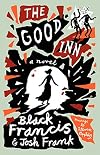
Part graphic novel, part film script The Good Inn is about as bizarre an historical narrative as one could find. The plot is spatially discontinuous, vertiginous and kinda fun. It is ostensibly the story of the first pornographic film. The plot follows the simple plot in a very surreal manner and the factual back ground setting and goings-on in parallel. One effect I derived that maybe the innovations of the period setting are not as relegated to obsolescence as they might seem. The very show more early film era was also the onset of all the contradictions found throughout the twentieth century and culminating in the hyper-reality and synaesthesia of the 21st. Many of the artists of the time in various medias, especially Surrealists and Dadaists anticipated this. Much of this history was destroyed because of poor understanding and many achievements were and are still filtered out, including the role of salacious entertainment.
This would be one film I'd definitely want to check out if it ever gets made. show less
This would be one film I'd definitely want to check out if it ever gets made. show less
Lists
Oral Histories (1)
You May Also Like


Associated Authors
Statistics
- Works
- 4
- Members
- 302
- Popularity
- #77,841
- Rating
- 3.5
- Reviews
- 12
- ISBNs
- 12