
Jimmy McDonough
Author of Shakey: Neil Young's Biography
About the Author
Jimmy McDonough is a journalist living in the Pacific Northwest.
Image credit: Natalia Wisdom
Works by Jimmy McDonough
Tagged
Common Knowledge
- Canonical name
- McDonough, Jimmy
- Birthdate
- 1960
- Gender
- male
- Occupations
- journalist
biographer - Nationality
- USA
- Places of residence
- Pacific Northwest, USA
- Map Location
- USA
Members
Reviews

This book should be unedifying. After all it is the biography of a cult pornographer written by a gonzo journalist.
In fact, it is highly educational on three different grounds. The man is interesting. The era is interesting (as far as popular culture and sexuality is concerned). And the insights it gives into the lives of women on the margins of Hollywood at the tail end of its Golden Age are interesting.
The man first. Russ Meyer was a soldier before he was anything else - McDonough makes show more the point more than once and it deserves the repetition. He learnt his trade with the 166th Signals and had a 'good war'. His skills and connections brought him into industrial films and permitted him his half-hobby of glamour photography. When the latter started to pay it was but a small step to taking his film experience and entering the sexploitation market with 'nudie cuties', making use of the pool of burlesque and sex industry workers that had emerged in California on the fringes of the movie industry.
The culture in which this took place needs to be understood and we have already produced two reviews - of Henry Miller's 'World of Sex' ( http://www.goodreads.com/book/show/3343410.The_World_of_Sex - in which he writes as a pre-war generation libertine surveying with dismay the aggression and cultural conservatism of post-war America) and of Taschen's edition of Men's Adventure magazine covers from the same period ( http://www.goodreads.com/book/show/2256217.Men_s_adventure_magazines_in_postwar_.... ) - that might assist.
The point is that a generation of young men, often raised in straitened circumstances during the Depression, went to war, experienced fear, adrenaline and sex in close proximity for the first time and then had to return to a conservative settler culture dominated by female values as if nothing had happened. Far from patriarchal, the culture was matriarchal - it is the world of the West after Gary Cooper's High Noon experience - and male violence and sexuality had a tendency to be pushed underground and then merge in a form of bonding through misogyny that Meyer's films represented and exploited.
We will get on to the role that Russ Meyer's films were to play in the liberation of parts of America from that closed culture but it was not a liberation that was understood or intended by Meyer (he attributed the revolution with some justification to Hugh Hefner's 'Playboy' which offered a softer, more 'romantic' view of women as distant beauties) or by his audiences who largely wanted relief from domestic pressures without questioning the American dream or Christian values.
Many commentators have noted that Meyer's characters are often powerful castrating women with signature large breasts. McDonough notes how Meyer, filled with adrenaline as if film-making was combat, acted like the worst sort of bully in order to get his films done and dusted within budget and on time. But was this misogyny or simply the same creative obsession of many men with a 'project'? Other evidence suggests that he was pandering to a misogynistic response to a matriarchal culture (set within a wider patriarchal economic system) rather than that he was misogynistic himself ...
There is certainly a misogyny in these films but not quite in a simplistic way. Much can be made of the monster of a mother behind Meyer and of Meyer's decline in powers being linked not just to his Alzheimer's but to her death. This is certainly one for 'Psycho-Style' analysis perhaps, but he would not have been able to make these films if he did not have hundreds of thousands of paying customers, largely married males or males still stuck at home under the thumbs of mothers but bonding in all-male work-places or living from forces reunion to forces reunion, who identified with this imagery - much as their mothers and wives identified with the romantic story-lines of films starring Cary Grant or Audrey Hepburn.
This brings us on to the second theme of the book which in itself makes it well worth reading - the transition in American popular culture from repressed conservatism to 'anything goes' (in parts). Although there were mainstream movies (neutered from portraying sexual themes by the Hays Code) and there was hard core stag material in the 1930s and 1940s which were clearly exploitative in the very worst sense, there was little or nothing inbetween to look at as the soldiers returned from war. Early material (which brought Meyer into the business) was little more than showing nudity, with a Carry On implication of naughtiness, some ersatz anthropological interest or a fake moral condemnation inserted, certainly with no sight or sign of pubic hair, let alone genitals.
Meyer used his experience and the pool of girls, whom he seems to have treated with sexual respect without use of the 'casting couch' that was still a factor in mainstream Hollywood (at least until very late in his career), to shift from these fake anthropological films to 'nudie cuties' with some limited story line to the 'classic' sexploitation movies like 'Faster Pussycat Kill Kill!' - all turbocharged female aggression designed to excite males who wanted to recognise both the wimp in themselves and to fantasise about the real men they would be if only they got the chance.
Meyer played this to the hilt but he treated rather deep psychological matters with broad humour (again, much like the 'Carry On' franchise), no holds barred on suggestion, cartoonish violence and fast cutting - it was catharsis on film.
Meyer was eventually invited to the collapsing Fox Studios because his formula was working but, with the usual lack of intelligence of corporate man, he was brought in at the end of a cycle and not at the beginning of one. The 1960s had brought new libertarian thinking on sexuality and, although 'Beyond the Valley of the Dolls' might be regarded as a bridge between eras, Meyer's vision was no longer going to be as meaningful in the 1970s, becoming a pastiche of itself (even though 'Supervixens' is creative enough that it will probably be one of those few films that you will leave not entirely believing that it had actually happened).
Apart from his influence on later generations of art film directors such as Waters and Tarantino (from a stylistic point of view), Meyer can lay claim to two longer term 'effects' on American culture.
The first is that the women he created had an unintended and paradoxical role to play in first gay and then sex-positive female iconography. What started out as a castration and domination fantasy for post-war traumatised and confused males was to transmute itself into the imagery of strong glamorous women who could defend themselves and kick red-neck ass.
The crass Lady Gaga video (based on 'Faster Pussycat Kill Kill!) is merely the fag end of this cultural revolution, its degradation into the mass commercialisation of style over substance, but, more positively, Meyer's imagery played its role in turning burlesque from an economic refuge for abused women on the lam, into an art form by women for women, an ironic sex-positive statement where women choose to become erotic fantasies for themselves and other women rather than for the men. Men are now increasingly more likely to be found being fleeced (at least in the big cities) by corporate lap-dancers and strippers with full human resources departments behind them.
The second is that Meyer, alongside the really hard core print pornographers like Larry Flynt, was instrumental in fighting First Amendment cases that opened the door for mainstream Hollywood to move into sex and violence on its own accord in the 1970s and enabled the hard core industry to push Meyer's style of cartoon sex and violence into the history books.
The revolution in cultural acceptance of extreme violence and the slightly slower path to extreme sexual portrayal began under conditions of recession and technological innovation (largely the need for Hollywood to deal head-on with family-friendly competition from TV in the 1970s). The determined litigiousness of Meyer and his ilk, as usual demonstrating the truth that big business likes small business to create or defend new markets at its own expense before moving in on the territory itself, removed a layer of caution - legal costs are a major deterrent when you have stockholders to answer to. Perhaps the current recession and innovation in the internet will see similar changes in the current troubled 'old' media like print media.
This was a worldwide phenomenon. Hammer Horror films, as an independent, began to crumble under recessionary pressures as mainstream pictures proved capable of being more visceral or psychological than their romantic Gothic approach (helped along no doubt by late Hitchcock). The Carry On franchise followed the same trajectory as the Russ Meyer films - a slow death as broad defusive humour was no longer required if sex could be portrayed full-on and, well, as sexual.
The period before the 1970s in both the US and UK had relegated sex to the art movie house while mass sexual culture thrived on the titter (UK) and on the crude belly laugh (US) but what the market really wanted was the thrill of gore and, eventually, penetration. Meyer did not do penetration or hard core and only late came to the portrayal of non-straight sex. His sex was highly energetic but definitely vanilla.
Meyer's eventual decline is charted in this book in almost cruel detail, partly explained by McDonough's reliance on personal testimony from those who worked with Meyer. The affairs of his estate were messy on his death and his last years were confused with many different opinions on how this senile old man was being cared for. Since everyone had an opinion and McDonough clearly has his own concerns, the last chapter or so turns into an unedifying 'he said, she said'.
Nevertheless, despite his own occasional moments of adrenaline-fuelled linguistic excess (this is not a book to lend to Grandmamma), McDonough writes with verve and can tell an anecdote as if you were there yourself. There are times when any red-blooded male, despite himself, is going to belly laugh at some of the japes and jollities of Mr. Meyer and his crew of filmic bandits.
But Meyer was a complex man - nice is not a word you would use about him. On set, he was a bully with a degree of cruel manipulation that shows either a strategy drawn out of the theories of Stanislavski or, more likely, an inner rage than came out when he was 'in combat'. McDonough makes the point more than once that film-making for Meyer was like his experience in the 166th Signals - deadly serious, live-or-die and that total loyalty was required from all those around him.
Given all this, what is fascinating is the strange love and loyalty given to him by his starlets - and even those women with whom he had temptestuous relationships seem to have given as good as they got in the long run. Being married to Meyer or in a relationship sounds like the worst nightmare of any modern feminist but until his latter days when his standards clearly slipped, he seems to have behaved personally well to his starlets and they seem generally to have cared for him.
It is hard to know what is going on here, especially as the treatment of women may go on the charge sheet of anyone determined to condemn him as MCP - the excuse 'that was then, this is now' always only goes so far. McDonough tends to lay out the facts and avoid theorising on 'gender relations' but there are enough facts to hazard a theory. Meyer seems to have been increasingly dysfunctional in actual relationships as time went on. Much of this can be put down to the relationship with that same, subsequently insane, mother, straight out of late Hitchcock, who helped inspire the castrating female fantasy that reached its apogee in Tura Satana's performance in 'Pussycat'.
But even here, there is a progression in his life from a 'normal' marriage that did not work, through a 'business' marriage that foundered on his sexual artistic ambitions and risk-taking and onward through ever further deterioration to the extremely dysfunctional and on occasions violent (not by him) relationship with his last lover. In other words, there is no necessary link between his personal treatment of women close to him and his alleged misogyny except that he becomes more dysfunctional as his powers wane - a psychologist might speculate that creative frustration leads to a practised misogyny because he can't get rid of his frustrations on screen but that would be highly speculative.
The starlets are a separate case again - some clearly nyphomaniac, some abused in the past, some not-so-bright but some also very together women with a practical approach to business and full control of their bodies. The women are as various as might be expected in any community with the only common denominator being that they tended to come from the 'softer' ends of the sex industry - modelling, burlesque, small roles on the fringes of Hollywood - and were certainly not linked to the 'hard' prostitution and stag film side of it. They were, by standards, mostly 'good bad girls' of a sort and one starlet had her mother accompany her to the shoot much to the irritation of Mr. Meyer.
The impression given is that Meyer really was primarily interested in their roles as filmic or photo fodder (and there are some excellent photographs giving a flavour of the changing image of the women over the decades). They may have been abused in the past (and there are one or two nightmare tales in the book) but, given no social services to pick them up in the cruel world of American capitalism, the 'soft' sex industry was actually giving them a livelihood without any necessity for more abuse than they might get today working for Walmart. Meyer was offering them decent if not over-generous pay and a role as well as, except on set, basically respectful treatment by the American standards of the time.
Meyer's 'decent' enemies come out no better than he. His 'golden age' was well before the rise of feminism. No doubt he would have felt the ire of feminists if his films had not slipped under the radar screen during their high point of influence and only returned to notice during the post-feminist sex-positive era.
McDonough spends a little time on one Charles Keating who seemed to have made it his life's mission to crush pornography under his heel in Ohio. Meyer one of his prime targets. Interestingly, it was Keating who was central to the Savings & Loan scandal and the book has disturbing stories of implied sexual harassment that make Meyer look like a model employer. One of the problems that the sexual moralists have in America is that, no matter how sleazy the sex industry gets, lacking a consensus on socialist solutions to exploitation, there are enough moral monsters on their own side to ensure that sex industry figures can still look, relatively, like saints.
So, this book is recommended as an entertaining read which is well written by someone with the ability to make us feel as if we know the subject and that we can make our own judgements as to whether we would want to know or do business with him. But it is equally recommended as a source of important data on the transition of American culture from a rural and small town conservatism to an urban-based libertarianism, a process that is still under way.
It also raises interesting questions about morality under capitalism - though this is my interest not McDonough's. Meyer's films were an entrepreneurial response to a need in the market that the system could not satisfy. They almost certainly did no harm (though his last efforts are nastier, they are not much nastier than what was coming out if the recession-hit mainstream or what was going on in the drug-fuelled post-Vietnam street) and they may (arguably) have done some good in allowing steam to be let off periodically by all those involved.
At the end of the day, the immorality probably lies mostly in the initial creation of the rage implicit in those market needs which comes from the tension that had emerged between male aspirations and female expectations under conditions of first poverty, then war and then conformity. The Hollywood romance had given 'nice' people the illusion that all was well in a way that was little different from the state-controlled media of the rival communist world.
Meanwhile, insecurity and abuse on the margins of society (much like child abuse in the Catholic Church) was not merely ignored as unmentionable but misfits with a different sexual nature or who had been abused or whose families had broken up were excluded, forced to sublimate their feelings (as soldiers were not permitted to speak of their wartime experience or, indeed, Holocaust survivors of their losses), went mad (like Meyer's sister, the tragic Lucinda) or, if they were a bit feisty, made their way to a big city or Hollywood and took what jobs they could.
The sex industry, soft and hard, may, in some cases, be the exploitative draw for sex traffickers but it may also - under free market conditions - be the means by which men and women can find their own economic freedom and social position and, ultimately, as in Meyer's films, contribute to culture. One of Meyer's starlets picked herself up and later became a small town teacher - in an instructive tale of the destructive affects of stigma, she feared her children knowing their mother's past when the biography was raised only to find that her kids had found the prints of the movie and wondered why she had not mentioned it. They seem to have been untraumatised and relaxed.
The common denominator in Meyer's circle is that these were people from a marginalised society, often very disturbed but equally as likely to be as tough as nuts, and that they cohered as a community of sorts no different from the village of Ambridge. Meyer had his stock of actors and actresses and some of them he would use over and over again - until they upset him, of course. His wierd attitude to loyalty is a constant theme in the book but we have all met strange neurotics like that in business so it should not alarm us unduly.
Indeed, many of Meyer's flaws are reproducible amongst all mildly sociopathic small businessmen in small towns across the 'free world'. He was, in fact, a typical anti-communist entrepreneur who just happened to have an obsession with large breasts and turned it to his economic advantage. Many other men have turned other less startling obsessions into businesses that made them wealthy. His little world was simultaneously abusive, quasi-feudal, a creative endeavour and a refuge for the marginalised i.e. the world of American capitalism writ small.
Until 'moralists' understand that it is not enough to condemn the output of the sex industry but that they must be prepared to engage in some form of 'socialism' (government or community engagement) to deal with abuse and bullying at source before they can claim to have an opinion on these burgeoning industries, they are moral hypocrites.
Even then, the demand for sexual imagery, adapted to the psychology of the time, for women as much as men, and for sexual services is going to be a 'given' for a long time to come in society. It is perhaps time to treat the industries themselves with as much regulatory attention as one might employ to protect the workers of Walmart (de minimis) and remove the air of stigma around sexual services so that at least the workers would get the full value of their labour, know that what they did was a matter of free economic choice in a culture that accepted them as persons in their own right and be able to use these jobs as way stations from the margins to the sort of family life or personal fulfilment that is their due. show less
In fact, it is highly educational on three different grounds. The man is interesting. The era is interesting (as far as popular culture and sexuality is concerned). And the insights it gives into the lives of women on the margins of Hollywood at the tail end of its Golden Age are interesting.
The man first. Russ Meyer was a soldier before he was anything else - McDonough makes show more the point more than once and it deserves the repetition. He learnt his trade with the 166th Signals and had a 'good war'. His skills and connections brought him into industrial films and permitted him his half-hobby of glamour photography. When the latter started to pay it was but a small step to taking his film experience and entering the sexploitation market with 'nudie cuties', making use of the pool of burlesque and sex industry workers that had emerged in California on the fringes of the movie industry.
The culture in which this took place needs to be understood and we have already produced two reviews - of Henry Miller's 'World of Sex' ( http://www.goodreads.com/book/show/3343410.The_World_of_Sex - in which he writes as a pre-war generation libertine surveying with dismay the aggression and cultural conservatism of post-war America) and of Taschen's edition of Men's Adventure magazine covers from the same period ( http://www.goodreads.com/book/show/2256217.Men_s_adventure_magazines_in_postwar_.... ) - that might assist.
The point is that a generation of young men, often raised in straitened circumstances during the Depression, went to war, experienced fear, adrenaline and sex in close proximity for the first time and then had to return to a conservative settler culture dominated by female values as if nothing had happened. Far from patriarchal, the culture was matriarchal - it is the world of the West after Gary Cooper's High Noon experience - and male violence and sexuality had a tendency to be pushed underground and then merge in a form of bonding through misogyny that Meyer's films represented and exploited.
We will get on to the role that Russ Meyer's films were to play in the liberation of parts of America from that closed culture but it was not a liberation that was understood or intended by Meyer (he attributed the revolution with some justification to Hugh Hefner's 'Playboy' which offered a softer, more 'romantic' view of women as distant beauties) or by his audiences who largely wanted relief from domestic pressures without questioning the American dream or Christian values.
Many commentators have noted that Meyer's characters are often powerful castrating women with signature large breasts. McDonough notes how Meyer, filled with adrenaline as if film-making was combat, acted like the worst sort of bully in order to get his films done and dusted within budget and on time. But was this misogyny or simply the same creative obsession of many men with a 'project'? Other evidence suggests that he was pandering to a misogynistic response to a matriarchal culture (set within a wider patriarchal economic system) rather than that he was misogynistic himself ...
There is certainly a misogyny in these films but not quite in a simplistic way. Much can be made of the monster of a mother behind Meyer and of Meyer's decline in powers being linked not just to his Alzheimer's but to her death. This is certainly one for 'Psycho-Style' analysis perhaps, but he would not have been able to make these films if he did not have hundreds of thousands of paying customers, largely married males or males still stuck at home under the thumbs of mothers but bonding in all-male work-places or living from forces reunion to forces reunion, who identified with this imagery - much as their mothers and wives identified with the romantic story-lines of films starring Cary Grant or Audrey Hepburn.
This brings us on to the second theme of the book which in itself makes it well worth reading - the transition in American popular culture from repressed conservatism to 'anything goes' (in parts). Although there were mainstream movies (neutered from portraying sexual themes by the Hays Code) and there was hard core stag material in the 1930s and 1940s which were clearly exploitative in the very worst sense, there was little or nothing inbetween to look at as the soldiers returned from war. Early material (which brought Meyer into the business) was little more than showing nudity, with a Carry On implication of naughtiness, some ersatz anthropological interest or a fake moral condemnation inserted, certainly with no sight or sign of pubic hair, let alone genitals.
Meyer used his experience and the pool of girls, whom he seems to have treated with sexual respect without use of the 'casting couch' that was still a factor in mainstream Hollywood (at least until very late in his career), to shift from these fake anthropological films to 'nudie cuties' with some limited story line to the 'classic' sexploitation movies like 'Faster Pussycat Kill Kill!' - all turbocharged female aggression designed to excite males who wanted to recognise both the wimp in themselves and to fantasise about the real men they would be if only they got the chance.
Meyer played this to the hilt but he treated rather deep psychological matters with broad humour (again, much like the 'Carry On' franchise), no holds barred on suggestion, cartoonish violence and fast cutting - it was catharsis on film.
Meyer was eventually invited to the collapsing Fox Studios because his formula was working but, with the usual lack of intelligence of corporate man, he was brought in at the end of a cycle and not at the beginning of one. The 1960s had brought new libertarian thinking on sexuality and, although 'Beyond the Valley of the Dolls' might be regarded as a bridge between eras, Meyer's vision was no longer going to be as meaningful in the 1970s, becoming a pastiche of itself (even though 'Supervixens' is creative enough that it will probably be one of those few films that you will leave not entirely believing that it had actually happened).
Apart from his influence on later generations of art film directors such as Waters and Tarantino (from a stylistic point of view), Meyer can lay claim to two longer term 'effects' on American culture.
The first is that the women he created had an unintended and paradoxical role to play in first gay and then sex-positive female iconography. What started out as a castration and domination fantasy for post-war traumatised and confused males was to transmute itself into the imagery of strong glamorous women who could defend themselves and kick red-neck ass.
The crass Lady Gaga video (based on 'Faster Pussycat Kill Kill!) is merely the fag end of this cultural revolution, its degradation into the mass commercialisation of style over substance, but, more positively, Meyer's imagery played its role in turning burlesque from an economic refuge for abused women on the lam, into an art form by women for women, an ironic sex-positive statement where women choose to become erotic fantasies for themselves and other women rather than for the men. Men are now increasingly more likely to be found being fleeced (at least in the big cities) by corporate lap-dancers and strippers with full human resources departments behind them.
The second is that Meyer, alongside the really hard core print pornographers like Larry Flynt, was instrumental in fighting First Amendment cases that opened the door for mainstream Hollywood to move into sex and violence on its own accord in the 1970s and enabled the hard core industry to push Meyer's style of cartoon sex and violence into the history books.
The revolution in cultural acceptance of extreme violence and the slightly slower path to extreme sexual portrayal began under conditions of recession and technological innovation (largely the need for Hollywood to deal head-on with family-friendly competition from TV in the 1970s). The determined litigiousness of Meyer and his ilk, as usual demonstrating the truth that big business likes small business to create or defend new markets at its own expense before moving in on the territory itself, removed a layer of caution - legal costs are a major deterrent when you have stockholders to answer to. Perhaps the current recession and innovation in the internet will see similar changes in the current troubled 'old' media like print media.
This was a worldwide phenomenon. Hammer Horror films, as an independent, began to crumble under recessionary pressures as mainstream pictures proved capable of being more visceral or psychological than their romantic Gothic approach (helped along no doubt by late Hitchcock). The Carry On franchise followed the same trajectory as the Russ Meyer films - a slow death as broad defusive humour was no longer required if sex could be portrayed full-on and, well, as sexual.
The period before the 1970s in both the US and UK had relegated sex to the art movie house while mass sexual culture thrived on the titter (UK) and on the crude belly laugh (US) but what the market really wanted was the thrill of gore and, eventually, penetration. Meyer did not do penetration or hard core and only late came to the portrayal of non-straight sex. His sex was highly energetic but definitely vanilla.
Meyer's eventual decline is charted in this book in almost cruel detail, partly explained by McDonough's reliance on personal testimony from those who worked with Meyer. The affairs of his estate were messy on his death and his last years were confused with many different opinions on how this senile old man was being cared for. Since everyone had an opinion and McDonough clearly has his own concerns, the last chapter or so turns into an unedifying 'he said, she said'.
Nevertheless, despite his own occasional moments of adrenaline-fuelled linguistic excess (this is not a book to lend to Grandmamma), McDonough writes with verve and can tell an anecdote as if you were there yourself. There are times when any red-blooded male, despite himself, is going to belly laugh at some of the japes and jollities of Mr. Meyer and his crew of filmic bandits.
But Meyer was a complex man - nice is not a word you would use about him. On set, he was a bully with a degree of cruel manipulation that shows either a strategy drawn out of the theories of Stanislavski or, more likely, an inner rage than came out when he was 'in combat'. McDonough makes the point more than once that film-making for Meyer was like his experience in the 166th Signals - deadly serious, live-or-die and that total loyalty was required from all those around him.
Given all this, what is fascinating is the strange love and loyalty given to him by his starlets - and even those women with whom he had temptestuous relationships seem to have given as good as they got in the long run. Being married to Meyer or in a relationship sounds like the worst nightmare of any modern feminist but until his latter days when his standards clearly slipped, he seems to have behaved personally well to his starlets and they seem generally to have cared for him.
It is hard to know what is going on here, especially as the treatment of women may go on the charge sheet of anyone determined to condemn him as MCP - the excuse 'that was then, this is now' always only goes so far. McDonough tends to lay out the facts and avoid theorising on 'gender relations' but there are enough facts to hazard a theory. Meyer seems to have been increasingly dysfunctional in actual relationships as time went on. Much of this can be put down to the relationship with that same, subsequently insane, mother, straight out of late Hitchcock, who helped inspire the castrating female fantasy that reached its apogee in Tura Satana's performance in 'Pussycat'.
But even here, there is a progression in his life from a 'normal' marriage that did not work, through a 'business' marriage that foundered on his sexual artistic ambitions and risk-taking and onward through ever further deterioration to the extremely dysfunctional and on occasions violent (not by him) relationship with his last lover. In other words, there is no necessary link between his personal treatment of women close to him and his alleged misogyny except that he becomes more dysfunctional as his powers wane - a psychologist might speculate that creative frustration leads to a practised misogyny because he can't get rid of his frustrations on screen but that would be highly speculative.
The starlets are a separate case again - some clearly nyphomaniac, some abused in the past, some not-so-bright but some also very together women with a practical approach to business and full control of their bodies. The women are as various as might be expected in any community with the only common denominator being that they tended to come from the 'softer' ends of the sex industry - modelling, burlesque, small roles on the fringes of Hollywood - and were certainly not linked to the 'hard' prostitution and stag film side of it. They were, by standards, mostly 'good bad girls' of a sort and one starlet had her mother accompany her to the shoot much to the irritation of Mr. Meyer.
The impression given is that Meyer really was primarily interested in their roles as filmic or photo fodder (and there are some excellent photographs giving a flavour of the changing image of the women over the decades). They may have been abused in the past (and there are one or two nightmare tales in the book) but, given no social services to pick them up in the cruel world of American capitalism, the 'soft' sex industry was actually giving them a livelihood without any necessity for more abuse than they might get today working for Walmart. Meyer was offering them decent if not over-generous pay and a role as well as, except on set, basically respectful treatment by the American standards of the time.
Meyer's 'decent' enemies come out no better than he. His 'golden age' was well before the rise of feminism. No doubt he would have felt the ire of feminists if his films had not slipped under the radar screen during their high point of influence and only returned to notice during the post-feminist sex-positive era.
McDonough spends a little time on one Charles Keating who seemed to have made it his life's mission to crush pornography under his heel in Ohio. Meyer one of his prime targets. Interestingly, it was Keating who was central to the Savings & Loan scandal and the book has disturbing stories of implied sexual harassment that make Meyer look like a model employer. One of the problems that the sexual moralists have in America is that, no matter how sleazy the sex industry gets, lacking a consensus on socialist solutions to exploitation, there are enough moral monsters on their own side to ensure that sex industry figures can still look, relatively, like saints.
So, this book is recommended as an entertaining read which is well written by someone with the ability to make us feel as if we know the subject and that we can make our own judgements as to whether we would want to know or do business with him. But it is equally recommended as a source of important data on the transition of American culture from a rural and small town conservatism to an urban-based libertarianism, a process that is still under way.
It also raises interesting questions about morality under capitalism - though this is my interest not McDonough's. Meyer's films were an entrepreneurial response to a need in the market that the system could not satisfy. They almost certainly did no harm (though his last efforts are nastier, they are not much nastier than what was coming out if the recession-hit mainstream or what was going on in the drug-fuelled post-Vietnam street) and they may (arguably) have done some good in allowing steam to be let off periodically by all those involved.
At the end of the day, the immorality probably lies mostly in the initial creation of the rage implicit in those market needs which comes from the tension that had emerged between male aspirations and female expectations under conditions of first poverty, then war and then conformity. The Hollywood romance had given 'nice' people the illusion that all was well in a way that was little different from the state-controlled media of the rival communist world.
Meanwhile, insecurity and abuse on the margins of society (much like child abuse in the Catholic Church) was not merely ignored as unmentionable but misfits with a different sexual nature or who had been abused or whose families had broken up were excluded, forced to sublimate their feelings (as soldiers were not permitted to speak of their wartime experience or, indeed, Holocaust survivors of their losses), went mad (like Meyer's sister, the tragic Lucinda) or, if they were a bit feisty, made their way to a big city or Hollywood and took what jobs they could.
The sex industry, soft and hard, may, in some cases, be the exploitative draw for sex traffickers but it may also - under free market conditions - be the means by which men and women can find their own economic freedom and social position and, ultimately, as in Meyer's films, contribute to culture. One of Meyer's starlets picked herself up and later became a small town teacher - in an instructive tale of the destructive affects of stigma, she feared her children knowing their mother's past when the biography was raised only to find that her kids had found the prints of the movie and wondered why she had not mentioned it. They seem to have been untraumatised and relaxed.
The common denominator in Meyer's circle is that these were people from a marginalised society, often very disturbed but equally as likely to be as tough as nuts, and that they cohered as a community of sorts no different from the village of Ambridge. Meyer had his stock of actors and actresses and some of them he would use over and over again - until they upset him, of course. His wierd attitude to loyalty is a constant theme in the book but we have all met strange neurotics like that in business so it should not alarm us unduly.
Indeed, many of Meyer's flaws are reproducible amongst all mildly sociopathic small businessmen in small towns across the 'free world'. He was, in fact, a typical anti-communist entrepreneur who just happened to have an obsession with large breasts and turned it to his economic advantage. Many other men have turned other less startling obsessions into businesses that made them wealthy. His little world was simultaneously abusive, quasi-feudal, a creative endeavour and a refuge for the marginalised i.e. the world of American capitalism writ small.
Until 'moralists' understand that it is not enough to condemn the output of the sex industry but that they must be prepared to engage in some form of 'socialism' (government or community engagement) to deal with abuse and bullying at source before they can claim to have an opinion on these burgeoning industries, they are moral hypocrites.
Even then, the demand for sexual imagery, adapted to the psychology of the time, for women as much as men, and for sexual services is going to be a 'given' for a long time to come in society. It is perhaps time to treat the industries themselves with as much regulatory attention as one might employ to protect the workers of Walmart (de minimis) and remove the air of stigma around sexual services so that at least the workers would get the full value of their labour, know that what they did was a matter of free economic choice in a culture that accepted them as persons in their own right and be able to use these jobs as way stations from the margins to the sort of family life or personal fulfilment that is their due. show less

I would venture to predict that even if you don't love Tammy Wynette, you would probably have a good time reading Jimmy McDonough's thoroughly researched and eccentrically told biography of the country music superstar. He gives us the full scope of Tammy's life and career -- her small town southern upbringing, her rise to stardom, her entertaining (and generally unlucky) love life, her tragic struggle with pain and painkillers, and her early death. He is obviously a superfan, but also looks show more straightforwardly at Wynette's less attractive personality traits and the low-points of her recording career. His interviews with the friends, producers, fellow musicians, friends, and hairdressers that surrounded Tammy during her life fill the book with humor and honesty, and I love that he extensively uses direct quotes that capture the personalities of the speakers. And because you couldn't tell the story of Tammy Wynette without George Jones, you get quite a bit of the Badger and his wild ways in the course of the narrative. While much of the book is straightforward and chronological, McDonough's unique writing style steals the show. Below is just one of many examples that were so evocative that I immediately started googling to see a performance, photograph, or album cover for myself. If you love Tammy, country music, or fun writing, this is the book for you.
"There is a gleefully voyeuristic 1972 performance of the song taped at the Ryman for the show That Good Ole Nashville Music. Lurking before the minister is a sad, scary Tammy at her most bewitchingly Gothic, sporting a big ol' blonde wig, Magic Marker eyeliner, and a strange amulet-like copper necklace she must've lifted off a Druid. Man, does she look hot. And in a slightly cubist Western suit, there's George, looking more resigned than agitated, his gleaming eyes staring at some offstage ghost. This is one of those classic 'happy' country records that manages to sound quite the opposite. A deathly serious business, marriage." (p. 186) show less
"There is a gleefully voyeuristic 1972 performance of the song taped at the Ryman for the show That Good Ole Nashville Music. Lurking before the minister is a sad, scary Tammy at her most bewitchingly Gothic, sporting a big ol' blonde wig, Magic Marker eyeliner, and a strange amulet-like copper necklace she must've lifted off a Druid. Man, does she look hot. And in a slightly cubist Western suit, there's George, looking more resigned than agitated, his gleaming eyes staring at some offstage ghost. This is one of those classic 'happy' country records that manages to sound quite the opposite. A deathly serious business, marriage." (p. 186) show less
BY McDonough, Jimmy ( Author ) [{ Big Bosoms and Square Jaws: The Biography of Russ Meyer, King of the Sex Film By McDonough, Jimmy ( Author ) Jun - 27- 2006 ( Paperback ) } ] by Jimmy McDonough
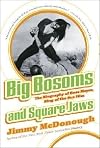
This book had sat on my shelf for a year or so after getting it as a Christmas gift and I finally got around to reading it and can say with authority that it was well worth the wait. I am a life-long movie buff and I especially like to read books about the creative process of film making, my last such book was a bio of John Ford, and I can say with absolute certitude that though Russ Meyer was about a million miles from the great Master of the Western Genre, they shared a few things in show more common, mainly a cantankerous disposition, which they used to get their way, and a great passion for movie making.
BIG BOSOMS AND SQUARE JAWS by Jimmy McDonough is an in depth look at the great renegade film maker and King of the Nudies, one that does not spare his subject his less than flattering attributes, but also lets the reader come away with a true understanding of this unique man. McDonough, a journalist in the mode of Hunter S. Thompson, finds just the right voice to tell Meyer’s story, from his lowly beginnings to his glory days through his eventual sad decline.
Meyer was born in California in 1922 and raised by a single mother after his police man father left the family when Russ was an infant. Like many of his generation, the defining event of Meyer’s life was service in World War II, where an early love of cameras landed him in the 166 Signal Photographic Company. As a combat photographer, he would see plenty of action and make the life-long friendships that would become a sort of first family for Meyer as he would remain close to his army buddies for the rest of his life. His wartime experience got him a job making industrial films, while working a sideline as a photographer for the many skin magazines of the era. It was a sideline that brought him in contact with strippers and budding actresses and allowed Meyer to indulge his fetish for the well-endowed and full-figured female form. At the same time, he was learning everything about the film making process, so by the time he was ready to make a low budget picture of his own in the late 50’s, the he was virtually a one man film crew all his own.
Starting with THE IMMORAL MR. TEAS and continuing for the next two decades, Russ Meyer would churn one low budget “nudie” film after another, filled with gorgeous women, the men they drive crazy, and the violence that ensues when his combustible characters meet. MUDHONEY; COMMON LAW CABIN; FASTER PUSSYCAT! KILL KILL; VIXEN, HARRY, CHERRY, AND RAQUEL; BEYOND THE VALLEY OF THE DOLLS and BENEATH THE VALLEY OF THE ULTRA VIXENS are among his titles that have developed a true cult following. Though he would often be called a pornographer, Meyer was nothing of the kind, his movies had actual plots, and the nudity in many of them would barely qualify for an R rating these days. The women in his films were anything but passive victims, most of them being able to handle anything a man dished out and then give back to him twice over, Some, like Tura Satana’s Varla in PUSSYCAT, are down-right man destroying killing machines; when it came to the kick ass female protagonist, Russ Meyer was way ahead of everyone else. He would briefly work at 20th Century Fox in 1970, and would produce a profitable X-rated epic for them before a change in studio management ended any chance of mainstream success. Which was a shame, one wishes he could have found a producer in the 70’s who could have raised the kind of money that would allowed Meyer to take it too another level; yet one gets the feeling that he would not have traded away the freedom to make his movies, his way, for any amount of money. And if truth be told, there were probably many Academy Award winning directors working within the studios who must have envied Meyer his freedom.
We meet Meyer’s second family, the varied individuals with whom he made his movies, especially the women, most of them characters in their own right: the aforementioned Tura Satana, Haji, Lori Williams, Erica Gavin, Rena Horton, Alaina Capri, Babette Bardot, Uschi Digard and Edy Williams. What a loss it was that most of them never found mainstream success. The famously square jawed Charles Napier was the one Meyer regular who went on to a real career, co-starring in RAMBO and becoming a regular in the late Jonathan Demme movies. And of course there is Roger Ebert, the film critic and passionate Meyer fan who wrote screenplays for him and become a lifelong friend. McDonough wrote this book in 2005, and sadly, a number of these people have passed away in the years since.
Meyer was among those, like Hugh Hefner, who in post war America, helped bring the notion of a sex life out from behind bedroom doors and closed curtains; it was an attitude that met with more than a little resistance. The author details Meyer’s battles with the censors and decency crusaders like the arch-hypocrite, Charles Keating, where he knocked down doors for the others to enter. McDonough doesn’t spare any details in describing Meyer’s sad last years when dementia ravaged his mind and he was taken advantage of by some less than scrupulous hanger-ons. The culture had moved on, and Meyer’s peculiar brand of sex and violence had become the normal.
Meyer, the man, could be rude and crude, a real 20th Century American male who detested Communists, and despite his reputation, preferred straight missionary style sex according to his many bedmates. He was a great self promoter who knew what he liked, and believed many of his fellow Americans would like the same things if given a half a chance. He was proven right and made millions in the process. Why should we remember him? Because his influence has been enormous, John Waters, Tim Burton and Quinton Tarantino have sung his praises; as a faithful watcher of TRUE BLOOD, I can say for certainty that Mayer’s presence is still being felt. Whether you are member of the cult of Meyer or just merely interested in movie history, BIG BOSOMS AND SQUARE JAWS is a must read. Thank you, Jimmy McDonough for writing it; I think Russ would be pleased. show less
BIG BOSOMS AND SQUARE JAWS by Jimmy McDonough is an in depth look at the great renegade film maker and King of the Nudies, one that does not spare his subject his less than flattering attributes, but also lets the reader come away with a true understanding of this unique man. McDonough, a journalist in the mode of Hunter S. Thompson, finds just the right voice to tell Meyer’s story, from his lowly beginnings to his glory days through his eventual sad decline.
Meyer was born in California in 1922 and raised by a single mother after his police man father left the family when Russ was an infant. Like many of his generation, the defining event of Meyer’s life was service in World War II, where an early love of cameras landed him in the 166 Signal Photographic Company. As a combat photographer, he would see plenty of action and make the life-long friendships that would become a sort of first family for Meyer as he would remain close to his army buddies for the rest of his life. His wartime experience got him a job making industrial films, while working a sideline as a photographer for the many skin magazines of the era. It was a sideline that brought him in contact with strippers and budding actresses and allowed Meyer to indulge his fetish for the well-endowed and full-figured female form. At the same time, he was learning everything about the film making process, so by the time he was ready to make a low budget picture of his own in the late 50’s, the he was virtually a one man film crew all his own.
Starting with THE IMMORAL MR. TEAS and continuing for the next two decades, Russ Meyer would churn one low budget “nudie” film after another, filled with gorgeous women, the men they drive crazy, and the violence that ensues when his combustible characters meet. MUDHONEY; COMMON LAW CABIN; FASTER PUSSYCAT! KILL KILL; VIXEN, HARRY, CHERRY, AND RAQUEL; BEYOND THE VALLEY OF THE DOLLS and BENEATH THE VALLEY OF THE ULTRA VIXENS are among his titles that have developed a true cult following. Though he would often be called a pornographer, Meyer was nothing of the kind, his movies had actual plots, and the nudity in many of them would barely qualify for an R rating these days. The women in his films were anything but passive victims, most of them being able to handle anything a man dished out and then give back to him twice over, Some, like Tura Satana’s Varla in PUSSYCAT, are down-right man destroying killing machines; when it came to the kick ass female protagonist, Russ Meyer was way ahead of everyone else. He would briefly work at 20th Century Fox in 1970, and would produce a profitable X-rated epic for them before a change in studio management ended any chance of mainstream success. Which was a shame, one wishes he could have found a producer in the 70’s who could have raised the kind of money that would allowed Meyer to take it too another level; yet one gets the feeling that he would not have traded away the freedom to make his movies, his way, for any amount of money. And if truth be told, there were probably many Academy Award winning directors working within the studios who must have envied Meyer his freedom.
We meet Meyer’s second family, the varied individuals with whom he made his movies, especially the women, most of them characters in their own right: the aforementioned Tura Satana, Haji, Lori Williams, Erica Gavin, Rena Horton, Alaina Capri, Babette Bardot, Uschi Digard and Edy Williams. What a loss it was that most of them never found mainstream success. The famously square jawed Charles Napier was the one Meyer regular who went on to a real career, co-starring in RAMBO and becoming a regular in the late Jonathan Demme movies. And of course there is Roger Ebert, the film critic and passionate Meyer fan who wrote screenplays for him and become a lifelong friend. McDonough wrote this book in 2005, and sadly, a number of these people have passed away in the years since.
Meyer was among those, like Hugh Hefner, who in post war America, helped bring the notion of a sex life out from behind bedroom doors and closed curtains; it was an attitude that met with more than a little resistance. The author details Meyer’s battles with the censors and decency crusaders like the arch-hypocrite, Charles Keating, where he knocked down doors for the others to enter. McDonough doesn’t spare any details in describing Meyer’s sad last years when dementia ravaged his mind and he was taken advantage of by some less than scrupulous hanger-ons. The culture had moved on, and Meyer’s peculiar brand of sex and violence had become the normal.
Meyer, the man, could be rude and crude, a real 20th Century American male who detested Communists, and despite his reputation, preferred straight missionary style sex according to his many bedmates. He was a great self promoter who knew what he liked, and believed many of his fellow Americans would like the same things if given a half a chance. He was proven right and made millions in the process. Why should we remember him? Because his influence has been enormous, John Waters, Tim Burton and Quinton Tarantino have sung his praises; as a faithful watcher of TRUE BLOOD, I can say for certainty that Mayer’s presence is still being felt. Whether you are member of the cult of Meyer or just merely interested in movie history, BIG BOSOMS AND SQUARE JAWS is a must read. Thank you, Jimmy McDonough for writing it; I think Russ would be pleased. show less
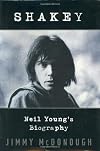
I've been a semi-fan of Neal Young, I have 4 of his CD's as well as 3 he did with CSNY. Reading this book made me a non-fan. I simply didn't like the guy portrayed in this book. It's an 800 page book, and the first 500 pages are more about drugs than music. Plus, to say the guy is self-absorbed doesn't even come close. I don't think I'd want to even spend 5 minutes in the same room with him. I'll still listen to the music I have, but the man himself seems a waste of talent. Why did I read show more the whole 800 pages? Well, honestly I skimmed a lot, and read the interesting parts. I've read biography's of David Crosby, Eric Clapton, James Taylor, Jimmy Buffett, and other musicians and always enjoyed them. Not this one. show less
Lists
02 (1)
Awards


You May Also Like


Statistics
- Works
- 8
- Members
- 1,090
- Popularity
- #23,566
- Rating
- 3.9
- Reviews
- 13
- ISBNs
- 41
- Languages
- 1