
David Browne (1)
Author of Dream Brother: The Lives and Music of Jeff and Tim Buckley
For other authors named David Browne, see the disambiguation page.
About the Author
David Browne is a senior writer at Rolling Stone and the author of So Many Roads: The Life and Times of the Grateful Dead and Fire and Rain: The Beatles, Simon Garfunkel, James Taylor, CSNY, and the Lost Story of 1970, as well as biographies of Sonic Youth and Jeff and Tim Buckley. He is also show more co-editor of Jeff Buckley: His Own Voice. He lives in Manhattan. show less
Image credit: David Browne
Works by David Browne
Fire and rain: The Beatles, Simon & Garfunkel, James Taylor, CSNY, and the lost story of 1970 (2011) 289 copies, 19 reviews
Crosby, Stills, Nash and Young: The Wild, Definitive Saga of Rock's Greatest Supergroup (2019) 65 copies, 4 reviews
Talkin' Greenwich Village: The Heady Rise and Slow Fall of America’s Bohemian Music Capital (2024) 30 copies, 1 review
Associated Works
Tagged
Common Knowledge
- Birthdate
- 20th century
- Gender
- male
- Education
- New York University
- Occupations
- music critic
biographer - Organizations
- Entertainment Weekly
- Awards and honors
- Music Journalism Award for excellence in criticism
- Nationality
- USA
- Places of residence
- New York, New York, USA
- Associated Place (for map)
- New York, USA
Members
Reviews
Crosby, Stills, Nash & Young Lib/E: The Wild, Definitive Saga of Rock's Greatest Supergroup by David Browne
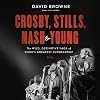
Stop me if you've heard this one before...Two Americans, a Brit, and a Canadian walk into a studio...
I have the same complaint with this book as everyone else. While I really enjoyed the first two CSN studio albums, and adore the first CSNY album, the story of these four men coming together, falling apart, rejoining in various combinations, falling apart, trying to get back together, falling apart, sniping at each other, making up, etc. etc. etc... Well, it just gets a little old after show more awhile.
Typically, I'll come away from any music biography likely finding out a bit more about the artist/band members than I probably wanted to know, but often with a better appreciation of them creatively and as a person.
The longer this book went on, the more disgusted I got at how badly Crosby, Stills, and Nash were willing to whore themselves out, or put up with completely intolerable bullshit (such as Crosby freebasing mid-show, for example) just because the CSN label would bring in the dollars. All sense of morality had been flung out the window by the mid-70s, making for some truly desperate gestures over the next forty years.
And then there's Neil Young. I've never been a fan, but I quite liked him on that one CSNY album I own. But this book reveals him to be a fairly big asshole and yet, it became quite obvious that the other three would happily bury their heads as far up his ass as he demanded, just to get more stage time with him (once again, all in the pursuit of the almighty buck).
For guys who started out singing more about peace, love, the hippie movement, and the rejection of Corporate America, they all, unfortunately like virtually all those free-lovin' hippies of the Sixties, decided that their ultimate god was money, and they all prostrated themselves before it.
A sad, repetitive, but well-researched, and ultimately disappointing tale of how power corrupts. show less
I have the same complaint with this book as everyone else. While I really enjoyed the first two CSN studio albums, and adore the first CSNY album, the story of these four men coming together, falling apart, rejoining in various combinations, falling apart, trying to get back together, falling apart, sniping at each other, making up, etc. etc. etc... Well, it just gets a little old after show more awhile.
Typically, I'll come away from any music biography likely finding out a bit more about the artist/band members than I probably wanted to know, but often with a better appreciation of them creatively and as a person.
The longer this book went on, the more disgusted I got at how badly Crosby, Stills, and Nash were willing to whore themselves out, or put up with completely intolerable bullshit (such as Crosby freebasing mid-show, for example) just because the CSN label would bring in the dollars. All sense of morality had been flung out the window by the mid-70s, making for some truly desperate gestures over the next forty years.
And then there's Neil Young. I've never been a fan, but I quite liked him on that one CSNY album I own. But this book reveals him to be a fairly big asshole and yet, it became quite obvious that the other three would happily bury their heads as far up his ass as he demanded, just to get more stage time with him (once again, all in the pursuit of the almighty buck).
For guys who started out singing more about peace, love, the hippie movement, and the rejection of Corporate America, they all, unfortunately like virtually all those free-lovin' hippies of the Sixties, decided that their ultimate god was money, and they all prostrated themselves before it.
A sad, repetitive, but well-researched, and ultimately disappointing tale of how power corrupts. show less
Fire and Rain: The Beatles, Simon and Garfunkel, James Taylor, CSNY, and the Lost Story of 1970 by David Browne

FIRE AND RAIN: THE BEATLES, SIMON & GARFUNKLE, JAMES TAYLOR, CSNY AND THE LOST STORY OF 1970 - it's quite a mouthful as a book title, but what it's really about is that last bit, 1970 as the end of something and the beginning of something, using that small sampling of the popular music of the day as a lens for looking at history. It's a pretty ambitious undertaking, and I'm not sure it's entirely successful. But it sure as hell did bring back a lot of memories for this old grey-haired show more geezer.
In 1970 I was finishing up grad school on the GI Bill, married and a new father, so I wasn't the typical college student of the 60s. I was intensely focused on getting through college and finding my first 'real' job, feeling the heavy responsibility of providing for my brand-new family. I was aware of the anti-war protests, the marches, the sit-ins and general unrest that went with the late 60s. But I was too busy to be part of them, working part-time at various minimum wage jobs and then as a teaching assistant. But I tried to be 'hip.' We went to the Shakespeare Fest in Stratford, Ontario, that spring. I bought my first bell-bottoms and sandals there. I let my hair grow. And I always - ALways - made time for music. Because music had always been important to me, from the time I was old enough to sit and rock to my mother's old 78rpm records of Bing Crosby, Guy Mitchell, and Gene Autry. My first 45rpm purchase was Johnny Ray's "Just Walking in the Rain," followed by Marty Robbins' "A White Sport Coat (and a Pink Carnation)." The first LP I bought was Elvis's Christmas Album when I was twelve. And I kept on buying records from then on.
So when David Browne focused in on 1970, I could immediately picture those album covers in my mind's eye. The Beatles' LET IT BE album was to my mind a damn good record, with tunes like "Across the Universe," "Two of Us," "The Long and Winding Road," and of course the title track. Because I came from an earlier time when there was rarely more than one hit per album. The Beatles changed all that when they became so popular on both sides of the Atlantic that whole albums were played on the radio and every single released from their LPs charted in the top ten. I was sad, of course, that the Beatles were finished as a group, but I was also excited that they'd keep making records, albeit individually. MCCARTNEY, Paul's debut solo album, was something of a disappointment. As big a fan as I was, I thought the track, "Junk" kinda summed up the effort. I wasn't real pleased with Lennon's initial efforts either - that 'primal scream' LP with the Plastic Ono Band was pretty raw. I didn't expect much from Ringo, but his albums of standards and C&W were, I thought, at least more honest efforts. George's triple album, ALL THINGS MUST PASS was the biggest surprise, and the best of all. Because I bought all those albums. I didn't stop being a Beatle fan just because the Beatles stopped liking each other. Because no matter how they all tried to forge their own identities as artists, they would always be Beatles to their fans. That's how big they were in the cultural lexicon of the 20th century. And I was saddened when we lost two of them. John and Yoko's Double Fantasy was a fantastic album and I felt Lennon was on the verge of a whole new career when he was killed. And George kept putting out great music too.
Simon & Garfunkle, well they were always simply superb in everything they did, even after they split up - even more beautiful and thought-provoking music. BRIDGE OVER TROUBLED WATER was indeed a gorgeous achievement, filled with wonderful inspiring, rollicking and joyous music - not a clinker on the whole album. I can still remember the day I bought it, in a store called Log Cabin Records on Mission Avenue in Mt Pleasant. Took it home and played it over and over; probably damn near drove my wife nuts. But my one year-old son was clapping his hands to "Cecelia" right along with me after a few times through. To me S&G were always - and still are - musicians for thinking folks.
CSNY? Yeah, I bought both of those early albums. I was cool; I knew what was in. Truth is I never really liked either one of them that much though. The only songs that have stayed with me are "Teach Your Children," which I loved for its nod to Kahlil Gibran's then enormously popular THE PROPHET and its sweet, sad vibe; and "Our House," because, well because I couldn't wait for my family to have its own house, with dogs in the yard and so on. And as I read Browne's book, I kept finding myself humming that song. After all that Browne had to say about CSNY, I found I didn't much like any of them, except maybe Graham Nash, who incidentally wrote both of those songs. Those other three - egotistical druggies not worth my time. In the CSNY sections I was also a bit surprised to find out the incestuous nature of the music biz too, how the women (and talented ones, like Joni Mitchell and Rita Coolidge) were passed so casually around among the men like a fat joint. I remember Stills' first solo album (not favorably), but nothing after. Crosby I think of now mainly as the sperm donor for Melissa Etheridge and her partner. Browne's description of him and Stills make me think of them as a couple of undisciplined - if mildly talented - jerks. This may not have been Browne's intention, but, well, there it is.
But enough of CSNY - never favorites of mine, and after reading all about their gravy days, even less so now. As far as them being the "American Beatles," huh-uh - no way. If there ever was such a thing, it had to be the Monkees. I know they were 'manufactured,' a product of Madison avenue, but their sound was indeed very close to that of the early Fab Four. So okay, maybe they couldn't even play their own instruments to start with, but the music was very 'up,' happy stuff, and I liked it.
James Taylor I've always enjoyed. I know he's had his problems with drugs and mental problemes, but he seems to be straight now and still making beautiful music. Reading about his matinee-idol good looks in 1970 kinda made me chuckle, because these days I usually think of him with his bald head and kindly-grandpa look. The voice is still as good as ever though. Browne suggests that the rise of James Taylor in late 1970 was a turning point from the harsher rebellious 60s to a quieter, perhaps better time. I tend to agree. Because he opened the door to a lot of very listenable stuff. Carole King's TAPESTRY album, for example. Or Michael Martin Murphy's music. Or, my favorite, the brief resurgence of Rick Nelson in the form of his last top 40 hit, "Garden Party." Ironically, at a time when most of the group acts had split off into solos, Nelson, perhaps one of the most successful solo artists of the late 50s and early 60s, was trying to come back as a group - The Stone Canyon Band.
Finally, I should probably fess up that I did just a teeny bit of skimming in the political, non-musical bits, and here and there in the BEATLE segements too, because, let's face it, their story has been done to death (Bob Spitz's biography is the best), but generally speaking, this is a terrific book, meticulously researched, thoughtful and well-written and also chock full of great musical connections and trivia. Thank you, David Browne, for bringing it all back for this old guy. show less
In 1970 I was finishing up grad school on the GI Bill, married and a new father, so I wasn't the typical college student of the 60s. I was intensely focused on getting through college and finding my first 'real' job, feeling the heavy responsibility of providing for my brand-new family. I was aware of the anti-war protests, the marches, the sit-ins and general unrest that went with the late 60s. But I was too busy to be part of them, working part-time at various minimum wage jobs and then as a teaching assistant. But I tried to be 'hip.' We went to the Shakespeare Fest in Stratford, Ontario, that spring. I bought my first bell-bottoms and sandals there. I let my hair grow. And I always - ALways - made time for music. Because music had always been important to me, from the time I was old enough to sit and rock to my mother's old 78rpm records of Bing Crosby, Guy Mitchell, and Gene Autry. My first 45rpm purchase was Johnny Ray's "Just Walking in the Rain," followed by Marty Robbins' "A White Sport Coat (and a Pink Carnation)." The first LP I bought was Elvis's Christmas Album when I was twelve. And I kept on buying records from then on.
So when David Browne focused in on 1970, I could immediately picture those album covers in my mind's eye. The Beatles' LET IT BE album was to my mind a damn good record, with tunes like "Across the Universe," "Two of Us," "The Long and Winding Road," and of course the title track. Because I came from an earlier time when there was rarely more than one hit per album. The Beatles changed all that when they became so popular on both sides of the Atlantic that whole albums were played on the radio and every single released from their LPs charted in the top ten. I was sad, of course, that the Beatles were finished as a group, but I was also excited that they'd keep making records, albeit individually. MCCARTNEY, Paul's debut solo album, was something of a disappointment. As big a fan as I was, I thought the track, "Junk" kinda summed up the effort. I wasn't real pleased with Lennon's initial efforts either - that 'primal scream' LP with the Plastic Ono Band was pretty raw. I didn't expect much from Ringo, but his albums of standards and C&W were, I thought, at least more honest efforts. George's triple album, ALL THINGS MUST PASS was the biggest surprise, and the best of all. Because I bought all those albums. I didn't stop being a Beatle fan just because the Beatles stopped liking each other. Because no matter how they all tried to forge their own identities as artists, they would always be Beatles to their fans. That's how big they were in the cultural lexicon of the 20th century. And I was saddened when we lost two of them. John and Yoko's Double Fantasy was a fantastic album and I felt Lennon was on the verge of a whole new career when he was killed. And George kept putting out great music too.
Simon & Garfunkle, well they were always simply superb in everything they did, even after they split up - even more beautiful and thought-provoking music. BRIDGE OVER TROUBLED WATER was indeed a gorgeous achievement, filled with wonderful inspiring, rollicking and joyous music - not a clinker on the whole album. I can still remember the day I bought it, in a store called Log Cabin Records on Mission Avenue in Mt Pleasant. Took it home and played it over and over; probably damn near drove my wife nuts. But my one year-old son was clapping his hands to "Cecelia" right along with me after a few times through. To me S&G were always - and still are - musicians for thinking folks.
CSNY? Yeah, I bought both of those early albums. I was cool; I knew what was in. Truth is I never really liked either one of them that much though. The only songs that have stayed with me are "Teach Your Children," which I loved for its nod to Kahlil Gibran's then enormously popular THE PROPHET and its sweet, sad vibe; and "Our House," because, well because I couldn't wait for my family to have its own house, with dogs in the yard and so on. And as I read Browne's book, I kept finding myself humming that song. After all that Browne had to say about CSNY, I found I didn't much like any of them, except maybe Graham Nash, who incidentally wrote both of those songs. Those other three - egotistical druggies not worth my time. In the CSNY sections I was also a bit surprised to find out the incestuous nature of the music biz too, how the women (and talented ones, like Joni Mitchell and Rita Coolidge) were passed so casually around among the men like a fat joint. I remember Stills' first solo album (not favorably), but nothing after. Crosby I think of now mainly as the sperm donor for Melissa Etheridge and her partner. Browne's description of him and Stills make me think of them as a couple of undisciplined - if mildly talented - jerks. This may not have been Browne's intention, but, well, there it is.
But enough of CSNY - never favorites of mine, and after reading all about their gravy days, even less so now. As far as them being the "American Beatles," huh-uh - no way. If there ever was such a thing, it had to be the Monkees. I know they were 'manufactured,' a product of Madison avenue, but their sound was indeed very close to that of the early Fab Four. So okay, maybe they couldn't even play their own instruments to start with, but the music was very 'up,' happy stuff, and I liked it.
James Taylor I've always enjoyed. I know he's had his problems with drugs and mental problemes, but he seems to be straight now and still making beautiful music. Reading about his matinee-idol good looks in 1970 kinda made me chuckle, because these days I usually think of him with his bald head and kindly-grandpa look. The voice is still as good as ever though. Browne suggests that the rise of James Taylor in late 1970 was a turning point from the harsher rebellious 60s to a quieter, perhaps better time. I tend to agree. Because he opened the door to a lot of very listenable stuff. Carole King's TAPESTRY album, for example. Or Michael Martin Murphy's music. Or, my favorite, the brief resurgence of Rick Nelson in the form of his last top 40 hit, "Garden Party." Ironically, at a time when most of the group acts had split off into solos, Nelson, perhaps one of the most successful solo artists of the late 50s and early 60s, was trying to come back as a group - The Stone Canyon Band.
Finally, I should probably fess up that I did just a teeny bit of skimming in the political, non-musical bits, and here and there in the BEATLE segements too, because, let's face it, their story has been done to death (Bob Spitz's biography is the best), but generally speaking, this is a terrific book, meticulously researched, thoughtful and well-written and also chock full of great musical connections and trivia. Thank you, David Browne, for bringing it all back for this old guy. show less
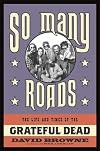
This is being touted as one of the most unique & comprehensive books about the Grateful Dead ever to be written. Author David Browne claims even hardcore fans will learn something new. Since I am a blossoming 21st century Deadhead I thought I would invite my husband to listen in to give his opinion. He helped in the writing of this review.
As an audio book, this was a bit different. Neither my husband or I could follow the format at first. The prologue jumps to 1970 pretty early which show more confused my resident Dead aficionado. Unlike other biographies this one is not in linear chronological order. The organization is as such: Browne chooses a date significant to the Grateful Dead's history whether it be fateful like the day Jerry and Bob met, historic like day the infamous wall of sound was conceived, or tragic like the day Pigpen died. He then centers a chapter around that day in time. But, as it was pointed out, Browne doesn't stick to that date. He'll leave the time frame and circle back to it again and again within the chapter. From an audio standpoint, it makes for interesting listening.
Extremely detailed and factual, Browne is spot on. Drawing from a multitude of interviews he is able bring the culture of the Grateful Dead to life. There is a sensitivity to his storytelling. For example, Hart's pain when his father ran off with over $75,000 of the band's earnings. The story goes much deeper than Mickey's self imposed exile from the band and Browne illustrates the journey to forgiveness beautifully. Everything about the Dead is there: the drugs, the women, the struggles with fame, traveling, relationships within the band, the highs and lows, but mostly importantly, the music that continues to influence generations. The attention given to the Grateful Dead sound was particularly enthralling. As someone who latches onto thought provoking lyrics, the sections including Robert Hunter and his collaboration with the band were my favorite.
As a result of listening to David Browne's So Many Roads I understand the Grateful Dead much better. I am looking forward to their Fare Thee Well tour in Chicago! I will not only be listening with my ears, but with my heart as well. show less
As an audio book, this was a bit different. Neither my husband or I could follow the format at first. The prologue jumps to 1970 pretty early which show more confused my resident Dead aficionado. Unlike other biographies this one is not in linear chronological order. The organization is as such: Browne chooses a date significant to the Grateful Dead's history whether it be fateful like the day Jerry and Bob met, historic like day the infamous wall of sound was conceived, or tragic like the day Pigpen died. He then centers a chapter around that day in time. But, as it was pointed out, Browne doesn't stick to that date. He'll leave the time frame and circle back to it again and again within the chapter. From an audio standpoint, it makes for interesting listening.
Extremely detailed and factual, Browne is spot on. Drawing from a multitude of interviews he is able bring the culture of the Grateful Dead to life. There is a sensitivity to his storytelling. For example, Hart's pain when his father ran off with over $75,000 of the band's earnings. The story goes much deeper than Mickey's self imposed exile from the band and Browne illustrates the journey to forgiveness beautifully. Everything about the Dead is there: the drugs, the women, the struggles with fame, traveling, relationships within the band, the highs and lows, but mostly importantly, the music that continues to influence generations. The attention given to the Grateful Dead sound was particularly enthralling. As someone who latches onto thought provoking lyrics, the sections including Robert Hunter and his collaboration with the band were my favorite.
As a result of listening to David Browne's So Many Roads I understand the Grateful Dead much better. I am looking forward to their Fare Thee Well tour in Chicago! I will not only be listening with my ears, but with my heart as well. show less
 This review was written for LibraryThing Early Reviewers.
Talkin' Greenwich Village: The Heady Rise and Slow Fall of America’s Bohemian Music Capital by David Browne
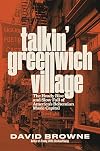
This is an enjoyable book all the way through, constructed in well-flowing narrative, overflowing with characterization and anecdote. Browne (a veteran writer for Rolling Stone covers the scene from 1957 all the way to it last gasp in the late eighties, from Dave Van Ronk and Bob Dylan to the Roches and Suzanne Vega. Although I'm unfamiliar with most of the pre-eighties musicians except for Dylan and Phil Ochs, my interest never flagged. There are lots of surprises here, from Bob Dylan show more turning up at a Patti Smith show in the seventies to Richie Havens co-authoring a song with Lou Gossett, Jr.
My one complaint would be that Browne doesn't seem to have much feeling for the music itself. Throughout most of the book, descriptions of the sound of these artists tends to be cursory and unenlightening. My suspicion that Browne isn't a fan was confirmed, I think, when we reach the Roches near the end, and suddenly we get a track-by-track analysis of each album's content together with full description. One can guess that this is where Browne's musical life started to intersect. Nevertheless, the life of the Village and its characters is very vivid and the book doesn't suffer too badly. show less
My one complaint would be that Browne doesn't seem to have much feeling for the music itself. Throughout most of the book, descriptions of the sound of these artists tends to be cursory and unenlightening. My suspicion that Browne isn't a fan was confirmed, I think, when we reach the Roches near the end, and suddenly we get a track-by-track analysis of each album's content together with full description. One can guess that this is where Browne's musical life started to intersect. Nevertheless, the life of the Village and its characters is very vivid and the book doesn't suffer too badly. show less
Awards


You May Also Like


Associated Authors
Statistics
- Works
- 8
- Also by
- 1
- Members
- 935
- Popularity
- #27,473
- Rating
- 3.7
- Reviews
- 40
- ISBNs
- 66
- Languages
- 2
