
Philip K. Dick (1928–1982)
Author of Do Androids Dream of Electric Sheep?
About the Author
Phillip Kindred Dick was an American science fiction writer best known for his psychological portrayals of characters trapped in illusory environments. Born in Chicago, Illinois, on December 16, 1928, Dick worked in radio and studied briefly at the University of California at Berkeley before show more embarking on his writing career. His first novel, Solar Lottery, was published in 1955. In 1963, Dick won the Hugo Award for his novel, The Man in the High Castle. He also wrote a series of futuristic tales about artificial creatures on the loose; notable of these was Do Androids Dream of Electric Sheep?, which was later adapted into film as Blade Runner. Dick also published several collections of short stories. He died of a stroke in Santa Ana, California, in 1982. (Bowker Author Biography) show less
Disambiguation Notice:
The collected short stories have been published with many different titles, so, when combining, please take care to combine the correct volumes.
Series
Works by Philip K. Dick
The Collected Stories of Philip K. Dick Volume 1: Beyond Lies the Wub (1947) 2,009 copies, 26 reviews
The Collected Stories of Philip K. Dick Volume 5: We Can Remember It For You Wholesale (1987) — Author — 741 copies, 10 reviews
The Shifting Realities of Philip K. Dick: Selected Literary and Philosophical Writings (1995) 738 copies, 5 reviews
Five Great Novels: "Do Androids Dream of Electric Sleep", "Martian Time Slip", "Ubik", "The Three Stigmata of Palmer Eldritch", "A Scanner Darkly" (GollanczF.) (2004) 335 copies, 1 review
What If Our World Is Their Heaven? The Final Conversations of Philip K. Dick (2001) 277 copies, 4 reviews
Counterfeit Unrealities (contains Ubik, A Scanner Darkly, Do Androids Dream of Electric Sheep [aka Blade Runner], The Three Stigmata of Palmer Eldritch) (2002) 206 copies, 2 reviews
The Third Science Fiction Megapack: 26 Modern and Classic Science Fiction Tales (2012) 65 copies, 1 review
Philip K. Dick: The Last Interview: and Other Conversations (The Last Interview Series) (2015) 61 copies, 2 reviews
The Early Work of Philip K. Dick, Volume 2: Breakfast at Twilight and Other Stories (2008) 39 copies
Robots, Androids, and Mechanical Oddities: The Science Fiction of Philip K. Dick (Alternatives) (1984) — Author — 32 copies, 1 review
The Early Science Fiction of Philip K. Dick (Dover Books on Literature & Drama) (2013) 30 copies, 3 reviews
Faith of Our Fathers [short fiction] 17 copies
The Philip K. Dick Anthology: 18 Classic Science Fiction Stories (Bybliotech Fiction) (2013) 12 copies, 1 review
Planeta, která neexistovala : sbírka sedmadvaceti antiutopicky a hororově laděných sci-fi povídek, vydaných časopisecky v letech 1952-1955 (2006) 10 copies
A Máquina Preservadora 1 9 copies
A Máquina Preservadora 2 8 copies
O Mistério de Valis 1 8 copies
Souvenir [Short Story] 8 copies
Rapport minoritaire/Minority Report - Souvenirs à vendre/We Can Remember It for You Wholesale (2009) 8 copies
O Mistério de Valis 2 8 copies
Satan's Pets 5 copies
Galaxy 11 - Eine Auswahl der besten Stories aus dem Schience Fiction Magazine GALAXY (1968) — Contributor — 5 copies
Time Traveler Tales: Sci-Fi Time Travel Classics: The Skull, The Variable Man & Meddler (2018) 4 copies
Fair Game 4 copies
The Eye of the Sibyl {story} 4 copies
Millemondinverno 1975 4 copies
Novelty Act 4 copies
The Hood Maker 4 copies
Blade Runner - Do Androids Dream of Electric Sheep? / The Game-Players of Titan / A Maze of Death HARDCOVER BOOK IN RUSSIAN CONTAINS ILLUSTRATIONS (1993) 3 copies, 1 review
Warning: We Are Your Police 3 copies
Waterspider 3 copies
The Short Stories Of Phillip K. Dick - Volume 1: "Reality is whatever refuses to go away when I stop believing in it." (2014) 3 copies
The World She Wanted 3 copies
Best Science Fiction Stories Collection of Philip K. Dick (Adjustment Team, The Skull, The Defenders, Second Variety, and many more) (2011) 3 copies
Minority report (II) 3 copies
A Scanner Darkly [short story] 2 copies
Naziism and the High Castle 2 copies
Ubik - Japan 2 copies
Különös éden 2 copies
Short Science Fiction Collection 051 2 copies
Ubik - UK 2 copies
Short Science Fiction Collection 075 2 copies
Short Science Fiction Collection 059 2 copies
Short Science Fiction Collection 057 2 copies
Short Science Fiction Collection 056 2 copies
Short Science Fiction Collection 053 2 copies
Un mundo de talento 2 copies
Survey Team 2 copies
Time Pawn 2 copies
Beyond the Door and Other Works by Philip K. Dick (Unexpurgated Edition) (Halcyon Classics) (2009) 2 copies
Five Stories by Philip K. Dick 2 copies
To Serve The Master [short story] 2 copies
Dry My White Noise Tears: A Philip K. Dick Collection (Six Philip K. Dick stories in one volume!) (2010) 2 copies
Eine Handvoll Dunkelheit. Acht Visionen einer dunklen Zukunft - erahnt und erzählt von Philip K. Dick (1963) 2 copies
Project: Earth 2 copies
Human Is [short story] 2 copies
Null-O 2 copies
Le guérisseur de cathédrales, suivi de Nick et le Glimmung [Galactic Pot-Healer / Nick and the Glimmung] (2017) 2 copies
The Chromium Fence 2 copies
The Story To End All Stories 1 copy
A Surface Raid 1 copy
Stand-by 1 copy
Philip K. Dick Omnibus 1 copy
Вспомнить все: рассказы 1 copy
Sokaktan Gelen Sesler 1 copy
Unknown Book 6531601 1 copy
Война на реалности 1 copy
The World That Jones Made 1 copy
The Eye in the Sky 1 copy
Bir Palavracinin Itiraflari 1 copy
Galaktik çömlek tamircisi 1 copy
Ölüm Labirenti 1 copy
Ubik - Romania 1 copy
Le Détourneur 1 copy
Os Agentes do Destino 1 copy
A Lincoln Androide 1 copy
The Trouble With Bubbles 1 copy
The Eyes Have It 1 copy
Il meglio di Philip Dick 1 copy
Philip K. Dick Omnibus 1 copy
フィリップ・K・ディックのすべて―ノンフィクション集成 1 copy
A city without a map - paperback collection of short stories fantasy Hayakawa Dick NV 122 (1976) 1 copy
Philip K. Dick Omnibus 1 copy
A Harag Istene 1 copy
Cla 1 copy
Philip K. Dick Omnibus 1 copy
Le père truqué 1 copy
Filmske priče 1 copy
Glas trećega 1 copy
Collected Stories Volume 1 1 copy
Električni snovi 1 copy
Collected Stories Volume 2 1 copy
Το ηλεκτρικό πρόβατο 1 copy
Confession of a Crap Artist 1 copy
Le retour des explorateurs 1 copy
The Short Stories Of Phillip K. Dick - Volume 2: "It is sometimes an appropriate response to reality to go insane." (2014) 1 copy
Philip K. Dick Omnibus 1 copy
Paycheck (Short Story) 1 copy
Ricordi di domani 1 copy
12 Science Fiction Short Story Collection : [Hugo Award winning writers] [illustrated] (2014) 1 copy
פוסטר, אתה מת וסיפורים אחרים 1 copy
Service Call 1 copy
I migliori romanzi 1 copy
2009 1 copy
Misadjustment 1 copy
A Terran Odyssey 1 copy
Contatto col nemico 1 copy
Strange New World 1 copy
Tutti i racconti 1 copy
I nostri amici da Frolix 8 1 copy
Вторая модель 1 copy
Убик 1 copy
Trilogia di Valis 1 copy
FORCED EXPOSURE #13 1 copy
Science Fiction Double feature: The Gun & The Eyes have it: Classic Science Fiction Graphic Novel 1 copy, 1 review
Urania 0320 - Vulcano 3 1 copy
The Slave Race 1 copy
What the Dead Man Said 1 copy
少数派报告 1 copy
Space Jockey (Science Fiction Short Stories) (Futura - Science Fiction Short Stories) (2013) 1 copy, 1 review
Omnibus 1 copy
Comprehensive works including Minority report, Do Androids Dream of Electric Sheep? and Blade Runner 1 copy
Philip K. Dick Super Pack: With linked Table of Contents (Positronic Super Pack Series Book 7) (2015) 1 copy
By Philip K. Dick Lies, Inc. 1 copy
Associated Works
Spells of Enchantment: The Wondrous Fairy Tales of Western Culture (1991) — Contributor — 604 copies, 5 reviews
The Big Book of Science Fiction: The Ultimate Collection (2016) — Contributor — 521 copies, 8 reviews
The Norton Book of Science Fiction: North American Science Fiction, 1960-1990 (1993) — Contributor — 344 copies, 6 reviews
The Vintage Book of Amnesia: An Anthology of Writing on the Subject of Memory Loss (2000) — Contributor — 227 copies, 2 reviews
Isaac Asimov's Magical Worlds of Fantasy, Volume 12: Faeries (1991) — Contributor — 213 copies, 4 reviews
The Very Best of Fantasy & Science Fiction: Sixtieth Anniversary Anthology (2009) — Contributor — 151 copies, 6 reviews
Adaptations: From Short Story to Big Screen: 35 Great Stories That Have Inspired Great Films (2005) — Contributor — 136 copies, 1 review
Isaac Asimov's Wonderful Worlds of Science Fiction, Volume 9: Robots (1989) — Contributor — 118 copies, 2 reviews
Science Fiction Showcase: Eleven Extraordinary Stories by Eleven Masters of Science-Fiction and Fantasy (1959) — Contributor — 111 copies, 3 reviews
The Prentice Hall Anthology of Science Fiction and Fantasy (2000) — Contributor — 100 copies, 2 reviews
Rivals of Weird Tales: 30 Great Fantasy & Horror Stories from the Weird Fiction Pulps (1990) — Contributor — 97 copies, 1 review
The Magazine of Fantasy & Science Fiction: A 30-Year Retrospective (1980) — Contributor — 94 copies, 1 review
The Science Fiction Megapack: 25 Classic Science Fiction Stories by Masters (2011) — Author — 66 copies, 3 reviews
A Century of Science Fiction 1950-1959 : The Greatest Stories of the Decade (1996) — Contributor — 64 copies, 2 reviews
Fourth Planet from the Sun: Tales of Mars from the Magazine of Fantasy and Science Fiction (2005) — Contributor — 44 copies, 4 reviews
Grave Predictions: Tales of Mankind’s Post-Apocalyptic, Dystopian and Disastrous Destiny (2016) 35 copies, 7 reviews
Nature's Warnings: Classic Stories of Eco-Science Fiction (British Library Science Fiction Classics) (2020) — Contributor — 34 copies
The Wild Years 1946-1955 (Amazing Science Fiction Anthology Series) (1987) — Contributor — 27 copies
The Magazine of Fantasy and Science Fiction October 1981, Vol. 61, No. 4 (1981) — Contributor — 19 copies
The Magazine of Fantasy and Science Fiction July 1964, Vol. 27, No. 1 (1964) — Contributor — 11 copies
The Magazine of Fantasy and Science Fiction July 1953, Vol. 5, No. 1 (1953) — Contributor — 10 copies
The Magazine of Fantasy and Science Fiction January 1954, Vol. 6, No. 1 (1954) — Contributor — 10 copies
The Magazine of Fantasy and Science Fiction June 1953, Vol. 4, No. 6 (1953) — Contributor — 10 copies
Robotics Through Science Fiction: Artificial Intelligence Explained Through Six Classic Robot Short Stories (2018) — Contributor — 9 copies
The Magazine of Fantasy and Science Fiction November 1952, Vol. 3, No. 7 (1952) — Contributor — 8 copies
Cosmos Science Fiction and Fantasy Magazine Vol. 1 No. 1: September 1953 (1953) — Contributor — 7 copies
The Magazine of Fantasy and Science Fiction February 1953, Vol. 4, No. 2 (1953) — Contributor — 7 copies
Faseskift : science fiction noveller : et udvalg (1984) — Author, some editions — 5 copies, 1 review
Questa notte attenti agli UFO — Contributor — 3 copies
Orbit Science Fiction No. 4, September-October 1954 — Contributor — 3 copies
Den elektriske myre og andre science fiction-fortællinger (1984) — Author, some editions — 2 copies, 1 review
Short Science Fiction Collection 047 — Contributor — 2 copies
Short Science Fiction Collection 072 — Contributor — 2 copies
Fantasy Fiction Magazine, June 1953 (Vol. 1, No. 2) — Contributor — 2 copies
Fantastic Universe October 1954 — Contributor — 2 copies
Science Fiction Stories 1953 — Contributor — 2 copies
Fantastic Universe July 1955 — Contributor — 2 copies
Mostri del cielo e della terra — Contributor — 2 copies
Millemondi Primavera 2001: Nuove avventure nell'ignoto — Contributor — 2 copies
BBC Proms 2025 : Berlioz’s 'Symphonie fantastique' : Tuesday 22 July 2025 {programme} (2025) — Contributor [Simpson} — 1 copy
Misunderstanding Cad First Contact SF Masterpiece Selection — Contributor — 1 copy
季刊NW-SF 7号 — Contributor — 1 copy
ロボット・オペラ — Contributor — 1 copy
季刊NW-SF 1976年 08月 第12号 — Contributor — 1 copy
新潮 1990年 09月号 現代SFの冒険 — Contributor — 1 copy
Tagged
Common Knowledge
- Legal name
- Dick, Philip Kindred
- Other names
- Philips, Richard
Dowland, Jack - Birthdate
- 1928-12-16
- Date of death
- 1982-03-02
- Gender
- male
- Education
- University of California, Berkeley (MLS|1975)
- Occupations
- short story writer
novelist
science fiction writer - Organizations
- Science Fiction and Fantasy Writers of America
- Awards and honors
- Science Fiction Hall of Fame ( [2005])
- Agent
- Russell Galen (Scovil-Chichak-Galen Literary Agency)
- Relationships
- Dick, Tessa B. (former spouse)
Dick, Anne R.(former spouse)
Powers, Tim (friend)
Blaylock, James P. (friend)
Jeter, K. W. (friend) - Short biography
- Philip K. Dick was born in Chicago in 1928 and lived most of his life in California. He briefly attended the University of California, but dropped out before completing any classes. In 1952, he began writing professionally and proceeded to write numerous novels and short-story collections. Philip K. Dick died on March 2, 1982, in Santa Ana, California, of heart failure following a stroke.
- Cause of death
- stroke
- Nationality
- USA
- Birthplace
- Chicago, Illinois, USA
- Places of residence
- Chicago, Illinois, USA
Berkeley, California, USA
San Rafael, California, USA
Fullerton, California, USA
Santa Ana, California, USA
Point Reyes Station, California, USA - Place of death
- Santa Ana, California, USA
- Burial location
- Riverside Cemetery, Fort Morgan, Colorado, USA (section K, block 1, lot 56)
- Map Location
- Illinois, USA
- Disambiguation notice
- The collected short stories have been published with many different titles, so, when combining, please take care to combine the correct volumes.
Members
Discussions
If I had a hammer in Good Show Sir! — bad science fiction and fantasy covers (March 2025)
Philip K. Dick, Do androids dream of electric sheep? in Science Fiction Fans (November 2024)
Original price of Philip K Dick Set? in Centipede Press (December 2022)
Found: Futuristic undercover cop in Name that Book (September 2021)
SciFi novella - Detecting Alien Attack Patterns in Name that Book (August 2019)
The Man in the High Castle in Folio Society Devotees (April 2015)
Do Androids Dream of Electric Sheep? by Philip K. Dick in Science Fiction Fans (May 2014)
Do androids dream of electric sheep? in The Green Dragon (January 2014)
Philip K. Dick Chronological Order? in Librarything Series (December 2013)
1001 Group Read: May, 2012 - Do Androids Dream of Electric Sheep? in 1001 Books to read before you die (May 2013)
Philip K. Dick Bibliography in Science Fiction Fans (May 2012)
I need some Dick in Science Fiction Fans (April 2012)
PKDs Man in the High Castle coming to TV soon in Science Fiction Fans (March 2011)
P. K. Dick's Eye in the Sky, rev. jimroberts in Reviews reviewed (September 2009)
Two More SF Shorts in Name that Book (August 2008)
Reviews

Not to be confused with the PKD book Vulcan's Hammer, 'Richard-Bessiere' is a pseudonym used by two Fleuve Noir editors; François Richard and Henri Bessièr. No one can agree, 50 years later, who wrote what, but it wasn't Philip Dick.
At the start of the book our narrator is in possession of a map to a planet which contains a fabulous treasure trove of jewels. He's about to gather together a crew to go look for it when Redbeard, a killer space pirate from his past ("the most feared and show more wanted man in the galaxy") turns up having found our narrator's watch next to the body of the last known possessor of the map. At blaster point our hero pulls out an ace card and tells the pirate that he's destroyed the map... but memorised it. You need me alive! Redbeard, I'm useless to you dead!
So off they go. Stopping only to blow up a galactic patrol ship that gets in their way, they navigate the secret hyperspacial path to the hidden planet, Fortuna. The crew are a repulsive, venal lot, a drunken doctor, a hermaphrodite from Saturn (who keeps the narrator awake at night by having noisy sex with itself), a Venusian who has to eat every 20 minutes and so on.
When they get there they find the planet Fortuna is surrounded by unusually high concentrations of "living proteins" which the author/s claim in footnote is a real thing, citing the, then recent, discovery of ammonia and formaldehyde in space https://www.nature.com/articles/222009a0.pdf - neither of which are proteins - anyway....
And after finding they can't eat the local fauna - the one animal they do try to eat has some kind of chlorophyll for blood, they set off in the direction of 'thataway' because, though the narrator has a map to how to get to the planet, he has no idea where on the planet the treasure is. Luckily the Venusian crew member has the uncanny ability to just point in the direction that any nearby pile of expensive rocks happens to be. So off they go following his sixth sense.
And the book gets very boring and repetitive for a long time. "We were attacked by some giant horrible worms that tried to eat us, so we ran into a cave where some horrible giant insects tried to eat us, so we ran out of the cave again and the worms had gone away but the rocks were suddenly explosive! and then a tree tried to eat us but we ran away and...." for chapter after chapter. During the course of their running away they are constantly beset by creatures with bizarre life cycles. Trees that bear animals as fruit, rocks which hatch out into insects. Caves where time suddenly runs at a different rate - they spend two hours inside while twenty days pass outside. Giant human arms grow out of the ground and try to flatten them with their fists - and get one of the crew. Splat! The whole ecosystem of the planet is one weird hyper-mishmash of mineral, animal and plant. The Venusian dies when something he ate turns him into a tree but luckily he drew a map. Why he drew a map is not explained but the book would have just stopped if he hadn't. More of them die. A fire breathing dragon sets fire to a desert as they are trying to cross a river. Our hero and Laura, the only woman in the crew and Redbeard's girlfriend, get separated from the others. As you would expect - they fall in love.
Eventually they meet up with the remaining members of the crew. Along the way they pass strange columns of light surrounded by circling flying fish. Creatures run into the light and die and dissolve and become proteins which fountain into the air and spread out over the planet starting the life cycle all over again. Some of the molecules achieve escape velocity and get into space to form the panspermial clouds they'd observed around the planet on their approach. (Wait! is 'panspermial' a real word? hang on... Googly... Googly... it is! Cool!) Anyway after observing this weird wonder they find the treasure. Huge piles of jewels just lying about in a valley. A strangely silent valley. The slightest noise makes violent echoes which threaten to bring down the surrounding cliffs and bury the treasure forever. Redbeard steps on a lose rock and makes a sound so loud that the echoes amplify so much they become so loud they become solid (sic)... and bring down the surrounding cliffs... and bury the treasure forever....
The last four characters get back to the ship - "Aha!" cries Redbeard, "I have the jewels! I no long need you, narrator person!" and pulls the trigger on his blaster. But nothing happens! How can this be? (Spoiler: Laura has taken the batteries out.) Our hero fires his weapon and blasts the villain - and the treasure - to atoms.
The doctor fries himself to death trying to repair the ship and the narrator and Laura start to feel feel heavy.
So they sit down and turn into rocks.
FIN
Seriously awful. I suspect fashionable, 1968 type, recreational pharmaceuticals were involved. show less
At the start of the book our narrator is in possession of a map to a planet which contains a fabulous treasure trove of jewels. He's about to gather together a crew to go look for it when Redbeard, a killer space pirate from his past ("the most feared and show more wanted man in the galaxy") turns up having found our narrator's watch next to the body of the last known possessor of the map. At blaster point our hero pulls out an ace card and tells the pirate that he's destroyed the map... but memorised it. You need me alive! Redbeard, I'm useless to you dead!
So off they go. Stopping only to blow up a galactic patrol ship that gets in their way, they navigate the secret hyperspacial path to the hidden planet, Fortuna. The crew are a repulsive, venal lot, a drunken doctor, a hermaphrodite from Saturn (who keeps the narrator awake at night by having noisy sex with itself), a Venusian who has to eat every 20 minutes and so on.
When they get there they find the planet Fortuna is surrounded by unusually high concentrations of "living proteins" which the author/s claim in footnote is a real thing, citing the, then recent, discovery of ammonia and formaldehyde in space https://www.nature.com/articles/222009a0.pdf - neither of which are proteins - anyway....
And after finding they can't eat the local fauna - the one animal they do try to eat has some kind of chlorophyll for blood, they set off in the direction of 'thataway' because, though the narrator has a map to how to get to the planet, he has no idea where on the planet the treasure is. Luckily the Venusian crew member has the uncanny ability to just point in the direction that any nearby pile of expensive rocks happens to be. So off they go following his sixth sense.
And the book gets very boring and repetitive for a long time. "We were attacked by some giant horrible worms that tried to eat us, so we ran into a cave where some horrible giant insects tried to eat us, so we ran out of the cave again and the worms had gone away but the rocks were suddenly explosive! and then a tree tried to eat us but we ran away and...." for chapter after chapter. During the course of their running away they are constantly beset by creatures with bizarre life cycles. Trees that bear animals as fruit, rocks which hatch out into insects. Caves where time suddenly runs at a different rate - they spend two hours inside while twenty days pass outside. Giant human arms grow out of the ground and try to flatten them with their fists - and get one of the crew. Splat! The whole ecosystem of the planet is one weird hyper-mishmash of mineral, animal and plant. The Venusian dies when something he ate turns him into a tree but luckily he drew a map. Why he drew a map is not explained but the book would have just stopped if he hadn't. More of them die. A fire breathing dragon sets fire to a desert as they are trying to cross a river. Our hero and Laura, the only woman in the crew and Redbeard's girlfriend, get separated from the others. As you would expect - they fall in love.
Eventually they meet up with the remaining members of the crew. Along the way they pass strange columns of light surrounded by circling flying fish. Creatures run into the light and die and dissolve and become proteins which fountain into the air and spread out over the planet starting the life cycle all over again. Some of the molecules achieve escape velocity and get into space to form the panspermial clouds they'd observed around the planet on their approach. (Wait! is 'panspermial' a real word? hang on... Googly... Googly... it is! Cool!) Anyway after observing this weird wonder they find the treasure. Huge piles of jewels just lying about in a valley. A strangely silent valley. The slightest noise makes violent echoes which threaten to bring down the surrounding cliffs and bury the treasure forever. Redbeard steps on a lose rock and makes a sound so loud that the echoes amplify so much they become so loud they become solid (sic)... and bring down the surrounding cliffs... and bury the treasure forever....
The last four characters get back to the ship - "Aha!" cries Redbeard, "I have the jewels! I no long need you, narrator person!" and pulls the trigger on his blaster. But nothing happens! How can this be? (Spoiler: Laura has taken the batteries out.) Our hero fires his weapon and blasts the villain - and the treasure - to atoms.
The doctor fries himself to death trying to repair the ship and the narrator and Laura start to feel feel heavy.
So they sit down and turn into rocks.
FIN
Seriously awful. I suspect fashionable, 1968 type, recreational pharmaceuticals were involved. show less

In an alternate version of San Fransisco, change is in the air, and Americans (both Jews and non-Jews), Japanese, and Germans weigh decisions about their futures. In their world, the Axis powers won World War II, and both individual society and international relations operate in a vacuum of trust. Japan controls the U.S. West Coast and the Americans who still live there have adopted Japanese customs. Japanese and Americans alike consult the I Ching as an oracle to make decisions and foretell show more the immediate future. Everyone is morbidly curious about a book the Germans have banned, The Grasshopper Lies Heavy, an alternate history of World War II in which Germany and Japan were defeated.
The theme of free will vs determinism resonated most with me. The characters, with a couple of brief exceptions, have a fatalistic view of the world and of their individual lives within the larger whole. By consulting the I Ching for even the most inconsequential of decisions, they cede their free will and personal responsibility for the consequences of their choices. If you take determinism to its logical conclusion, this book would be completely implausible because it would be impossible for history to have turned out any differently than it has. show less
The theme of free will vs determinism resonated most with me. The characters, with a couple of brief exceptions, have a fatalistic view of the world and of their individual lives within the larger whole. By consulting the I Ching for even the most inconsequential of decisions, they cede their free will and personal responsibility for the consequences of their choices. If you take determinism to its logical conclusion, this book would be completely implausible because it would be impossible for history to have turned out any differently than it has. show less
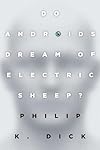
Wow. I read through this novella twice, and after the second time I was all set to start at the beginning all over again. I think it's marvelous. The more I read the book, the more nuance I found.
Rick Deckard is a bounty hunter who 'retires' androids who have escaped the human colony on Mars and travelled to Earth, an earth rendered a wasteland by a terminal world war. The radioactive dust that has contaminated all has not yet affected him biologically, but others who are so contaminated are show more considered unfit for migration, or much of anything else. Rick and his wife and others are sustained by self-selected electrical mood manipulation and an religion that acknowledges the hopelessness of life but provides a massive and supportive circuit of empathy. Androids, however, are missing the ability to empathize, even with each other, and this lack allows detection.
At first I was amused by the mix of futuristic predictions and seeming anachronisms - yes to self-programmed mood machines but also coin-operated wired telephones. But that unevenness in imagination is after all unimportant. More to the point, what is the value of a 'natural' person? How well-engineered does an android have to be before it's indistinguishable from a natural person? Will it someday be possible to engineer an android with all the emotional accoutrements of a human - what then?
Could there be a religion that would support a population witnessing the slow ending of the world? What would it be?
Who has the right to survive after world-wide self-destruction? What would we value in such a devastated world?
And of course, the analagous questions are about our own times: What constitutes a valuable person (especially in 1968, when this was published, and now, alas - do black lives matter)? What is the value of the living world? To what purpose are the various religions we honor, and how real are they, and how real do they have to be to be of value? How pure can our actions be, or are we as imperfect as the androids?
Written in the 60s, there are more than discreet echoes of questions of race, the impact of slavery, ecological danger, religion as opiate, opiate as opiate, denial versus reality, love and despair.
The story is so intense and visual it cries out for a movie treatment, which of course is the film 'Blade Runner' - with many changes. Read the book. show less
Rick Deckard is a bounty hunter who 'retires' androids who have escaped the human colony on Mars and travelled to Earth, an earth rendered a wasteland by a terminal world war. The radioactive dust that has contaminated all has not yet affected him biologically, but others who are so contaminated are show more considered unfit for migration, or much of anything else. Rick and his wife and others are sustained by self-selected electrical mood manipulation and an religion that acknowledges the hopelessness of life but provides a massive and supportive circuit of empathy. Androids, however, are missing the ability to empathize, even with each other, and this lack allows detection.
At first I was amused by the mix of futuristic predictions and seeming anachronisms - yes to self-programmed mood machines but also coin-operated wired telephones. But that unevenness in imagination is after all unimportant. More to the point, what is the value of a 'natural' person? How well-engineered does an android have to be before it's indistinguishable from a natural person? Will it someday be possible to engineer an android with all the emotional accoutrements of a human - what then?
Could there be a religion that would support a population witnessing the slow ending of the world? What would it be?
Who has the right to survive after world-wide self-destruction? What would we value in such a devastated world?
And of course, the analagous questions are about our own times: What constitutes a valuable person (especially in 1968, when this was published, and now, alas - do black lives matter)? What is the value of the living world? To what purpose are the various religions we honor, and how real are they, and how real do they have to be to be of value? How pure can our actions be, or are we as imperfect as the androids?
Written in the 60s, there are more than discreet echoes of questions of race, the impact of slavery, ecological danger, religion as opiate, opiate as opiate, denial versus reality, love and despair.
The story is so intense and visual it cries out for a movie treatment, which of course is the film 'Blade Runner' - with many changes. Read the book. show less
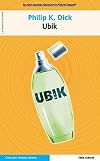
This is one of those books that has had a whole lot said about it, so I'm not going to go too deep right now. Maybe I'll have more thoughts later. Suffice to say, I bloody loved it.
In the far flung future of 1992 capitalism has reached the point where you have to pay your front door door to be able to get in or out and corporate espionage teams are made up by all groups with various psychic and anti-psychic powers. When a mission on the moon blows up in his face Joe Chip is hurled into the show more past and and must try to work out what the hell is going on as time decays around him.
Essentially, this is a murder mystery with a phenomenal sci-fi framing device using denaturing time and instability of objects that echo the confusion and degrading sanity of the protagonist and reader. This doesn't do it justice though. It also has some fun and pithy adverts.
There's commentary on capitalism, consumerism, death, letting go, and more, which is hardly surprising for a Philip K. Dick novel, but there is something truly fascinating about how he goes about all of this, even when compared to his vast and bizarre library. I can see why this was his favourite.
This book is incredible. I literally said, "what the fuck?!" moments before it ended and then, "motherfucker!!!" much louder when it finished. I'm not saying I haven't ended a few books that way before, but it is rate that they are accompanied by positive feelings towards said book. show less
In the far flung future of 1992 capitalism has reached the point where you have to pay your front door door to be able to get in or out and corporate espionage teams are made up by all groups with various psychic and anti-psychic powers. When a mission on the moon blows up in his face Joe Chip is hurled into the show more past and and must try to work out what the hell is going on as time decays around him.
Essentially, this is a murder mystery with a phenomenal sci-fi framing device using denaturing time and instability of objects that echo the confusion and degrading sanity of the protagonist and reader. This doesn't do it justice though. It also has some fun and pithy adverts.
There's commentary on capitalism, consumerism, death, letting go, and more, which is hardly surprising for a Philip K. Dick novel, but there is something truly fascinating about how he goes about all of this, even when compared to his vast and bizarre library. I can see why this was his favourite.
This book is incredible. I literally said, "what the fuck?!" moments before it ended and then, "motherfucker!!!" much louder when it finished. I'm not saying I haven't ended a few books that way before, but it is rate that they are accompanied by positive feelings towards said book. show less
Lists
Books Read in 2023 (22)
1950s (1)
current (1)
2023 (1)
Read (1)
SF Masterworks (1)
2021 (1)
A Novel Cure (1)
Classic Sci-Fi (1)
Classics (1)
science fiction (1)
Folio Society (1)
Five star books (1)
Books (1)
Franklit (1)
Florida (1)
Page Turners (1)
Cooper (1)
Yet another list (1)
SF Masterworks (14)
Best Dystopias (3)
Read These Too (2)
1970 Club (2)
Forced Exposure (10)
Favourite Books (4)
Unread books (4)
My TBR (4)
1960s (2)
SF - To Read (2)
Wishlist (1)
One Day (1)
1970s (1)
Best Cyberpunk (1)
um actually (1)
Overdue Podcast (2)
Futurism Works (2)
Science Fiction (2)
ORCID Book list (1)
Awards


You May Also Like


Associated Authors
Statistics
- Works
- 664
- Also by
- 257
- Members
- 146,312
- Popularity
- #44
- Rating
- 3.8
- Reviews
- 2,748
- ISBNs
- 3,206
- Languages
- 33
- Favorited
- 883
