
Julie Hearn (1) (1958–)
Author of The Minister's Daughter
For other authors named Julie Hearn, see the disambiguation page.
Series
Works by Julie Hearn
Tagged
Common Knowledge
- Legal name
- Hearn, Julie Elizabeth
- Birthdate
- 1958-09-03
- Gender
- female
- Education
- Westminster College, Oxford
Mansfield College (MA|Women's Studies) - Nationality
- UK
- Associated Place (for map)
- UK
Members
Reviews

Hazel Louise Mull-Dare has always been a pampered Daddy's girl. But when she witnesses a suffragette throw herself in front of the king's horse at the Epsom Derby to draw attention to her cause, Hazel begins to yearn to break out of the mold of the sweet naive girl who would never do anything her father disapproves of and to take action. The family's straitened circumstances and need for propriety lead to Hazel's 'banishment' to her grandfather's sugar plantation in the Caribbean - where she show more must confront even more family secrets.
My Thoughts:
Hazel is definitely not a simple escapist read - rather it is a historical novel that deals with burgeoning political awareness, votes for women, depression, gambling addiction, slavery and its aftermath, adolescent rebellion and betrayal. In short, Hazel is a realistic snapshot of the many pressures and influences an actual teenager of her time might have faced. She's not just a character with some fleshing out to capture the reader's attention - she's a full-fledged person The novel is more of a character study than a plot-driven story, and its weakest points tend to be those that rely on external plot for tension (such as the hurricane).
Hazel is an interesting contrast. The first half of the book focuses on Hazel's membership in a class of the oppressed. She gradually realizes how much society's polite strictures are meant to keep women powerless and docile, and she rebels out of desire for greater autonomy for herself and others. After she takes action, she is sent to her family's sugar plantation and must come to grips with being a member of the oppressors. She gradually awakens from her naivete to appreciate (to a degree) the hardships and continuing injustice the former slaves face on the island. She sees first-hand some of the prejudice they encounter, and she also must deal with hostility from the house-servants because of who her family is, and her own skin tone.
I found the treatment of racism and the after-effects of slavery interesting, though I was a bit annoyed at how the thread was introduced into the narrative. While the plantation workers certainly had ample reason for resentment against the Mull-Dare/Moulder family, I wasn't convinced that hostile messages to a 13-year-old girl holding her vicariously responsible for the sins of her family would lead to the kind of acceptance and acknowledgment Hazel demonstrates after her initial bewilderment. I've never thought hostility and blame were particularly effective didactic tools. Aside from my disbelief regarding how the message was brought across, it was good to see Hazel overcome her ignorance and blind naivete.
More at A Hoyden's Look at Literature. show less
My Thoughts:
Hazel is definitely not a simple escapist read - rather it is a historical novel that deals with burgeoning political awareness, votes for women, depression, gambling addiction, slavery and its aftermath, adolescent rebellion and betrayal. In short, Hazel is a realistic snapshot of the many pressures and influences an actual teenager of her time might have faced. She's not just a character with some fleshing out to capture the reader's attention - she's a full-fledged person The novel is more of a character study than a plot-driven story, and its weakest points tend to be those that rely on external plot for tension (such as the hurricane).
Hazel is an interesting contrast. The first half of the book focuses on Hazel's membership in a class of the oppressed. She gradually realizes how much society's polite strictures are meant to keep women powerless and docile, and she rebels out of desire for greater autonomy for herself and others. After she takes action, she is sent to her family's sugar plantation and must come to grips with being a member of the oppressors. She gradually awakens from her naivete to appreciate (to a degree) the hardships and continuing injustice the former slaves face on the island. She sees first-hand some of the prejudice they encounter, and she also must deal with hostility from the house-servants because of who her family is, and her own skin tone.
I found the treatment of racism and the after-effects of slavery interesting, though I was a bit annoyed at how the thread was introduced into the narrative. While the plantation workers certainly had ample reason for resentment against the Mull-Dare/Moulder family, I wasn't convinced that hostile messages to a 13-year-old girl holding her vicariously responsible for the sins of her family would lead to the kind of acceptance and acknowledgment Hazel demonstrates after her initial bewilderment. I've never thought hostility and blame were particularly effective didactic tools. Aside from my disbelief regarding how the message was brought across, it was good to see Hazel overcome her ignorance and blind naivete.
More at A Hoyden's Look at Literature. show less
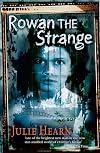
Rowan Scrivener hears a voice, and sometimes, when stressed or scared, the voice makes him do things he never would normally, like the time he slammed the lid of the piano down on his sister's hand, breaking three of her fingers. It is 1939, war has just broken out, London is under blackout and schizophrenia is poorly understood. Rowan is sent to a hospital where he is to undergo a radical new therapy, administered by a German doctor.
What a brilliant, beautiful, heartrending book. Its power show more lies in its understated humanity. Rowan's is a tiny, surely insignificant drama in the face of the coming global conflict. He is not treated harshly or cruelly, but by today's standards it is clumsy, callous, insensitive and even contemptuous. Set against the scale of human suffering, however, Rowan seems downright lucky. About halfway through, in a scene of quiet devastation, we discover why this book has been set when it has and why the doctor is German, and suddenly every tiny mistreatment is set in sharp relief, not diminished but accentuated, as these vulnerable people are horribly exposed in the face of indifference or fear or spite at the hands of others.
This isn't a tale of plucky rebellion against institutional authority, it's a story of people struggling against an illness they cannot understand trying to get better with the help of people with limited insight, and who do not understand the limits of their vision.
Yeah, I cried. show less
What a brilliant, beautiful, heartrending book. Its power show more lies in its understated humanity. Rowan's is a tiny, surely insignificant drama in the face of the coming global conflict. He is not treated harshly or cruelly, but by today's standards it is clumsy, callous, insensitive and even contemptuous. Set against the scale of human suffering, however, Rowan seems downright lucky. About halfway through, in a scene of quiet devastation, we discover why this book has been set when it has and why the doctor is German, and suddenly every tiny mistreatment is set in sharp relief, not diminished but accentuated, as these vulnerable people are horribly exposed in the face of indifference or fear or spite at the hands of others.
This isn't a tale of plucky rebellion against institutional authority, it's a story of people struggling against an illness they cannot understand trying to get better with the help of people with limited insight, and who do not understand the limits of their vision.
Yeah, I cried. show less

I love when books talk about heresy and heretics and this one didn’t disappoint! While it was sometimes slow, I bet it was carefully planned for us to get attached to Nell (the MC) and her granny because I truly did. They are so sweet and lovable though persecuted. Also, the ending...! It left me baffled and wanting more. Questioning, too. But the author made sure I would remember it even in my old days. I recommend it without a doubt!
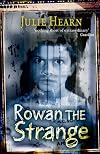
The cover and the description for this book are highly misleading; they make it sound like it's going to be some creepy One Flew Over the Cuckoo's Nest type story, or even science fiction. Instead, although the characters and setting is indeed a troubling one -- the patients and staff at a mental hospital in Britain in 1939 -- the story is, in the end, almost heartwarming.
There were so many characters to appreciate here. Rowan's family, particularly his eccentric dog-loving grandmother, show more captivated me. Though stressed and bewildered by his illness, they truly wanted what was best for him. The same for his psychiatrist, Dr. von Metzer, a kind and compassionate doctor whose biggest problem was being German in a very xenophobic Britain. Dorothea was annoying but refreshingly real, and the other patients in Rowan's unit were fully drawn, not just cardboard cutouts like supporting characters often are. Even the bad people in the story weren't evil, just bigoted and selfish.
The historical details of the early war -- gas masks, blackout curtains, evacuations of children to the countryside -- were authentic and added color to the story without seeming too didactic. I thought the subplot about Germany's T4 program was very well done.
I would recommend Rowan the Strange to junior high schoolers up through adulthood. There's a lot for people to like in this book. show less
There were so many characters to appreciate here. Rowan's family, particularly his eccentric dog-loving grandmother, show more captivated me. Though stressed and bewildered by his illness, they truly wanted what was best for him. The same for his psychiatrist, Dr. von Metzer, a kind and compassionate doctor whose biggest problem was being German in a very xenophobic Britain. Dorothea was annoying but refreshingly real, and the other patients in Rowan's unit were fully drawn, not just cardboard cutouts like supporting characters often are. Even the bad people in the story weren't evil, just bigoted and selfish.
The historical details of the early war -- gas masks, blackout curtains, evacuations of children to the countryside -- were authentic and added color to the story without seeming too didactic. I thought the subplot about Germany's T4 program was very well done.
I would recommend Rowan the Strange to junior high schoolers up through adulthood. There's a lot for people to like in this book. show less
Lists
Awards


You May Also Like


Associated Authors
Statistics
- Works
- 7
- Members
- 1,232
- Popularity
- #20,834
- Rating
- 3.6
- Reviews
- 58
- ISBNs
- 62
- Languages
- 6