
Michelle West
Author of Cast in Shadow
About the Author
Michelle Sagara is the pseudonym used by Michelle West. She was born in 1963 and is a native of Canada. She is a Japanese-Canadian author of fantasy literature. She has published her books as Michelle Sagara (her legal name), Michelle West (her husband's surname), and as Michelle Sagara West (a show more combination of the two). She lives in Toronto. (Bowker Author Biography) show less
Series
Works by Michelle West
Elegy {novelette} 1 copy
Lady of the Lake 1 copy
Social Suicide 1 copy
Ghostwood 1 copy
Under the Skin 1 copy
The Riven Shield 1 copy
The Unicorn Hunt 1 copy
Easy Folded Paper Snowflakes 1 copy
The Broken Crown / The Uncrowned King / The Shining Court / Sea of Sorrows / The Riven Shield 1 copy
Shahira 1 copy
Musing on Books 1 copy
Associated Works
Finding Serenity: Anti-Heroes, Lost Shepherds and Space Hookers in Joss Whedon's Firefly (2005) — Contributor — 1,028 copies, 24 reviews
Seven Seasons of Buffy: Science Fiction and Fantasy Writers Discuss Their Favorite Television Show (2003) — Contributor — 415 copies, 10 reviews
Out of Avalon: An Anthology of Old Magic & New Myths (15-in-1) (2001) — Contributor — 322 copies, 3 reviews
Five Seasons of Angel: Science Fiction and Fantasy Writers Discuss Their Favorite Vampire (2004) — Contributor — 204 copies, 3 reviews
The Magazine of Fantasy and Science Fiction October/November 2009, Vol. 117, Nos. 3 & 4 (60th Anniversary Issue) (2009) — Book Reviewer, some editions — 19 copies, 3 reviews
The Magazine of Fantasy and Science Fiction June 2008, Vol. 114, No. 6 (2008) — Contributor — 16 copies, 2 reviews
The Magazine of Fantasy and Science Fiction September/October 2011, Vol. 121, Nos. 3 & 4 (2011) — Contributor — 14 copies
The Magazine of Fantasy and Science Fiction July/August 2019, Vol. 137, Nos. 1 & 2 (1951) — Book reviewer — 13 copies, 1 review
The Magazine of Fantasy and Science Fiction January/February 2019, Vol. 136, Nos. 1 & 2 (1978) — Contributor — 11 copies, 1 review
The Magazine of Fantasy and Science Fiction November/December 2019, Vol. 137, Nos. 5 & 6 (2019) — Book reviewer — 10 copies
Tagged
Common Knowledge
- Legal name
- Sagara, Michelle Michiko
- Other names
- West, Michelle Sagara
West, Michelle
Sagara, Michelle M. - Birthdate
- 1963
- Gender
- female
- Occupations
- fantasy writer
- Nationality
- Canada
- Places of residence
- Toronto, Ontario, Canada
- Associated Place (for map)
- Ontario, Canada
Members
Discussions
Sacred Hunt Group Read - May - Hunter's Oath by Michelle West in The Green Dragon (June 2015)
Reviews
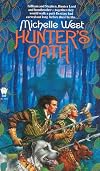
What I really love about Michelle West's writing is that she gets into each character's head so well. While a lot is still clothed in mystery, the switches in perspective shift this story from just another fantasy novel into something deeper and more epic. That very epic sense is what makes HUNTER'S OATH so dense. There were times that I had to pause, take a breath, and learn to savor the story itself.
Gilliam is a Hunter Lord; Stephen is his Huntbrother. Together, they must participate in show more the Sacred Hunt each year in order to keep Breodanir safe and bountiful, at the risk of their own lives. But it soon becomes much more than that as Stephen falls prey to the unfathomable world of magic, demon-kin, and Gods.
I suspect what many can either find fault with or relish in HUNTER'S OATH is its ability to surround you with so much that you're not sure if you're enthralled with the world... or just confused. But if you simply let go, agree to not understand every little detail - then you can let it take you on a ride that is most definitely worth reading. I found myself incredibly attached to the world, its characters, its conflicts, which was really a surprise because I never thought I'd be thrilled to be reading about hunting and dogs. But really, it's so much more than that.
I'd say, read this if you're looking to get into something interesting but also by no means an easy, sit-back-and-enjoy type of book. You'll find yourself immersed in a world wrought with intense intrigue, conflict, and sacrifice, and a mishmash of fascinating characters (time-travelers, assasins, kings, thieves) that kept me keenly interested. show less
Gilliam is a Hunter Lord; Stephen is his Huntbrother. Together, they must participate in show more the Sacred Hunt each year in order to keep Breodanir safe and bountiful, at the risk of their own lives. But it soon becomes much more than that as Stephen falls prey to the unfathomable world of magic, demon-kin, and Gods.
I suspect what many can either find fault with or relish in HUNTER'S OATH is its ability to surround you with so much that you're not sure if you're enthralled with the world... or just confused. But if you simply let go, agree to not understand every little detail - then you can let it take you on a ride that is most definitely worth reading. I found myself incredibly attached to the world, its characters, its conflicts, which was really a surprise because I never thought I'd be thrilled to be reading about hunting and dogs. But really, it's so much more than that.
I'd say, read this if you're looking to get into something interesting but also by no means an easy, sit-back-and-enjoy type of book. You'll find yourself immersed in a world wrought with intense intrigue, conflict, and sacrifice, and a mishmash of fascinating characters (time-travelers, assasins, kings, thieves) that kept me keenly interested. show less
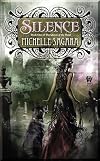
Recommended?: Highly recommended, particularly for people who love ghost stories, strong friendships, and human-shaped monsters.
Our main character, Emma, spends part of her nights walking her dog Petal (a delightfully sweet and funny Rottweiler) to the cemetery so she can sit in silence by her boyfriend’s grave. The night the book opens, Emma actually sees someone she knows, new boy Eric.
Eric isn’t alone; he’s with an old woman who gives Emma the lantern she carries, along with a show more disturbing kiss, after she realizes Emma can see her. This unwelcome touch brings unfortunate side effects: excruciating headaches, lots of nausea, and, suddenly, Emma can see and hear things no one else can.
At the heart of it, this is a pretty straightforward story: Emma can see the dead, talk to them, use them to gain power. She’s tempted by the power, mostly because she sees the ways she could use it to do good, to help the ghosts, to solve the mystery surrounding what happens to them after they die.
There are other people like her in the world, necromancers who have no qualms about taking the power for their own needs, and Eric, his pseudo-brother Chase, and the old man who trains them (plus others) hunt down necromancers and kill them.
Emma is an excellent main character and narrator. She’s loving, loyal to family and friends, and driven by her desire to do good in the world. I particularly love her friendships; this is no lone girl, different from all the other girls (ignore that bit in the description). She is different than most people because she sees ghosts, but she participates in her life, even as she mourns her father and her boyfriend. She is close with her mother, she has dear friends, and those two things are such a nice change. Female friendships forever.
Also wonderful is the lack of a love triangle, which can be done well, but so often isn’t. Here, Emma is still in love with her boyfriend, and so desperately mourning him, there is no real room in her life for a new romance. It’s not that she’ll never love again, but it would have weakened the story for her to start out mourning him, and then immediately enter into a love triangle with Eric and Chase. The way the guys are introduced could lead to that, and I braced myself, but was happily surprised when it didn’t happen. Emma convinces the boys not to kill her not because they’re flirting with her, but because of how much she loves her friends, her family, and how much she tries to do good for the ghosts.
For the most part, I enjoyed the Sagara’s writing style, but there were a couple times that the narrative became far too talky in the middle of an action scene, including one of the last big scenes at the climax. That’s not the time I should be flipping ahead, hoping for something to happen, but that’s what I did.
Emma’s group of friends are pretty wonderful (I particularly love her best friend, Allison, who is smart and funny and sweet, and the token mean girl who is actually friendly and loyal and snarky), but there are some issues surrounding Michael, who is autistic. I’m neurotypical, and would be speaking from a place of privilege, so I’m going to link instead to Ada Hoffman’s review at Disability in Kidlit, which hits the things that pinged for me, and then goes into more depth with them: Ada Hoffman’s review of SILENCE.
Quote:
This is where a lot of my misgivings about the book come from, and is complicated to talk about. I don’t want to suggest that it is somehow bad or undesirable to provide clueful help to a disabled person. Yet I think a lot of us with disabilities will feel a familiar wince at the idea of being a charity case – of being valuable, not for ourselves, but so that someone else can earn goodness points by helping us.
I really love Michael’s character, particularly the way he is with child ghosts (oh, man, could be creepy because CHILD GHOSTS, ends up surprisingly sweet), but Hoffman has an excellent discussion of his purpose in the story.
In the end, I really enjoyed SILENCE, loved the characters, and immediately purchased the next book in the series. I can’t wait to see what happens next, and to explore more of this delightfully developed world. show less
Our main character, Emma, spends part of her nights walking her dog Petal (a delightfully sweet and funny Rottweiler) to the cemetery so she can sit in silence by her boyfriend’s grave. The night the book opens, Emma actually sees someone she knows, new boy Eric.
Eric isn’t alone; he’s with an old woman who gives Emma the lantern she carries, along with a show more disturbing kiss, after she realizes Emma can see her. This unwelcome touch brings unfortunate side effects: excruciating headaches, lots of nausea, and, suddenly, Emma can see and hear things no one else can.
At the heart of it, this is a pretty straightforward story: Emma can see the dead, talk to them, use them to gain power. She’s tempted by the power, mostly because she sees the ways she could use it to do good, to help the ghosts, to solve the mystery surrounding what happens to them after they die.
There are other people like her in the world, necromancers who have no qualms about taking the power for their own needs, and Eric, his pseudo-brother Chase, and the old man who trains them (plus others) hunt down necromancers and kill them.
Emma is an excellent main character and narrator. She’s loving, loyal to family and friends, and driven by her desire to do good in the world. I particularly love her friendships; this is no lone girl, different from all the other girls (ignore that bit in the description). She is different than most people because she sees ghosts, but she participates in her life, even as she mourns her father and her boyfriend. She is close with her mother, she has dear friends, and those two things are such a nice change. Female friendships forever.
Also wonderful is the lack of a love triangle, which can be done well, but so often isn’t. Here, Emma is still in love with her boyfriend, and so desperately mourning him, there is no real room in her life for a new romance. It’s not that she’ll never love again, but it would have weakened the story for her to start out mourning him, and then immediately enter into a love triangle with Eric and Chase. The way the guys are introduced could lead to that, and I braced myself, but was happily surprised when it didn’t happen. Emma convinces the boys not to kill her not because they’re flirting with her, but because of how much she loves her friends, her family, and how much she tries to do good for the ghosts.
For the most part, I enjoyed the Sagara’s writing style, but there were a couple times that the narrative became far too talky in the middle of an action scene, including one of the last big scenes at the climax. That’s not the time I should be flipping ahead, hoping for something to happen, but that’s what I did.
Emma’s group of friends are pretty wonderful (I particularly love her best friend, Allison, who is smart and funny and sweet, and the token mean girl who is actually friendly and loyal and snarky), but there are some issues surrounding Michael, who is autistic. I’m neurotypical, and would be speaking from a place of privilege, so I’m going to link instead to Ada Hoffman’s review at Disability in Kidlit, which hits the things that pinged for me, and then goes into more depth with them: Ada Hoffman’s review of SILENCE.
Quote:
This is where a lot of my misgivings about the book come from, and is complicated to talk about. I don’t want to suggest that it is somehow bad or undesirable to provide clueful help to a disabled person. Yet I think a lot of us with disabilities will feel a familiar wince at the idea of being a charity case – of being valuable, not for ourselves, but so that someone else can earn goodness points by helping us.
I really love Michael’s character, particularly the way he is with child ghosts (oh, man, could be creepy because CHILD GHOSTS, ends up surprisingly sweet), but Hoffman has an excellent discussion of his purpose in the story.
In the end, I really enjoyed SILENCE, loved the characters, and immediately purchased the next book in the series. I can’t wait to see what happens next, and to explore more of this delightfully developed world. show less
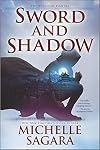
Curiouser and curiouser!
How can you not be inspired by Severn Handred’s story? His challenges and choices inspire as he journeys to the West Marshes, and on into the heart of the Green, I am reminded even more of Kaylin Nyla’s journey through the Green. I wonder how far in the past to that time this is set, and if the now experience will meld with that one.
Severn and Kaylin still have to come face to face in this series. Intriguing!
As I said before about Severn when looking at the show more first in this series, The Emperor’s Wolves, “I love the quiet energy that emenates from Severn Handred. [The Wolves tales—the Emperor’s assassins] fill in the behind the-scene gaps of the early Elantra stories. I’ve always admired and wondered about Severn. He is a gift that reveals so much, as the past, present and future are intwined. Severn’s story rounds out and strengthens the Elantra series and Private Kaylin Neya.”
Severn as a Shadow Wolf—his composure is amazing. And he will need every inch of that control in the West Marshes. Barranari Lord, An’Tellarus wishes Severn to accompany her to the Marshes. As always she keeps close council and has many balls juggling in the air at once. What we know is An’Tellarus marches to the beat of her own drum. Elluvian, the Barrani Wolf who reports directly to the Dragon Emperor must go for his own reasons. Elluvian does not trust An’Tellarus. For Severn this journey is very personal. Once again we are confirmed that honor and integrity are key elements of Severn’s personality.
I relish the insight we are given about this society where the Barranari lead almost ageless lives. That longevity has spawned a society of beings who have old memories, seemingly immortal and yet not. Their contrast with short lived humans is startling. Their children are seen as either pawns or rising adversaries. But for humans it’s different. As one human explains to Severn, “children are important to so many of us: they’re the only form of immortality we have. They’re a part of ourselves that we can leave for the future. If we can’t become people of renown, if our name itself doesn’t become significant in history, it’s our sons and daughters that remain.”
Some questions about the Barrani and the other races are answered, even as new questions arise. Questions about the importance of the West Marches and the Shadow are highlighted.
This particular title, Sword and Shadow, off shoot of the Elantra texts,The Wolves of Elantra, has it all—adventure, mystery, sensitivity and danger.
Like Alice I’m wondering where to next. Which hole (or vortex) am I going to disappear down, who will I meet, and what happens when I get there? I can hardly wait!
A Harlequin Trade ARC via NetGalley
Please note: Quotes taken from an advanced reading copy maybe subject to change show less
How can you not be inspired by Severn Handred’s story? His challenges and choices inspire as he journeys to the West Marshes, and on into the heart of the Green, I am reminded even more of Kaylin Nyla’s journey through the Green. I wonder how far in the past to that time this is set, and if the now experience will meld with that one.
Severn and Kaylin still have to come face to face in this series. Intriguing!
As I said before about Severn when looking at the show more first in this series, The Emperor’s Wolves, “I love the quiet energy that emenates from Severn Handred. [The Wolves tales—the Emperor’s assassins] fill in the behind the-scene gaps of the early Elantra stories. I’ve always admired and wondered about Severn. He is a gift that reveals so much, as the past, present and future are intwined. Severn’s story rounds out and strengthens the Elantra series and Private Kaylin Neya.”
Severn as a Shadow Wolf—his composure is amazing. And he will need every inch of that control in the West Marshes. Barranari Lord, An’Tellarus wishes Severn to accompany her to the Marshes. As always she keeps close council and has many balls juggling in the air at once. What we know is An’Tellarus marches to the beat of her own drum. Elluvian, the Barrani Wolf who reports directly to the Dragon Emperor must go for his own reasons. Elluvian does not trust An’Tellarus. For Severn this journey is very personal. Once again we are confirmed that honor and integrity are key elements of Severn’s personality.
I relish the insight we are given about this society where the Barranari lead almost ageless lives. That longevity has spawned a society of beings who have old memories, seemingly immortal and yet not. Their contrast with short lived humans is startling. Their children are seen as either pawns or rising adversaries. But for humans it’s different. As one human explains to Severn, “children are important to so many of us: they’re the only form of immortality we have. They’re a part of ourselves that we can leave for the future. If we can’t become people of renown, if our name itself doesn’t become significant in history, it’s our sons and daughters that remain.”
Some questions about the Barrani and the other races are answered, even as new questions arise. Questions about the importance of the West Marches and the Shadow are highlighted.
This particular title, Sword and Shadow, off shoot of the Elantra texts,The Wolves of Elantra, has it all—adventure, mystery, sensitivity and danger.
Like Alice I’m wondering where to next. Which hole (or vortex) am I going to disappear down, who will I meet, and what happens when I get there? I can hardly wait!
A Harlequin Trade ARC via NetGalley
Please note: Quotes taken from an advanced reading copy maybe subject to change show less
Gilliam is a Hunter Lord; Stephen is his huntbrother. Together, they hunt in the forests of their God, but in return, their God demands the chance to devour one Hunter Lord each year. And he's one of the good Gods.
Hunter's Oath is several different novels spliced together. The first novel is full of generic mythological gods and evil demons who laugh manically as they plot to destroy humanity. This novel is boring. The second novel is a trash-epic fantasy about adopted orphans and castles show more and psychic dog packs and wizards and unsophisticated court politics. This novel is thoughtless but satisfying: the intellectual equivalent of spraying EZ-CHEEZ straight into your mouth. The third novel is the disjointed account of a young woman driven to hop-scotch through time, never sure where she will arrive or what she will be forced to do. And this novel is interesting, if jarring: despite acting as an omnipotent deus ex machina for the other characters, Evayne has no control over her travels and no way to change the terrible history she must visit again and again.
If Evayne's third of Hunter's Oath is awkwardly executed, it's at least intriguing. Not so the other two thirds. The generic fantasy bilge is just white noise to be skimmed, but the third with Hunter's Oath's ostensible protagonist, Stephen of Elseth, is more problematic. The tragic paradox driving all of the novel's events is that the Hunter Lords and huntbrothers have great power and freedom in Breodanir -- but at the cost of sacrificing one of their members each year to their God. As you may imagine, this really harshes the Breodani's buzz. So, large swaths of the novel are dedicated to the Breodani bemoaning their fate and their dead fathers/brothers/sons and thinking unkind thoughts about their hungry God et cetera. Which is weird but okay -- it's strange that the Breodani have so many self-doubts about their inculcated culture of human sacrifice, but as their society is consistently portrayed as self-flagellating, I will accept it without too much thought. But. The reason the Breodani put up with their rapacious God is (ostensibly) the great fringe benefits: the land is fertile, the feudal estates are at peace, and all the ruling Hunter Lords get to hunt the rest of the year with their psychic dog packs. Breodani society is built around the hunt.
But. Our Hero Stephen doesn't particularly like hunting: he would rather read books than hunt with Gilliam, and he feels no great connection to Gilliam's hunting pack. Stephen is the reader's main point of view, and he's just not interested in hunting, which flies in the face of both his background, his relationship with Gilliam, and his society. And this disinterest fatally undermines the book, because how can the reader emphasize with the Breodani's (much bemoaned) sacrifice if they can't understand the (tepidly endorsed) benefits? show less
Hunter's Oath is several different novels spliced together. The first novel is full of generic mythological gods and evil demons who laugh manically as they plot to destroy humanity. This novel is boring. The second novel is a trash-epic fantasy about adopted orphans and castles show more and psychic dog packs and wizards and unsophisticated court politics. This novel is thoughtless but satisfying: the intellectual equivalent of spraying EZ-CHEEZ straight into your mouth. The third novel is the disjointed account of a young woman driven to hop-scotch through time, never sure where she will arrive or what she will be forced to do. And this novel is interesting, if jarring: despite acting as an omnipotent deus ex machina for the other characters, Evayne has no control over her travels and no way to change the terrible history she must visit again and again.
If Evayne's third of Hunter's Oath is awkwardly executed, it's at least intriguing. Not so the other two thirds. The generic fantasy bilge is just white noise to be skimmed, but the third with Hunter's Oath's ostensible protagonist, Stephen of Elseth, is more problematic. The tragic paradox driving all of the novel's events is that the Hunter Lords and huntbrothers have great power and freedom in Breodanir -- but at the cost of sacrificing one of their members each year to their God. As you may imagine, this really harshes the Breodani's buzz. So, large swaths of the novel are dedicated to the Breodani bemoaning their fate and their dead fathers/brothers/sons and thinking unkind thoughts about their hungry God et cetera. Which is weird but okay -- it's strange that the Breodani have so many self-doubts about their inculcated culture of human sacrifice, but as their society is consistently portrayed as self-flagellating, I will accept it without too much thought. But. The reason the Breodani put up with their rapacious God is (ostensibly) the great fringe benefits: the land is fertile, the feudal estates are at peace, and all the ruling Hunter Lords get to hunt the rest of the year with their psychic dog packs. Breodani society is built around the hunt.
But. Our Hero Stephen doesn't particularly like hunting: he would rather read books than hunt with Gilliam, and he feels no great connection to Gilliam's hunting pack. Stephen is the reader's main point of view, and he's just not interested in hunting, which flies in the face of both his background, his relationship with Gilliam, and his society. And this disinterest fatally undermines the book, because how can the reader emphasize with the Breodani's (much bemoaned) sacrifice if they can't understand the (tepidly endorsed) benefits? show less
Lists
Overdue Podcast (1)
Best Fantasy Novels (15)
Awards


You May Also Like


Associated Authors
Statistics
- Works
- 90
- Also by
- 76
- Members
- 15,247
- Popularity
- #1,496
- Rating
- 3.9
- Reviews
- 408
- ISBNs
- 246
- Languages
- 3
- Favorited
- 14