
Tyehimba Jess
Author of Olio
About the Author
Tyehimba Jess received a bachelor's degree from the University of Chicago and a master's degree in fine arts from New York University. He is a poet. His books include leadbelly and Olio, which won the Pulitzer Prize for poetry in 2017. (Bowker Author Biography)
Works by Tyehimba Jess
Associated Works
African American Poetry: 250 Years of Struggle and Song (2020) — Contributor — 232 copies, 4 reviews
This Is the Honey: An Anthology of Contemporary Black Poets (2024) — Contributor — 66 copies, 1 review
Respect the Mic: Celebrating 20 Years of Poetry from a Chicagoland High School (2022) — Foreword — 32 copies, 1 review
Gathering Ground: A Reader Celebrating Cave Canem's First Decade (2006) — Contributor — 30 copies, 1 review
Brown Sugar 4: Secret Desires - A Collection of Erotic Black Fiction (2005) — Contributor — 16 copies
Tagged
Common Knowledge
- Gender
- male
- Occupations
- poet
- Awards and honors
- Whiting Writers' Award (2006)
Members
Reviews
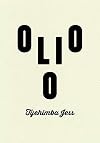
[Olio], the 2017 winner of the Pulitzer Prize for Poetry by [[Tyhimba Jess]], is an amazing piece of work. "Olio" has been defined as "a miscellaneous collection of things" and "a variety act or show", and Jess has given us a collection that is both a history of black oppression and undaunted expression in this country, and a poetic variety show that pulls together many different voices into a cohesive whole. It isn't often I read something and say, "How in the world did he/she do that", but show more I'm saying it here. The product of many years' work by this poet, it is underpinned by prodigious research, and shows a graceful hand with a panoply of different expressive forms.
One facet many readers might overlook: he has collected the names of black churches, and the dates they burned, before and after the "Jubilee" poems, a frame of anguish for each. The timeline at the end of the book is similarly a record of horror and shame - e.g. the number of black lynchings per year, lasting longer than one can believe - and of wonder, as black leaders and creators are born and make their mark. Well worth reading, apart from the stories told in the book.
I haven't been a fan of two column poems, with a separate poem in each column, and the intention that the two mix and create a greater meaning. The simple reason: they don't often work well. But I'm a fan of [[Jess]]'s. He makes it seem easy, does it surprisingly well many times in the book. One example is this excerpt from "Mark Twain v. Blind Tom". The first column is quoted from Twain's1869 letters to the San Francisco Chronicle, and the second is one of Jess's takes on the black master piano player Blind Tom (1849 - 1908) (sorry I can't get them to separate in a free form post)::
Some archangel I'm sent from above-
cast out of upper heaven like rain on blue prayers.
like another Satan blessed with Gabriel's lost notes, I
inhabits this coarse casket;can see up to God's throne, yes
and he comforts himself while he plays this soul
and makes his prison of flesh free - makes me
beautiful with the music of piano, the
thoughts and breath and
dreams and burn in the
memories of stormcloud's roar
another time when sound called up
and another existence first made me whole
that fire sounds like love.
We get minstrel ("coon") shows, operas, interviews, biographies, and more. We learn about Blind Tom, Blind Boone, Sisseretta Jones, and the Jubilee singers. We even get poems that play off of some of [[John Berrryman]]'s [Dream Songs] (which I love) and his character Henry, and are beautifully, starkly, handled.
There's an ongoing series of real life interviews of people who knew ragtime composer Scott Joplin by a Pullman Porter who traveled the country and revered him. The concluding interview with Joplin's wife Lottie, a successful property owner, is so, so good. Here's an excerpt from that, in which she explains that "most men {are} afraid to be afraid", and that they need to learn to "tame fear like a woman tames fear":
"A woman knows fear from the beginning - what she has to look forward to is fear. We're told to fear the pain of birthing, and we keep on making the world come out of us. Told to fear a man's hand when he's angry, and we keep on saying truth that turn men into fists. Told to fear being a woman, 'cause it means we only get half the credit for twice the job - and we go ahead and hunch it up anyway. Told to fear loving a man because it'll break us in two, and then we go ahead and love a man so hard it's enough for a dozen. We're told we can't get what a man has, and we go on ahead and squeeze it out the world's grip."
There's more, much more, from Lottie Joplin, who testifies that "fear is a devil's liar."
The story, in poems, of sculptor Edmonia Lewis, betrayed by white "friends" at Oberlin College, but going on to success in Italy, is heart-wrenching, as is, to be honest, story after story in this collection. But this book is beautifully written and presented, and it's a remarkable tribute to all those mentioned.
Turn of the century black musicians are featured in much of it, but other lives are explored, like those of two sideshow conjoined twins, and others who have physical disabilities (via Jess, Blind Boone is grateful for his: “Bless the fever, for it gave me sight" . . . "from my darkness, you shall see light"). While angry at the profound injustice, and for many the need to entertain racist audiences, no one is saying poor, poor pitiful me.
This song that I sing. Do you know how
twisting beauty into ugly burns?
Believe this: ain’t no way I’d take a
insult if I weren’t getting paid.
the coon song
it keeps a belly full.
This isn't an easy read, but it's hard to think of one more rewarding or more worth your time. Five stars. show less
The more I read and reread this book the more my enthusiasm grows. Tyehimba Jess is doing something truly original and innovative in poetry, explores history to make forgotten voices speak in a language that is both absolutely modern and, like geological strata, a carrier of memory. A dictionary entry that is the epigraph to the volume defines "olio" as "a: a miscellaneous mixture of heterogeneous elements; hodgepodge; b: a miscellaneous collection (as of literary or musical selections). | show more also: the second part of a minstrel show which featured a variety of performance acts and later evolved into vaudeville." To this set of meanings, the Oxford English Dictionary adds a fourth, "In a theatre: a painted curtain let down to shield the stage from the view of the audience ... in front of which comedy or variety acts are performed; a curtain behind the drops which performs the same function." The polysemy of the word "olio" hints at the ambitious scope of this book (think W.C. Williams' Paterson or Robert Duncan's Groundwork). OLIO is a book of poetry, a sideshow, an opera in five acts, a masked performance, minstrelsy; sonnet, psalm, aria, ghazal, stichomythic dialog, contrapuntal poem, calligramme, pastiche; news clipping, correspondence, interview, parapoetic exploration, broadside, ballyhoo, proclamation, advertisement; rag, blues, a capella, solo aria, a vocal duo, spiritual, worksong, syncopation, mourning song. The cover already promises a visual performance: OLIO, a near-palindrome, an invitation to multidirectional reading, is a face with its mouth Open wide as in a sOng, two round eyes slightly asquint, and a nose, funnyLI profILed, perhaps as in a mask, such as corked blackface, or a mask covering a wound or ILlness.
When a coiled thread is unwound, laid straight & split into strands, it loses its form, and the meaning that's tied up in its architecture; so to speak of this poem in linear terms is already a misreading, a misaligning. But perhaps you need to unwind it, to hear the rag rhythm slowly grind to the span of a note, to tell the many voices apart, before you can listen to it again and understand the complexity of the composition. It is no coincidence that to speak of it, I have picked musical metaphors. OLIO is a songbook, a ragbook, a history of rag music told in "first-generation freed voices" which "coalesce in counterpoint, name nemeses, summon tongue to wit-ness."
Thread 1: Julius Monroe Trotter & newly discovered interviews.
One of classic narrative techniques is to introduce the story as a long-lost manuscript of the first-person account recorded by the protagonist, rediscovered and brought to light by the narrator. Tyehimba Jess skillfully appropriates & renews this technique. He also does away with the omniscient narrator of 19th-c novels: it is up to the reader to fill in the blanks, to compose the whole. "Weave your own chosen way between these voices...", we are told. We, the readers, are key actors in the performance that is OLIO, and it's up to us whether we read it page by page, or whether we free ourselves from the imposed order of print, tear the pages out, and improvise!
Julius Monroe Trotter (whose name evokes that of William Monroe Trotter, the Boston newspaper man and civil-rights activist) is a World War I veteran, one of those men fortunate enough to survive but unlucky to have been disfigured by a close encounter with a shrapnel (or as Trotter puts it, to have found himself "at the wrong end of Mauser curiosity"). His face is covered by a mask. On the website of the Smithsonian, Caroline Alexander has an informative article called "Faces of War", where we learn that such face masks were "fashioned of galvanized copper one thirty-second of an inch thick—or ... 'the thinness of a visiting card.' Depending upon whether it covered the entire face, or as was often the case, only the upper or lower half, the mask weighed between four and nine ounces and was generally held on by spectacles. The greatest artistic challenge lay in painting the metallic surface the color of skin." (http://www.smithsonianmag.com/history/faces-of-war-145799854/?all).
Julius Monroe Trotter uses his job as a railroad worker to travel around the country and seek out any people who might have known Scott Joplin. He plans to have the interviews published in W.E.B. Du Bois' Crisis, and the set of interviews is prefaced by a letter addressed to the famed historian, editor, and civil-rights activist. Bracketing the book is another piece of correspondence, this time a letter Trotter wrote to his sister, summing his "ragtag wandering across countryside". The interviewees include Joplin's nurse, other musicians who met him, his boarder, and his widow.
These fragments not only contain some beautiful descriptions of music but manage to turn the most prosaic gesture into poetry nestled within a homely line of an interview. Listen to the nurse: "I would be wiping him down while he played rags on that invisible piano all slow motion and stiff, all herky jerky like a rusted up gadget. So far gone into his dreams he didn't know much of whoever came to visit, but knew how to find middle C, knew how to grow something in his head nobody else could hear. ... [H]e didn't play much, except when he was all feeble finger-twitching on the air, or on the table, or on the wall, or on his stretched out legs...."
Thread 2: Fisk Jubilee Singers
Fisk Jubilee Singers are an African-American a cappella group founded in 1871 at Fisk University. After a rough start, they ended up touring the United States and abroad to great acclaim. In OLIO, they are the chorus that, like in a Greek tragedy, appears on stage at intervals: their songs draw on Negro spirituals, on psalms. Sometimes these are choral performances, like the opening Fisk Jubilee Proclamation, sometimes solos by individual members of the group, and have their name as the title: "Jubilee: Isaac Dickerson (1852–1900)", "Jubilee: Maggie Porter (1853–1942)", etc. You can imagine each of these individual voices supported by the powerful hum of the whole choir. Where one voice ends, the next one picks up. The Jubilee songs are all sonnets, nearly all with identical rhyme scheme (abab cdcd efef gg). The rhymes are never identical; mostly near rhymes, eye rhymes, etc. Sometimes the rhyme structure is shifted inward. These variations, along with enjambments, differences in line length, etc., allow for the emergence of individual voices and a domination of rhythm over rhyme. Unlike the Greek chorus, which comments on the action from a position of all-seeing wisdom (akin perhaps to that of an omniscient narrator in a 19th-c novel), the Jubilee choir singers tell their own heart-wrenching stories, speak of their own struggle to freedom. Listen to "Jubilee: Jennie Jackson (1852–1910)":
Mama and us fled, hands clasped, into the light
of a Nashville dawn, running from rogue slavers.
Our presidential last name wasn't quite
enough to outshine this skin. Was never
worth much till Andrew Jackson passed on. Left
my Granddaddy George free. Then there was me,
Mama, and her washboard legacy. So she bet
my future on some university
schooling. Had no idea I'd be singin'
slave-cabin-kindled songs all 'round the world.
I've been educated on European
soil, between concerts. I bet I've traveled
more than ol' Andrew on this rambling mission
to prove how our souls are holy and human.
As singers in a choir stand next to one another, or like slaves are bound together, so the Jubilee sonnets in this book are chain-linked by their first and last lines. So, the singer who precedes Jennie Jackson ends his song with "And did she die | dreaming of our flight, hands clasped, into starlight?", and the choral that follows her solo, opens thus: "How do we prove our souls to be wholly human | when the world don't believe we have a soul?".
Each sonnet is framed, top and bottom by a list of names of churches that were burned down by arson, or otherwise sites of racial violence. The long litany of church burnings opens and closes with Mother Emmanuel AME Church in Charleston, SC, first torched in 1822, and then in June of 2015, the site of a shooting. The events themselves are not mentioned, only the names of the churches: it's up to the reader to learn more.
Like the names of the dead commemorated in a Jewish Memorbuch, the names of the churches turn the page into a stele. But with the mourning comes Jubilee, a song of suffering AND hope.
Thread 3: Rag composers, musicians, "freaks"
Not counting the Fisk Jubilee Singers, the book has eleven sections, each devoted to a rag musician, composer... What they all have in common is that they are first-generation "freed voices". The "Introduction or Cast or Owners of This Olio" at the beginning of the book (just after the Table of Contents) lists these 'dramatis personae" in alphabetical order with short bios. Already here you get a sense of the poetic power unleashed in the pages of this book. Take for example JOHN WILLIAM "BLIND" BOONE (1864–1927): "Sprung from a Yankee bugler and a newly freed mother, his sight was sacrificed to encephalitis at the age of six months. Possessed by a prodigious memory, perfect pitch, and a particular partiality to piano, from which he sees and he sees and he sees...". Hear how his "sight" [SITe] expands in "sacrificed" [S-acrif-ISTe] and then in "encephalitis" [en-S-efal-ITIS], the opening and closing consonants S - T containing more and more world within them even as the disease eats away at the eyes. This little bit of close reader is just a meager foretaste of the depth of this poetry. This is not a parlor trick or gimmick construction. This is poetry that goes down to the bone, reaches to the marrow.
The different sections -- for the lack of better word, let's call them biographical -- tell the life stories of each of the "OLIO cast" members, and each biography takes on a unique poetic form. One of my favorites is the story of HENRY "BOX" BROWN (1816–?) ("One day, he got carried away--crate-wise. Slipped from slavery by mailing himself free to Philly. Motivated abolitionists and mesmerized the British for 25 years ... returned to amaze America in 1875."). It is a pastiche (pastiche by the way, like OLIO, is defined as "hodgepodge"!) of John Berryman's Dreamsongs. Each is called a FREEDSONG, and has its own individual title. As an epigraph, there is a newsclipping, an excerpt from H.B. Brown's own writings, a handbill... To understand how Jesse rewrites Berryman here, you have to open your copy of 77 Dreamsongs and read them side by side.
So, take Dream Song 71:
“Spellbound held subtle Henry all his four
hearers in the racket of the market
with ancient signs, infamous characters,
new rhythms. On the steps he was beloved,
hours a day, by all his four, or more,
depending. And they paid him.
It was not, so, like no one listening
but critics famed & Henry’s pals or other
tellers at all
chiefly in another country. No.
He by the heart & brains & tail, because
of their love for it, had them.
Junk he said to all them open-mouthed.
Weather wóuld govern. When the monsoon spread
its floods, few came, two.
Came a day when none, though he began
in his accustomed way on the filthy steps
in a crash of waters, came.”
Excerpt From: John Berryman. “77 Dream Songs: Poems (FSG Classics).”
And then read,
"FREEDSONG: DREAM STRONG
Mr. H. Box Brown, The King of All Mesmerisers
Handbill, 1864
Spellbound held subtle Henry all his foll-
owers with the racket of his sales pitch:
his painted signs, his slave panoramas
and mesmerism. More, then less, he was beloved
for his day. His act was more and more
revenging ... still, they paid him.
He was not so tied up in befriending
his critics. Famous Henry'd railed on Southern
slavers that mauled
deeply in his mother country. So
he'd plied his heart and brains and wail. He was
cuffed with love for his freedom.
Once, he'd preached to them--all open-mouthed.
Prayed that they'd learn. Then war's monsoon spread
its blood through and through
the States. Freedom won. So, H. began
in his accustomed way toward the place he'd left.
Across the waters, he came."
The Henry Box Brown section also contains one of the original features that recur throughout the book, each time transformed: there is a foldout page to be torn out at the perforation, rolled up, this way or that way so that the printed lines can be read forwards or backwards, together or across. The text is enclosed in "speech bubbles" shaped like human heads, facing each other or away from each other, depending on how you interpret your rolled up scroll.
Another section contains Jesse's brilliant take on a ghazal: a poem in dialogic form, where the first two lines end with the same word, which then recurs at the end of the second line of each pair of couplets. Jesse turns this form into a poetic perpetuum mobile: the second couplet, as printed on the page laid flat, actually has the form of the opening verses, following the classic rules of the rhyme, but when you roll it up, the end flows into the beginning, the lines free of punctuation can be read from left to right or top to bottom, or bottom up, and right to left, diagonally. Or yet, there are different ways you can fold your page, turn it into a mobius strip, or some other shape. Experiment, improvise, or follow the non-prescriptive suggestions at the back of the book.
Coda, ... sort of:
The three threads I have tried to unwind, just barely scratch the surface. What will you *not* find here! I'd like to see this poem performed, sung, danced, with eyes open and blindfolded, torn to shreds & tossed to the wind & read as it falls. Can the reader be freed through the freedsong? That OLIO, besides being a history of rag music and a set of personal histories, is a history of the freedom struggle, of the civil rights struggle, with all the violence, lynchings, church burnings, discrimination, & suffering, is obvious enough. And the timeline established by the historical markers, spanning from 1822 to the time of writing, somewhere in the summer of 2015, indicates that that freedom struggle is far from over. But the true strength of this poem, the energy that explodes the covers of the book, that mocks any generic labels and frustrates the Dewey Decimal Classification, is in the implicit belief in poetry as a power to fashion the world. Everything hinges on ... unhinging the reader, on unsettling the habits of page-turning routine which accepts the world as is, with its predetermined hierarchy of numbered pages, on drawing the reader into the book, turning the pageturner into a composer, the book into a rag, the reading into a performance torn at the perforated lines & wound up into a yet unheard-of shape of a song. show less
When a coiled thread is unwound, laid straight & split into strands, it loses its form, and the meaning that's tied up in its architecture; so to speak of this poem in linear terms is already a misreading, a misaligning. But perhaps you need to unwind it, to hear the rag rhythm slowly grind to the span of a note, to tell the many voices apart, before you can listen to it again and understand the complexity of the composition. It is no coincidence that to speak of it, I have picked musical metaphors. OLIO is a songbook, a ragbook, a history of rag music told in "first-generation freed voices" which "coalesce in counterpoint, name nemeses, summon tongue to wit-ness."
Thread 1: Julius Monroe Trotter & newly discovered interviews.
One of classic narrative techniques is to introduce the story as a long-lost manuscript of the first-person account recorded by the protagonist, rediscovered and brought to light by the narrator. Tyehimba Jess skillfully appropriates & renews this technique. He also does away with the omniscient narrator of 19th-c novels: it is up to the reader to fill in the blanks, to compose the whole. "Weave your own chosen way between these voices...", we are told. We, the readers, are key actors in the performance that is OLIO, and it's up to us whether we read it page by page, or whether we free ourselves from the imposed order of print, tear the pages out, and improvise!
Julius Monroe Trotter (whose name evokes that of William Monroe Trotter, the Boston newspaper man and civil-rights activist) is a World War I veteran, one of those men fortunate enough to survive but unlucky to have been disfigured by a close encounter with a shrapnel (or as Trotter puts it, to have found himself "at the wrong end of Mauser curiosity"). His face is covered by a mask. On the website of the Smithsonian, Caroline Alexander has an informative article called "Faces of War", where we learn that such face masks were "fashioned of galvanized copper one thirty-second of an inch thick—or ... 'the thinness of a visiting card.' Depending upon whether it covered the entire face, or as was often the case, only the upper or lower half, the mask weighed between four and nine ounces and was generally held on by spectacles. The greatest artistic challenge lay in painting the metallic surface the color of skin." (http://www.smithsonianmag.com/history/faces-of-war-145799854/?all).
Julius Monroe Trotter uses his job as a railroad worker to travel around the country and seek out any people who might have known Scott Joplin. He plans to have the interviews published in W.E.B. Du Bois' Crisis, and the set of interviews is prefaced by a letter addressed to the famed historian, editor, and civil-rights activist. Bracketing the book is another piece of correspondence, this time a letter Trotter wrote to his sister, summing his "ragtag wandering across countryside". The interviewees include Joplin's nurse, other musicians who met him, his boarder, and his widow.
These fragments not only contain some beautiful descriptions of music but manage to turn the most prosaic gesture into poetry nestled within a homely line of an interview. Listen to the nurse: "I would be wiping him down while he played rags on that invisible piano all slow motion and stiff, all herky jerky like a rusted up gadget. So far gone into his dreams he didn't know much of whoever came to visit, but knew how to find middle C, knew how to grow something in his head nobody else could hear. ... [H]e didn't play much, except when he was all feeble finger-twitching on the air, or on the table, or on the wall, or on his stretched out legs...."
Thread 2: Fisk Jubilee Singers
Fisk Jubilee Singers are an African-American a cappella group founded in 1871 at Fisk University. After a rough start, they ended up touring the United States and abroad to great acclaim. In OLIO, they are the chorus that, like in a Greek tragedy, appears on stage at intervals: their songs draw on Negro spirituals, on psalms. Sometimes these are choral performances, like the opening Fisk Jubilee Proclamation, sometimes solos by individual members of the group, and have their name as the title: "Jubilee: Isaac Dickerson (1852–1900)", "Jubilee: Maggie Porter (1853–1942)", etc. You can imagine each of these individual voices supported by the powerful hum of the whole choir. Where one voice ends, the next one picks up. The Jubilee songs are all sonnets, nearly all with identical rhyme scheme (abab cdcd efef gg). The rhymes are never identical; mostly near rhymes, eye rhymes, etc. Sometimes the rhyme structure is shifted inward. These variations, along with enjambments, differences in line length, etc., allow for the emergence of individual voices and a domination of rhythm over rhyme. Unlike the Greek chorus, which comments on the action from a position of all-seeing wisdom (akin perhaps to that of an omniscient narrator in a 19th-c novel), the Jubilee choir singers tell their own heart-wrenching stories, speak of their own struggle to freedom. Listen to "Jubilee: Jennie Jackson (1852–1910)":
Mama and us fled, hands clasped, into the light
of a Nashville dawn, running from rogue slavers.
Our presidential last name wasn't quite
enough to outshine this skin. Was never
worth much till Andrew Jackson passed on. Left
my Granddaddy George free. Then there was me,
Mama, and her washboard legacy. So she bet
my future on some university
schooling. Had no idea I'd be singin'
slave-cabin-kindled songs all 'round the world.
I've been educated on European
soil, between concerts. I bet I've traveled
more than ol' Andrew on this rambling mission
to prove how our souls are holy and human.
As singers in a choir stand next to one another, or like slaves are bound together, so the Jubilee sonnets in this book are chain-linked by their first and last lines. So, the singer who precedes Jennie Jackson ends his song with "And did she die | dreaming of our flight, hands clasped, into starlight?", and the choral that follows her solo, opens thus: "How do we prove our souls to be wholly human | when the world don't believe we have a soul?".
Each sonnet is framed, top and bottom by a list of names of churches that were burned down by arson, or otherwise sites of racial violence. The long litany of church burnings opens and closes with Mother Emmanuel AME Church in Charleston, SC, first torched in 1822, and then in June of 2015, the site of a shooting. The events themselves are not mentioned, only the names of the churches: it's up to the reader to learn more.
Like the names of the dead commemorated in a Jewish Memorbuch, the names of the churches turn the page into a stele. But with the mourning comes Jubilee, a song of suffering AND hope.
Thread 3: Rag composers, musicians, "freaks"
Not counting the Fisk Jubilee Singers, the book has eleven sections, each devoted to a rag musician, composer... What they all have in common is that they are first-generation "freed voices". The "Introduction or Cast or Owners of This Olio" at the beginning of the book (just after the Table of Contents) lists these 'dramatis personae" in alphabetical order with short bios. Already here you get a sense of the poetic power unleashed in the pages of this book. Take for example JOHN WILLIAM "BLIND" BOONE (1864–1927): "Sprung from a Yankee bugler and a newly freed mother, his sight was sacrificed to encephalitis at the age of six months. Possessed by a prodigious memory, perfect pitch, and a particular partiality to piano, from which he sees and he sees and he sees...". Hear how his "sight" [SITe] expands in "sacrificed" [S-acrif-ISTe] and then in "encephalitis" [en-S-efal-ITIS], the opening and closing consonants S - T containing more and more world within them even as the disease eats away at the eyes. This little bit of close reader is just a meager foretaste of the depth of this poetry. This is not a parlor trick or gimmick construction. This is poetry that goes down to the bone, reaches to the marrow.
The different sections -- for the lack of better word, let's call them biographical -- tell the life stories of each of the "OLIO cast" members, and each biography takes on a unique poetic form. One of my favorites is the story of HENRY "BOX" BROWN (1816–?) ("One day, he got carried away--crate-wise. Slipped from slavery by mailing himself free to Philly. Motivated abolitionists and mesmerized the British for 25 years ... returned to amaze America in 1875."). It is a pastiche (pastiche by the way, like OLIO, is defined as "hodgepodge"!) of John Berryman's Dreamsongs. Each is called a FREEDSONG, and has its own individual title. As an epigraph, there is a newsclipping, an excerpt from H.B. Brown's own writings, a handbill... To understand how Jesse rewrites Berryman here, you have to open your copy of 77 Dreamsongs and read them side by side.
So, take Dream Song 71:
“Spellbound held subtle Henry all his four
hearers in the racket of the market
with ancient signs, infamous characters,
new rhythms. On the steps he was beloved,
hours a day, by all his four, or more,
depending. And they paid him.
It was not, so, like no one listening
but critics famed & Henry’s pals or other
tellers at all
chiefly in another country. No.
He by the heart & brains & tail, because
of their love for it, had them.
Junk he said to all them open-mouthed.
Weather wóuld govern. When the monsoon spread
its floods, few came, two.
Came a day when none, though he began
in his accustomed way on the filthy steps
in a crash of waters, came.”
Excerpt From: John Berryman. “77 Dream Songs: Poems (FSG Classics).”
And then read,
"FREEDSONG: DREAM STRONG
Mr. H. Box Brown, The King of All Mesmerisers
Handbill, 1864
Spellbound held subtle Henry all his foll-
owers with the racket of his sales pitch:
his painted signs, his slave panoramas
and mesmerism. More, then less, he was beloved
for his day. His act was more and more
revenging ... still, they paid him.
He was not so tied up in befriending
his critics. Famous Henry'd railed on Southern
slavers that mauled
deeply in his mother country. So
he'd plied his heart and brains and wail. He was
cuffed with love for his freedom.
Once, he'd preached to them--all open-mouthed.
Prayed that they'd learn. Then war's monsoon spread
its blood through and through
the States. Freedom won. So, H. began
in his accustomed way toward the place he'd left.
Across the waters, he came."
The Henry Box Brown section also contains one of the original features that recur throughout the book, each time transformed: there is a foldout page to be torn out at the perforation, rolled up, this way or that way so that the printed lines can be read forwards or backwards, together or across. The text is enclosed in "speech bubbles" shaped like human heads, facing each other or away from each other, depending on how you interpret your rolled up scroll.
Another section contains Jesse's brilliant take on a ghazal: a poem in dialogic form, where the first two lines end with the same word, which then recurs at the end of the second line of each pair of couplets. Jesse turns this form into a poetic perpetuum mobile: the second couplet, as printed on the page laid flat, actually has the form of the opening verses, following the classic rules of the rhyme, but when you roll it up, the end flows into the beginning, the lines free of punctuation can be read from left to right or top to bottom, or bottom up, and right to left, diagonally. Or yet, there are different ways you can fold your page, turn it into a mobius strip, or some other shape. Experiment, improvise, or follow the non-prescriptive suggestions at the back of the book.
Coda, ... sort of:
The three threads I have tried to unwind, just barely scratch the surface. What will you *not* find here! I'd like to see this poem performed, sung, danced, with eyes open and blindfolded, torn to shreds & tossed to the wind & read as it falls. Can the reader be freed through the freedsong? That OLIO, besides being a history of rag music and a set of personal histories, is a history of the freedom struggle, of the civil rights struggle, with all the violence, lynchings, church burnings, discrimination, & suffering, is obvious enough. And the timeline established by the historical markers, spanning from 1822 to the time of writing, somewhere in the summer of 2015, indicates that that freedom struggle is far from over. But the true strength of this poem, the energy that explodes the covers of the book, that mocks any generic labels and frustrates the Dewey Decimal Classification, is in the implicit belief in poetry as a power to fashion the world. Everything hinges on ... unhinging the reader, on unsettling the habits of page-turning routine which accepts the world as is, with its predetermined hierarchy of numbered pages, on drawing the reader into the book, turning the pageturner into a composer, the book into a rag, the reading into a performance torn at the perforated lines & wound up into a yet unheard-of shape of a song. show less
This is an amazing work of poetry, prose, drawing, and 3-D construction. Winner of the 2017 Pulitzer Prize for Poetry, it is a breathtaking exploration of African Americans' experience through the final years of slavery and "reconstruction" and Jim Crow years. Music is a main character and we hear from minstrels, conjoined twins, Scott Joplin's widow, a blind piano prodigy, and so many others....
Here is one excerpt, in the voice of John William "Blind" Boone (1864-1927), "sprung from a show more Yankee bugler and a newly freed mother, his sight was sacrificed to encephalitis at the age of six months. Possessed by a prodigious memory, perfect pitch, and a particular partiality to piano, from which he sees and he sees and he sees..."
I swear it now and I swore it then --
I'll never slave my music for no man
again. I ain't bendin over no piano
like a plow on a sharecropper's piece.
I ain't no beast bent to push ivory keys.
I'll be free as I play or I won't play at all
--I'll just play the notes inside my skull
alone in the dark where they roam
around loose. 'Cause playing like a slave,
I'd just step myself straight into
a hangman's noose.
My library copy is littered with flags and I will be purchasing this work, partly because it warrants frequent revisiting and partly because this artist deserves to have his work sitting on the shelves of the most ardent lovers of literature. show less
Here is one excerpt, in the voice of John William "Blind" Boone (1864-1927), "sprung from a show more Yankee bugler and a newly freed mother, his sight was sacrificed to encephalitis at the age of six months. Possessed by a prodigious memory, perfect pitch, and a particular partiality to piano, from which he sees and he sees and he sees..."
I swear it now and I swore it then --
I'll never slave my music for no man
again. I ain't bendin over no piano
like a plow on a sharecropper's piece.
I ain't no beast bent to push ivory keys.
I'll be free as I play or I won't play at all
--I'll just play the notes inside my skull
alone in the dark where they roam
around loose. 'Cause playing like a slave,
I'd just step myself straight into
a hangman's noose.
My library copy is littered with flags and I will be purchasing this work, partly because it warrants frequent revisiting and partly because this artist deserves to have his work sitting on the shelves of the most ardent lovers of literature. show less
Serendipitously read this during Black History Month. This book defies description because it is such a complex blend of art forms - poetry, drawings, historical documents, shaped verse, and other genres all brought together seamlessly to represent African-American performers from the end of the Civil War until WWI who became minstrel performers by choice or by force. According to the publisher's blurb, "Olio is an effort to understand how they met, resisted, complicated, co-opted, and show more sometimes defeated attempts to minstrelize them." This seeks to honor them and their experiences. Running throughout is the attempts by Julius Trotter to obtain information about Scott Joplin to submit to WEB DuBois' NAACP magazine, the Crisis. That's some name-dropping right there, but there are other examples of well-known people mixed in with fictional characters. It reminded me of Spoon River Anthology - in that each poem represents a character but this is much more ambitious and far-reaching. According to the frontispiece, an olio is a miscellaneous mixture of heterogeneous elements; a hodgepodge, a miscellaneous collection (as of literary or musical selections) and also the second part of a minstrel show. This book somehow represents all of these definitions. I'm always amazed and impressed when authors can envision a completely fresh presentation of material in a completely new form. Winner of the 2017 Pulitzer Prize - I can see why! show less
Awards


You May Also Like


Associated Authors
Statistics
- Works
- 7
- Also by
- 14
- Members
- 425
- Popularity
- #57,428
- Rating
- 4.4
- Reviews
- 15
- ISBNs
- 5
- Favorited
- 1