
William Glasser (1925–2013)
Author of Reality therapy
About the Author
William Glasser, who was born in Cleveland, Ohio, first earned a degree in chemical engineering from the then Case Institute of Technology and later became a psychiatrist. He found himself doubting much of the conventional psychoanalysis, in which often the patient is seen as the helpless victim of show more past traumas, and insisted that the cobwebs of the past be brushed aside and that the patient develop a plan of action for the future. Glasser's conviction that success breeds success and that failure breeds failure led him to develop his reality therapy, a remedy for people for whom conventional psychotherapy does not work and a prescription of use to people regardless of their circumstances. Glasser has also done much for and within the school system, dealing with the issues of motivation, quality in the school, and problems of delinquency. Glasser's books have been translated into many languages. He has wide experience as a psychiatrist in Los Angeles and has been a consultant to the school system there. (Bowker Author Biography) show less
Works by William Glasser
Every Student Can Succeed: Finally A Book That Explains How to reach and Teach Every Student in your School (2000) 27 copies, 2 reviews
Take Charge of Your Life: How to Get What You Need with Choice-Theory Psychology (2011) 16 copies, 1 review
The Lessons of Littleton [videorecording] : remember forever: Columbine High, April 20 1999 Part 1 1 copy
My Quality World Workbook 1 copy
Associated Works
The Mummy at the Dining Room Table: Eminent Therapists Reveal Their Most Unusual Cases (2003) — Contributor, some editions — 156 copies, 3 reviews
Favorite Counseling and Therapy Homework Assignments: Leading Therapists Share Their Most Creative Strategies (2001) — Contributor — 11 copies
Tagged
Common Knowledge
- Canonical name
- Glasser, William
- Birthdate
- 1925-05-11
- Date of death
- 2013-08-23
- Gender
- male
- Education
- Case Western Reserve University (BS|1945|MA|1949|MD|1953)
University of California, Los Angeles (residency)
Board Certified (Psychiatry 1961) - Occupations
- psychiatrist
- Organizations
- William Glasser Institute
- Short biography
- William Glasser was, quite simply, one of the most influential educators and therapists who ever lived. Beginning in the 1960s when he first develope Reality Therapy, he was among the first to develop a relatively brief methond for helping people address a wise range of personal problems, from depression and addictions to lifestyle issues.
By concentrating on the consequences of one's behavaior and the choices one makes, Glasser provided a framework for helping people move toward taking constructive action in their lives. His classic books Reality Therapy (1965), Positive Addiction (1976), Reality Therapy in Action (2000), and Counseling with Choice Therapy (2001) educated several generations of practitioners about his theory. Reality Therapy has since become so popular that Glasser Institutes have sprouted up all over the world, from Australia and Hong Kong to Russia and the Middle East. At this point, practically every therapist makes use of some aspect of his approach.
As if his contributions to therapy were not enough, Glasser was just as influential in the field of education. Through his books Schools Without Failure (1969) and The Quality School (1990), he expanded his "choice theory" to design education and discipline strategies that both empower children and make them more responsible for their behavior. He has accomplished similar goals by developing "choice theory communities" in which civic and corporate cultures are restructured in such a way as to emphasize more cooperative and self-determined actions.
Although trained originally as a psychiatrist, Glasser has spent most of his professional life working in the areas of education, counseling, addictions, organizational behavior, and public health. He has also concentrated more recently on improving marital relationships, in his books What is this Thing Called Love? (2000) and Getting Together and Staying Together (2000). Glasser was also auite active as a speaker and writer, continuing to refine his ideas and apply choice therapy to new settings. [adapted from The Mummy at the Dining Room Table, by Jeffrey A. Kottler and Jon Carlson (2004)] - Cause of death
- respiratory failure
- Nationality
- USA
- Birthplace
- Cleveland, Ohio, USA
- Places of residence
- Cleveland, Ohio, USA
Ventura, California, USA
Los Angeles, California, USA - Place of death
- Los Angeles, California, USA
- Associated Place (for map)
- California, USA
Members
Reviews
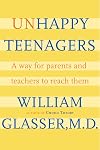
William Glasser created a kind of therapy called Choice Theory which as far as I understand it to be means you no longer argue with your teenager or anyone really, you give them a choice. All unhappiness is created by trying to externally control the people around you. When you stop trying to make people do what you want then you become closer to them emotionally and as a result they are more likely to do what you want. You cannot force anyone to do anything and if you try both parties will show more be miserable. You need to remove the seven deadly sins which are criticizing, blaming, complaining, nagging, threatening, punishing, and rewarding to control from your relationships.
Glasser goes on to present some case examples including disobedience and anorexia which illustrate how his choice theory is beneficial. One of the things that stood out to me is how Glasser points out repeatedly in the book that you should not worry if your child is not doing their homework because the public school system is inherently stacked against them. He supports a non structured school environment where a student can study anything they choose. If they don't feel like taking Algebra 1 they don't have to. One of his patients dropped out of school completely and got pregnant. That's not okay or what I want for my kid. I want her to be emotionally healthy and succeeding in school. Not one or the other. Plenty of kids do well in public school, it's not bad for everyone. He also does not seem to have hard data for how his choice theory works. He loses touch with his patients but feels that if things got worse for them he would have heard. What if he didn't hear because they killed themselves or were in jail? Glasser does not seem concerned about kids having sex or trying drugs. He advises the parents of the anorexic to not even mention food to their daughter and to stop being concerned about a situation that could kill their child. I am still somewhat confused on how you offer choices about things that could potentially ruin your child's life.
I found the book to be thought provoking and it had useful points but it also generated a lot of questions in my mind. It was short and referenced a lot of Glasser's previous books. I think if I had read his more in depth work on Choice Theory this book would have been more helpful. I did however understand enough to want to learn more about choice theory but this book was probably not the best place to start. show less
Glasser goes on to present some case examples including disobedience and anorexia which illustrate how his choice theory is beneficial. One of the things that stood out to me is how Glasser points out repeatedly in the book that you should not worry if your child is not doing their homework because the public school system is inherently stacked against them. He supports a non structured school environment where a student can study anything they choose. If they don't feel like taking Algebra 1 they don't have to. One of his patients dropped out of school completely and got pregnant. That's not okay or what I want for my kid. I want her to be emotionally healthy and succeeding in school. Not one or the other. Plenty of kids do well in public school, it's not bad for everyone. He also does not seem to have hard data for how his choice theory works. He loses touch with his patients but feels that if things got worse for them he would have heard. What if he didn't hear because they killed themselves or were in jail? Glasser does not seem concerned about kids having sex or trying drugs. He advises the parents of the anorexic to not even mention food to their daughter and to stop being concerned about a situation that could kill their child. I am still somewhat confused on how you offer choices about things that could potentially ruin your child's life.
I found the book to be thought provoking and it had useful points but it also generated a lot of questions in my mind. It was short and referenced a lot of Glasser's previous books. I think if I had read his more in depth work on Choice Theory this book would have been more helpful. I did however understand enough to want to learn more about choice theory but this book was probably not the best place to start. show less
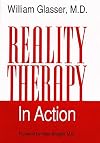
This is absolutely the best psychotherapy book I have ever read. It basically puts ownership and responsibility for a person's state of mind on the choices they make. I'm paraphrasing Glasser, but my interpretation is that we all need relationships to satisfy our basic needs, and when there is a problem in a relationship area we basically fall apart. It could be that you don't have any relationships and want them, you are scared of committing, you never had a secure relationship with a show more parent or you have harmful people in your life. Once you identify and acknowledge the relationship problem and figure out which needs aren't being met (survival, love and belonging, power, freedom, fun) you can begin to repair your mental health. Part of this is to also acknowledge that you make choices all day long that affect your level of functioning and happiness.
Glasser believes that most of the diagnoses in the psychiatric manual aren't truly mental illness. He also believes that people are over medicated. This is where his ideas are controversial. I personally agree with him but many people don't. He would argue that people don't have the willpower to put the effort in that is required to change. People want the easier and less expensive way which is medication. It's easier to treat something physiological than mental, so people and doctors convince them that their problem is out of their mental control. Glasser would argue that this keeps people on drugs that never fully work or have side effects at the expense of truly helping them change their thinking.
If you are motivated to change your thinking you should read this book. It is full of real accounts of people Glasser has worked with who had diagnoses such as OCD, schizophrenia and alcoholism. These are tough disorders to "cure," but he gives a play by play of actual therapy sessions which makes the therapeutic process easy to grasp. show less
Glasser believes that most of the diagnoses in the psychiatric manual aren't truly mental illness. He also believes that people are over medicated. This is where his ideas are controversial. I personally agree with him but many people don't. He would argue that people don't have the willpower to put the effort in that is required to change. People want the easier and less expensive way which is medication. It's easier to treat something physiological than mental, so people and doctors convince them that their problem is out of their mental control. Glasser would argue that this keeps people on drugs that never fully work or have side effects at the expense of truly helping them change their thinking.
If you are motivated to change your thinking you should read this book. It is full of real accounts of people Glasser has worked with who had diagnoses such as OCD, schizophrenia and alcoholism. These are tough disorders to "cure," but he gives a play by play of actual therapy sessions which makes the therapeutic process easy to grasp. show less
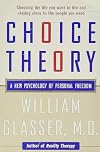
Choice Theory as created by Glasser is really extraordinary. Basically humans choose everything that we do, we are in control directly or indirectly of everything.
Hold up there, then why are so many people depressed and miserable, you ask? Well, a person would not intentionally choose to be miserable, but they may choose behaviors and thoughts that make them so. See, the way Glasser puts it (as I understand it) is to say that humans have 5 needs: 1) Love and belonging, 2) Power 3) Survival show more 4) Freedom 5) Fun (I did not place them in any order). And we behave in ways to meet those needs. So, perhaps my need for love is lower than my need for freedom, I may jeopardize relationships with people in order to maintain freedom (which could at times also make me loney and unhappy). I may have such a strong need for love and belonging that I allow myself to be in an abusive relationship--as long as the abuser meets that need (the honeymoon period after violence where the abused is told he/she is loved and that the abuse will never happen again).
Here's the deal--humans all have different levels of these needs, and we need to be sure that the people in our lives (ie: romantic relationships) have similar needs as we do...or else it might lead to problems. (Can you imagine the relationship where Person A has a low need for Freedom, but a very high need for Love....being with Person B who has a very high need for Freedom and an average need for Love? Recipe for fighting? I think so...) There is no 'right' amount needed (although he speculates that sociopaths may have a far too low need for love) by anyone, but matching up with others may prove useful.
Here's the other big part of choice theory (formerly known as control theory): you can ONLY control your OWN behavior...not the behavior of others. Let that sink in a bit. You can't make other people do what you want them to do. The girl striving to get married can't force her boyfriend to propose any more than the parent (or teacher) can force the child to do school work. We can hope they will do it, but in the end you have to decide if you want to nag and guilt people into doing what you want them to, or if you want to maintain the strong relationship with the person.
Excellent book and a great way to think about human relationships. I'd say you should read it too. show less
Hold up there, then why are so many people depressed and miserable, you ask? Well, a person would not intentionally choose to be miserable, but they may choose behaviors and thoughts that make them so. See, the way Glasser puts it (as I understand it) is to say that humans have 5 needs: 1) Love and belonging, 2) Power 3) Survival show more 4) Freedom 5) Fun (I did not place them in any order). And we behave in ways to meet those needs. So, perhaps my need for love is lower than my need for freedom, I may jeopardize relationships with people in order to maintain freedom (which could at times also make me loney and unhappy). I may have such a strong need for love and belonging that I allow myself to be in an abusive relationship--as long as the abuser meets that need (the honeymoon period after violence where the abused is told he/she is loved and that the abuse will never happen again).
Here's the deal--humans all have different levels of these needs, and we need to be sure that the people in our lives (ie: romantic relationships) have similar needs as we do...or else it might lead to problems. (Can you imagine the relationship where Person A has a low need for Freedom, but a very high need for Love....being with Person B who has a very high need for Freedom and an average need for Love? Recipe for fighting? I think so...) There is no 'right' amount needed (although he speculates that sociopaths may have a far too low need for love) by anyone, but matching up with others may prove useful.
Here's the other big part of choice theory (formerly known as control theory): you can ONLY control your OWN behavior...not the behavior of others. Let that sink in a bit. You can't make other people do what you want them to do. The girl striving to get married can't force her boyfriend to propose any more than the parent (or teacher) can force the child to do school work. We can hope they will do it, but in the end you have to decide if you want to nag and guilt people into doing what you want them to, or if you want to maintain the strong relationship with the person.
Excellent book and a great way to think about human relationships. I'd say you should read it too. show less
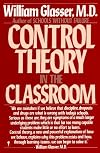
Glasser's views on education mesh with those of several other authors I admire. He agrees with Daniel Pink that people's main motivators are autonomy, mastery, and purpose (though he calls them power and importance). He agrees with Randy Pausch that learning to work as a team is just as important as learning material. The book does contain some glaring flaws. Glasser doesn't seem to understand Pavlov's theory (he says the dogs "choose" to drool); he thinks dyslexia is students being show more "creative" in order to distract adults from their failure at learning to read. Nonetheless, it's a good, quick read that got me thinking about how to use learning teams in my classroom. show less
Lists
Awards

You May Also Like


Associated Authors
Statistics
- Works
- 47
- Also by
- 2
- Members
- 2,438
- Popularity
- #10,523
- Rating
- 3.7
- Reviews
- 26
- ISBNs
- 90
- Languages
- 7
- Favorited
- 2
