
Shelagh Weir
Author of Spinning and weaving in Palestine
About the Author
Shelagh Weir is a former Curator for the Middle East at the British Museum, and is now a Research Associate at the School of Oriental and African Studies, University of London.
Image credit: Shelagh Weir
Works by Shelagh Weir
Associated Works
Tagged
Common Knowledge
Members
Reviews
When I lived in Israel I used to work for a Palestinian who had an antique shop in the Old City of Jerusalem. Most of the day I was a girl there to serve the customers, but at lunchtime I was an honorary man who ate lunch with the boys and got served by the women. It wasn't what you might call a liberated society. Still, it had its moments and one of them was that although mostly women ate what was left (and what they had eaten while preparing the food) this particularly group always let the show more women eat first, just in case they poisoned the food. Another 'moment' was being able to buy the absolutely exquisite clothes at a reasonable price.
The clothes are not constructed in the same way as Western clothes which are essentially two flat pieces with side seams. No, these are four pieces, back and front and two sides. Much roomier and they, like the long shirts of the desert, the jellabiahs, allow the air to flow upwards and circulate. The embroidery that decorates the fronts, the yokes and sides is so beautifully worked and precious that it is cut off an old dress to be applied onto a new one. I was lucky enough to own two black velvet Palestinian dresses and eventually cut the beautiful yoke off one, but its lost now, gone wherever possessions from decades past go, I don't remember where exactly.
How did I, a Jewish girl, an argumentative one at that, get on with Palestinians? Fine. I worked for them, when I was running a restaurant, I employed them and had a very nice Jewish Israeli (from his mother) and Muslim Jordanian (from his father) boyfriend. He was a lifeguard in Lake Galilee and was so freaked at being drafted into either the Israeli or Jordanian army that he got his Green Card and left me for a life in the new land of milk and honey, America.
When I got back to London I shared a flat in the West End with an Egyptian, a Palestinian and an Israeli couple who had both completed their army service, we were all in art or film college. Did we talk politics? Of course! It was all our nature. Did we agree? Yes, of course, we all wanted peace. Did we agree on how that would in reality,not in late night stoned chats, be achieved? Nah, not ever!
You know something, that whole Middle Eastern situation could probably be sorted out by young people who all had ambitions and wanted to live the good life and who weren't involved in politics as their main focus. We were just all kids together. I hope a generation sometime soon could be that way too.
(Was this review a work of fiction? No actually, it's all true). show less
The clothes are not constructed in the same way as Western clothes which are essentially two flat pieces with side seams. No, these are four pieces, back and front and two sides. Much roomier and they, like the long shirts of the desert, the jellabiahs, allow the air to flow upwards and circulate. The embroidery that decorates the fronts, the yokes and sides is so beautifully worked and precious that it is cut off an old dress to be applied onto a new one. I was lucky enough to own two black velvet Palestinian dresses and eventually cut the beautiful yoke off one, but its lost now, gone wherever possessions from decades past go, I don't remember where exactly.
How did I, a Jewish girl, an argumentative one at that, get on with Palestinians? Fine. I worked for them, when I was running a restaurant, I employed them and had a very nice Jewish Israeli (from his mother) and Muslim Jordanian (from his father) boyfriend. He was a lifeguard in Lake Galilee and was so freaked at being drafted into either the Israeli or Jordanian army that he got his Green Card and left me for a life in the new land of milk and honey, America.
When I got back to London I shared a flat in the West End with an Egyptian, a Palestinian and an Israeli couple who had both completed their army service, we were all in art or film college. Did we talk politics? Of course! It was all our nature. Did we agree? Yes, of course, we all wanted peace. Did we agree on how that would in reality,not in late night stoned chats, be achieved? Nah, not ever!
You know something, that whole Middle Eastern situation could probably be sorted out by young people who all had ambitions and wanted to live the good life and who weren't involved in politics as their main focus. We were just all kids together. I hope a generation sometime soon could be that way too.
(Was this review a work of fiction? No actually, it's all true). show less

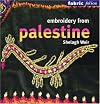
Detail color photos of embroidery on 19th & 20th c. women's thawbs, shawls, and veils. Not SCA period, but the basic shapes reflect continuity with the past, and some of the embroidered designs are possibly very old. Lovely.
Patterns and techniques of traditional clothing; lots of well-done photos.

You May Also Like


Associated Authors
Statistics
- Works
- 9
- Also by
- 1
- Members
- 233
- Popularity
- #96,931
- Rating
- 4.4
- Reviews
- 8
- ISBNs
- 18