
Ann-Ping Chin
Author of Four Sisters of Hofei: A History
About the Author
Image credit: Courtesy of the author.
Works by Ann-Ping Chin
Associated Works
The Analects (0070) — Translator, some editions; Introduction, some editions — 6,965 copies, 66 reviews
Tagged
Common Knowledge
- Canonical name
- Chin, Ann-Ping
- Birthdate
- 1950
- Gender
- female
- Education
- Michigan State University (B.S, 1972)
Columbia University (Ph.D., 1984) - Occupations
- senior lecturer (Yale University)
- Nationality
- Taiwan
China
Members
Reviews
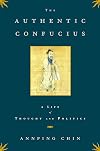
With the ascendancy of New Age religion and metaphysics, if one can even bear to grace them those names, it has been increasingly difficult to discern the scholarly from the hogwash, the learned from the those whose aimless spirits are drawn to the next universal panacea. The problem is only compounded when we see the convergence of these ideas with those in Buddhism, Hinduism, and other Asian traditions. Thankfully, Annping Chin provides us with a carefully thought out perspective, a deep show more reverence for the history of both China and Confucius' life in particular, and the much-appreciated scholarly credentials. After studying mathematics, she received her Ph.D. in Chinese Thought from Columbia, and has taught at both Wesleyan and Yale. Her husband, renowned author and sinologist Jonathan Spence, who is also at Yale, wrote one of my favorite books, "The Memory Palace of Matteo Ricci." (Incidentally, Ricci, a sixteenth-century Italian Jesuit priest, was the first to Latinize Confucius' name from the original Chinese Kung Fuzi, and would also later translate much of the Confucian corpus into Latin.)
Chin does a sublime job at contextualizing Confucius' political thought. He was born in the time commonly referred to as the Spring and Autumn period, spanning some three-and-a-half centuries, when China was in a state of existential crisis, riven by familial conflict and discord. Matters came to such a head that he spent 14 years, from 497 to 484 B. C., in exile passing from feudal state to feudal state. Only later does he return to his home state of Lu as a reluctant political advisor. In such a mess, the principle concerns of Confucius' thought make much more sense. In emphasizing the rites, customs, and social mores that he saw as the fabric of Chinese society, he thought that he could restore order, propriety, and that piety that had been lost in all of the fighting. These inherently conservative ideas (in the purest sense of the word) were utterly essential to work one's way into Chinese civil service up until the end of the Qian Dynasty, which fell in 1912 (with a moribund resurgence five years later). While that is no longer the case, the ripples of his influence are still very noticeable Chinese culture.
Chin's ability to marshal the gaps in ancient Confucian historiography is just as remarkable. Her primary sources are small in number, almost wholly limited to the Analects, the Zuo Zhuan, and Sima Qian's biography, all of which date anywhere from one hundred to five hundred years after the Confucius' death. The hagiographic nature of a lot of these materials, especially those written by his students, makes painting an accurate portrait even more difficult. Ping uses these sources not only to create a biography, but to provide illustrative vignettes that shed a lot of insight into what Confucius considered the most important in both the individual and the state.
This is a highly reliable introduction to the history, thought, and influence of Confucius, all couched nicely within the political context he was continually at odds with, and should come highly recommended for anyone interested in the historical Confucius or the history of the Warring States period. show less
Chin does a sublime job at contextualizing Confucius' political thought. He was born in the time commonly referred to as the Spring and Autumn period, spanning some three-and-a-half centuries, when China was in a state of existential crisis, riven by familial conflict and discord. Matters came to such a head that he spent 14 years, from 497 to 484 B. C., in exile passing from feudal state to feudal state. Only later does he return to his home state of Lu as a reluctant political advisor. In such a mess, the principle concerns of Confucius' thought make much more sense. In emphasizing the rites, customs, and social mores that he saw as the fabric of Chinese society, he thought that he could restore order, propriety, and that piety that had been lost in all of the fighting. These inherently conservative ideas (in the purest sense of the word) were utterly essential to work one's way into Chinese civil service up until the end of the Qian Dynasty, which fell in 1912 (with a moribund resurgence five years later). While that is no longer the case, the ripples of his influence are still very noticeable Chinese culture.
Chin's ability to marshal the gaps in ancient Confucian historiography is just as remarkable. Her primary sources are small in number, almost wholly limited to the Analects, the Zuo Zhuan, and Sima Qian's biography, all of which date anywhere from one hundred to five hundred years after the Confucius' death. The hagiographic nature of a lot of these materials, especially those written by his students, makes painting an accurate portrait even more difficult. Ping uses these sources not only to create a biography, but to provide illustrative vignettes that shed a lot of insight into what Confucius considered the most important in both the individual and the state.
This is a highly reliable introduction to the history, thought, and influence of Confucius, all couched nicely within the political context he was continually at odds with, and should come highly recommended for anyone interested in the historical Confucius or the history of the Warring States period. show less
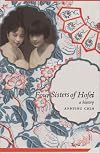
This is the biography of four sisters who were born in China between 1908 and 1914.
Their story is set amidst the tapestry of Chinese culture, Chinese history, and class.
I love how Chin wove all of those elements together. With excerpts from Chinese classics, Chinese opera, and poetry, Chin placed a subtle emphasis on culture. On the chapters focusing on the nurse-nannies and other servants, she made the lives of the serving class important as well. These elements never took over the story, show more but added great flavor, like a well-seasoned dish. show less
Their story is set amidst the tapestry of Chinese culture, Chinese history, and class.
I love how Chin wove all of those elements together. With excerpts from Chinese classics, Chinese opera, and poetry, Chin placed a subtle emphasis on culture. On the chapters focusing on the nurse-nannies and other servants, she made the lives of the serving class important as well. These elements never took over the story, show more but added great flavor, like a well-seasoned dish. show less

Although I read this book so many years ago, in 1998, before I started teaching in China, it still hold up very well. I have now been teaching in China for more than two decades and I must say I am often reminded of the transcripts in this book. This book can give you a really good idea how Chinese school-going children think, for instance there veneration of Adolf Hitler as a hero, because he achieved his goals.
I enjoyed parts of the book and many of her quotes from the Analects, but felt in the end only marginally closer to understanding who he was. Maybe that's actually closer to the truth anyway - how close can you get to understanding someone in a biography without oversimplifying. A good sign is that I want to read the Analects. Good read.
You May Also Like


Associated Authors
Statistics
- Works
- 3
- Also by
- 1
- Members
- 241
- Popularity
- #94,247
- Rating
- 3.7
- Reviews
- 8
- ISBNs
- 25
- Languages
- 7