
Sony Lab'ou Tansi (1947–1995)
Author of Life and a Half
About the Author
Works by Sony Lab'ou Tansi
Associated Works
Tagged
Common Knowledge
- Canonical name
- Sony Lab'ou Tansi
- Legal name
- Ntsoni, Marcel
- Birthdate
- 1947-07-05
- Date of death
- 1995-06-14
Brazzaville, Congo - Gender
- male
- Occupations
- teacher
writer
Member of Parliament, Republic of the Congo - Nationality
- Congo
- Birthplace
- Kinshasa, Democratic Republic of the Congo
- Place of death
- Brazzaville, Republic of the Congo
- Associated Place (for map)
- Kinshasa, Democratic Republic of the Congo
Members
Reviews
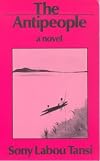
Writing these reviews calls my attn to what I haven't read. Prior to reading this I hadn't read a single bk from Africa. I've only read 1 Japanese novel. Definitely a big lack. So I decided to read this. I was attracted by the title. The description on the bk's back gives away the outline of the plot but it didn't spoil it for me.
As a person who knows African music somewhat but African literature not at all, what did I expect? Not really anything in particular but certainly NOT this. It show more reminds me of so many of my favorite novels. The beginning writing reminds me of Raymond Queneau: humorous & quirky characterization that affectionately describes the messy life of the protaganist. But it transforms in much the same way as B. Traven's "Death Ship": it starts out light-heartedly enuf but idiotic circumstances make everything progressively more grim. In that respect it's like a South American political satire. & much of the political conflict that ensues cd be South American too.
I was completely engrossed in this bk. BUT, it was strange. My copy was translated into English from French. I assume the original was in French. Perhaps that means that the author speaks French b/c of Belgian imperialism in Zaire. Perhaps the author, Sony Labou Tansi, was educated in a Belgian missionary school. Perhaps he loves the writing of Queneau. Right away, I'm reading my 1st African novel & there's colonialism rearing its ugly ass. But the writing appeals to me so much precisely b/c it's rooted in this education.
After all, what bks were written in Africa before colonialism? I cd be completely ignorant here but I'm assuming that the bk is an imported phenomena, I'm assuming that African culture was oral rather than written. If I'm right, then all African bks will be somehow a product of colonialism - immediately making them problematic for me. & yet I loved this novel. & I love literate culture - even though I 'know' that bks are often used as weapons for imperialism - ways of defining 'reality' from a distance - different from oral culture in wch the immediate presence of a story-teller humanizes. But even that changes when recordings are introduced. & I love recordings too.
Anyway, this bk had the effect of making me interested in the history & culture of Zaire & the Congo - where the novel takes place. The political situation seems hellish & brutal but the humanity of so many of the characters, the antiantipeople perhaps - or just the people, is endearing: so much love, so much decency, so much affection, so much caring.
Now I'll be seeking out African bks. Is there a genre of African bk that has less European influence? Not that I'm critical of Tansi's writing. It's beautiful. Sensitive. I just wonder if there's a type of African writing that's less urbanized. show less
As a person who knows African music somewhat but African literature not at all, what did I expect? Not really anything in particular but certainly NOT this. It show more reminds me of so many of my favorite novels. The beginning writing reminds me of Raymond Queneau: humorous & quirky characterization that affectionately describes the messy life of the protaganist. But it transforms in much the same way as B. Traven's "Death Ship": it starts out light-heartedly enuf but idiotic circumstances make everything progressively more grim. In that respect it's like a South American political satire. & much of the political conflict that ensues cd be South American too.
I was completely engrossed in this bk. BUT, it was strange. My copy was translated into English from French. I assume the original was in French. Perhaps that means that the author speaks French b/c of Belgian imperialism in Zaire. Perhaps the author, Sony Labou Tansi, was educated in a Belgian missionary school. Perhaps he loves the writing of Queneau. Right away, I'm reading my 1st African novel & there's colonialism rearing its ugly ass. But the writing appeals to me so much precisely b/c it's rooted in this education.
After all, what bks were written in Africa before colonialism? I cd be completely ignorant here but I'm assuming that the bk is an imported phenomena, I'm assuming that African culture was oral rather than written. If I'm right, then all African bks will be somehow a product of colonialism - immediately making them problematic for me. & yet I loved this novel. & I love literate culture - even though I 'know' that bks are often used as weapons for imperialism - ways of defining 'reality' from a distance - different from oral culture in wch the immediate presence of a story-teller humanizes. But even that changes when recordings are introduced. & I love recordings too.
Anyway, this bk had the effect of making me interested in the history & culture of Zaire & the Congo - where the novel takes place. The political situation seems hellish & brutal but the humanity of so many of the characters, the antiantipeople perhaps - or just the people, is endearing: so much love, so much decency, so much affection, so much caring.
Now I'll be seeking out African bks. Is there a genre of African bk that has less European influence? Not that I'm critical of Tansi's writing. It's beautiful. Sensitive. I just wonder if there's a type of African writing that's less urbanized. show less
I would love to have someone read this and explain it to me. I would also love to have someone explain to me who Tansi believed his audience to be. Translated from the French, it is so thoroughly written with the expectation that readers will understand, if not sympathize with, the situation in the Congo that the very writing was an obstacle. It’s not well-written in a first world, classic literature way. Tansi assumes much and I have no doubt I missed things because of that. The story is show more also almost ludicrously involved. So much so that I had trouble believing it, even as metaphor. And that is a major part of the problem: I think Tansi is so angry that he crams too much in and his ideas and message become impossible to follow. Dadou, the protagonist, is head of an all-girls’ school who is so impossibly attractive that most of his time is spent fighting off students intent on taking him to bed. One rejected student who becomes pregnant then commits suicide, naming him as the father (apparently in revenge for his ignoring her). He is imprisoned, escapes with the help of the student’s older sister, only for things go from bad to worse. Many things happen, some of which are even comprehensible. If the writing were clearer, if the writing were in fact better, if Tansi knew what he was trying to say and how to say it, I’d have more respect and appreciation for this book. You can find a more in-depth review with Michael Orthofer at The Complete Review. His conclusion: “Teeming with ideas, plots, events, and characters, The Antipeople is yet another African novel in which the centre does not hold. It is effective as such, convincing in its authenticity, frustration, and anger, but a more tightly-focused book would likely impress far more.” I think he’s being generous; I won’t be reading Tansi again. show less
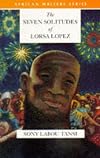
Tansi's book reads like 'Catch-22' crossed with 'One Hundred Years of Solitude'. It is a darkly comic journey through a fictional isolated town in Congo (Valancia). When a parrot reveals that Lorsa Lopez's wife has an ill-gotten dose of pubic lice, Lopez murders her, setting into motion a chain of events which result in the rise to power of the fearsome Estina Bronzario. Her battles are against the men of Valancia, as well as the influence of the Islamic capital city (Nsanga-Norda) and the show more imposition of beaurocracy. The book touches on issues such as as racial divides and male/female roles. It is a little surreal and allegorical in places, so someone (like me) with no knowledge of society or politics in the Congo can get a bit lost in places. The book is, however, brilliantly written and very, very funny. In his foreword, Tansi describes the book as 'going in search of man' and the humanity of the work shines through throughout. show less
As in the other book I've read by this Congolese author, Life and a Half, time shifts, impossible things happen, and people are pulled by the needs of their bodies. I found this one almost as confusing, just as satiric, and not quite as powerful.
The story begins in Valancia, the former capital (of the country, region?) when the murder of a woman is predicted and then happens. The police, who have to come from the inland capital town, Nsanga-Norda, never arrive -- for 47 years. After the show more woman, Estina Benta, is killed by her husband, the Lorsa Lopez of the title, lots of other bizarre things happen, including other murders and deaths, but the reader also sees the life of the community and how it struggles for its identity and power. There is a hint of global politics, because the economic life of the nation has been affected by an affront to the US, which has resulted in there being no market for its pineapple crop, and because various European scientists are examining fossils (?) in various rocks and cliffs to try to identify the ancestors of humans. To complicate matters Sony Lab'ou Tansi (a pen name) writes in a dense allusive prose, although he can often be funny.
If I step back and try to look at the themes the author is exploring, I would have to say the big ones are identity, pride, and power, or the lack of it (the coast versus inland, Valencia versus Nsanga-Norda, "Christians" versus Muslims, the responsibilities of members the Founding Line), women versus men (very strong female characters for a male writer -- the women are the heart of the book), and, love, humanity, and respect for our fellow humans. Nonetheless, I was mystified for most of the book. show less
The story begins in Valancia, the former capital (of the country, region?) when the murder of a woman is predicted and then happens. The police, who have to come from the inland capital town, Nsanga-Norda, never arrive -- for 47 years. After the show more woman, Estina Benta, is killed by her husband, the Lorsa Lopez of the title, lots of other bizarre things happen, including other murders and deaths, but the reader also sees the life of the community and how it struggles for its identity and power. There is a hint of global politics, because the economic life of the nation has been affected by an affront to the US, which has resulted in there being no market for its pineapple crop, and because various European scientists are examining fossils (?) in various rocks and cliffs to try to identify the ancestors of humans. To complicate matters Sony Lab'ou Tansi (a pen name) writes in a dense allusive prose, although he can often be funny.
If I step back and try to look at the themes the author is exploring, I would have to say the big ones are identity, pride, and power, or the lack of it (the coast versus inland, Valencia versus Nsanga-Norda, "Christians" versus Muslims, the responsibilities of members the Founding Line), women versus men (very strong female characters for a male writer -- the women are the heart of the book), and, love, humanity, and respect for our fellow humans. Nonetheless, I was mystified for most of the book. show less
Awards


You May Also Like


Associated Authors
Statistics
- Works
- 20
- Also by
- 1
- Members
- 224
- Popularity
- #100,171
- Rating
- 3.6
- Reviews
- 8
- ISBNs
- 52
- Languages
- 6
- Favorited
- 1