
Matthias Politycki
Author of Next World Novella
About the Author
Image credit: Leipziger Buchmesse 2011 - Jobst-Ulrich Brandt und Matthias Politycki By Lesekreis - Own work, CC0, https://commons.wikimedia.org/w/index.php?curid=16180612
Series
Works by Matthias Politycki
Associated Works
Tagged
Common Knowledge
- Canonical name
- Politycki, Matthias
- Birthdate
- 1955-05-20
- Gender
- male
- Occupations
- Schriftsteller
- Nationality
- Germany
- Birthplace
- Karlsruhe, Baden-Württemberg, Deutschland
- Places of residence
- München, Bayern, Deutschland
Hamburg, Hamburg, Deutschland - Associated Place (for map)
- Germany
Members
Reviews
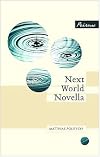
Hinrich Schepp has never wanted to be the centre of attention. Qualified to be a university lecturer and professor in his field of Ancient Chinese Language, he is content to be a research fellow. He is proud to have won the heart of the remarkable Dorothee Wilhelmine Renate, Countess von Hagelstein whilst at university. She, in turn, surrenders her career to become the plain Frau Schepp, devoted wife and mother. Yes, he is content, even more so, when his poor eyesight, which has plagued him show more all his life, is restored by laser surgery and the world takes on a new meaning for him. What was once a cloudy blur, is now bright and crystal clear.
Unfortunately, what Schepp can now see on waking this morning is his dead wife hunched over the desk where he left her editing his work the night before. True, he had often discovered her asleep in this position and shaken his head at her devotion, but there is a strange smell in the room today which he can't quite place, and now it's source is horrifyingly obvious. As he seems reluctant to let her go, Schepp reflects on how they had talked often about the after life...the next world... and Doro's dread of the huge black lake she believed the newly dead encountered as they passed over.
In a distressed and anxious state, Schepp discovers the manuscript Doro had been editing is a long forgotten, part completed story of his, and alarmingly, her comments had become scathing and personal. This leads to a story within a story and they begin to take on startling similarities to his own post operative life. Schepp starts to doubt the very fibre of his marriage. All he had believed is called in to question and we learn that Schepp himself has not been entirely truthful to his wife. There are two delicious and intriguing twists at the end of the novella which made me catch my breath.
This book was kindly sent to me for review by the publishers Peirene Press and it is the fourth of their stunning collection of European short novellas. This new addition does not disappoint and I congratulate them on their selections, which are all immaculately translated into English and so refreshing to read. show less
Unfortunately, what Schepp can now see on waking this morning is his dead wife hunched over the desk where he left her editing his work the night before. True, he had often discovered her asleep in this position and shaken his head at her devotion, but there is a strange smell in the room today which he can't quite place, and now it's source is horrifyingly obvious. As he seems reluctant to let her go, Schepp reflects on how they had talked often about the after life...the next world... and Doro's dread of the huge black lake she believed the newly dead encountered as they passed over.
In a distressed and anxious state, Schepp discovers the manuscript Doro had been editing is a long forgotten, part completed story of his, and alarmingly, her comments had become scathing and personal. This leads to a story within a story and they begin to take on startling similarities to his own post operative life. Schepp starts to doubt the very fibre of his marriage. All he had believed is called in to question and we learn that Schepp himself has not been entirely truthful to his wife. There are two delicious and intriguing twists at the end of the novella which made me catch my breath.
This book was kindly sent to me for review by the publishers Peirene Press and it is the fourth of their stunning collection of European short novellas. This new addition does not disappoint and I congratulate them on their selections, which are all immaculately translated into English and so refreshing to read. show less
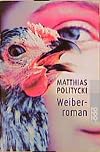
Weiberroman is a very postmodern, 1990s sort of book. The basic premise is that Gregor Schattschneider has disappeared in mysterious circumstances from the Bavarian island of Frauenchiemsee, leaving behind him the manuscript of his vast and unfinished novel-about-women, Weiberroman, in which he appears as the serially-love-lorn anti-hero. Gregor's friend, the literary scholar Eckhardt (who also appears as a character in the novel), has collated a portion of the thousands of un-ordered show more manuscript fragments and edited them for publication, and has annotated them with copious quantities of pedantic footnotes, before also disappearing in mysterious circumstances and leaving Politycki to complete the work of preparing the text for publication.
Except that practically all of these "facts" about the genesis of the text are put into question during the course of the book, with Gregor at one point hinting that it is he himself who is writing both text and footnotes, and at another accusing Eckhardt of being the author of the text, and so on. Politycki makes sure that we know we are not allowed to believe in either the stability of the text, or its authority, and that we entirely forget that the whole thing was dreamed up by Politycki! At times it feels like [Kater Murr], [Tristram Shandy] and [Pale fire] all rolled into one, and it definitely has one of the funniest bibliographies I've seen.
The novel itself is in three sections, corresponding to three of the great loves of Gregor's life (we are told that there are further unpublished fragments dealing with at least two more women). The first part, "Kristina", takes place in the early seventies, when Gregor is a teenager in a sleepy small town in Westphalia. "Tania" is set during Gregor's student days in Vienna at the end of the seventies, and "Katharina" in Stuttgart in the late eighties. Gregor appears as something like the stock heterosexual man of romantic comedy, forever falling in love with women, but totally unable to put himself in their place and work out what they might be thinking. Or to explain to them what he himself feels. The women are also, at least at first glance, stock figures: unattainable princess, dumb-blonde Playboy-model, and immaculate flight-attendant. But the narrator helps us to see beyond Gregor's tunnel vision, and we realise that the women are actually much more human and interesting than that. Which is just as well, because Gregor on his own would be a bit of a pain. Fortunately, there's plenty of comedy, both in the narrator's ability to distance himself from and laugh at Gregor-the-protagonist and in the constant sparring between the narrator and the editor, who clearly has no understanding of the concept of fiction, and constantly feels obliged to leap in with a footnote and contradict what Gregor is telling us.
Apart from the ostensible subject of the incomprehensibility of women, there's a lot more going on. One element is Politycki's mock-serious aim of establishing the cultural heritage of the "Generation of 78" — which is of course really just a way to poke fun at the self-importance of all the people who have made careers out of their activities as student rebels in 68. There are hundreds of references to contemporary events in the text (as Eckhardt can't resist pointing out, almost all of them incorrect), from Baader-Meinhoff to the fall of the Berlin wall, but the running joke is that despite being an intellectual and the protagonist of a Bildungsroman, Gregor isn't in the least interested in politics (or indeed in anything much else, apart from women, word-games, and beer). As we are reminded in the first part, he belongs to the generation that all wore parkas, blue-jeans and air-force boots to express their contempt for uniforms.
This is a very unGerman book in many ways: it's poking fun at seriousness of all kinds, culture, history, the academic establishment, Swabians, expensive cars, and above all at Schwärmerei. But it does have one very German attribute, which is sort of endearing (and which the author is aware of: he has Eckhardt mention it in his editorial postscript). It is one of the most over-engineered comic novels I've ever read. I think I might have been put off by this in the early chapters if I hadn't been drawn in by the nostalgic appeal of his description of German provincial life in the seventies, as seen by teenagers. Being of a similar age and having spent a lot of holidays with my teenage German cousins, it's all extremely recognisable! show less
Except that practically all of these "facts" about the genesis of the text are put into question during the course of the book, with Gregor at one point hinting that it is he himself who is writing both text and footnotes, and at another accusing Eckhardt of being the author of the text, and so on. Politycki makes sure that we know we are not allowed to believe in either the stability of the text, or its authority, and that we entirely forget that the whole thing was dreamed up by Politycki! At times it feels like [Kater Murr], [Tristram Shandy] and [Pale fire] all rolled into one, and it definitely has one of the funniest bibliographies I've seen.
The novel itself is in three sections, corresponding to three of the great loves of Gregor's life (we are told that there are further unpublished fragments dealing with at least two more women). The first part, "Kristina", takes place in the early seventies, when Gregor is a teenager in a sleepy small town in Westphalia. "Tania" is set during Gregor's student days in Vienna at the end of the seventies, and "Katharina" in Stuttgart in the late eighties. Gregor appears as something like the stock heterosexual man of romantic comedy, forever falling in love with women, but totally unable to put himself in their place and work out what they might be thinking. Or to explain to them what he himself feels. The women are also, at least at first glance, stock figures: unattainable princess, dumb-blonde Playboy-model, and immaculate flight-attendant. But the narrator helps us to see beyond Gregor's tunnel vision, and we realise that the women are actually much more human and interesting than that. Which is just as well, because Gregor on his own would be a bit of a pain. Fortunately, there's plenty of comedy, both in the narrator's ability to distance himself from and laugh at Gregor-the-protagonist and in the constant sparring between the narrator and the editor, who clearly has no understanding of the concept of fiction, and constantly feels obliged to leap in with a footnote and contradict what Gregor is telling us.
Apart from the ostensible subject of the incomprehensibility of women, there's a lot more going on. One element is Politycki's mock-serious aim of establishing the cultural heritage of the "Generation of 78" — which is of course really just a way to poke fun at the self-importance of all the people who have made careers out of their activities as student rebels in 68. There are hundreds of references to contemporary events in the text (as Eckhardt can't resist pointing out, almost all of them incorrect), from Baader-Meinhoff to the fall of the Berlin wall, but the running joke is that despite being an intellectual and the protagonist of a Bildungsroman, Gregor isn't in the least interested in politics (or indeed in anything much else, apart from women, word-games, and beer). As we are reminded in the first part, he belongs to the generation that all wore parkas, blue-jeans and air-force boots to express their contempt for uniforms.
This is a very unGerman book in many ways: it's poking fun at seriousness of all kinds, culture, history, the academic establishment, Swabians, expensive cars, and above all at Schwärmerei. But it does have one very German attribute, which is sort of endearing (and which the author is aware of: he has Eckhardt mention it in his editorial postscript). It is one of the most over-engineered comic novels I've ever read. I think I might have been put off by this in the early chapters if I hadn't been drawn in by the nostalgic appeal of his description of German provincial life in the seventies, as seen by teenagers. Being of a similar age and having spent a lot of holidays with my teenage German cousins, it's all extremely recognisable! show less
This is a short book translated from the German. The author, Matthias Politycki, is one of the most successful literary German authors, but he's not well known over here in Canada. I think I first read of this book on the excellent book blog Kimbofo.typepad.com. Reading books in translation from other countries is like solo travelling, without a tour group but with an invisible tour guide. We get to meet the people, meet the natives. Everything is familiar yet different, seen from an show more unfamiliar angle.
The story is about a professor, married for many years, who finds his wife dead from a stroke. As he goes through her papers and writings, he discovers that their lives weren't as he thought. Same events, different perspectives. She was editing a manuscript he had started and abandoned years earlier, and wrote copious notes in it and around it. His wife's voice finally emerges from within his own writings. He finally listens to his wife, but it is too late.
"Being dead, he thought, means first and foremost that you can’t apologise, can’t forgive and be reconciled, there’s nothing left to be forgiven, only to be forgotten. Or rather there’s nothing to be forgotten, only forgiven." The big themes - the arc of marriage, the mirages we choose to believe in, communication and misunderstanding, death -- all in a slim binding of just 138 pages. show less
The story is about a professor, married for many years, who finds his wife dead from a stroke. As he goes through her papers and writings, he discovers that their lives weren't as he thought. Same events, different perspectives. She was editing a manuscript he had started and abandoned years earlier, and wrote copious notes in it and around it. His wife's voice finally emerges from within his own writings. He finally listens to his wife, but it is too late.
"Being dead, he thought, means first and foremost that you can’t apologise, can’t forgive and be reconciled, there’s nothing left to be forgiven, only to be forgotten. Or rather there’s nothing to be forgotten, only forgiven." The big themes - the arc of marriage, the mirages we choose to believe in, communication and misunderstanding, death -- all in a slim binding of just 138 pages. show less
“Where his contemporaries succeeded, he stood aside. Luckily the details eluded him because he saw antying that was more than three to five metres away only in indistinct outline. Of course he noticed something was going on. He just didn’t let on, learned another language instead. And although at university he was at last considered a genius and quietly admired, he still always had to stand aside when the real prizes were handed out.”
What real prizes? That question becomes the theme to show more this story of Schepp and his wife Doro, two academics who teach Chinese history and whose marriage appears solid on the surface. Schepp serves as an anchor to Doro as she has a tremendous fear of death---she worries obsessively about possible afterlife scenarios. Doro, for her part, is a quiet and agreeable complement to Schepp’s genius, and they raise a family together quietly and in peace.
That is, until Schepp has eye surgery to better his eyesight. Suddenly, everything changes…quiet and peace are no longer enough: the change in his vision changes his entire outlook on life.
“It was terrible to see the world in such detail, so sharply outlined, all of a sudden! It had always been so comfortably impersonal in its remote milkiness; Schepp hadn’t felt he was missing anything. Now it dazzled him with a confusingly large number of details… Overnight life seemed like one long missed opportunity. If he had previously renounced a great deal, never complained, he was now determined to make up for it.”
The novel begins ominously, as he finds Doro dead in their study (not a spoiler, it’s stated on the back cover!). As shock sets in, he is strangely unable to take the necessary actions, and instead finds himself poring over her notes. The Doro he discovers in print was one he had never seen, although he’d lived with her for decades. Thus the concepts of sight, vision, appearance, and imagination all combine to make this a suspenseful read, from the reality of his dealing with her corpse to the mystery behind her hidden personality.
Woven into the story of this couple is another story, one that Schepp wrote in his spare time, “Marek the Drunkard”. It has its own suspense and ties in to Schepp’s life as he both writes the story and somehow unknowingly appears in it. The denouement of it, a manuscript that Schepp had kept hidden and was somehow now edited by Doro, creates confusion and another element of mystery. It begs the question, how much of a writer’s own intentions and wishes are put into their writing? How separate can a writer be from his characters? Was it a novel that he wrote, or a wish list? An alternate life?
As the terrible day of his grim discovery proceeds, a sense of anticipation builds. I found myself mentally urging him to call the coroner, to put the notes away, to get some air. Yet he’s locked into that manuscript and what she’s written…this new woman he hadn’t seen before.
“He was in such a state that he accused Doro to her face of deliberately distorting the facts, of malicious insinuation. Angrily he asked her why she always had to destroy everything, even in death! Now she had gone and spoilt even this sad day for him…”
A thought-provoking read, I wish it had been longer! In a practical sense, it made me never want to smell cut flowers again, and I certainly will make sure my pathetic short stories are password-protected. show less
What real prizes? That question becomes the theme to show more this story of Schepp and his wife Doro, two academics who teach Chinese history and whose marriage appears solid on the surface. Schepp serves as an anchor to Doro as she has a tremendous fear of death---she worries obsessively about possible afterlife scenarios. Doro, for her part, is a quiet and agreeable complement to Schepp’s genius, and they raise a family together quietly and in peace.
That is, until Schepp has eye surgery to better his eyesight. Suddenly, everything changes…quiet and peace are no longer enough: the change in his vision changes his entire outlook on life.
“It was terrible to see the world in such detail, so sharply outlined, all of a sudden! It had always been so comfortably impersonal in its remote milkiness; Schepp hadn’t felt he was missing anything. Now it dazzled him with a confusingly large number of details… Overnight life seemed like one long missed opportunity. If he had previously renounced a great deal, never complained, he was now determined to make up for it.”
The novel begins ominously, as he finds Doro dead in their study (not a spoiler, it’s stated on the back cover!). As shock sets in, he is strangely unable to take the necessary actions, and instead finds himself poring over her notes. The Doro he discovers in print was one he had never seen, although he’d lived with her for decades. Thus the concepts of sight, vision, appearance, and imagination all combine to make this a suspenseful read, from the reality of his dealing with her corpse to the mystery behind her hidden personality.
Woven into the story of this couple is another story, one that Schepp wrote in his spare time, “Marek the Drunkard”. It has its own suspense and ties in to Schepp’s life as he both writes the story and somehow unknowingly appears in it. The denouement of it, a manuscript that Schepp had kept hidden and was somehow now edited by Doro, creates confusion and another element of mystery. It begs the question, how much of a writer’s own intentions and wishes are put into their writing? How separate can a writer be from his characters? Was it a novel that he wrote, or a wish list? An alternate life?
As the terrible day of his grim discovery proceeds, a sense of anticipation builds. I found myself mentally urging him to call the coroner, to put the notes away, to get some air. Yet he’s locked into that manuscript and what she’s written…this new woman he hadn’t seen before.
“He was in such a state that he accused Doro to her face of deliberately distorting the facts, of malicious insinuation. Angrily he asked her why she always had to destroy everything, even in death! Now she had gone and spoilt even this sad day for him…”
A thought-provoking read, I wish it had been longer! In a practical sense, it made me never want to smell cut flowers again, and I certainly will make sure my pathetic short stories are password-protected. show less
Lists
Awards


You May Also Like


Associated Authors
Statistics
- Works
- 30
- Also by
- 2
- Members
- 238
- Popularity
- #95,269
- Rating
- 3.6
- Reviews
- 16
- ISBNs
- 59
- Languages
- 2
