
Adam Foulds
Author of The Quickening Maze
About the Author
Adam Foulds was born in 1974 and lives in south London. In 2001 he graduated from the Creative Writing MA at the University of East Anglia. In 2007 he won a Betty Trask Award for The Truth About These Strange Times and two years later, in 2009, his novel The Quickening Maze was shortlisted for the show more Booker Prize. (Bowker Author Biography) show less
Works by Adam Foulds
Associated Works
Tagged
Common Knowledge
- Birthdate
- 1974
- Gender
- male
- Education
- University of Oxford (St. Catherine's College ∙ BA ∙ English)
University of East Anglia (MA ∙ creative writing ∙ 2001)
Bancroft's School, Woodford Green, London, England, UK - Occupations
- novelist
poet - Awards and honors
- Granta's Best of Young British Novelists (2013)
- Relationships
- Raine, Craig (professor)
- Nationality
- UK
- Birthplace
- London, England, UK
- Associated Place (for map)
- England, UK
Members
Reviews
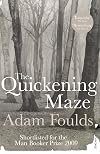
I met Adam Foulds recently at an arts festival in Kuala Lumpur and was lucky enough to do a workshop with him on creating character. I felt a bit ashamed of myself that I hadn't read this book already (especially as I usually read the Booker shortlist).
I thoroughly enjoyed this novel - the writing was gorgeous, particularly rich in details of the natural world, and had me wanting to reread passages. He has recreated a small slice of history around High Beach Asylum in Epping Forest, run by show more Dr Malcolm Allen. The poet John Clare is incarcerated there, and Alfred Tennyson is renting a cottage close by since his brother Septimus is also a patient. I had never given much thought to the men behind the poetry, but Foulds opened a window for me into their lives and I found myself wanting to read beyond his novel to find out more about them. (Honestly, did Tennyson smell?)
Foulds has so much sympathy for his characters and does so well depicting their inner lives, including the workings of madness. The narrative, which weaves together the stories of several characters is very well handled. show less
I thoroughly enjoyed this novel - the writing was gorgeous, particularly rich in details of the natural world, and had me wanting to reread passages. He has recreated a small slice of history around High Beach Asylum in Epping Forest, run by show more Dr Malcolm Allen. The poet John Clare is incarcerated there, and Alfred Tennyson is renting a cottage close by since his brother Septimus is also a patient. I had never given much thought to the men behind the poetry, but Foulds opened a window for me into their lives and I found myself wanting to read beyond his novel to find out more about them. (Honestly, did Tennyson smell?)
Foulds has so much sympathy for his characters and does so well depicting their inner lives, including the workings of madness. The narrative, which weaves together the stories of several characters is very well handled. show less
I enjoyed this. It's one of those books where nothing much happens, but everything happens. There are no obvious heroes or villains, it's stocked with people doing what people do, some of them are nicer than others, but they're all just human. Set in an asylum where John Clare, the rural poet, is locked up due to his mental instability. For someone used to walking in the open to see the far horizon, this is torture of the worst kind. It also feature his fellow inmates, the asylum's owner and show more family, Alfred Tennyson and his brother - who's in the asylum for treatment of depression (in effect - they call it melancholia) and other assorted locals.
It's written in a manner that could be seen as disjointed - you get a short chapter of an individuals actions, then move on to someone else. The separate strands start to draw together at the end, but it's not a linear narrative. If you need a plot driven book - this won't appeal - it's far more a gentle meander with snapshots of the world as you pass. The writing was, however, almost poetic in itself, lyrical would describe it.
The book has a way of making you think who is really mad here. Is it John, who thinks he is several people(although usually thinks he's only one at a time)? Is it Margaret, who thinks she's on a mission from God to save souls? Is it Matthew, who allows an idea to consume him utterly? And who gets to judge what is sanity? show less
It's written in a manner that could be seen as disjointed - you get a short chapter of an individuals actions, then move on to someone else. The separate strands start to draw together at the end, but it's not a linear narrative. If you need a plot driven book - this won't appeal - it's far more a gentle meander with snapshots of the world as you pass. The writing was, however, almost poetic in itself, lyrical would describe it.
The book has a way of making you think who is really mad here. Is it John, who thinks he is several people(although usually thinks he's only one at a time)? Is it Margaret, who thinks she's on a mission from God to save souls? Is it Matthew, who allows an idea to consume him utterly? And who gets to judge what is sanity? show less
The Broken Word: An Epic Poem of the British Empire in Kenya, and the Mau Mau Uprising Against It (Poets, Penguin) by Adam Foulds

This is a powerful and damning epic poem about the brutality inflicted by British colonialists on ordinary Kenyans and freedom fighters during the Mau Mau Uprising, also known as the Kenyan Emergency, which took place there from 1952-1960 and cost the lives of tens of thousands of Kenyans and 200 colonialists. The main character, Tom, is a British lad on the cusp of adulthood, whose father volunteers his services after members of the Mau Mau resistance group are reported to have savagely show more murdered other Kenyans who refused to take the oath to fight against the colonialists, or die in the process. Those suspected of being Mau Mau fighters are hunted down and shot like wild animals, or, worse yet, are captured, tortured and forced to work under the most inhumane conditions until they die of starvation or injury. Tom, encouraged by fellow colonialists and his family, is quickly transformed from a reluctant observer to an active participant in the worsening brutality.
As the poem closes, Tom appears to have returned to a more normal existence, as he enters university and falls in love with another student. However, we are able to glimpse the subtle behaviors and beliefs that will surely haunt Tom and those nearest to him throughout the remainder of his life.
The Broken Word won the Costa Award for Poetry in 2008 and the Somerset Maugham Award in 2009, and deservedly so. This is easily one of the best poetry collections I've read, and its deeply moving passages deserve to be read by anyone with an interest in the Kenyan independence movement. show less
As the poem closes, Tom appears to have returned to a more normal existence, as he enters university and falls in love with another student. However, we are able to glimpse the subtle behaviors and beliefs that will surely haunt Tom and those nearest to him throughout the remainder of his life.
The Broken Word won the Costa Award for Poetry in 2008 and the Somerset Maugham Award in 2009, and deservedly so. This is easily one of the best poetry collections I've read, and its deeply moving passages deserve to be read by anyone with an interest in the Kenyan independence movement. show less
‘Henry. Henry was everywhere and nowhere, shaping everything. He was the key signature in which the music of her life was played.’
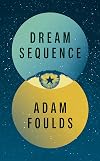
Adam Foulds’ new novel is a short (coming in at a little over 200 pages) meditation on the nature of celebrity-obsession. Henry Banks is an actor on the way up: having spent years in a successful TV period drama The Grange (I think we all know what this is an allusion to!), given the lead in a new movie by famed director Miguel Garcia, star of a west End run show more of Hamlet…. He has it all, and is dashingly good-looking to boot. Meanwhile, in Philadelphia, Kristin is newly divorced, alone, left clinging on to a Superman toy left by one of her stepsons so she wouldn’t feel lonely (again, Foulds has a delicate touch, as this subtly references later when Henry is up for a role in a Marvel superhero franchise). Kristin obsessively recalls a chance meeting with Henry in an airport the year before, and resolves to go to London to meet him again, convinced it is their destiny to be together.
Foulds sets the scene with deft touches: both characters are introduced as they set out one morning, their routines and habits subtly mirroring each other, post arriving, things to do. Their houses suggest their characters too: Kristin’s is ornately decorated, full of colour, while Henry’s Dockside apartment is all bare floors and white walls. The book switches between the 2 main characters as we get inside their heads: Henry is anxious, self-obsessed, insecure, fond of parties, drugs and one-night stands, while Kristin is unemployed, filling her days with yoga and dreaming of Henry. As the two stories start to come together the sense of the inevitable hangs over the book. Without giving away any spoilers, let’s just say it ends with an understated sense of drama and melancholy.
I thoroughly enjoyed the book, and Foulds is a wonderful writer, able to capture a mood or a description with a poet’s compactness. I found the book hovering somewhere between a tragedy and a satire; the mood is often comic (Henry’s parents are a hoot, and his father’s put downs made me laugh out loud at times). Although we are in well-trodden territory there was enough to keep the book fresh and moving along: the fish-out-of-water set piece where Henry attends a film premiere in Qatar; the ‘zoo’ of the celebrity circuit, where normality is some hyper-extension of what us mere mortals experience; the mild-mannered stalker who seemingly has no idea of just how creepy they are… Some of Foulds’ descriptions are wonderful, especially of London itself: ‘London’s surplus of faces, of human versions, every permutation, all preoccupied, unconscious, milling towards something’.
Perhaps the characters were a little too shallow (did we really learn that much about Kristin?) but I found this an interesting take on the stalker theme, with Henry being almost as self-obsessed as Kristin. The sense of fate and destiny, of playing a role, are also crucial – as is the play Hamlet which, for those familiar with it, takes on an extra level of meaning as the novel ends…. Overall, this was a pleasure to read, and Foulds’ control of the English language is a joy to behold. I definitely recommend this.
(With thanks to the publisher and NetGalley for an ARC of the book.) show less
Adam Foulds’ new novel is a short (coming in at a little over 200 pages) meditation on the nature of celebrity-obsession. Henry Banks is an actor on the way up: having spent years in a successful TV period drama The Grange (I think we all know what this is an allusion to!), given the lead in a new movie by famed director Miguel Garcia, star of a west End run show more of Hamlet…. He has it all, and is dashingly good-looking to boot. Meanwhile, in Philadelphia, Kristin is newly divorced, alone, left clinging on to a Superman toy left by one of her stepsons so she wouldn’t feel lonely (again, Foulds has a delicate touch, as this subtly references later when Henry is up for a role in a Marvel superhero franchise). Kristin obsessively recalls a chance meeting with Henry in an airport the year before, and resolves to go to London to meet him again, convinced it is their destiny to be together.
Foulds sets the scene with deft touches: both characters are introduced as they set out one morning, their routines and habits subtly mirroring each other, post arriving, things to do. Their houses suggest their characters too: Kristin’s is ornately decorated, full of colour, while Henry’s Dockside apartment is all bare floors and white walls. The book switches between the 2 main characters as we get inside their heads: Henry is anxious, self-obsessed, insecure, fond of parties, drugs and one-night stands, while Kristin is unemployed, filling her days with yoga and dreaming of Henry. As the two stories start to come together the sense of the inevitable hangs over the book. Without giving away any spoilers, let’s just say it ends with an understated sense of drama and melancholy.
I thoroughly enjoyed the book, and Foulds is a wonderful writer, able to capture a mood or a description with a poet’s compactness. I found the book hovering somewhere between a tragedy and a satire; the mood is often comic (Henry’s parents are a hoot, and his father’s put downs made me laugh out loud at times). Although we are in well-trodden territory there was enough to keep the book fresh and moving along: the fish-out-of-water set piece where Henry attends a film premiere in Qatar; the ‘zoo’ of the celebrity circuit, where normality is some hyper-extension of what us mere mortals experience; the mild-mannered stalker who seemingly has no idea of just how creepy they are… Some of Foulds’ descriptions are wonderful, especially of London itself: ‘London’s surplus of faces, of human versions, every permutation, all preoccupied, unconscious, milling towards something’.
Perhaps the characters were a little too shallow (did we really learn that much about Kristin?) but I found this an interesting take on the stalker theme, with Henry being almost as self-obsessed as Kristin. The sense of fate and destiny, of playing a role, are also crucial – as is the play Hamlet which, for those familiar with it, takes on an extra level of meaning as the novel ends…. Overall, this was a pleasure to read, and Foulds’ control of the English language is a joy to behold. I definitely recommend this.
(With thanks to the publisher and NetGalley for an ARC of the book.) show less
Lists
THE WAR ROOM (1)
Booker Prize (1)
Awards


You May Also Like


Associated Authors
Statistics
- Works
- 8
- Also by
- 9
- Members
- 1,093
- Popularity
- #23,508
- Rating
- 3.4
- Reviews
- 47
- ISBNs
- 71
- Languages
- 6