
Martin Fletcher (1) (1947–)
Author of The List: A Novel
For other authors named Martin Fletcher, see the disambiguation page.
About the Author
Martin Fletcher was born in London to Austrian parents, He is also the author of Breaking News and The List, both published by Thomas Dunne Books/St. Martin's Press. He has been a foreign correspondent for NBC News for thirty-five years, winning numerous prestigious awards, including five Emmys.
Works by Martin Fletcher
Tagged
Common Knowledge
- Birthdate
- 1947
- Gender
- male
- Education
- University of Bradford
- Occupations
- TV reporter
interpreter - Organizations
- NBC
- Nationality
- UK
- Birthplace
- London, England, UK
- Places of residence
- Tel Aviv, Israel
London, England, UK - Associated Place (for map)
- UK
Members
Reviews
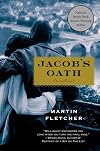
Told over the period of 3 months in 1945, it's the story of concentration camp survivor Jacob, who returns to his home town, and Sarah, who wound up in Heidelberg also. They are the only 2 jews there. As they finding housing....such as it his, and Jacob figures out how to hustle to make money, they start believing in a future. But when the SS guard who killed Jacob's brother returns to town, Jacob wants to kill him. In a twist at the ending "the rat" is indeed killed, but there are a lot of show more ethical issues raised. Are the jews German or not? What about the families that moved into their deserted home - who gets them? I'm not sure I'd stay in a country that imprisoned me in a concentration camp, but how do you find the will to start over? show less
Breaking News: A Stunning and Memorable Account of Reporting from Some of the Most Dangerous Places in the World by Martin Fletcher
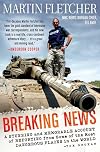
In this book, NBC foreign correspondent Martin Fletcher talks about his career in journalism, which lead to covering a number of horrific events from suicide bombers in Israel to genocide in Rwanda. Along the way, he also stops to discuss journalistic ethics (is it worse to film a dying person so that their final moments aren't peaceful or to not film them so that the world remains oblivious to suffering and does nothing to stop it?), his own family's history as Holocaust survivors -- and show more victims -- and the role this plays in his views toward the 'good guys' and 'bad guys' in each conflict he records, and the ways his field and he personally sometimes failed (like unwittingly amplifying the effects of colonialism in Somalia).
Although a little bit dated at times (e.g., a reference to Bin Laden still alive and in hiding), this book is interesting and thought-provoking. It is not for the faint of heart as Fletcher describes in some detail violent deaths that he witnessed, or reports on the experiences of those who narrowly survived horrific acts of violence. This isn't exactly a history book, although Fletcher usually provides the most relevant information; however, some readers may want to brush on their modern events knowledge before or after reading this. show less
Although a little bit dated at times (e.g., a reference to Bin Laden still alive and in hiding), this book is interesting and thought-provoking. It is not for the faint of heart as Fletcher describes in some detail violent deaths that he witnessed, or reports on the experiences of those who narrowly survived horrific acts of violence. This isn't exactly a history book, although Fletcher usually provides the most relevant information; however, some readers may want to brush on their modern events knowledge before or after reading this. show less

As someone who loves Israel, I loved this book. Fletcher combined a journalist's eye with someone who clearly loved his adopted home. This was a fast, easy read and his pace of walk and writing never dragged. I loved how mch of his focus was on the people he met and the stories they told - this book and Israel are about people, not stereotypes. I also like how he interwove the history of the Holocaust with the people he met and their stories nce they arrived in Israel. Same with the paths of show more the crusaders, and where those cities are now. A wonderful read. show less
Just weeks before Germany surrendered in April 1945, Jacob Klein's young brother, Maxie, who was suffering from typhoid, was killed by a savage Nazi guard. As Maxie died, Jacob promised him would get revenge. As he prepared to leave Bergen-Belsen, Jacob saw the guard, Rat, walking out. He was in no position to follow him or keep his promise at that time but was determined to go to Heidelberg, where they both had lived, find Rat, and kill him.
Sarah Kaufman, also from Heidelberg, promised her show more lover, whom she planned to marry, that they would meet in Heidelberg after the war if they were still alive. She survived by being hidden by good Christians only to be attacked by one of the liberating Russian soldiers.
Though it was difficult, both Jacob and Sarah met in Heidelberg, the only two Jews to have returned by the end of May. They meet and fall in love.
Jacob keeps watching out for Rat to return so he can carry out his oath. Sarah is afraid if he does so he will be caught and arrested, thus ruining any chance of them having a future together.
While neither of them are aware of it, there is a Jewish Brigade hit team targeting former SS officers.
Moral questions form a large part of the plot: Is someone from whom everything was taken guilty for stealing items to survive from people who may or may not have personally stolen from him? Was violence ever the answer? If so, what about other family members who would be directly affected by the retaliation? What should people do if those in control, in this case the liberating army, do not differentiate between the victims and the perpetrators? What would be the effect of killing a few former brutal Nazis? Are there limits to promised, hatred, love? What future is there for Jewish survivors who return to their prewar homes? The characters explain the desperate need for personal, often sexual relationships among the survivors. However, I think it was too detailed and distracted from the main story.
Martin Fletcher raise an interesting concept: "We all live with delusion...; it's our best weapon of survival. If we don't delude ourselves about ourselves, how can we live with ourselves?" It is the foundation for much of the story.
JACOB'S OATH was a well-written, fast-paced novel with and O.Henry-like ending. show less
Sarah Kaufman, also from Heidelberg, promised her show more lover, whom she planned to marry, that they would meet in Heidelberg after the war if they were still alive. She survived by being hidden by good Christians only to be attacked by one of the liberating Russian soldiers.
Though it was difficult, both Jacob and Sarah met in Heidelberg, the only two Jews to have returned by the end of May. They meet and fall in love.
Jacob keeps watching out for Rat to return so he can carry out his oath. Sarah is afraid if he does so he will be caught and arrested, thus ruining any chance of them having a future together.
While neither of them are aware of it, there is a Jewish Brigade hit team targeting former SS officers.
Moral questions form a large part of the plot: Is someone from whom everything was taken guilty for stealing items to survive from people who may or may not have personally stolen from him? Was violence ever the answer? If so, what about other family members who would be directly affected by the retaliation? What should people do if those in control, in this case the liberating army, do not differentiate between the victims and the perpetrators? What would be the effect of killing a few former brutal Nazis? Are there limits to promised, hatred, love? What future is there for Jewish survivors who return to their prewar homes? The characters explain the desperate need for personal, often sexual relationships among the survivors. However, I think it was too detailed and distracted from the main story.
Martin Fletcher raise an interesting concept: "We all live with delusion...; it's our best weapon of survival. If we don't delude ourselves about ourselves, how can we live with ourselves?" It is the foundation for much of the story.
JACOB'S OATH was a well-written, fast-paced novel with and O.Henry-like ending. show less
Awards


You May Also Like


Statistics
- Works
- 5
- Members
- 537
- Popularity
- #46,379
- Rating
- 3.7
- Reviews
- 18
- ISBNs
- 50
- Languages
- 2