
Patrícia Melo
Author of The Simple Art of Killing a Woman
About the Author
Works by Patrícia Melo
Associated Works
Tagged
Common Knowledge
- Canonical name
- Melo, Patrícia
- Other names
- Melo, Patricia
- Birthdate
- 1962-10-02
- Gender
- female
- Nationality
- Brazil
- Birthplace
- Assis, Brazil
- Associated Place (for map)
- Assis, Brazil
Members
Reviews
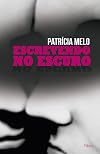
A arriscada arte de escrever no escuro demanda o cultivo de um certo gosto pelas sombras que reinam nas profundezas da alma humana. Por outro lado, só aquele que procura algo às cegas pode tatear as texturas invisíveis da superfície do mundo. Pois é na alternância entre profundidade e superfície que os contos de Patrícia Melo nos levam por breves e impactantes passeios por zonas que não costumamos enxergar na luz. Assim, travamos contato com personagens como um crítico e escritor show more frustrado que enlouquece de rancor em meio a uma feira literária; uma depiladora que escuta os segredos mais escabrosos de suas clientes, e um adoentado músico brasileiro com sede de morfina em um hospital americano. Há ainda a história de Cecilia, personagem que se rebela contra sua autora por não aceitar o destino trágico que lhe é imposto. Fazendo uso da metalinguagem e visitando diversos gêneros, mergulhando na trama ou observando-a de fora, Patrícia Melo retorce suas narrativas, apagando as luzes, para em seguida reacendê-las. E o que vemos, então, é sempre uma grata surpresa. show less
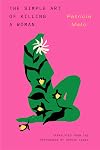
Rating: 4* of five
The Publisher Says: From best-selling Brazilian crime novelist Patrícia Melo comes a genre-defying tale of women in the Amazon and their reckoning with brutal oppression
By turns poetic, humorous, dark, and inspiring. The Simple Art of Killing a Woman vividly conjures the epidemic of femicide in Brazil, the power women can hold in the face of overwhelming male violence, the resilience of community despite state-sponsored degradation, and the potential of the jungle to save show more us all.
To escape her newly aggressive lover, a young lawyer accepts an assignment in the Amazonian border town of Cruzeiro do Sul. There, she meets Carla, a local prosecutor, and Marcos, the son of an indigenous woman, and learns about the rampant attacks on the region’s women, which have grown so commonplace that the cases quickly fill her large notebook. What she finds in the jungle is not only persistent racism, patriarchy, and deforestation, but a deep longing for answers to her enigmatic past. Through the ritual use of ayahuasca, she meets a chorus of Icamiabas, warrior women bent on vengeance―and gradually, she recovers the details of her own mother’s early death.
The Simple Art of Killing a Woman resists categorization: it is a series of prose poems lamenting the real-life women murdered by so many men in Brazil; a personal search for history, truth, and belonging; and a modern, exacting, and sometimes fantastical take on very old problems that, despite our better selves, dog us the world over.
I RECEIVED A DRC FROM THE PUBLISHER VIA EDELWEISS+. THANK YOU.
My Review: You know a book has said something profound, moving, and honest when more about fifteen hundred Goodreads reviews are very positive to four hundred profoundly negative. Goodreads ain't the Land of Woke, yet four times as many people chose to express a positive opinion of this story of violence and murder against women as bothered to bash it.
I'm praising it, too. The way Author Melo weaves magical, intensely sensual words...
...into lovely images as well as wields word-scalpels as she detachedly discusses the murder of women simply for being (or presenting as) women is brutal and effective in conveying the sickness at the heart of femicide.
It is as Author Melo has Carla say: "It doesn't matter where you are or what social class you belong to and it doesn't matter what you do for a living. It's dangerous being a woman."
From many directions, for reasons and for no reason at all, it is dangerous to be a woman.
That simple, statistically verifiable truth is really all the impetus I think you should need to get and read this book.
I couldn't offer a fifth star, as the subject matter alone merited, because the reading experience was not well-integrated; the tonal shifts were effective but were also overused. The characters aren't really developed because there is so very much to say about the reason we-the-reader are here; but that means, at times, we-the-reader don't get the real horror-movie-esque impact only the documentary, evidentiary disgust and outrage.
A story to admire, to absorb and retain lessons from; not one to follow your spouse or equivalent around, reading bits and snatches to. show less
The Publisher Says: From best-selling Brazilian crime novelist Patrícia Melo comes a genre-defying tale of women in the Amazon and their reckoning with brutal oppression
By turns poetic, humorous, dark, and inspiring. The Simple Art of Killing a Woman vividly conjures the epidemic of femicide in Brazil, the power women can hold in the face of overwhelming male violence, the resilience of community despite state-sponsored degradation, and the potential of the jungle to save show more us all.
To escape her newly aggressive lover, a young lawyer accepts an assignment in the Amazonian border town of Cruzeiro do Sul. There, she meets Carla, a local prosecutor, and Marcos, the son of an indigenous woman, and learns about the rampant attacks on the region’s women, which have grown so commonplace that the cases quickly fill her large notebook. What she finds in the jungle is not only persistent racism, patriarchy, and deforestation, but a deep longing for answers to her enigmatic past. Through the ritual use of ayahuasca, she meets a chorus of Icamiabas, warrior women bent on vengeance―and gradually, she recovers the details of her own mother’s early death.
The Simple Art of Killing a Woman resists categorization: it is a series of prose poems lamenting the real-life women murdered by so many men in Brazil; a personal search for history, truth, and belonging; and a modern, exacting, and sometimes fantastical take on very old problems that, despite our better selves, dog us the world over.
I RECEIVED A DRC FROM THE PUBLISHER VIA EDELWEISS+. THANK YOU.
My Review: You know a book has said something profound, moving, and honest when more about fifteen hundred Goodreads reviews are very positive to four hundred profoundly negative. Goodreads ain't the Land of Woke, yet four times as many people chose to express a positive opinion of this story of violence and murder against women as bothered to bash it.
I'm praising it, too. The way Author Melo weaves magical, intensely sensual words...
Death has been kind to me, I thought. I haven't been run over by a lorry. I haven't fallen to a stray bullet. I have not been hastened toward death—rather, death has only dreamed of me; it has only knocked at my door. Tap, tap, tap. "I'm thinking of coming for you tonight at nightfall," death had said.
–and–
It seemed to be raising a piece of me that had been forgotten, something stifled inside me, a piece that on coming free levered up another, and so on and so on, down to the last lost piece, the furthest fallen, as good as buried—the one called "mother."
...into lovely images as well as wields word-scalpels as she detachedly discusses the murder of women simply for being (or presenting as) women is brutal and effective in conveying the sickness at the heart of femicide.
You never imagine that a guy like this, a Wittgenstein reader and yoga fan, will hit you in the face at a lawyers’ New Year’s Eve party. But the statistics show that it happens a lot. And that lots of men don’t stop at a slap. They’d actually rather kill you.
–and–
The conclusion I reached by my second week in court was this: we women are dying like flies. You men get hammered and kill us. Men want to fuck and kill us. Men get enraged and kill us. Men want a bit of fun and kill us. Men discover our lovers and kill us. We leave them and men kill us. Men get another lover and kill us. Men come home tired after work and kill us.
It is as Author Melo has Carla say: "It doesn't matter where you are or what social class you belong to and it doesn't matter what you do for a living. It's dangerous being a woman."
From many directions, for reasons and for no reason at all, it is dangerous to be a woman.
That simple, statistically verifiable truth is really all the impetus I think you should need to get and read this book.
I couldn't offer a fifth star, as the subject matter alone merited, because the reading experience was not well-integrated; the tonal shifts were effective but were also overused. The characters aren't really developed because there is so very much to say about the reason we-the-reader are here; but that means, at times, we-the-reader don't get the real horror-movie-esque impact only the documentary, evidentiary disgust and outrage.
A story to admire, to absorb and retain lessons from; not one to follow your spouse or equivalent around, reading bits and snatches to. show less
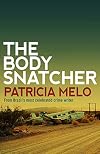
I almost didn't read this book. I picked it up at the library for the South American author square on book bingo, but then I finished two other books for that category, and the crime genre isn't really my thing. But isn't that what this challenge is about -- pushing boundaries? So, I read it.
I had a lot of feelings about this one, but then, I couldn't put it down. The main character seems to lack any kind of moral center, which of course snowballs him into a completely horrible situation show more that just seems to get worse and worse. I'm sure he'd think he didn't have any choices along the way, but as he drags more people down with him, one at a time, it becomes increasingly difficult to decide if you're rooting for him to get away with it or to end up executed on the side of some seldom-travelled road.
Some of the situations strained credulity, but really, what am I basing my expectations of Bolivian drug runners or rural Brazilian police on in the first place?
As I said, I don't read much crime fiction, so I don't know how this fares within the expectations of its genres. But different it was, and interesting. show less
I had a lot of feelings about this one, but then, I couldn't put it down. The main character seems to lack any kind of moral center, which of course snowballs him into a completely horrible situation show more that just seems to get worse and worse. I'm sure he'd think he didn't have any choices along the way, but as he drags more people down with him, one at a time, it becomes increasingly difficult to decide if you're rooting for him to get away with it or to end up executed on the side of some seldom-travelled road.
Some of the situations strained credulity, but really, what am I basing my expectations of Bolivian drug runners or rural Brazilian police on in the first place?
As I said, I don't read much crime fiction, so I don't know how this fares within the expectations of its genres. But different it was, and interesting. show less
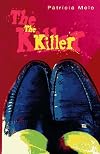
This must be the one book that the Brazil Department of Tourism hopes will forever be a flop. A young man of the streets in Sao Paolo senselessly and brutally commits his first murder, and then quickly gravitates to more killing. The reaction he gets from his neighbors is astounding to not only himself but also to the reader, but upon reflection it is understandable. There are probably lots of big messages here, but what I take out of this is a bit more mundane - there are a lot of crazies show more out there, and that guy that just cut you off or who jumped in front of you at the movie line could be one of them, someone who would give little thought to killing you in the next 60 seconds. It's a downer of a book, intriguing, I was glad to finish it. I think there's a lot of the world I'll see before heading to certain places in Brazil and South Africa (see my review of Random Violence). show less
Awards


You May Also Like


Associated Authors
Statistics
- Works
- 14
- Also by
- 1
- Members
- 503
- Popularity
- #49,234
- Rating
- 3.6
- Reviews
- 7
- ISBNs
- 107
- Languages
- 10
- Favorited
- 1