
Kapka Kassabova
Author of Border: A Journey to the Edge of Europe
About the Author
Kapka Kassabova is the author of three poetry collections, the novel Villa Pacifica, and the acclaimed memoirs Street Without a Name: Childhood and Other Misadventures in Bulgaria, and Twelve Minutes of Love: A Tango Story. She lives in Scotland.
Image credit: Portobello Books
Works by Kapka Kassabova
Associated Works
Tagged
Common Knowledge
- Canonical name
- Kassabova, Kapka
- Legal name
- Kassabova, Kapka
- Birthdate
- 1973
- Gender
- female
- Education
- French College, Sofia, Bulgaria
- Occupations
- poet
novelist
teacher (University of Strathclyde) - Nationality
- Bulgaria (birth)
- Birthplace
- Bulgaria
- Places of residence
- Edinburgh, Scotland, UK
England, UK
New Zealand
Members
Reviews

During Kapka Kassabova's childhood, Bulgaria's southern border was part of the Iron Curtain, a mysterious and deadly zone, out of bounds to everyone except border guards and a few specially vetted and supervised shepherds and foresters, a place where desperate East Germans would make futile attempts to escape to the West under the pretext of beach holidays by the Black Sea. Now it's the southern frontier of the European Union, the point where desperate people from countries like Syria are show more trying to get in.
Kassabova returns to the region to explore this border, from both sides, visiting the Strandja mountains on the Black Sea coast, the Rhodope mountains in the west, and the Thracian plain around Edirne (Adrianople) in between the two. This isn't the kind of travel book that has a lot of actual travel in it, though: she is more interested in people and their stories than in scenery or buildings, so she takes the time to stay where she is, sit in cafés, and let the locals come and talk to her. She finds out about local practices and beliefs that seem to go back a long way before Christianity and Islam (firewalking, divination, sacred springs, etc.), about smugglers, treasure-hunters and former border guards, about the region's many minority groups, and about the uncountable individual human tragedies that go with the "bigger historical picture", from the pre-WWI Balkan Wars and the Treaty of Lausanne right through to Bulgaria's forced de-islamisation programme of the late eighties and the Syrian refugee crisis that was at its height while she was researching this book.
Fascinating, and very engaging writing. The tone and emphasis are quite different, but there was a lot of overlap of interest and sympathies that made me think of Paddy Leigh Fermor's Roumeli. show less
Kassabova returns to the region to explore this border, from both sides, visiting the Strandja mountains on the Black Sea coast, the Rhodope mountains in the west, and the Thracian plain around Edirne (Adrianople) in between the two. This isn't the kind of travel book that has a lot of actual travel in it, though: she is more interested in people and their stories than in scenery or buildings, so she takes the time to stay where she is, sit in cafés, and let the locals come and talk to her. She finds out about local practices and beliefs that seem to go back a long way before Christianity and Islam (firewalking, divination, sacred springs, etc.), about smugglers, treasure-hunters and former border guards, about the region's many minority groups, and about the uncountable individual human tragedies that go with the "bigger historical picture", from the pre-WWI Balkan Wars and the Treaty of Lausanne right through to Bulgaria's forced de-islamisation programme of the late eighties and the Syrian refugee crisis that was at its height while she was researching this book.
Fascinating, and very engaging writing. The tone and emphasis are quite different, but there was a lot of overlap of interest and sympathies that made me think of Paddy Leigh Fermor's Roumeli. show less

Let me start out by saying that I absolutely loved this book. Ms. Kassabova is a staggeringly talented narrative storyteller, and her account of the history and happenings in the Bulgarian/Greek/Turkish area are informative and interesting. Her cast of locals with whom she travels and gets to know add much to the texture and depth of her book, which is well worth your time and attention. I'm pretty sure that I blew through it in three days of solid reading, as once I jumped in, I just made show more coffee and kept reading. show less
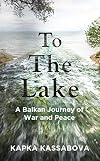
A beautifully written travelogue-cum-history-cum-family memoir about Kassabova’s return visit to Lake Ohrid after a lifetime away, narrating her coming to accept the conflicting pull of place, with memories of conflict and exile.
Lake Ohrid, Lake Prespa and Little Prespa about which she also writes are in the Balkans, Macedonia, where the borders of three countries meet: North Macedonia, Albania and Greece. Kassabova’s Grandmother came from Ohrid and it is with her and the town of Ohrid show more that Kassabova’s narrative starts, with her mother’s move to Bulgaria, where Kassabova was born. But she builds up her book with stories of other exiles, sometimes economic and sometimes refugees from war.
I knew next to nothing about this region, and the book provides a good introduction to the highly complex history of the area, as it moved from being an Ottoman province to becoming parts of three often warring nations. However that is only the necessary background of the book, which is more generally about conflict, forced exile and understanding the emotional longing to return, but also to move on.
This may sound heavy and serious, and it is, but the writing lifts up and illuminates the subject matter, making you cautiously hopeful that not all the conflict will repeat itself, in what sounds to be a beautiful place. show less
Lake Ohrid, Lake Prespa and Little Prespa about which she also writes are in the Balkans, Macedonia, where the borders of three countries meet: North Macedonia, Albania and Greece. Kassabova’s Grandmother came from Ohrid and it is with her and the town of Ohrid show more that Kassabova’s narrative starts, with her mother’s move to Bulgaria, where Kassabova was born. But she builds up her book with stories of other exiles, sometimes economic and sometimes refugees from war.
I knew next to nothing about this region, and the book provides a good introduction to the highly complex history of the area, as it moved from being an Ottoman province to becoming parts of three often warring nations. However that is only the necessary background of the book, which is more generally about conflict, forced exile and understanding the emotional longing to return, but also to move on.
This may sound heavy and serious, and it is, but the writing lifts up and illuminates the subject matter, making you cautiously hopeful that not all the conflict will repeat itself, in what sounds to be a beautiful place. show less
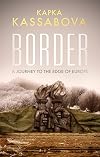
Kapka Kassabova now lives in Scotland and before that resided in New Zealand, but she was not born in these places. Twenty-five years ago she left Bulgaria as a teenager and in this book she returns to her home country. In her childhood, the border between Bulgaria, Turkey and Greece was part of the Iron Curtain. A few miles from where she played on the beach was the physical barrier, an electric fence whose sharpest barbs were directed at the real enemy; its own people. It had the show more reputation of being an easier point to cross over to the West than further North and therefore the woods and valleys crawled with soldiers and spies after those people seeking freedom.
The recent past is just a small part of the long history of this region. Kassabova travels around the region talking to border guards, fire walkers and treasure hunters as well as meeting the disposed and displaced who have made their way from Iraq and Syria. These refugees have walked away from the horrors of war with only the clothes on their back in search of freedom and a new life. There is much more to this landscape that the modern borders sit uncomfortably on top of. Peeling back the layers of past in the dense forests, she travels to springs that have deep pagan roots and are still considered to have healing qualities and visits tombs that add an ancient dimension to the land.
'It is not for everyone', Nevzat agreed, but I could see that he loved these villages. He and Mr Karadeniz resonated with the ruinous beauty of this landscape. Because they were its children.
This book is primarily about people of the region as well as the places they inhabit. Kassabova meets and speaks to the people in villages who are seeing their populations plummet and the buildings crumble around them. However, this is not just about those that live in the region; but she is prepared to share a coffee or a meal with those that are waiting before passing through to other places, shining a light on the current refugee crisis that is prompting the rise of nationalism in Europe. Most impressive though is Kassabova’s writing; it is elegant and lyrical with a beautiful haunting melancholy about it, immersing you, the reader, in the landscape. Just, quite a wonderful book really. 4.5 stars show less
The recent past is just a small part of the long history of this region. Kassabova travels around the region talking to border guards, fire walkers and treasure hunters as well as meeting the disposed and displaced who have made their way from Iraq and Syria. These refugees have walked away from the horrors of war with only the clothes on their back in search of freedom and a new life. There is much more to this landscape that the modern borders sit uncomfortably on top of. Peeling back the layers of past in the dense forests, she travels to springs that have deep pagan roots and are still considered to have healing qualities and visits tombs that add an ancient dimension to the land.
'It is not for everyone', Nevzat agreed, but I could see that he loved these villages. He and Mr Karadeniz resonated with the ruinous beauty of this landscape. Because they were its children.
This book is primarily about people of the region as well as the places they inhabit. Kassabova meets and speaks to the people in villages who are seeing their populations plummet and the buildings crumble around them. However, this is not just about those that live in the region; but she is prepared to share a coffee or a meal with those that are waiting before passing through to other places, shining a light on the current refugee crisis that is prompting the rise of nationalism in Europe. Most impressive though is Kassabova’s writing; it is elegant and lyrical with a beautiful haunting melancholy about it, immersing you, the reader, in the landscape. Just, quite a wonderful book really. 4.5 stars show less
Lists
Awards


You May Also Like


Associated Authors
Statistics
- Works
- 25
- Also by
- 3
- Members
- 882
- Popularity
- #29,045
- Rating
- 3.8
- Reviews
- 33
- ISBNs
- 80
- Languages
- 7
- Favorited
- 1