
Philip Marsden-Smedley
Author of The Crossing Place: A Journey Among the Armenians
About the Author
Disambiguation Notice:
This author already has Philip Marsden (1) aliased into it. Do not combine it with Philip Marsden.
Works by Philip Marsden-Smedley
Associated Works
Archipelago, Number Nine (Winter 2014) — Contributor — 1 copy
Archipelago: Number Twelve (Summer 2019) — Contributor — 1 copy
Tagged
Common Knowledge
- Birthdate
- 1961-05-11
- Gender
- male
- Organizations
- The Spectator
- Awards and honors
- Royal Society of Literature (Fellow)
- Short biography
- Philip Marsden also known as Philip Marsden-Smedley (born 11 May 1961, Bristol, England) is an English travel writer and novelist.
Marsden has a degree in anthropology and worked for some years for The Spectator magazine. He became a full-time writer in the late 1980s. He is a Fellow of the Royal Society of Literature. [Wikipedia] - Nationality
- UK
- Birthplace
- Bristol, Gloucestershire, England, UK
- Places of residence
- Cornwall, England, UK
- Disambiguation notice
- This author already has Philip Marsden (1) aliased into it. Do not combine it with Philip Marsden.
- Associated Place (for map)
- England, UK
Members
Reviews
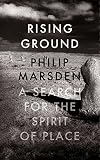
The well-known phrase of the estate agent; location, location, location; where the right spot can be very beneficial to your financial position. But in this book, Marsden is looking for something much, much deeper in meaning than that superficial statement, and what he wants to consider is the word place.
Certain places affect people in very different ways, some are what they call home, and that isn’t always where they are currently living, others are where people feel great spiritual show more meaning or significance. There are places that have a long history of ritual activity, and as he travels around places near his home in Cornwall, he starts to peel back the layers of time, even going as far back as the Mesolithic.
He visits the still visible Neolithic landscape on Bodmin Moor, and with the help of an expert learns what it may have meant to the people then. In Tintagel, home of the Arthurian legends, it is packed full of myths but very little in the way of solid evidence and yet still draws the crowds to immerse themselves in the atmosphere of the place. The granite Tors that spike the skyline on the Cornish moors have held men’s gaze for millennia. There is even evidence of bronze age stone rows on the Scilly Isles, the islands far from the end of Cornwall. Lands End too comes under his gaze, it is a more contemporary place, a focus for end to enders these days, but it is a remote place of dramatic cliffs.
It is such a lovely book to read too, not only is the prose careful and measured, almost haunting at times, but he has a way of weaving the history, the landscape and the sacred into a beautifully written book. I like the way that each chapter begins with a place name, a definition and an image to set the scene of the next location; it is a clever addition to the book to set some context.
The evocative way that he describes the landscapes makes you want to go too, absorb the atmosphere as others have done before, and contemplate the personal and real meaning of that place to you. All these places are deeply ingrained in our culture and psyche now, and as much as we have formed them, they have moulded us too. show less
Certain places affect people in very different ways, some are what they call home, and that isn’t always where they are currently living, others are where people feel great spiritual show more meaning or significance. There are places that have a long history of ritual activity, and as he travels around places near his home in Cornwall, he starts to peel back the layers of time, even going as far back as the Mesolithic.
He visits the still visible Neolithic landscape on Bodmin Moor, and with the help of an expert learns what it may have meant to the people then. In Tintagel, home of the Arthurian legends, it is packed full of myths but very little in the way of solid evidence and yet still draws the crowds to immerse themselves in the atmosphere of the place. The granite Tors that spike the skyline on the Cornish moors have held men’s gaze for millennia. There is even evidence of bronze age stone rows on the Scilly Isles, the islands far from the end of Cornwall. Lands End too comes under his gaze, it is a more contemporary place, a focus for end to enders these days, but it is a remote place of dramatic cliffs.
It is such a lovely book to read too, not only is the prose careful and measured, almost haunting at times, but he has a way of weaving the history, the landscape and the sacred into a beautifully written book. I like the way that each chapter begins with a place name, a definition and an image to set the scene of the next location; it is a clever addition to the book to set some context.
The evocative way that he describes the landscapes makes you want to go too, absorb the atmosphere as others have done before, and contemplate the personal and real meaning of that place to you. All these places are deeply ingrained in our culture and psyche now, and as much as we have formed them, they have moulded us too. show less
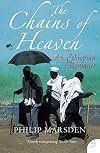
This is really an excellent book for armchair travelers. For anyone who loves reading about journeys to rarely seen places, or is interested in Ethiopian religious and monastical traditions, histories, myths and legends, this book has it all. Who wouldn’t dream of visiting Lalibela, Aksum, or the cliff top monasteries and churches of the Gheralta. Philip Marsden’s deep love and respect for Ethiopian cultures and peoples shines through throughout. Pity the poor Tigrayans, once again show more caught in the middle of a vicious civil war. show less

This 1993 work opens with the author happening on a human bone while in E Turkey. "Armenians!" explains a local shepherd, harking back to the 1915 genocide as, in an early episode of 'ethnic cleansing', the Turks turned on the Armenian population.
Marsden goes on to investigate the dispersed Armenians. Taking in various countries of the Levant, lands of Eastern Europe...and finally Armenia itself, he tries to get to the heart of this resilient and never-assimilated people.
One sees huge show more similarities with the plight of the Jewish people- years of pogroms and hostility, for no very apparent reason; finding success as merchants and businessmen; a strong identification with their culture...
It wasn't quite as fascinating as I'd hoped- Armenia is on my list of Places I Must Visit (we also have a relative who married an Armenian immigrant to UK). Nonetheless provides a starting point for some understanding of the Armenian diaspora. show less
Marsden goes on to investigate the dispersed Armenians. Taking in various countries of the Levant, lands of Eastern Europe...and finally Armenia itself, he tries to get to the heart of this resilient and never-assimilated people.
One sees huge show more similarities with the plight of the Jewish people- years of pogroms and hostility, for no very apparent reason; finding success as merchants and businessmen; a strong identification with their culture...
It wasn't quite as fascinating as I'd hoped- Armenia is on my list of Places I Must Visit (we also have a relative who married an Armenian immigrant to UK). Nonetheless provides a starting point for some understanding of the Armenian diaspora. show less
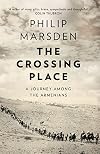
“The Crossing Place: A Journey Among the Armenians” (1993) by Philip Marsden is more difficult to define. I think it is a nice travelogue, describing Marsden’s circumvent journey through the Middle East, Turkey, then Eastern Europe, eventually ending up in Armenia, in the early 1990s. He manages largely because of his Armenian network, who help him along the way – until he actually gets to Armenia, where he is treated more suspect, every foreigner a potential Russian spy. The other show more element of the book, trying to identify what it means to be Armenian, is less convincing. He falls to often back to the 1915 genocide, for which there are better alternatives, if you want to learn about this. The book is perhaps too much of an attempt to eulogise a people who have suffered in history, no doubt, and who have been remarkably resilient, no doubt, but who may have been at times part of a conflict, too, not just the victim – something Marsden may realise at the very end of the book, only. show less
Lists
Awards


You May Also Like


Associated Authors
Statistics
- Works
- 15
- Also by
- 5
- Members
- 866
- Popularity
- #29,560
- Rating
- 3.9
- Reviews
- 31
- ISBNs
- 60
- Languages
- 4