
Phaidon Press
Author of The Art Book
About the Author
Series
Works by Phaidon Press
Century: One Hundred Years of Human Progress, Regression, Suffering and Hope (1999) 682 copies, 3 reviews
30,000 Years of Art: The Story of Human Creativity Across Time and Space (2007) 416 copies, 5 reviews
Creamier: Contemporary Art in Culture: 10 Curators, 100 Contemporary Artists, 10 Sources (2010) 41 copies, 1 review
Interiors - The Greatest Rooms of the Century (Velvet Cover Color is Merlot Red, 1 of 4 available colors – see below for more detail) (2019) 36 copies
The Art Book 14 copies
Phaidon Design Classics, Vol. 2: 334-666 10 copies
Five Pioneers of Photography: Mathew Brady,Martin Chambi, Fadweard Muybridge, Daido Moriyama, James VanDerZee (Phaidon 55's S.) (2005) 7 copies
Living in Colour: Colour in Contemporary Interior Design, Compact Format (Phaidon Compacts) (2026) 3 copies
Mas Te Vale Hacer Ruido. Palabras Para Cambiar El Mundo (You Had Better Make Some Noise) (Spanish Edition) (2017) 3 copies
Phaidon catalogue 1998-9 2 copies
The Book of Special Days 2 copies
ESP ABC DEL ARTE MINI: Art Book, The, New Edition, mini format (SP) (Spanish Edition) (2015) 2 copies
greece 1 copy
great britain and ireland 1 copy
PHAIDON: 1997 SPRING UPDATE 1 copy
BLINK.: 100 photographers, 10 curators, 10 writers (Photography) by Shahidul Alam (2002-05-30) 1 copy
Phaidon Catalog Fall 1994 1 copy
FRENCH IMPRESSIONISTS 1 copy
Décoration - couverture jaune: Les plus beaux intérieurs du siècle (Design) (French Edition) (2019) 1 copy
Phaidon Catalogue 1996-97 1 copy
The Italian Bakery 1 copy
10x10, 100 Architects 1 copy
Space and Sky 1 copy
Art USA 1 copy
Trentamila anni di arte. La storia della creatività umana attraverso il tempo e lo spazio (2009) 1 copy
Phaidon Catalogue 1 copy
Phaidon Catalog 2000 1 copy
Art Book, The 1 copy
PHOTOBOOK 1 copy
LA COCINA DE VEFA 1 copy
Tagged
Common Knowledge
Members
Discussions
Map: Exploring the World in Maps and Atlases (December 2015)
Reviews
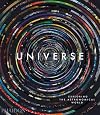
This gorgeous coffee table book exhibits an exceptional collection of astronomical photographs, artwork, manuscripts and other ephemera, both historical and contemporary. I'm a mediocre at best appreciator of art, so I was most taken with the photography and ancient writings. Three images which particularly resonated with me were Curiosity's "selfie," the photo of astronaut Bruce McCandless' untethered space walk (this gave me chills, as I have recurring dreams about hurtling through the show more vastness of space), and the New Horizons' 2015 photo of Pluto. The ashes of Clyde Tombaugh, who discovered Pluto in 1930, are aboard the spacecraft, which makes Tombaugh the furthest any human (alive or dead!) has ever traveled in space. Awesome. It's a lovely book to simply page through at leisure. show less

This is a crazy book: a huge, weighty, gorgeous insane publication. What an incredible art book. Scale matters: great reproductions on elephant folio sized pages. But damn, what a pain to get home. And it really needs a coffee table to live on. Hell, get legs for it and it will be a coffee table. This is absolutely corrective to the idea that paper will disappear under the onslaught of epubs. Will be browsing this for years.
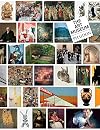
A blockbuster of a book that, on and off, took me about eighteen months to get through. It comprises nearly 1,000 pages of art works, with useful references at the back, on a large pictorial scale. This means that you get a better sense of the scale of a work than you would from most art books.
My edition lost a star because of a gripe. Perhaps the publishers were keen to get the book out for Christmas 2011 but there are persistent problems with inaccurate cross references in some sections. show more However, it is an achievement of great educational value, covering all periods and regions from the stone age to contemporary work.
I tend to have a jaundiced view of much recent art which strikes me as simply reflecting the same bubble that burst with the crash of the financial engineers in 2008 - cynics servicing fools.
Despite that, there are signs of recovery. Relational art takes conceptual art out of the hands of the alleged creative genius and makes the artist a potential educator and facilitator of liberation.
In addition, there are individual geniuses for our age - the late Cy Twombly speaks to the great tradition and Eliasson tries to make us think again while installations are there to create wonder.
Even the neo-pop of Murakami and Koons is, at the least, fun and sculptural techniques continue to subvert materials. Perhaps we can now move on from the constant hommages to Duchamp.
This book is a great table top item - albeit very heavy to carry around. It is highly recommended although I hope a second edition corrects the referencing. Such sloppy editing, for whatever reason, is not good enough from the House of Phaidon - and certainly not at the relatively high price. show less
My edition lost a star because of a gripe. Perhaps the publishers were keen to get the book out for Christmas 2011 but there are persistent problems with inaccurate cross references in some sections. show more However, it is an achievement of great educational value, covering all periods and regions from the stone age to contemporary work.
I tend to have a jaundiced view of much recent art which strikes me as simply reflecting the same bubble that burst with the crash of the financial engineers in 2008 - cynics servicing fools.
Despite that, there are signs of recovery. Relational art takes conceptual art out of the hands of the alleged creative genius and makes the artist a potential educator and facilitator of liberation.
In addition, there are individual geniuses for our age - the late Cy Twombly speaks to the great tradition and Eliasson tries to make us think again while installations are there to create wonder.
Even the neo-pop of Murakami and Koons is, at the least, fun and sculptural techniques continue to subvert materials. Perhaps we can now move on from the constant hommages to Duchamp.
This book is a great table top item - albeit very heavy to carry around. It is highly recommended although I hope a second edition corrects the referencing. Such sloppy editing, for whatever reason, is not good enough from the House of Phaidon - and certainly not at the relatively high price. show less

This book was originally issued in 1999 in an extremely large and bulky format; 6 kilos in weight and a genuine coffee-table book (in that if you attached four legs to it, you'd have a coffee table). In light of the events of 9th September 2001, the publishers decided to add a postscript chapter of photographs from the years 1999-2001, and to reissue the book in a different, more portable format. That is the edition I possess and am reviewing.
The photographs in this book were all selected show more for their value as images reflecting the Twentieth Century in all its glory and horror. In this, it succeeds. Indeed, with the growth of photojournalism over the century, readers might be excused for seeing it as a century of horror; images of war and violence abound. But this is a warts and all image of humanity, and that cannot be helped.
Each ten years is covered by a set of images, with a caption and an associated piece of background text. I found at least two captions that were completely wrong; and quite often an intriguing image would have background text that referred to the general situation the picture was taken within rather than telling the reader more about the image itself.
Of course, the book is now twenty years old, and hindsight is a wonderful thing. The first twenty years of the Twenty-First Century have been little better; we have nothing to be complacent about. Perhaps my biggest raise of the eyebrows was on page 1188, a picture showing a jubilant and victorious Lance Armstrong, the American cyclist who beat cancer and then went on to win the prestigious Tour de France. Except, of course, in the subsequent years his reliance on performance-enhancing drugs and his role in pushing those drugs out to his team-mates was exposed, and he was stripped of his titles.
This second edition is in a handier, square format; but its thickness still makes it a little unwieldy to handle and the text, especially in the additional notes, is quite small. Still, this was never going to be an easy exercise in packaging.
But this is a minor quibble. Here in one place is a visual history of the Twentieth Century. Leaf through its pages and see who we, who were born and lived in those times, were and are. show less
The photographs in this book were all selected show more for their value as images reflecting the Twentieth Century in all its glory and horror. In this, it succeeds. Indeed, with the growth of photojournalism over the century, readers might be excused for seeing it as a century of horror; images of war and violence abound. But this is a warts and all image of humanity, and that cannot be helped.
Each ten years is covered by a set of images, with a caption and an associated piece of background text. I found at least two captions that were completely wrong; and quite often an intriguing image would have background text that referred to the general situation the picture was taken within rather than telling the reader more about the image itself.
Of course, the book is now twenty years old, and hindsight is a wonderful thing. The first twenty years of the Twenty-First Century have been little better; we have nothing to be complacent about. Perhaps my biggest raise of the eyebrows was on page 1188, a picture showing a jubilant and victorious Lance Armstrong, the American cyclist who beat cancer and then went on to win the prestigious Tour de France. Except, of course, in the subsequent years his reliance on performance-enhancing drugs and his role in pushing those drugs out to his team-mates was exposed, and he was stripped of his titles.
This second edition is in a handier, square format; but its thickness still makes it a little unwieldy to handle and the text, especially in the additional notes, is quite small. Still, this was never going to be an easy exercise in packaging.
But this is a minor quibble. Here in one place is a visual history of the Twentieth Century. Leaf through its pages and see who we, who were born and lived in those times, were and are. show less
Lists
Awards


You May Also Like


Associated Authors
Statistics
- Works
- 267
- Members
- 16,984
- Popularity
- #1,308
- Rating
- 4.0
- Reviews
- 130
- ISBNs
- 461
- Languages
- 10
