
Marina Fiorato
Author of The Glassblower of Murano
About the Author
Image credit: Marina Fiorato
Works by Marina Fiorato
The Daughter of Sienna 1 copy
Associated Works
Het Beste Boek: De Cock en een recept voor moord; Een nieuw begin; De rekening; De glasblazer — Author — 1 copy, 1 review
Tagged
Common Knowledge
- Other names
- Bennett, M. A.
- Birthdate
- 1972
- Gender
- female
- Education
- Durham University
University of Warwick - Occupations
- illustrator
actor
film reviewer
producer - Nationality
- UK
- Birthplace
- Manchester, England, UK
- Places of residence
- Manchester, England, UK
Yorkshire Dales, England, UK
London, England, UK - Map Location
- England, UK
Members
Discussions
Found: YA Thriller about rich hunting poor in Name that Book (January 2024)
Found: YA Thriller,Private school hunting party in Name that Book (November 2023)
Reviews
The Ship of Doom: A time-travelling adventure set on board the Titanic (The Butterfly Club) by M A Bennett
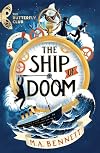
You won’t change your own past, but you could alter the future. You can’t change huge events. But remember, small changes can have big consequences. That’s the Butterfly Effect.
Mark my words, Titanic will be remembered long after the Lusitania is forgot.’ He put down his glass and addressed the whole table. ‘Titanic is more than a ship. Titanic is an idea. Titanic is a feeling. Britannia rules the waves – always has and al- ways will.’
It took some timeto get into this, but once show more I did it was one hell of a middle grade book.
The concept of time travel isn't new, but I loved the twisty way small details were repeated or altered every time they went back into the past. Sentences and items come back to haunt the protagonists, or to help them.
I also liked how the protagonists each had their little journey aboard the Titanic, and the information they discovered fit together like a puzzle.
This is the principle of checkov's gun well done.
The main characters' personalities were fine. I didn't love them, but each one had some satisfying moments to shine. I'm not sure how old they are, since they were able to pass as young adults but act like 12-14 year olds.
All of their character arcs left some big questions open for the sequel, and it felt slightly anticlimactic to have major bits of setup unresolved at the end. (Especially since everything relating to the Titanic was so well put together.)
I also hope the sequel will go a little further into depth about the important issues that were raised. Should Brittannia rule the waves, or the world? Why do men act and women watch, only to put the women on lifeboats as if their lives are more valuable? show less
Mark my words, Titanic will be remembered long after the Lusitania is forgot.’ He put down his glass and addressed the whole table. ‘Titanic is more than a ship. Titanic is an idea. Titanic is a feeling. Britannia rules the waves – always has and al- ways will.’
It took some timeto get into this, but once show more I did it was one hell of a middle grade book.
The concept of time travel isn't new, but I loved the twisty way small details were repeated or altered every time they went back into the past. Sentences and items come back to haunt the protagonists, or to help them.
I also liked how the protagonists each had their little journey aboard the Titanic, and the information they discovered fit together like a puzzle.
This is the principle of checkov's gun well done.
The main characters' personalities were fine. I didn't love them, but each one had some satisfying moments to shine. I'm not sure how old they are, since they were able to pass as young adults but act like 12-14 year olds.
All of their character arcs left some big questions open for the sequel, and it felt slightly anticlimactic to have major bits of setup unresolved at the end. (Especially since everything relating to the Titanic was so well put together.)
I also hope the sequel will go a little further into depth about the important issues that were raised. Should Brittannia rule the waves, or the world? Why do men act and women watch, only to put the women on lifeboats as if their lives are more valuable? show less
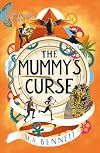
The thing I loved most about the first book was how each character had their own journey and their respective discoveries fit together like pieces of a puzzle. With every time jump they made, the puzzle pieces got altered and put into a new light.
This one was less of a clever puzzle and focused more on the supernatural, which is why I didn’t love the plot as much.
However, this one had way more depth to it when it came to the historical part.
The author clearly researched the details of show more tomb KV62 and it showed.
Not only the tomb itself, but the era surrounding it felt very realistic. From the English views on Germans, the new Egyptian independence and the race to find Tutankhamun first.
I especially loved the way this book handles the ethics of the English archeological activities in Egypt. Every single aspect is beautifully layered, and the characters involved come in shades of grey.
Carnavon doesn’t trust Konstantin because he is Prussian, his daughter doesn’t mind. Both father and daughter do not bother to learn Abdel’s name because he is a servant, but still reward him when helps them find something important.
When a working mule dies, only working class Aiden understand that grieving is not possible because work has to continue in order to earn money.
There is a ‘good’ and a ‘bad’ but none of the characters are wholly good or bad. show less
This one was less of a clever puzzle and focused more on the supernatural, which is why I didn’t love the plot as much.
However, this one had way more depth to it when it came to the historical part.
The author clearly researched the details of show more tomb KV62 and it showed.
Not only the tomb itself, but the era surrounding it felt very realistic. From the English views on Germans, the new Egyptian independence and the race to find Tutankhamun first.
I especially loved the way this book handles the ethics of the English archeological activities in Egypt. Every single aspect is beautifully layered, and the characters involved come in shades of grey.
Carnavon doesn’t trust Konstantin because he is Prussian, his daughter doesn’t mind. Both father and daughter do not bother to learn Abdel’s name because he is a servant, but still reward him when helps them find something important.
When a working mule dies, only working class Aiden understand that grieving is not possible because work has to continue in order to earn money.
There is a ‘good’ and a ‘bad’ but none of the characters are wholly good or bad. show less
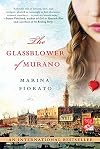
This was an extremely enjoyable read that bounced back and forth between modern-day and 17th century Venice. Reeling from a recent divorce and an infertility diagnosis, Leonora Manin leaves England for Venice, her birthplace and spiritual home. In search of solace and a sense of history, Leonora looks to her father's ancestor and legendary glassblower Corradino to help her find a anchor in a city built on water. As the sometimes sordid details of Corradino's life come to light, Leonora finds show more her footing in Venice, and with her Venetian love Alessandro, shifting beneath her.
I enjoyed this book and the story that centered around Leonora and her search for herself because it felt emotionally true. The storyline that focused on Corradino was rich with details of 17th century Venice and the art of glassblowing, but lacked that same emotional connection. On the other hand, Fiorato's love of Venice itself shone through both narratives and provided an excellent unifying thread. I have travelled to Venice several times and can definitely relate to Leonora's desire to make a home there if at all possible. Venice in this novel lives and breathes as much as any other character, and lends its unique flavor to this excellent novel. Highly recommended. show less
I enjoyed this book and the story that centered around Leonora and her search for herself because it felt emotionally true. The storyline that focused on Corradino was rich with details of 17th century Venice and the art of glassblowing, but lacked that same emotional connection. On the other hand, Fiorato's love of Venice itself shone through both narratives and provided an excellent unifying thread. I have travelled to Venice several times and can definitely relate to Leonora's desire to make a home there if at all possible. Venice in this novel lives and breathes as much as any other character, and lends its unique flavor to this excellent novel. Highly recommended. show less
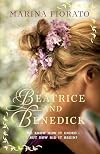
Beatrice, a young woman from Verona, is walking her cousin’s estate in Sicily when she sees a Moor making love to a white woman who wears an identical wedding band to his. Though at first surprised that interracial marriage is even possible, Beatrice comes away wanting a husband too, especially one who’ll desire her so powerfully.
As it happens, her uncle is about to play host to Spanish noblemen representing the power that rules Sicily; joining them are Benedick and Claudio, merchants’ show more sons from Padua and Florence, respectively. Beatrice and Benedick fall for each other on sight, while Claudio cozies up to her cousin, Hero.
Readers familiar with Much Ado about Nothing will recognize this setup as backstory for Shakespeare’s comedy. Maybe you’ve also identified the passionate couple on the beach as Othello and Desdemona. And when you hear that Beatrice’s older brother is named Teobaldo (aka Tybalt), and that a feud between the Montecchi and Capuletti families is tearing apart Verona, you’ll know to keep an eye peeled for Romeo and Giulietta.
This bold contrivance promises a rollicking story and a bushel of grand themes: jealousy, the nature of love, the sexual double standard, how appearances deceive, split loyalties, and so forth. But Beatrice and Benedick falters from the get-go, and the narrative seldom rises above what feels ordained. It’s never easy to create tension in a well-known story, but Fiorato tries by adding plot rather than by deepening her characters. That’s a mistake.
The trouble begins with her premise, which supposes that Shakespeare was Sicilian. I might accept that notion for the two hours’ traffic of her stage if she portrayed him as a rising poet and dramatist, a charismatic figure caught up in his verse. But her ink-stained scribbler’s capacity for invention takes a distant third behind the terrible wrongs done him and his thirst for revenge. He claims the mantle of authorship solely by spouting words that have since become famous, which prompts either a wink-wink, nudge-nudge or uneasy laughter.
Worse, Beatrice and Benedick quote random snippets from Guess Who and even pen sonnets from the same source. You too can write great literature in your spare time, without any practice at all!
This implausible conceit would matter a lot less if the characters, especially the men, amounted to more than a collection of attitudes, locked in place for an obvious purpose. Benedick, aside from his looks and ability with a rapier (how he learned is never adequately explained), has little to recommend him, and his pride, ideas about women, and approach to life seem handed to him rather than born from within. As the wheels turn, you sense that he’s got a long journey to make, and much ado about transforming himself, before the final drama with Beatrice takes place.
Moreover, for no good reason, he immediately embraces as great friend Don Pedro, a Spanish nobleman who wears villainy barely concealed below his charm. Yet it takes Benedick, supposedly a perceptive fellow, a very long time to get the message. Further, he does so while serving Don Pedro aboard ship in the Spanish Armada, a nod to the political theme.
But the conflict between Don Pedro and Benedick could unfold anywhere, and burdening the narrative with yet another epic story—one with an inevitable ending—is too much. Maybe more to the point, Fiorato’s narrative seems to lose its moorings at sea, while it's far more authoritative at the Spanish court, where, for example, King Philip II keeps a red-headed dwarf as a caricature of England’s Queen Elizabeth. What a fabulous scene, full of tension from unexpected undercurrents.
That leaves it up to Beatrice to save this hodgepodge, but she can’t. How she got to be so independent-minded, capable with a sword, or virtually oblivious of sex until watching Othello and Desdemona are only some of the questions I have. Her conversion to ardent feminism feels unnecessarily earnest, maybe because she doesn’t have that far to travel.
Further, I’m not clear how a woman who holds feminist views (and knows how to defend herself physically) surrenders so meekly to her tyrannical father. One such surrender, however, provides what I think is the author’s best scene. Before male witnesses, a doctor brusquely examines Beatrice to prove her virginity so that a marriage contract may be drawn up.
Nothing speaks more eloquently than this humiliating, abusive act, which needs no further commentary. I wish the rest of Beatrice and Benedick had shown the same directness and economy. show less
As it happens, her uncle is about to play host to Spanish noblemen representing the power that rules Sicily; joining them are Benedick and Claudio, merchants’ show more sons from Padua and Florence, respectively. Beatrice and Benedick fall for each other on sight, while Claudio cozies up to her cousin, Hero.
Readers familiar with Much Ado about Nothing will recognize this setup as backstory for Shakespeare’s comedy. Maybe you’ve also identified the passionate couple on the beach as Othello and Desdemona. And when you hear that Beatrice’s older brother is named Teobaldo (aka Tybalt), and that a feud between the Montecchi and Capuletti families is tearing apart Verona, you’ll know to keep an eye peeled for Romeo and Giulietta.
This bold contrivance promises a rollicking story and a bushel of grand themes: jealousy, the nature of love, the sexual double standard, how appearances deceive, split loyalties, and so forth. But Beatrice and Benedick falters from the get-go, and the narrative seldom rises above what feels ordained. It’s never easy to create tension in a well-known story, but Fiorato tries by adding plot rather than by deepening her characters. That’s a mistake.
The trouble begins with her premise, which supposes that Shakespeare was Sicilian. I might accept that notion for the two hours’ traffic of her stage if she portrayed him as a rising poet and dramatist, a charismatic figure caught up in his verse. But her ink-stained scribbler’s capacity for invention takes a distant third behind the terrible wrongs done him and his thirst for revenge. He claims the mantle of authorship solely by spouting words that have since become famous, which prompts either a wink-wink, nudge-nudge or uneasy laughter.
Worse, Beatrice and Benedick quote random snippets from Guess Who and even pen sonnets from the same source. You too can write great literature in your spare time, without any practice at all!
This implausible conceit would matter a lot less if the characters, especially the men, amounted to more than a collection of attitudes, locked in place for an obvious purpose. Benedick, aside from his looks and ability with a rapier (how he learned is never adequately explained), has little to recommend him, and his pride, ideas about women, and approach to life seem handed to him rather than born from within. As the wheels turn, you sense that he’s got a long journey to make, and much ado about transforming himself, before the final drama with Beatrice takes place.
Moreover, for no good reason, he immediately embraces as great friend Don Pedro, a Spanish nobleman who wears villainy barely concealed below his charm. Yet it takes Benedick, supposedly a perceptive fellow, a very long time to get the message. Further, he does so while serving Don Pedro aboard ship in the Spanish Armada, a nod to the political theme.
But the conflict between Don Pedro and Benedick could unfold anywhere, and burdening the narrative with yet another epic story—one with an inevitable ending—is too much. Maybe more to the point, Fiorato’s narrative seems to lose its moorings at sea, while it's far more authoritative at the Spanish court, where, for example, King Philip II keeps a red-headed dwarf as a caricature of England’s Queen Elizabeth. What a fabulous scene, full of tension from unexpected undercurrents.
That leaves it up to Beatrice to save this hodgepodge, but she can’t. How she got to be so independent-minded, capable with a sword, or virtually oblivious of sex until watching Othello and Desdemona are only some of the questions I have. Her conversion to ardent feminism feels unnecessarily earnest, maybe because she doesn’t have that far to travel.
Further, I’m not clear how a woman who holds feminist views (and knows how to defend herself physically) surrenders so meekly to her tyrannical father. One such surrender, however, provides what I think is the author’s best scene. Before male witnesses, a doctor brusquely examines Beatrice to prove her virginity so that a marriage contract may be drawn up.
Nothing speaks more eloquently than this humiliating, abusive act, which needs no further commentary. I wish the rest of Beatrice and Benedick had shown the same directness and economy. show less
Lists
Awards


You May Also Like


Associated Authors
Statistics
- Works
- 27
- Also by
- 1
- Members
- 2,536
- Popularity
- #10,124
- Rating
- 3.5
- Reviews
- 191
- ISBNs
- 169
- Languages
- 13
