
Ann Tusa (1938–2021)
Author of The Nuremberg Trial
About the Author
Image credit: Ann and John Tusa
Works by Ann Tusa
Tagged
Common Knowledge
- Legal name
- Tusa, Ann Hilary
- Other names
- Dawson, Ann Hilary (birth name)
- Birthdate
- 1938-05-23
- Date of death
- 2021-11-13
- Gender
- female
- Education
- Pendleton Grammar School
University of Cambridge (Newnham College) - Occupations
- historian
- Relationships
- Tusa, John (husband)
- Cause of death
- cancer (multiple cancers)
- Nationality
- UK
- Birthplace
- Eccles, Lancashire, England, UK
- Associated Place (for map)
- England, UK
Members
Reviews

This is an exhaustively detailed account of the events leading up to and during the blockade of west Berlin carried out by the Soviet Union in 1948-49 against the sectors of Berlin controlled by the other three allied powers , and the allied response in terms of the airlift of food, fuel and other goods into the city. The work is extremely well referenced. It was published, ironically, in 1988, the year before the Wall came down and Berlin ceased to be a divided city, so if it had been show more written a few years later, the perspective may have been slightly different and there may perhaps have been more background to Soviet motivations available from recently opened archives. As it is, it gives a very clear picture of the pressures that the Soviets were exerting to try to compel the Allies to leave Berlin without overt military action, the growing success of the airlift after a shaky start when it looked to many as though it could not possibly work, and the tensions that eventually led to the setting up of the German Democratic Republic in the East and the Federal Republic of Germany in the West. There was a real buzz around the discussions of the new constitution for West Germany and the formulation of the Basic Law - how heady it must have been to engage in such discussions after a generation of dictatorship. A number of personalities come over strongly, including Ernest Bevin, General Clay, Dean Acheson and Robert Schumann. The blockade was really the true start of the Cold War, though the signs of freezing over were present beforehand, arguably even before the hot war had ended. In hindsight, the significance of the airlift is that, without it, the Soviets would almost certainly have been able to take over the whole of Berlin and perhaps, in time, the rest of Germany (as it is, the unusually mild winter of 1948-49 was a significant factor in allowing Berlin to hold out as the airlift would probably not have been able to fly in the extra fuel needed in a winter as cold as earlier ones had been in Berlin).
This was a great read, if sometimes containing a little too much technical detail about aeroplane parts and food processing and so on; and unfortunately there are absolutely no maps, diagrams or photos at all, which is a noteworthy omission. show less
This was a great read, if sometimes containing a little too much technical detail about aeroplane parts and food processing and so on; and unfortunately there are absolutely no maps, diagrams or photos at all, which is a noteworthy omission. show less
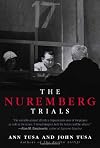
I could not urge anyone enough to buy this book - an engrossing tale of the trials and the participants. I found the political and legal arguments concerning the moral authority of the court very interesting and some of the remarks attributed to the chief gaoler, Col Andrus, hilarious. Perhaps the best aspect of the book's coverage is the description of the relationships between the various defendants and those of the captives and their lawyers. The political wrangling between the four show more powers is also well covered.
I am very disappointed that this appears to be the first review of this book, because it is fantastic. Anyone with even the slightest interest in WW2 really should read this. I would very much like the authors to consider a second, follow-up title considering the trials and fate of many of the lower ranking SS men etc, about which, little has been written. show less
I am very disappointed that this appears to be the first review of this book, because it is fantastic. Anyone with even the slightest interest in WW2 really should read this. I would very much like the authors to consider a second, follow-up title considering the trials and fate of many of the lower ranking SS men etc, about which, little has been written. show less
Well rounded book on the Nazi war trials at Nuremberg after World War II. The authors managed to convey the importance of the trial - the reliance on the idea of law rather than violence to settle criminal behavior.
The book identifies all the defendants,their alleged criminal activities, and the results, with emphasis on those that were sentenced to death. Interesting, but not captivating, this book describes the Trial very well.
The book identifies all the defendants,their alleged criminal activities, and the results, with emphasis on those that were sentenced to death. Interesting, but not captivating, this book describes the Trial very well.

To give the reader a complete understanding of how the Allied victors of WW II came to the impasse over Berlin during the years following the War, the authors give an amazing detailed description the fall of Berlin and immediate persecution of Berliners by the Russians. Then they do the same to show how the Western Allies found working with the Russians virtually impossible but did not have the armed forces available to challenge the Russians.
The description of how the airlift started and show more how the Allies met the challenges of few air fields in Berlin to too few aircraft with the ability to carry the loads necessary to make the whole thing work is also very detailed. Equally detailed is the the long period of negotiation with the Soviets to allow Germany to govern itself and to include Berlin in that government. As we know final and complete unification did not take place until 1989 which this book does not cover as it was written before that occurred..
The men who ran the airlift never realized when it was over that they had "won a great victory and contributed to great changes in Europe".
This a mammoth work of research. The notes cover 50 pages and the index 24. show less
The description of how the airlift started and show more how the Allies met the challenges of few air fields in Berlin to too few aircraft with the ability to carry the loads necessary to make the whole thing work is also very detailed. Equally detailed is the the long period of negotiation with the Soviets to allow Germany to govern itself and to include Berlin in that government. As we know final and complete unification did not take place until 1989 which this book does not cover as it was written before that occurred..
The men who ran the airlift never realized when it was over that they had "won a great victory and contributed to great changes in Europe".
This a mammoth work of research. The notes cover 50 pages and the index 24. show less
Lists
Awards


You May Also Like


Associated Authors
Statistics
- Works
- 3
- Members
- 512
- Popularity
- #48,443
- Rating
- 4.0
- Reviews
- 5
- ISBNs
- 30
- Languages
- 2
- Favorited
- 1