
Hamid Ismailov
Author of The Railway
About the Author
Works by Hamid Ismailov
FIABA NUCLEARE 1 copy
Associated Works
And We Came Outside and Saw the Stars Again: Writers from Around the World on the COVID-19 Pandemic (2020) — Contributor — 16 copies
Tagged
Common Knowledge
- Birthdate
- 1954-05-05
- Gender
- male
- Education
- Tashkent State University (biology ∙ law ∙ management)
Bagrationov Military Institute - Occupations
- journalist
- Organizations
- BBC World Service
- Awards and honors
- ROSSICA (UK)
AATSEEL (US) (for the best translation of 'The Railway') - Agent
- Liepman AG
- Relationships
- Sultanova, Razia (wife)
- Nationality
- Kyrgyzstan (birth)
UK (naturalized)
Uzbekistan - Birthplace
- Tokmok, Kirgyz SSR, Soviet Union
- Places of residence
- London, England, UK
- Map Location
- Uzbekistan
Members
Reviews
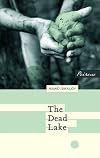
Whilst on a train journey across Kazakhstan, the narrator meets Yerzhan, a twenty-seven year old itinerant peddler and virtuoso violinist who, strangely, has the looks and build of a boy of twelve years. After overcoming his initial diffidence, Yerzhan starts to recount the tale of his childhood. He recalls growing up in a two-family settlement on a lonely, remote railway outpost in the Kazakh steppes, close to a top-secret “Zone” where Soviet nuclear experiments were carried out. He show more tells of his precocious musical talents on the dombra [lute-like folk instrument] and the violin, and his equally precocious love for his neighbour Aisulu. Chillingly, he recalls a fateful day when, during a school outing to the “Zone”, he waded into a radioactive lake to impress his classmates. Did the poisonous waters stunt his growth or was some other-worldly spell cast on him?
I suppose Hamid Ismailov’s novella might be regarded as a work of “magical realism”. I would prefer to describe it as a modern-day fable or myth. For what is mythology, if not an attempt to describe and explain the world through stories and symbols? In this case, Ismailov conjures up images of terrible beauty, by means of which he evokes daily life in the Kazakh steppes at the height of the Cold War. Andrew Bromfield's sensitive translation from the original Russian retains a poetic feel to it, as if the prose were permeated with the strains of Yerzhan’s dombra.
A haunting coming-of-age novel about a boy who does not come of age, this is my favourite amongst the Peirene Press publications I have had the pleasure to read.
https://endsoftheword.blogspot.com/2018/09/hamid-ismailovs-dead-lake.html show less
I suppose Hamid Ismailov’s novella might be regarded as a work of “magical realism”. I would prefer to describe it as a modern-day fable or myth. For what is mythology, if not an attempt to describe and explain the world through stories and symbols? In this case, Ismailov conjures up images of terrible beauty, by means of which he evokes daily life in the Kazakh steppes at the height of the Cold War. Andrew Bromfield's sensitive translation from the original Russian retains a poetic feel to it, as if the prose were permeated with the strains of Yerzhan’s dombra.
A haunting coming-of-age novel about a boy who does not come of age, this is my favourite amongst the Peirene Press publications I have had the pleasure to read.
https://endsoftheword.blogspot.com/2018/09/hamid-ismailovs-dead-lake.html show less

A complicated novel, telling the intersecting but sometimes contradictory stories of a large group of characters in a small railway town north of Tashkent between about 1900 and 1980, interleaved with the story of an unnamed character just referred to as “the boy”. The stories are often ribald and usually involve at least a hint of magic realism, and the point of view is always that of a Muslim, Uzbek observer, looking with slight puzzlement at western civilisation and the Soviet show more project.
Ismailov says in an interview with the translator included as an afterword here that he wanted to contrast the regimented, hierarchical, Soviet way of looking at the world — obviously symbolised here by the railway — with the unprejudiced, fluid, Sufi-like gaze of the innocent boy. Ismailov takes no prisoners either in his social and political satire or in his brutally matter-of-fact descriptions of sex and violence, so this definitely isn’t for everyone, but it is a quite remarkable book, and often very funny indeed, even in places where you had rather it wasn’t… Certainly another one that invites a re-read to get the most out of it. show less
Ismailov says in an interview with the translator included as an afterword here that he wanted to contrast the regimented, hierarchical, Soviet way of looking at the world — obviously symbolised here by the railway — with the unprejudiced, fluid, Sufi-like gaze of the innocent boy. Ismailov takes no prisoners either in his social and political satire or in his brutally matter-of-fact descriptions of sex and violence, so this definitely isn’t for everyone, but it is a quite remarkable book, and often very funny indeed, even in places where you had rather it wasn’t… Certainly another one that invites a re-read to get the most out of it. show less
The Dead Lake has restored my faith in the Peirene imprint after the grubby misogynist fantasy that was Reader for hire. Hamid Ismailov shows a world of radioactive fallout in Soviet era Kazakhstan. Yerzhan's childhood idyll is disrupted and then dismantled as the effects of atomic testing are felt by his family. Ismailov's portrait of three generations of the family includes the musical grandfather and his poetic songs of the steppe, the grandmothers whose folk tales explain everything of show more significance, to the son who is a worker on the atomic plant and is convinced their work is essential to overcoming the US."And once again his rebellion was put off until the next day. If this was the way of things in the world, then weren't his suffering, his imagination and threats, all his thoughts, like a flowing stream, like powdered snow, like a swirling blizzard and his life simply a short, sad song?" show less
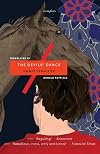
Hamid Ismailov has masterfully given us a story within a story about Uzbek history and culture. In this novel there is much that is self consciously transitory but one is left with a feeling of solidity of something left for the ages. The unavoidable poetry, especially that of Cho'lpon, adds depth and foundation to an already present richness. Another unique feature are the many Uzbek sayings: “The camel shakes its back, the load goes to the donkey”; “A lie can sometimes serve a man, show more but truth will serve him better”; “The mirror doesn't know what it serves: love, shame, or the poet.” Death and ruminations about it play a large part. The author goes to some trouble to point out that death is not much of a story without love. My thanks to Hamilton College, the Hockessin Library, and the interlibrary loan system for making this remarkable treasure available to me.
Quotes: (page 166) “Abdulla loved Cho'lpon's poetry more than anyone else's...'An unacquainted acquaintance' was phrase for it. In actual fact, when he wrote a prose piece, it too was a representation of this same 'known unknown' world. The known, the everyday, the petty and the trivial, once plunged in the light of the unknown--- and what was unknown, frightening and alien takes on a real existence and reverts to its real self.”
(page 237) “True, he was learning much he'd never known about the history of Uzbek khanates, but were such articles of any use for a novel he planned to call The Harem Girl? What could they have to do with Oyxon? On the other hand, how could he write about the nineteenth century and leave out the Great Game? Didn't he see himself as a national writer? If you're a national writer, and don't know the grindstones through which your nation's history has passed, and the consequences for its fate today, are you worth a tuppence?”
(page 265) “When Conoly left Kokand for Bukara, Oyxon was heartbroken. She was not consoled by noisy excursions to the countryside with the harem ladies to celebrate spring; she was not comforted by the gardens regal flowering. It was during this period that she found solace in an unexpected corner: from Uvaysiy, a woman old enough to be her grandmother. Until then Oyxon had not let her come close, for she considered Uvaysiy to be Nodira's deciple. But when she looked at her with clear eyes, she saw not a scheming rival but a woman who, like herself, lived a lonely and precarious life.”
(page 300)” 'So I've hit the nail on the head,' Fitrat smiled faintly.
'When you respond to a question with another question, that's a sign you're at a loss for an answer. That incomparably beautiful lady was betrayed on all sides. And isn't the same true of your incomparable literary talent? It's been betrayed; is there anyone left who wouldn't sell it down the river? ' he said, like a surgeon inserting a probe in someone's eye, and with repeated stabs of the knife, bringing out what had been concealed deep inside Abdulla.”
(page 355) “Now that Mahmud had abandoned his mother Nodira and fled Kokand, renouncing his crown and throne, he reached Shahrixon with his suite. From Shahrixon they were heading for Andijan, where, by getting reinforcements in the fortress, they could rouse the Kyrgyz against the Bukharans. But the citizens of Shahrixon were enrage that their Emir's wife Oyxon had been expelled from Kokand back to her native city, and when they found out that Mahmud had arrived in their city they swore that they would hand him over to Emir Nasrullo.” show less
Quotes: (page 166) “Abdulla loved Cho'lpon's poetry more than anyone else's...'An unacquainted acquaintance' was phrase for it. In actual fact, when he wrote a prose piece, it too was a representation of this same 'known unknown' world. The known, the everyday, the petty and the trivial, once plunged in the light of the unknown--- and what was unknown, frightening and alien takes on a real existence and reverts to its real self.”
(page 237) “True, he was learning much he'd never known about the history of Uzbek khanates, but were such articles of any use for a novel he planned to call The Harem Girl? What could they have to do with Oyxon? On the other hand, how could he write about the nineteenth century and leave out the Great Game? Didn't he see himself as a national writer? If you're a national writer, and don't know the grindstones through which your nation's history has passed, and the consequences for its fate today, are you worth a tuppence?”
(page 265) “When Conoly left Kokand for Bukara, Oyxon was heartbroken. She was not consoled by noisy excursions to the countryside with the harem ladies to celebrate spring; she was not comforted by the gardens regal flowering. It was during this period that she found solace in an unexpected corner: from Uvaysiy, a woman old enough to be her grandmother. Until then Oyxon had not let her come close, for she considered Uvaysiy to be Nodira's deciple. But when she looked at her with clear eyes, she saw not a scheming rival but a woman who, like herself, lived a lonely and precarious life.”
(page 300)” 'So I've hit the nail on the head,' Fitrat smiled faintly.
'When you respond to a question with another question, that's a sign you're at a loss for an answer. That incomparably beautiful lady was betrayed on all sides. And isn't the same true of your incomparable literary talent? It's been betrayed; is there anyone left who wouldn't sell it down the river? ' he said, like a surgeon inserting a probe in someone's eye, and with repeated stabs of the knife, bringing out what had been concealed deep inside Abdulla.”
(page 355) “Now that Mahmud had abandoned his mother Nodira and fled Kokand, renouncing his crown and throne, he reached Shahrixon with his suite. From Shahrixon they were heading for Andijan, where, by getting reinforcements in the fortress, they could rouse the Kyrgyz against the Bukharans. But the citizens of Shahrixon were enrage that their Emir's wife Oyxon had been expelled from Kokand back to her native city, and when they found out that Mahmud had arrived in their city they swore that they would hand him over to Emir Nasrullo.” show less
Lists
Awards


You May Also Like


Associated Authors
Statistics
- Works
- 13
- Also by
- 3
- Members
- 525
- Popularity
- #47,376
- Rating
- 3.5
- Reviews
- 28
- ISBNs
- 30
- Languages
- 4
