
Constance Hale
Author of Sin and Syntax: How to Craft Wickedly Effective Prose
About the Author
Works by Constance Hale
The Natives Are Restless: A San Francisco dance master takes hula into the twenty-first century (2016) 4 copies, 1 review
Associated Works
Tagged
Common Knowledge
- Gender
- female
- Education
- Princeton University (BA - English Literature)
University of California, Berkeley (MA - Journalism) - Occupations
- reporter
editor - Organizations
- Oakland Tribune
San Francisco Examiner - Relationships
- Bigelow, Bruce Lowell (husband)
- Nationality
- USA
- Birthplace
- Waialua, Hawaii, USA
- Associated Place (for map)
- Hawaii, USA
Members
Reviews
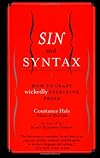
I picked this up at a used book sale because I recently finished a MOOC class on grammar and, although I passed with flying colors—oh, I think Constance (author) would suggest I rethink that too oft used phrase…hmm, I passed with aplomb, I didn’t feel like I could by any means teach the subject…so thought this title sounded like a fun way to keep going. I was write! Errr, “Right”! (Now you’re wondering how I passed at all?) This book has it all, and if you didn’t think a book show more on grammar could be entertaining (as well as instructive), read this one.
Sample? OK, here’s one of many illustrative quotes complete with quippy explanation of the error. This passage is from a section called “Dangling Doozies”:
“Remember, participles exist so that verbs can modify nouns. Dangling participles are adjectival phrases that have come unmoored from the nouns they are supposed to modify and instead modify the nearest noun they can find. Here’s a dangling participle reprinted in the "New Yorker" as a space filler:
In San Diego, the “in” place for years has been McDini’s for corned beef. Thinly sliced and heaped on rye, corned beef lovers won’t be disappointed.”
When was the last time you were thinly sliced and heaped on rye?”
I get that a grammar book probably isn’t your first choice for light summer reading, but if you do happen to enjoy the many quirks of the English language, this is a good one to turn to. show less
Sample? OK, here’s one of many illustrative quotes complete with quippy explanation of the error. This passage is from a section called “Dangling Doozies”:
“Remember, participles exist so that verbs can modify nouns. Dangling participles are adjectival phrases that have come unmoored from the nouns they are supposed to modify and instead modify the nearest noun they can find. Here’s a dangling participle reprinted in the "New Yorker" as a space filler:
In San Diego, the “in” place for years has been McDini’s for corned beef. Thinly sliced and heaped on rye, corned beef lovers won’t be disappointed.”
When was the last time you were thinly sliced and heaped on rye?”
I get that a grammar book probably isn’t your first choice for light summer reading, but if you do happen to enjoy the many quirks of the English language, this is a good one to turn to. show less
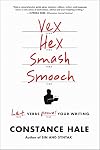
Constance Hale provides one of the most thorough treatments of verbs I've read. The book is aimed at writers, both novice and experienced, and unless you hold a PhD in English composition, you will learn something useful to make your writing better. Do you know all about verb tense, mood, and voice? How well do you understand participles, gerunds, irregular verbs, and phrasal verbs? Do you know why these things matter (and they do matter) and how mastering them will help your writing shine show more brighter? Hale's book provides the answers.
The title is a bit awkward (try saying it three times fast!)--I think "Let Verbs Power Your Writing" by itself would have been just fine--but "vex," "hex," "smash," and "smooth" provides the framework around which Hale organizes each chapter, and the scheme works pretty well. At times she ventures into murky waters where even she may be out of her depth. For example, I'm still scratching my head at how "tight-fisted" is a past participle, as she asserts on page 224. But for the most part, she's spot on. She includes many examples from real life and literature to illuminate the concepts, along with plenty of endnotes and an extensive bibliography to warm the hearts of readers who care to dig deeper.
I highly recommend this book, and I know that I'll regularly pull it off my bookshelf to consult for my own writing. show less
The title is a bit awkward (try saying it three times fast!)--I think "Let Verbs Power Your Writing" by itself would have been just fine--but "vex," "hex," "smash," and "smooth" provides the framework around which Hale organizes each chapter, and the scheme works pretty well. At times she ventures into murky waters where even she may be out of her depth. For example, I'm still scratching my head at how "tight-fisted" is a past participle, as she asserts on page 224. But for the most part, she's spot on. She includes many examples from real life and literature to illuminate the concepts, along with plenty of endnotes and an extensive bibliography to warm the hearts of readers who care to dig deeper.
I highly recommend this book, and I know that I'll regularly pull it off my bookshelf to consult for my own writing. show less
This small book packs in a lot of information in a spirited and intelligent way. Starting “New Principles of Prose” - which are: Relish Every Word. Be Simple, But Go Deep. Take Risks. Seek Beauty. Find The Right Word. She then divides it into three parts: Words, Sentences and Music. Each chapter has four subheadings, Bones, Flesh, Cardinal Sins, and Carnal Pleasures.
This book is a good introduction or refresher for using correct grammar, a word which I think frightens some people, show more including me, myself and I(?)! Stylistically, it is modern and clever rather than old and stuffy.
But this is a grammar book, you already know what it’s going to explain... the parts of speech, their proper usage, and structure and Hale does so in a manner that uses reference that are topical and sometimes comical and it keeps the information from feeling stale and dated. As in this example for an ‘obscure pronominal reference’ from a church bulletin, “The ladies of the church have cast off clothing of every kind, and they can be seen in the church basement Friday afternoon.” Hahaha!
Hale’s layout is logical and consistent. Using Chapter 8-Interjection as an example:
The Bones (grammar sermonette) are explanations of the chapter subject. She describes interjections as “The banging windows and bursting pipes that add excitement to the story inside.”
The Flesh (lesson on writing), “Since speech tics reveal as much individuality as proper syntax, interjections can help impart character.”
Cardinal Sin (true transgressions) “In speech, like as an interjection buys you a little time when your mind can’t keep up with your mouth. But in prose it has the effect of whittling your words down to whimpering, simpering sissyspeak.”
I appreciate writers who can inform and amuse at the same time. Though the threats of death were a bit extreme. “We do not say I’s, you’s, he’s, or she’s to indicate possession, so why would we say who’s or it’s?” “Who’s and it’s are contractions of who is and it is. Learn this or die.” —Okay, okay! show less
This book is a good introduction or refresher for using correct grammar, a word which I think frightens some people, show more including me, myself and I(?)! Stylistically, it is modern and clever rather than old and stuffy.
But this is a grammar book, you already know what it’s going to explain... the parts of speech, their proper usage, and structure and Hale does so in a manner that uses reference that are topical and sometimes comical and it keeps the information from feeling stale and dated. As in this example for an ‘obscure pronominal reference’ from a church bulletin, “The ladies of the church have cast off clothing of every kind, and they can be seen in the church basement Friday afternoon.” Hahaha!
Hale’s layout is logical and consistent. Using Chapter 8-Interjection as an example:
The Bones (grammar sermonette) are explanations of the chapter subject. She describes interjections as “The banging windows and bursting pipes that add excitement to the story inside.”
The Flesh (lesson on writing), “Since speech tics reveal as much individuality as proper syntax, interjections can help impart character.”
Cardinal Sin (true transgressions) “In speech, like as an interjection buys you a little time when your mind can’t keep up with your mouth. But in prose it has the effect of whittling your words down to whimpering, simpering sissyspeak.”
I appreciate writers who can inform and amuse at the same time. Though the threats of death were a bit extreme. “We do not say I’s, you’s, he’s, or she’s to indicate possession, so why would we say who’s or it’s?” “Who’s and it’s are contractions of who is and it is. Learn this or die.” —Okay, okay! show less

A book that is both helpful and entertaining. Not often that I find myself laughing out loud while reading grammar books, but I did with this one.
Lists
You May Also Like


Associated Authors
Statistics
- Works
- 5
- Also by
- 1
- Members
- 1,516
- Popularity
- #16,963
- Rating
- 3.8
- Reviews
- 16
- ISBNs
- 16
