
Rohinton Mistry
Author of A Fine Balance
About the Author
Rohinton Mistry was born in Bombay in 1952 and immigrated to Canada in 1975. He began writing stories in 1983 while a student at the University of Toronto. His books recount everyday life in India. Titles include Tales From Firozsha Baag, a collection of short stories, and A Fine Balance, a novel. show more Mistry's first novel, Such a Long Journey, received several awards, including the Governor General's Award and the Commonwealth Writers Prize for Best Book. It was also shortlisted for the Booker Prize and for the Trillium Award. (Bowker Author Biography) show less
Works by Rohinton Mistry
Associated Works
A World of Difference: An Anthology of Short Stories from Five Continents (2008) — Contributor — 110 copies, 1 review
Freedom: Stories Celebrating the Universal Declaration of Human Rights (2009) — Contributor — 85 copies, 2 reviews
Tagged
Common Knowledge
- Canonical name
- Mistry, Rohinton
- Birthdate
- 1952-07-03
- Gender
- male
- Education
- University of Mumbai (BA|1975| St. Xavier's College | Mathematics ∙ Economics)
University of Toronto (BA|1982| English | Philosophy) - Occupations
- writer
novelist - Awards and honors
- Order of Canada (Member, 2016)
Neustadt International Prize for Literature (2012)
Royal Society of Literature (Fellow, 2010)
Commonwealth Writers Prize (1991, 1996)
Los Angeles Times Book Prize for Fiction (1996)
Governor General's Award (1991) (show all 9)
Trillium Award (1991)
Timothy Findley Award (2005)
Giller Prize (1995) - Agent
- Lucinda Vardey (Lucinda Vardey Agency)
- Relationships
- Elavia, Freny (spouse)
- Nationality
- India (birth)
Canada - Birthplace
- Mumbai, India
- Places of residence
- Mumbai, India
Brampton, Ontario, Canada - Associated Place (for map)
- Brampton, Ontario, Canada
Members
Discussions
A Fine Balance Group Read: July 2013 in 75 Books Challenge for 2013 (August 2013)
Reviews
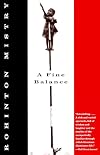
A truly sickening portrayal of daily life that I simply couldn't put down. I've been trying to digest this masterpiece that I somehow read on vacation (!!!!) for a few months now, and I still don't think I can form the words to truly do it justice. Definitely one of the best I've ever read, and one that justifies being over 600 pages long. Also, take a good look at the cover (the one with the stripes) and really think about it for a moment. It will come back to haunt you when you least show more expect it. show less
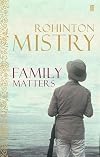
As Nariman counts his last breaths amid the serene violin rendition of Brahms Lullaby, played by Daisy, my mind races through a gloomy apartment where the stale odor of eau de cologne amalgamates in the air of misery thriving among the bustling of outside traffic and noisy vendors trying to earn their daily wage unaware of Nariman’s existence. The acridity of my parched throat makes me think about my death. Will I die as a happy soul or will death be a gift that I would crave in the course show more of vulnerable seclusion? This is how Mistry’s words affect me, as I breathe and feel every emotion that flows through the ink. It is not because of my familiarity with the physical surroundings or the Parsi community, but the fact that Mistry writes a simple story of nameless ordinary faces with astonishing lives.
Old age and Parkinson’s disease has not only bed-ridden Nariman but made him a burden on his financially challenged children. Coomy and Jal, his step-children, both heading their prime and plagued by their own ailments coax Nariman’s biological daughter Roxanna into providing healthcare to her ailing father. A middle-class housewife with two young kids and a budgeted monthly survival faces a monstrous task by burning the candle at both ends. The woes of middle-classes ripened by bigotry and communalism are highlighted with sheer accuracy throughout the manuscript. The preposterous stubbornness of arranged marriages, the segregation of religious identities, stigmatism of step-parental aspects and the eternal financial instabilities mesh into a burdensome desperation of graphic cunningness. In Asian cultures, looking after elderly parents is viewed not only dutiful but the most obedient thing to do. The concept of old-aged homes is highly condemned in the Indian society (also, many other Asian cultures). Old age can be cruel and if plagued by incurable diseases it becomes a metal cage. A man who once was free to walk in the by lanes of his vicinity and enjoy a wonderful German orchestra at the nearby concert hall; Nariman was reduced to a mere caged mortal who longed for freedom to breathe fresh air, feel the splatter of rainwater as he walked through the puddles and for once make his own choices without being reprimanded for his doings. I empathize more towards Nariman than any other character in the book. Nariman could never marry his true love Lucy, for she was a Catholic, he could not bring his step-daughter (Coomy) to accept him as her father and now he was the sole reason for the rifts between his children. I wonder if my grandparents could have had found happiness if they were not arranged to be married? What would the circumstances be if my father was not financially well enough to take care of my grandfather during his last days surviving cancer? Would we have been deprived of basic amenities like butter or hot water and frantically hoped to find additional money in the budgeted envelopes of monthly payments? In a society where corruption is spelled in gold letters, and a man’s potency is derived from his monetary success, money matters; come what may.
Each sketched characters defines the ebb and flow of life and its greatness that we as children dream to achieve. Right from Nariman to Roxanna and even Yehzad (Roxanna’s husband) who once nurtured the dream of Canadian immigration, somehow end up in a vortex of familial or financial obligations of a capricious life. Mistry does not adhere either to pompous melancholic facades or epical anecdotes. He throws out the phrase of ordinary people with ordinary lives. For if, lives were ordinary, nostalgia would not be such a pain in the arse and worries would not construct topsy-turvy pathways. show less
Old age and Parkinson’s disease has not only bed-ridden Nariman but made him a burden on his financially challenged children. Coomy and Jal, his step-children, both heading their prime and plagued by their own ailments coax Nariman’s biological daughter Roxanna into providing healthcare to her ailing father. A middle-class housewife with two young kids and a budgeted monthly survival faces a monstrous task by burning the candle at both ends. The woes of middle-classes ripened by bigotry and communalism are highlighted with sheer accuracy throughout the manuscript. The preposterous stubbornness of arranged marriages, the segregation of religious identities, stigmatism of step-parental aspects and the eternal financial instabilities mesh into a burdensome desperation of graphic cunningness. In Asian cultures, looking after elderly parents is viewed not only dutiful but the most obedient thing to do. The concept of old-aged homes is highly condemned in the Indian society (also, many other Asian cultures). Old age can be cruel and if plagued by incurable diseases it becomes a metal cage. A man who once was free to walk in the by lanes of his vicinity and enjoy a wonderful German orchestra at the nearby concert hall; Nariman was reduced to a mere caged mortal who longed for freedom to breathe fresh air, feel the splatter of rainwater as he walked through the puddles and for once make his own choices without being reprimanded for his doings. I empathize more towards Nariman than any other character in the book. Nariman could never marry his true love Lucy, for she was a Catholic, he could not bring his step-daughter (Coomy) to accept him as her father and now he was the sole reason for the rifts between his children. I wonder if my grandparents could have had found happiness if they were not arranged to be married? What would the circumstances be if my father was not financially well enough to take care of my grandfather during his last days surviving cancer? Would we have been deprived of basic amenities like butter or hot water and frantically hoped to find additional money in the budgeted envelopes of monthly payments? In a society where corruption is spelled in gold letters, and a man’s potency is derived from his monetary success, money matters; come what may.
Each sketched characters defines the ebb and flow of life and its greatness that we as children dream to achieve. Right from Nariman to Roxanna and even Yehzad (Roxanna’s husband) who once nurtured the dream of Canadian immigration, somehow end up in a vortex of familial or financial obligations of a capricious life. Mistry does not adhere either to pompous melancholic facades or epical anecdotes. He throws out the phrase of ordinary people with ordinary lives. For if, lives were ordinary, nostalgia would not be such a pain in the arse and worries would not construct topsy-turvy pathways. show less
[A Fine Balance] is a sweeping drama of four people who unexpectedly end up living together during a tumultuous year, 1975, in India. Dina is a middle-aged widow desperately trying to hang on to her independence, despite her brother's efforts to get her to re-marry. Maneck is a young man in the city to attend college, who left his beautiful mountain town at his parents' behest to try to better his life. The student hostel is so disgusting that he ends up renting a room from Dina, who is a show more distant family friend. And then there are Ishvar and Omprakash, who are tailors that end up working for Dina out of her apartment. They were also living in a rural town where their family had been on the rise out of their lower caste. But misfortunes keep arising to keep them down. The four will spend a year together during a State of Emergency declared by the Prime Minister that upends life for the lower classes in some truly horrifying and gruesome ways.
The book is grim and has moments of utter despair, pure bad luck, and unfairness. There are despicable characters, horrible deaths, and plenty of squalor. Usually I can't stomach a book like this. However, Mistry somehow balances this with some good, some lighthearted moments, and impressive writing. I was completely invested from the first chapter and just had to see where it was all going to end up. I don't think, in a book like this, it's a spoiler to say that things do not end well for all the characters. It's clear from the get go that a book this realistic will not have a fairy tale ending - though I did keep hoping for one. And I suppose that's where the title comes in. Life is "a fine balance" of hope and despair. In 1970s India, if Mistry's portrayal is at all accurate, this is all too true. show less
The book is grim and has moments of utter despair, pure bad luck, and unfairness. There are despicable characters, horrible deaths, and plenty of squalor. Usually I can't stomach a book like this. However, Mistry somehow balances this with some good, some lighthearted moments, and impressive writing. I was completely invested from the first chapter and just had to see where it was all going to end up. I don't think, in a book like this, it's a spoiler to say that things do not end well for all the characters. It's clear from the get go that a book this realistic will not have a fairy tale ending - though I did keep hoping for one. And I suppose that's where the title comes in. Life is "a fine balance" of hope and despair. In 1970s India, if Mistry's portrayal is at all accurate, this is all too true. show less

This is Rohinton Mistry's first novel published in 1991 and shortlisted for the Booker prize of that year. It is the story of a community living in and around an old block of flats in Bombay(Mumbai). Gustad Noble and his family struggle to keep pace with the rising cost of living brought about by the corrupt government of Indira Gandhi and the war with Pakistan in 1971. Tensions within his family combine with illness and a corrosion of the society around him to test his strength and show more humanity.
Gustad gets involved in a plot to fund freedom fighters in East Pakistan, through his friendship with a member of the Indian secret service. While this storyline places Gustad at risk and adds tension to the story I found it the least successful part of the novel. It is the characters in and around Khodadad Building that bring this novel to life. There are some marvellous portraits drawn by Mistry; Tehmal the mentally impaired youth that only Gustade can understand, Dinshawji, Gustads work colleague fighting a terminal illness with humour and high spirits, Peerbhoy the Paanwalla dispensing paan and tall stories outside the local brothel, Miss Kalpitia a Miss Haversham like figure who casts spells for and on the inhabitants of the Building. Many more characters provide a rich tapestry of Indian urban life and are expertly woven into the plot.
Gustad's family are Zoroastrians and Mistry gives us a peek into the religious life of the family: the funerals and the towers of silence, the prayers and the ritual of kusti and how they fit into a society where they are in a minority. This is such a well written book full of atmosphere and character development. Mistry brilliantly shows us the proud Gustad bearing up to the challenges that threaten to tear him apart and becoming more human in the process. Through all the adversity Mistry gives his characters dignity and hope. There is an optimism that despite all of the things happening to them, which are beyond their control and which show no sign of changing for the better, the characters in the story will get through it all and India will endure.
This excellent novel with its superb characters and descriptions of Indian urban life deserves to be read especially if you have enjoyed A fine balance
This is every bit as good show less
Gustad gets involved in a plot to fund freedom fighters in East Pakistan, through his friendship with a member of the Indian secret service. While this storyline places Gustad at risk and adds tension to the story I found it the least successful part of the novel. It is the characters in and around Khodadad Building that bring this novel to life. There are some marvellous portraits drawn by Mistry; Tehmal the mentally impaired youth that only Gustade can understand, Dinshawji, Gustads work colleague fighting a terminal illness with humour and high spirits, Peerbhoy the Paanwalla dispensing paan and tall stories outside the local brothel, Miss Kalpitia a Miss Haversham like figure who casts spells for and on the inhabitants of the Building. Many more characters provide a rich tapestry of Indian urban life and are expertly woven into the plot.
Gustad's family are Zoroastrians and Mistry gives us a peek into the religious life of the family: the funerals and the towers of silence, the prayers and the ritual of kusti and how they fit into a society where they are in a minority. This is such a well written book full of atmosphere and character development. Mistry brilliantly shows us the proud Gustad bearing up to the challenges that threaten to tear him apart and becoming more human in the process. Through all the adversity Mistry gives his characters dignity and hope. There is an optimism that despite all of the things happening to them, which are beyond their control and which show no sign of changing for the better, the characters in the story will get through it all and India will endure.
This excellent novel with its superb characters and descriptions of Indian urban life deserves to be read especially if you have enjoyed A fine balance
This is every bit as good show less
Lists
Favourite Books (1)
Unread books (1)
1990s (1)
A Novel Cure (1)
Big Jubilee List (1)
To Read (1)
Carly's TBR (1)
BBC Big Read (1)
Booker Prize (3)
Urban Fiction (1)
Five star books (2)
All Things India (3)
AP Lit (1)
BBC Big Read (1)
1970s Narratives (1)
Sense of place (1)
Asia (1)
Awards


You May Also Like


Associated Authors
Statistics
- Works
- 10
- Also by
- 14
- Members
- 15,256
- Popularity
- #1,495
- Rating
- 4.2
- Reviews
- 374
- ISBNs
- 185
- Languages
- 16
- Favorited
- 106
